

Persona 01

The Casual Gamer
"I play in idle moments. If it takes more than 30 seconds to start, I'm out."
Idle play
Low commitment
Mobile-first
MPL came to us with a growth problem most real-money gaming platforms face — they had the product, but their experience wasn't built for where they were going. In 8 weeks, we redesigned it end-to-end.


MPL is one of the largest skill-based mobile gaming platforms in its category — with a player base that spans casual mobile gamers, committed cash-game players, and a dedicated bingo community.
MPL engaged Wandr to prepare the brand for a specific strategic move: entering the United States market.
Five problems surfaced the moment we started the audit.
The existing website wasn't built for where MPL was going. Each problem mapped to a different gating factor for U.S. market entry.
The U.S. real-money gaming market is one of the most skeptical consumer environments in the world. Players don't download — they investigate. Licensing, fair-play, payment security, and responsible gaming aren't footer items in this market. They're gating factors.
Every audience — bingo players, cash-game players, casual gamers — funneled through the same generic landing experience. Three distinct user motivations, one undifferentiated entry point. Each segment lost on the way in.
The site's voice, hierarchy, and visual language didn't match the institutional credibility MPL needed to compete in a regulated, trust-driven market. It looked like a gaming site. It needed to feel like an institution.
Every U.S. state regulates real-money gaming differently. The experience had to flex across jurisdictions, surfacing the right legal, age, and responsible-gaming requirements without burying players in fine print or blocking legitimate signups.
MPL needed a system, not a one-off page. Without a shared design language and component library, every new segment, promotion, or market would mean rebuilding from scratch. The experience had to scale as fast as the roadmap.
Drag the handle to see how the experience changed, from a generic gaming site into an institution-grade platform built to earn trust with skeptical U.S. players.
We spent the first phase of the engagement doing three things in parallel — user research, competitive benchmarking, and an audit of the current site.
Casual gamer, committed player, office-context player. Each with different trust thresholds and conversion triggers.
Across gaming, real-money gaming, casual entertainment, and bingo. We looked at how they earned trust — not what they said.
Where it was costing conversion, and which assumptions about players the data didn't support.
"I play in idle moments. If it takes more than 30 seconds to start, I'm out."

"This is a regular habit. I need to know my money is safe and the games are fair."

"I play with colleagues. Social proof and community matter as much as the games."
We organized the redesign around six principles, each tied to a specific failure mode we identified in testing.
6 principlesThe old site led with breadth. The new site leads with credibility signals — licensing, security, fairness — the barrier to first install in the U.S. market.
Casual, cash-game, and bingo players don't share a funnel. We built differentiated entry paths so each audience sees what matches their motivation.
Bingo has its own demographic, competitive landscape, and purchase behavior. It gets its own landing page strategy — not a shared one.
Generic "play now" copy doesn't work in a skeptical market. Every CTA names the game, the format, the stakes, and what the player is committing to.
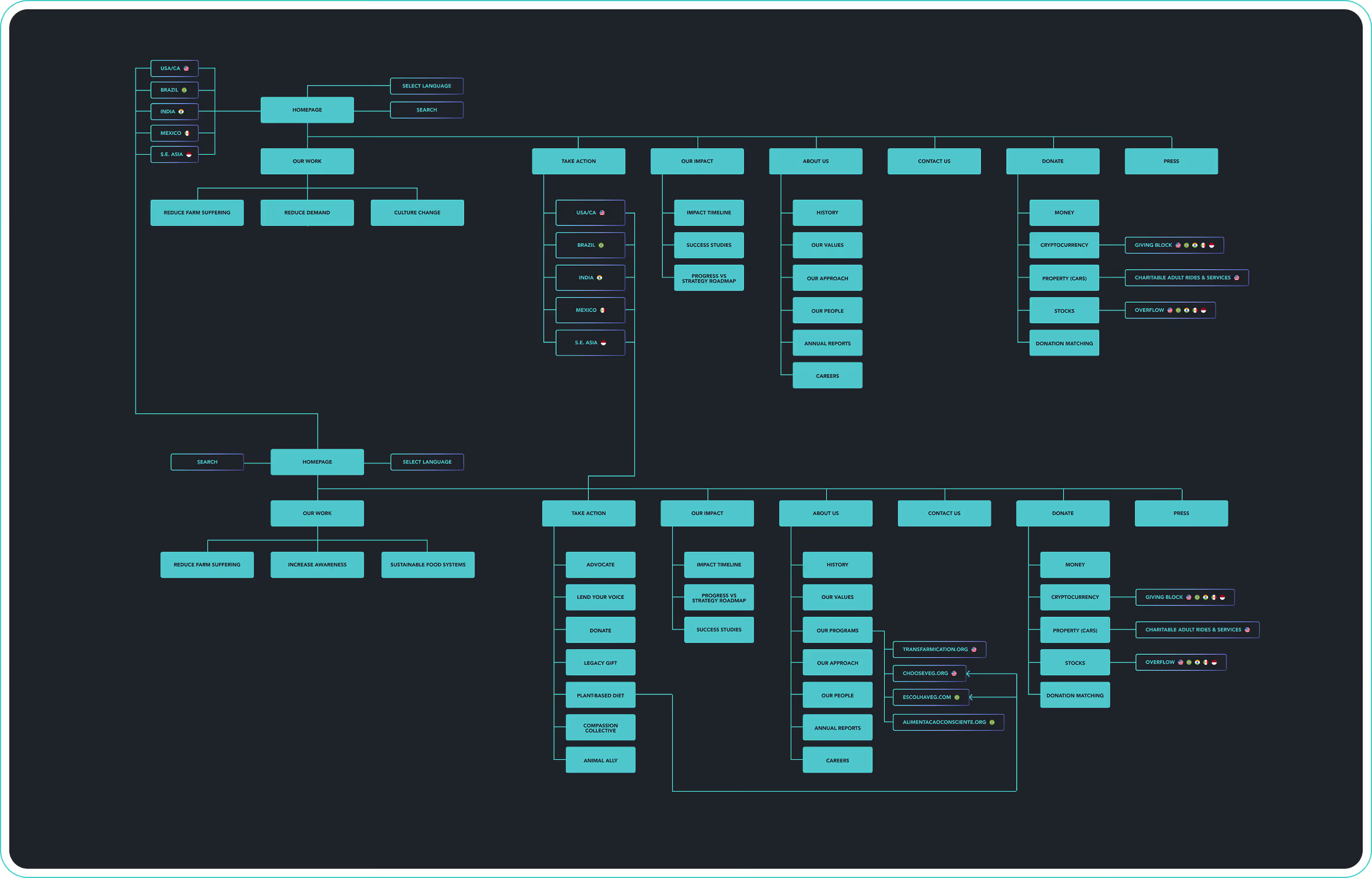
Player voices, winner stories, and community scale are load-bearing elements — placed where skepticism peaks, not where visual balance suggests.
A platform scaling into the U.S. has to meet the accessibility standard its institutional markets expect. The redesign follows WCAG 2.1 AA across the board.
Each surface was designed against the trust architecture. The home leads with credibility. The bingo page operates as its own product. Categories segment by player motivation. Every CTA names what the player is committing to.
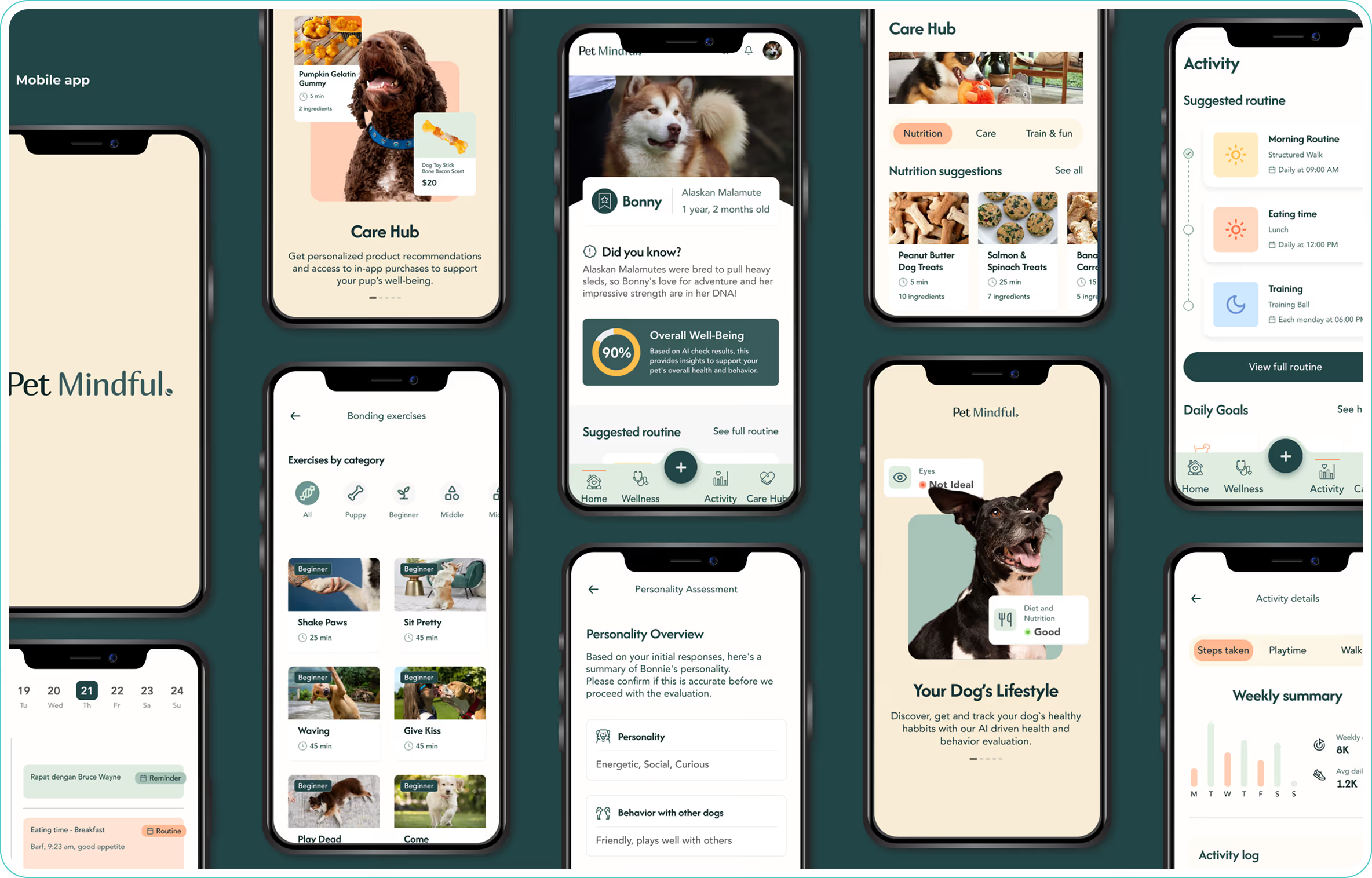

The engagement closed with a complete handoff package: page designs across 20+ unique templates, research documentation, a trust architecture framework, a design system, and an implementation plan ordered by impact.
Figures from qualitative user testing conducted during the engagement. In-market performance validation sits with MPL's internal team post-handoff.
Wandr understood the strategic value of design from the start — they helped us build a product story that resonated with both users and regulators, and gave our team the system to execute against without ambiguity.