

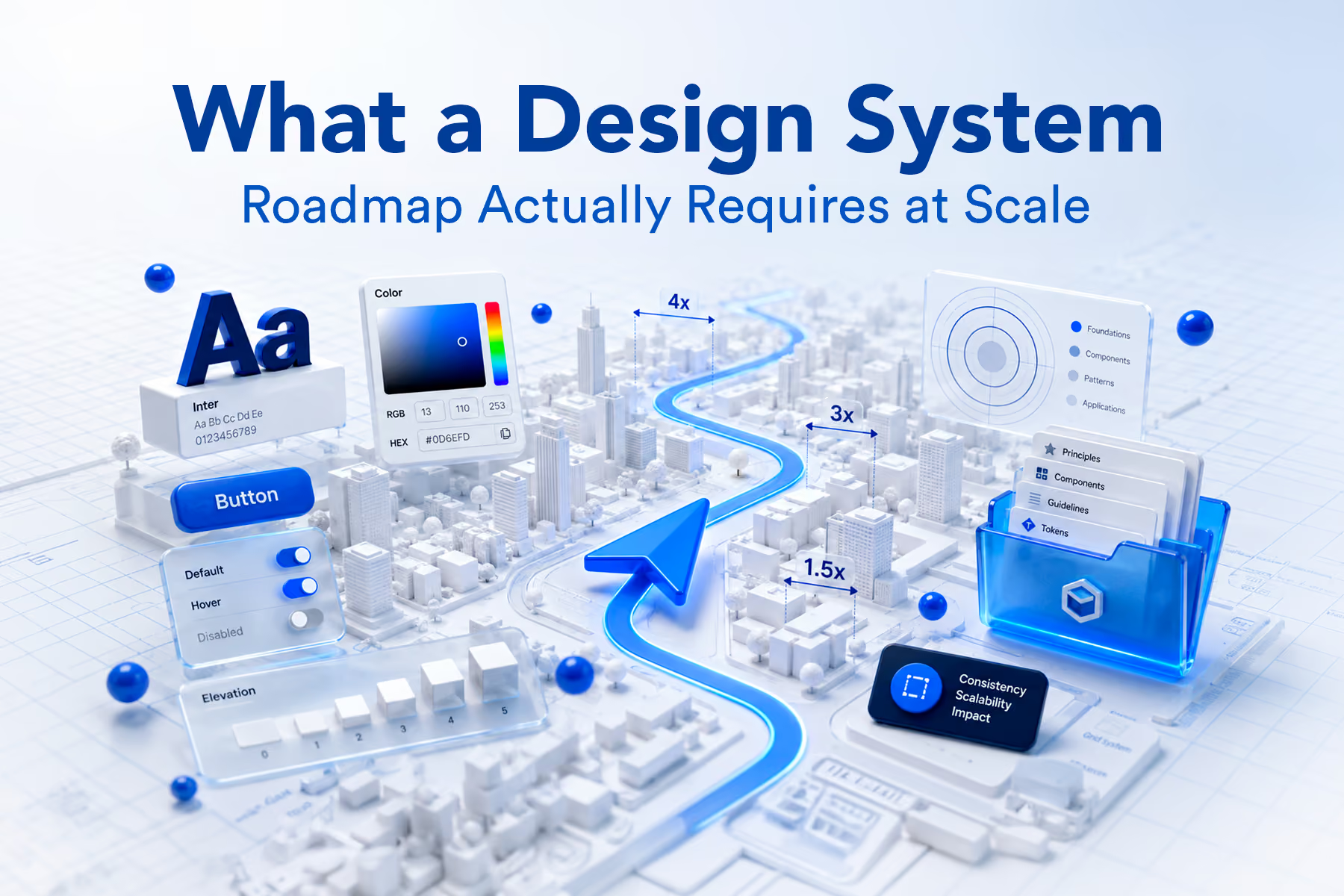
A design system roadmap is not a component checklist or a Figma migration plan. It is a strategic document that governs how design decisions get made, communicated, and enforced across an organization as it grows. Most internal attempts at design system roadmaps collapse because they treat the work as a design deliverable rather than an organizational infrastructure problem. This post covers what a design system roadmap needs to contain, why the sequence of decisions matters as much as the decisions themselves, and what building one at scale looks like in practice, drawn from Wandr's work building and consolidating design systems for Fanatics and Tenable.
The Design System Roadmap Problem Nobody Talks About
Most organizations that struggle with their design system do not have a design problem. They have a prioritization and sequencing problem.
The design work itself, defining tokens, building components, documenting usage, is tractable. Design teams understand how to do it. The part that consistently breaks down is the organizational infrastructure around that work: getting engineering to adopt the system, convincing product managers to slow down feature development long enough for the system to catch up, maintaining consistency across teams that are all moving at different speeds, and making a case to leadership that investing in foundational design work has a measurable return.
A design system roadmap that only addresses the first problem and ignores the second produces excellent documentation that nobody follows.
This is not a small failure. The downstream cost of a design system that exists in Figma but does not govern actual product decisions is the same fragmentation the system was built to prevent, except now there is also a maintenance burden for the system itself. Teams spend time keeping the documentation current while simultaneously building outside of it, which is worse than not having a system at all.
The organizations that build design systems that actually work treat the roadmap as an organizational change document, not a design project plan.
What a Design System Roadmap Is Actually Governing
Before building a design system roadmap, it is worth being precise about what the roadmap is meant to govern. Most internal roadmaps conflate several different things that need to be sequenced separately.
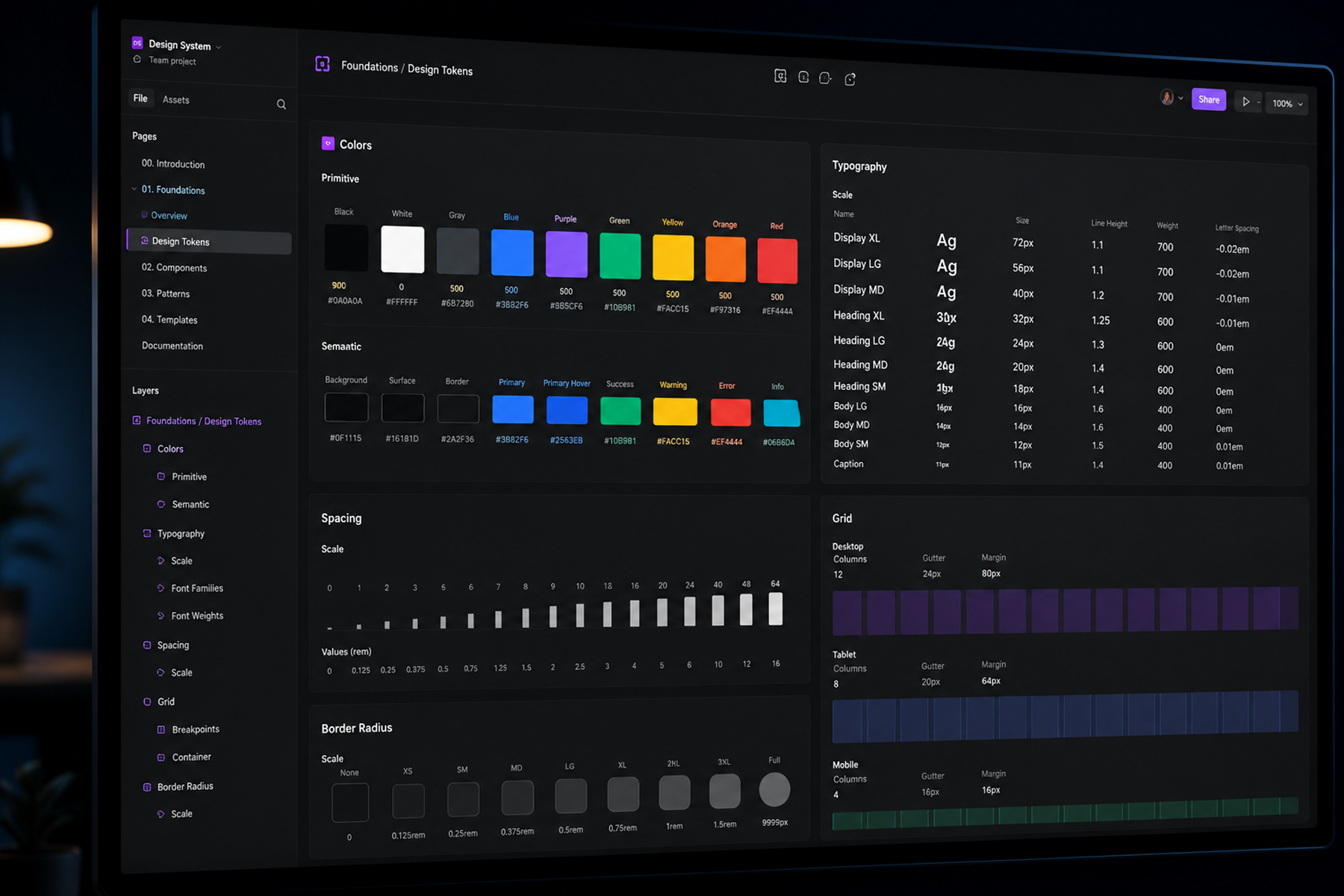
Foundation work covers the decisions that everything else depends on: design tokens, typography scale, color system, spacing system, grid, and motion principles. These decisions are upstream of every component and every product decision that follows. Getting them right requires more stakeholder alignment than most teams budget for, because changing foundational decisions after components are built is expensive. The roadmap should treat foundation work as a separate phase with explicit sign-off criteria before component work begins.
Component library work is where most design system roadmaps start, which is the first sequencing mistake. A component library built before the foundation is settled will need to be rebuilt or significantly reworked when the foundation decisions change. The component library phase should follow foundation completion, and it should be scoped explicitly: which components are in scope for the initial release, what the acceptance criteria are, and how components will be maintained after they ship.
Documentation and adoption work is the most consistently underinvested phase in design system roadmaps. The assumption is that once the system is built, teams will use it. This assumption is wrong in every organization above a certain size. Adoption requires deliberate effort: onboarding materials for new designers and engineers, integration guides for existing codebases, office hours or support channels, and a feedback mechanism that allows the teams using the system to surface problems without those problems getting lost. The roadmap should allocate as much time and resource to adoption as it does to building.
Governance work defines how the system evolves over time: who can propose changes, how proposals are evaluated, how decisions get made when teams disagree, and how breaking changes are communicated and versioned. Most design system roadmaps skip this entirely and discover the problem eighteen months later when the system has forked across three codebases because there was no process for handling conflicting requirements.
The Sequencing That Determines Whether a Design System Roadmap Survives Contact With the Organization
The most common reason design system roadmaps fail is not poor design quality. It is wrong sequencing of stakeholder alignment relative to the design work.
Design system work that runs ahead of organizational buy-in produces a system that is technically complete and practically ignored. Engineering teams that were not involved in the component architecture decisions will build around the system rather than inside it. Product managers who do not understand why the system requires a dedicated maintenance budget will cut it when the next quarterly planning cycle creates pressure. Leadership that did not sign off on the foundational decisions will override them when a specific product requirement conflicts with the system's constraints.
The sequence that works consistently is alignment before artifact. The roadmap should front-load the conversations that are hardest to have after the work is done: what problem is the design system solving, for which teams, and how will we know it is working? These conversations surface the organizational constraints that should shape the system architecture, not the other way around.
When Wandr built the global design system for Fanatics, one of the world's largest sports commerce platforms, the scope of the work required alignment across multiple product teams operating in different markets with different technical stacks and different release cadences. The design system roadmap had to account for that organizational complexity from the beginning, because a system built for one team's workflow would not scale to the others. The foundation decisions were made with input from engineering leads across teams before a single component was specified, which is what allowed the system to be adopted rather than worked around.

What Enterprise Design System Consolidation Looks Like
The design system challenge at enterprise scale is different from the challenge at startup scale in one fundamental way: there is already a system, or something that functions like one, and it has been accumulating inconsistency for years.
Enterprise organizations that have grown through acquisitions, rapid scaling, or parallel product development typically arrive at a design system conversation with multiple component libraries in various states of maintenance, design files that do not match production, documented patterns that teams stopped following at some point, and engineers who have built their own component implementations because the official ones did not meet their requirements.
Consolidating this is not a design refresh. It is an audit, a prioritization, and a migration project simultaneously, and the roadmap has to reflect that complexity.
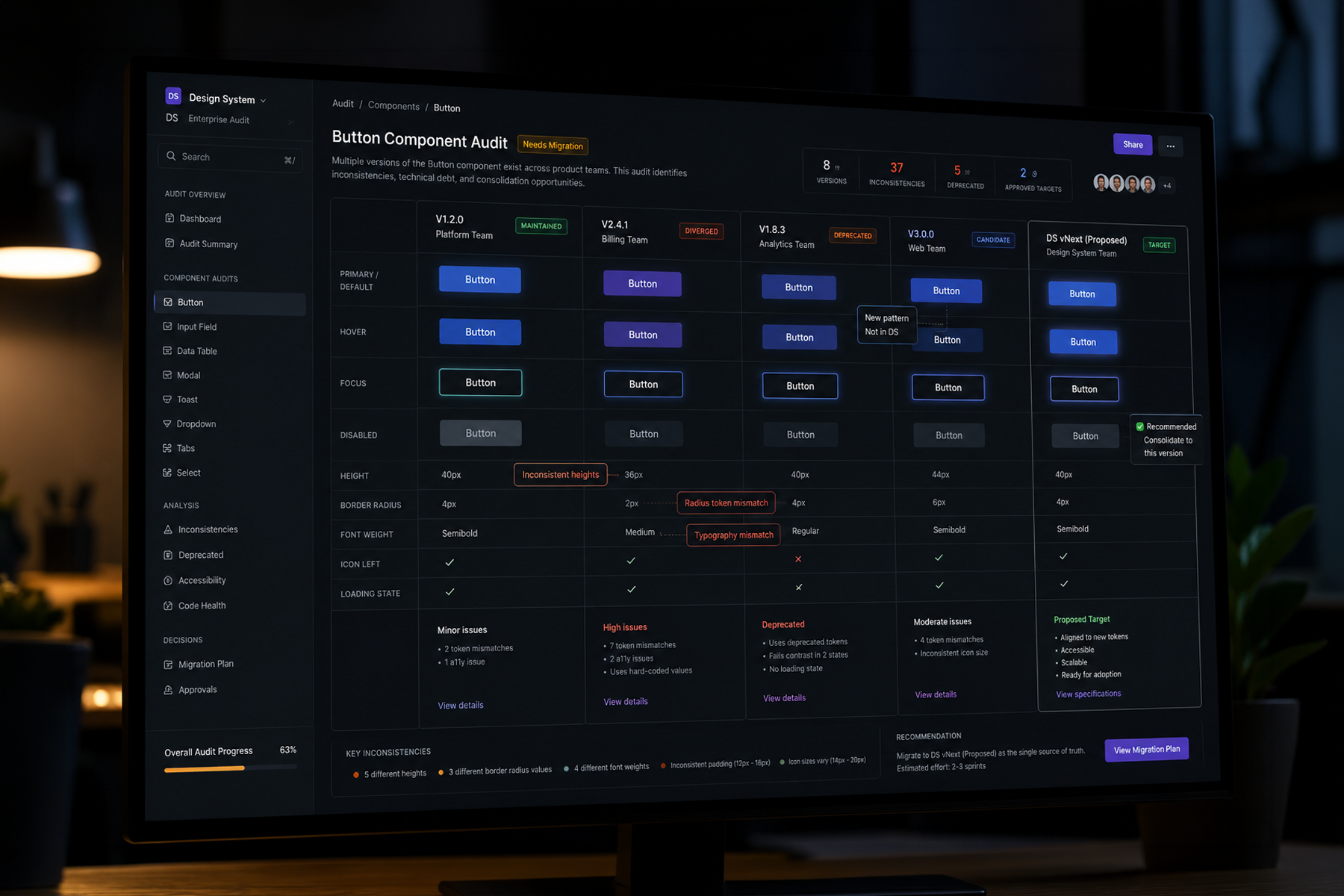
Wandr's three-year embedded partnership with Tenable, spanning their growth through and beyond their public offering, included consolidating their entire global design system across a product portfolio that had scaled significantly. The consolidation work required mapping what existed across every product surface, identifying which patterns were genuinely load-bearing versus which ones were legacy decisions that could be simplified, and building a migration path that allowed existing product teams to move to the consolidated system without disrupting active development cycles.
The roadmap for that kind of work looks nothing like a greenfield design system roadmap. It is phased around migration risk rather than around design deliverables, and it requires a governance model that can handle the transition period where some teams are on the new system and others are still migrating.
The Metrics a Design System Roadmap Should Be Measured Against
Most design system roadmaps define success as completion of deliverables: the component library is shipped, the documentation is published, the Figma file is organized. These are outputs, not outcomes.
The outcomes a design system roadmap should be measured against are the organizational problems it was built to solve. If the primary driver was inconsistency across product surfaces, the metric is consistency improvement measured through audit. If the driver was engineering velocity, the metric is reduction in time to implement new features using system components versus custom builds. If the driver was onboarding speed for new designers, the metric is time to first independent contribution. If the driver was design-to-development handoff friction, the metric is reduction in implementation discrepancies measured through QA.
Defining these metrics before the roadmap work begins changes the decisions made during the work. A design system built to improve engineering velocity will make different component architecture decisions than one built to improve visual consistency, even if both end up with similar component libraries. The metric defines the design priority when tradeoffs have to be made, and tradeoffs always have to be made.
Where Most Internal Design System Roadmaps Break Down
Scope creep before foundation completion. The pressure to ship components before foundation decisions are fully resolved is constant. Product teams want the components now. Engineering wants to start building against the system. The roadmap needs explicit governance criteria that prevent component work from beginning before foundation sign-off, or the component work will need to be redone when the foundation decisions change.
Insufficient engineering involvement in architecture decisions. A component library that designers love and engineers find difficult to implement will not be adopted at scale. The design system roadmap should require engineering input on component API design and token implementation before those decisions are finalized.
No version management strategy. A design system that cannot communicate breaking changes, manage deprecations, and maintain backward compatibility is not a system. It is a shared Figma file. The roadmap should include a versioning and release strategy before the first components ship.
Treating documentation as a post-launch activity. Documentation written after components are built is always less accurate than documentation written alongside them, and it is always the first thing that gets cut when timelines compress. The roadmap should treat documentation as a parallel workstream, not a cleanup task.
No clear ownership after launch. The most successful design systems have a named owner with dedicated time, a clear process for accepting contributions, and a defined relationship with product and engineering leadership. Roadmaps that treat ownership as something to figure out later produce systems that degrade after launch as the team that built them moves on to other work.

Final Thoughts
A design system roadmap is one of the highest-leverage investments a scaling product organization can make, and one of the most consistently underscoped. The organizations that get it right treat it as an infrastructure project with an organizational change component, not a design project with a documentation deliverable.
The sequence matters. The stakeholder alignment comes before the design work. The foundation decisions come before the component library. The adoption strategy comes before the launch. And the governance model comes before the first change request arrives.
Fanatics and Tenable are not the same kind of company, and their design system challenges were not the same. What they shared was the need for a roadmap that accounted for organizational complexity, not just design deliverables. That is the difference between a design system roadmap that produces a system teams actually use and one that produces a system teams work around.
Work With a Team That Has Built Design Systems at Global Scale
Wandr has built and consolidated design systems for Fanatics, Tenable, and product organizations across fintech, cybersecurity, healthcare technology, and enterprise software. If your organization needs a design system roadmap built around the organizational complexity of your product, not a generic template, schedule a free consultation with our team and let us show you how we approach it.