



Most companies selling game UI/UX design are selling art production. That is a legitimate business and it is frequently not what the buyer needs, and the mismatch is rarely discovered until the deliverable arrives and the numbers do not move.
This is a buyer's guide. What the categories of vendor actually are, which one solves which problem, the questions that separate them in a first call, and the signals worth walking away from.
The Three Kinds of Vendor
Almost every company you will shortlist falls into one of these, and the confusion between them is where most bad engagements start.
Art Outsourcers
These are the largest category by far and they are very good at what they do. You send a spec, they send back beautiful screens. Icons, HUD elements, menu art, splash screens, marketing assets.
The model is production capacity. They are fast, they are comparatively cheap, they scale, and they will make your interface look considerably better than your programmer's placeholder art.
What they do not do is tell you the spec is wrong. That is not a criticism, it is the deal. You bring the decisions, they bring the execution. If you already know exactly what your interface should contain and in what order, and you just need it to look good, this is the correct purchase and paying product-partner rates for it is a waste of money.
The failure happens when a buyer has a retention problem and hires an art outsourcer. They get a beautiful version of the interface that was causing the retention problem. The vendor did their job perfectly. The problem is untouched.
Staffing and Outsourcing Shops
These place designers into your team. You manage them, they work your backlog, you get capacity without headcount.
This works well if you have strong internal design leadership and a resourcing gap. It works badly if you are hiring the shop to supply the leadership, because an embedded contractor has no authority to tell your VP of Product that the onboarding is the problem. They are a resource, not a voice.
The economics are usually hourly or monthly per person. It is a genuinely useful model and the mistake is expecting strategy from a staffing arrangement.
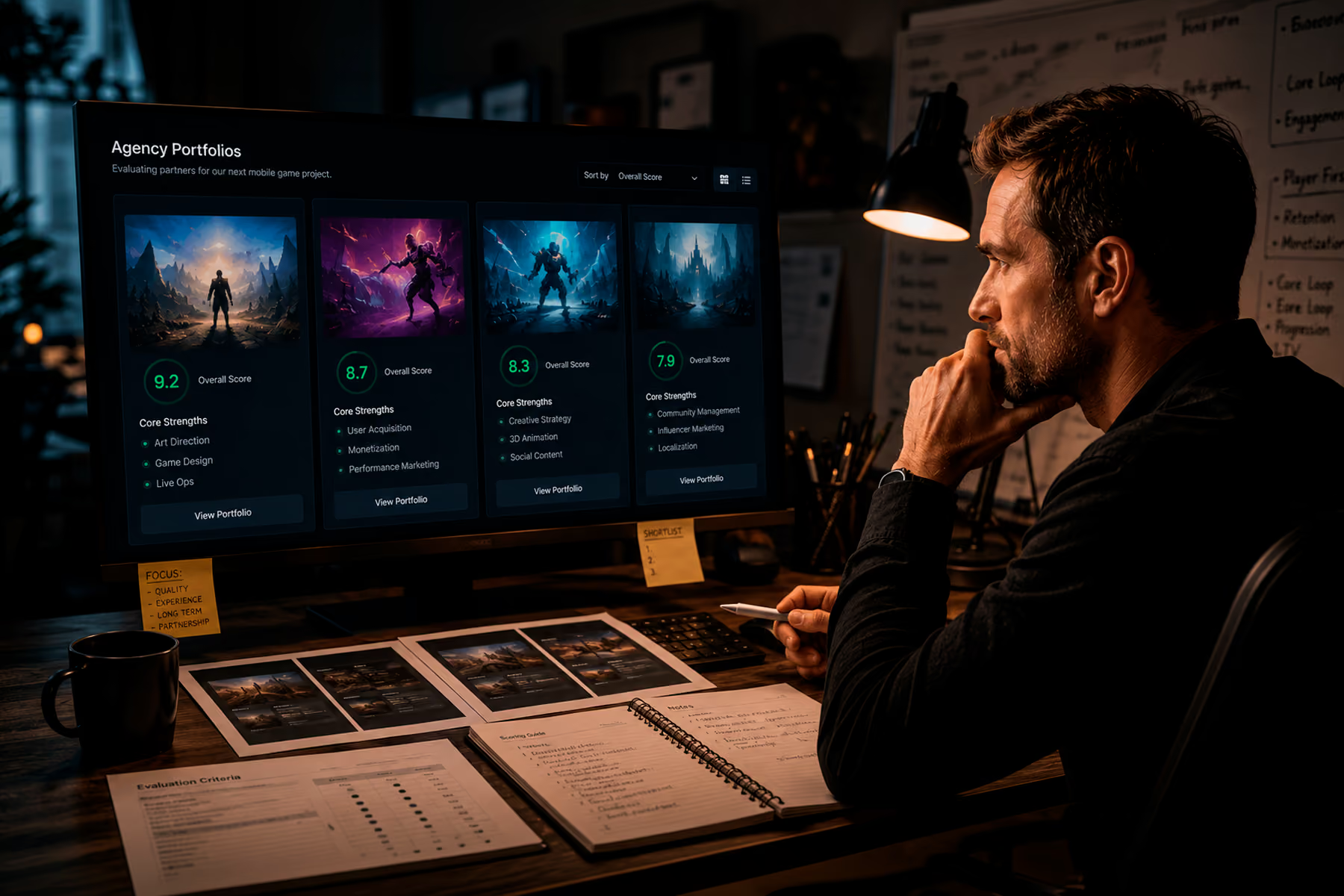
Product Partners
These start with your problem rather than your spec. They research, they diagnose, they will tell you the thing you asked for is not the thing you need, and they attach themselves to an outcome rather than a deliverable list.
They are more expensive per unit of output and there is less output per unit of time, because a meaningful proportion of the engagement is spent finding out what is actually wrong rather than making things.
This is the right purchase when you have a number that is bad and you do not know why. It is the wrong purchase when you know exactly what you want built and just need hands.
Work Out Which Problem You Have First
This is the step buyers skip and it determines everything.
If your interface looks dated but performs fine, you have an art problem. Hire an art outsourcer. Do not overpay for diagnosis of a problem you have already diagnosed.
If you have a backlog and not enough designers, you have a capacity problem. Hire a staffing shop, and understand you are buying hands, not direction.
If a number is bad and nobody can explain it, you have a product problem. That is the only case where a product partner is worth the premium, and it is also the case where hiring the other two categories will waste six months.
If you are entering a regulated market, you have a compliance and trust problem, which is a specific subcategory of the third. Very few vendors have done it. Ask directly.
Most buyers arrive with the third problem and shop as though they have the first, because the first is easier to write a brief for. "Redesign our onboarding screens" is a brief. "Find out why 60% of installs never finish a match" is a question, and questions are harder to put out to tender.
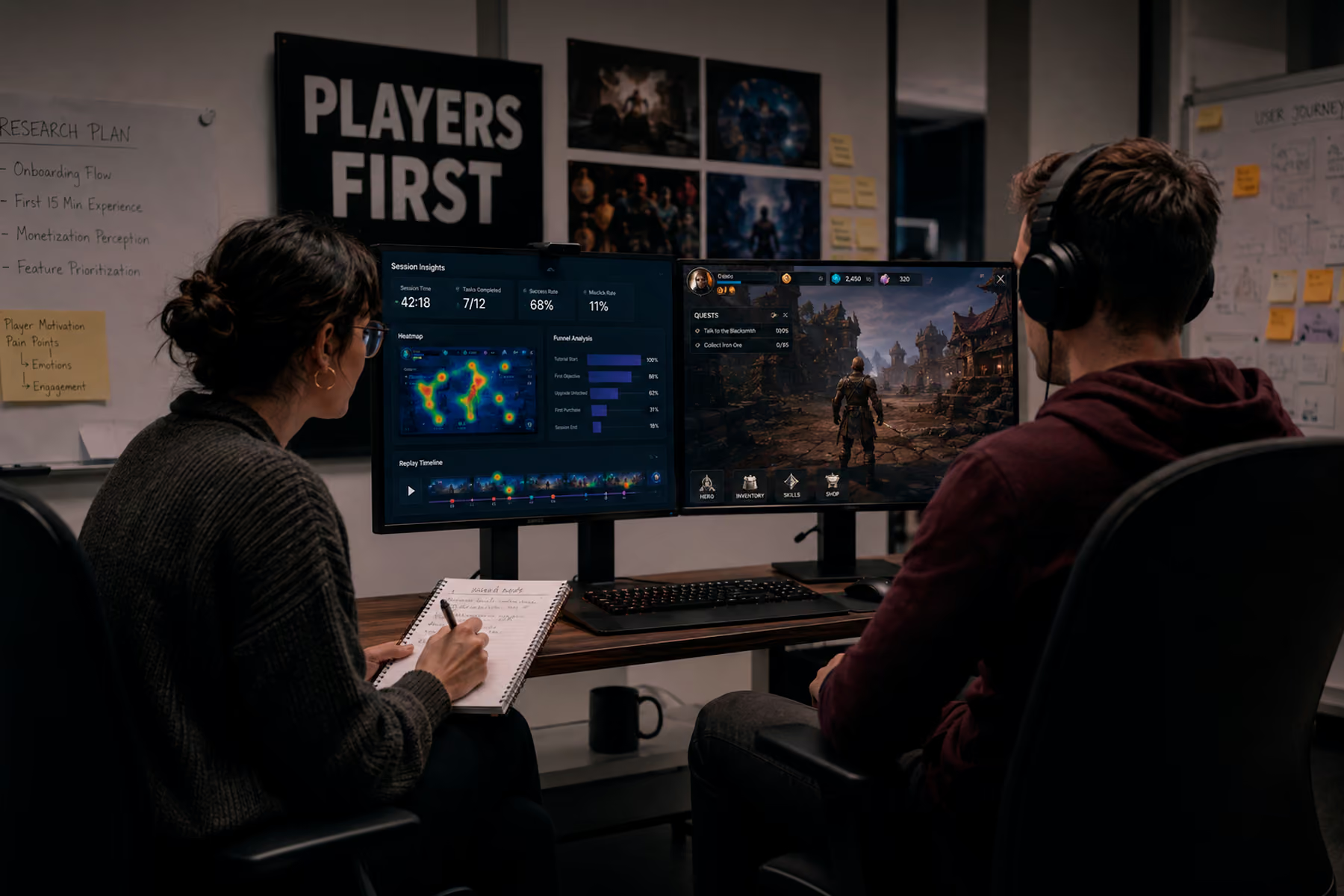
The Questions That Separate Vendors
Five questions, in a first call, that reveal category faster than a portfolio review.
"What would you remove from our interface?" Art vendors cannot answer this. They will talk about hierarchy and polish. A product partner will have opinions within a few minutes of seeing your build, because removal is the core of the discipline and they think about it constantly. If nobody has an answer, you have found an art vendor with a strategy page.
"Tell me about a project where research changed the plan." The answer separates real research from research theatre instantly. If nothing ever changed, there was no research.
Here is what a real answer sounds like. Claudia Mérigo, a UX researcher on our team, described a gaming project on our podcast where the interviews revealed the client had misunderstood their own users. The product had been designed for casual gamers. The people who would actually use it were professional gamers, and the two audiences have completely different behaviours, needs, and expectations. The research redirected the entire product. That is what it looks like when research does something. If a vendor's research has never overturned an assumption, it is a deck.
"What do you measure?" Watch for gameable answers. Mariana Lopez, a product strategist on our team, gave the test on leveraging metrics to improve user experiences: a metric is measurable, movable, related to a specific goal, and not gameable. A vendor who proposes to improve engagement without defining it is proposing to improve a number that goes up when your menus are confusing.
"Who on your team has shipped a game?" Games have constraints that do not exist elsewhere. Controller navigation graphs. Couch viewing distance. Certification. Localisation inflation on dense short strings. A team from pure SaaS will design something lovely that fails cert. Ask specifically, not about gaming clients, but about shipping.
"What happens when we disagree?" Most revealing question on the list. A vendor who says they will do what you ask is telling you they are a supplier. That is fine if you want a supplier. If you are paying for expertise and they fold the moment you push, you are paying for expertise you will never receive.
Reading a Games Portfolio Properly
The portfolio is where buyers get misled most, because portfolios select for the photogenic and interfaces are not judged photographically.
Screens with no numbers attached means art production. Not a criticism, just a category identification. If every case study ends with "we delivered a refreshed visual language," you know what you are buying.
Look for the before. A vendor showing only the after is showing you their art. A vendor showing the before and explaining what was wrong with it is showing you their thinking, which is the thing you cannot verify any other way.
Look for a constraint. Every real project has one. Budget, platform, legacy code, a stakeholder who would not move. Case studies with no constraints are marketing.
Beware the reskin dressed as a redesign. Many impressive-looking case studies are the same information architecture in nicer clothes. If the before and after have the same screens in the same order, nothing was designed. It was decorated.
We try to hold ourselves to this. On Buildbox, a no-code game creation platform used by millions, the original interface presented all of the product's power the moment a user signed in, and people got lost and left before making anything. The redesign asked what a meaningful first success looks like and moved everything else later. First-success completion moved 41%. The interesting part of that story is not the screens. It is that the answer was a sequence change, and the screens were downstream.
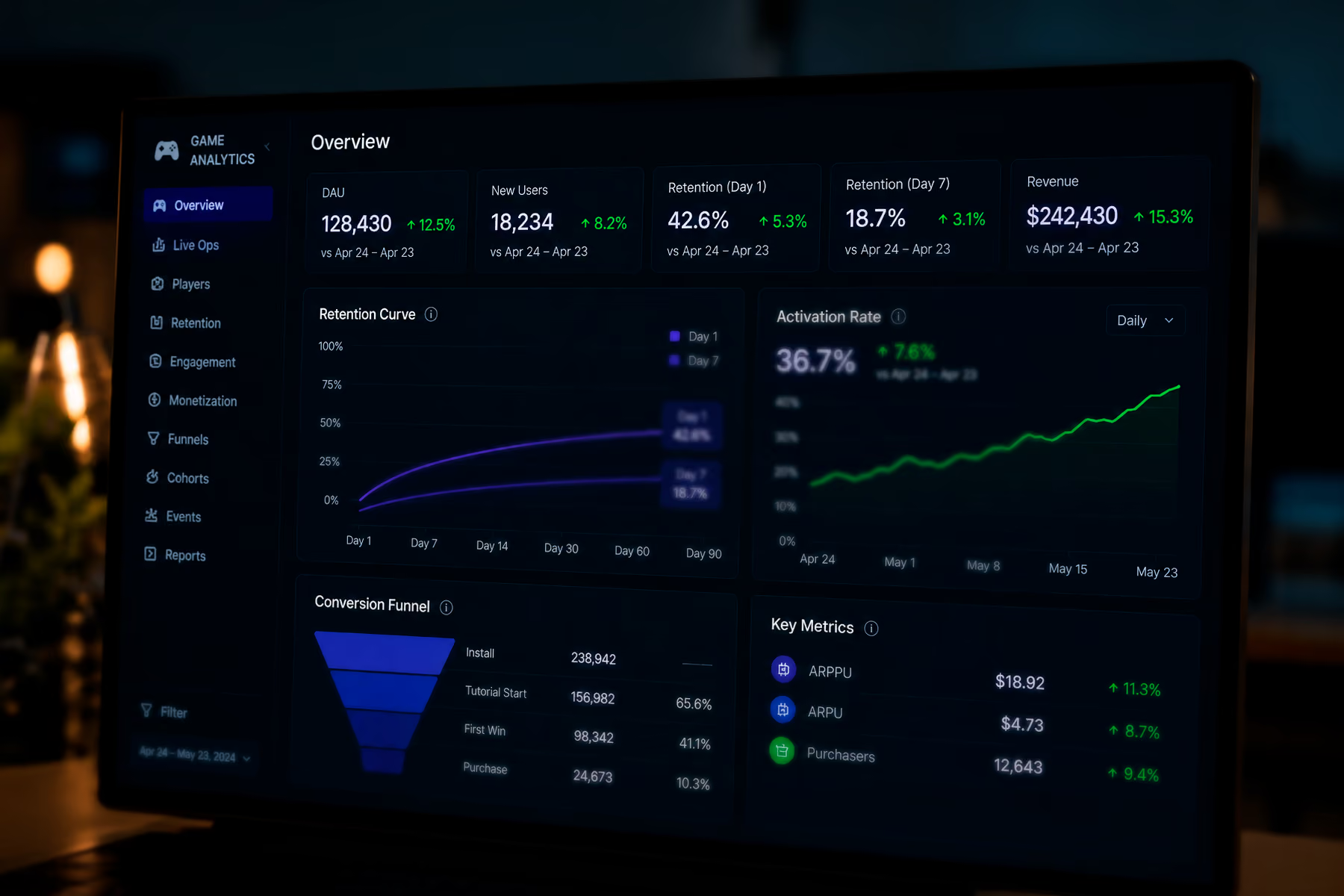
Checking Whether They Know the Games-Specific Constraints
A quick technical screen that separates teams who have shipped games from teams who have shipped software. Ask about any of these and listen for whether the answer is fluent or improvised.
Controller navigation. Do they specify focus order, wrap behaviour, and default selection in the design, or do they leave it to engineering? The correct answer is that it is a design deliverable. A vendor who has never thought about it will not understand the question.
Text size at viewing distance. Microsoft's Xbox Accessibility Guidelines publish minimums by platform and resolution, and they are more demanding than most designers expect. A vendor who has shipped console will know these numbers exist. One who has not will tell you they will make it look good on a TV.
Localisation headroom. German runs 30 to 40% longer than English for equivalent UI strings. Ask how they handle it. "We will design flexible components" is a non-answer. "We pseudo-localise before translation exists" is an answer.
Accessibility baseline. The Game Accessibility Guidelines basic tier is genuinely basic and most shipped games still fail parts of it. A vendor who cannot name anything on it is going to hand you a compliance problem.
Contrast against a live background. Game UI sits on whatever the renderer draws. Ask how they validate contrast. If the answer involves a mockup background, they have not shipped a game.
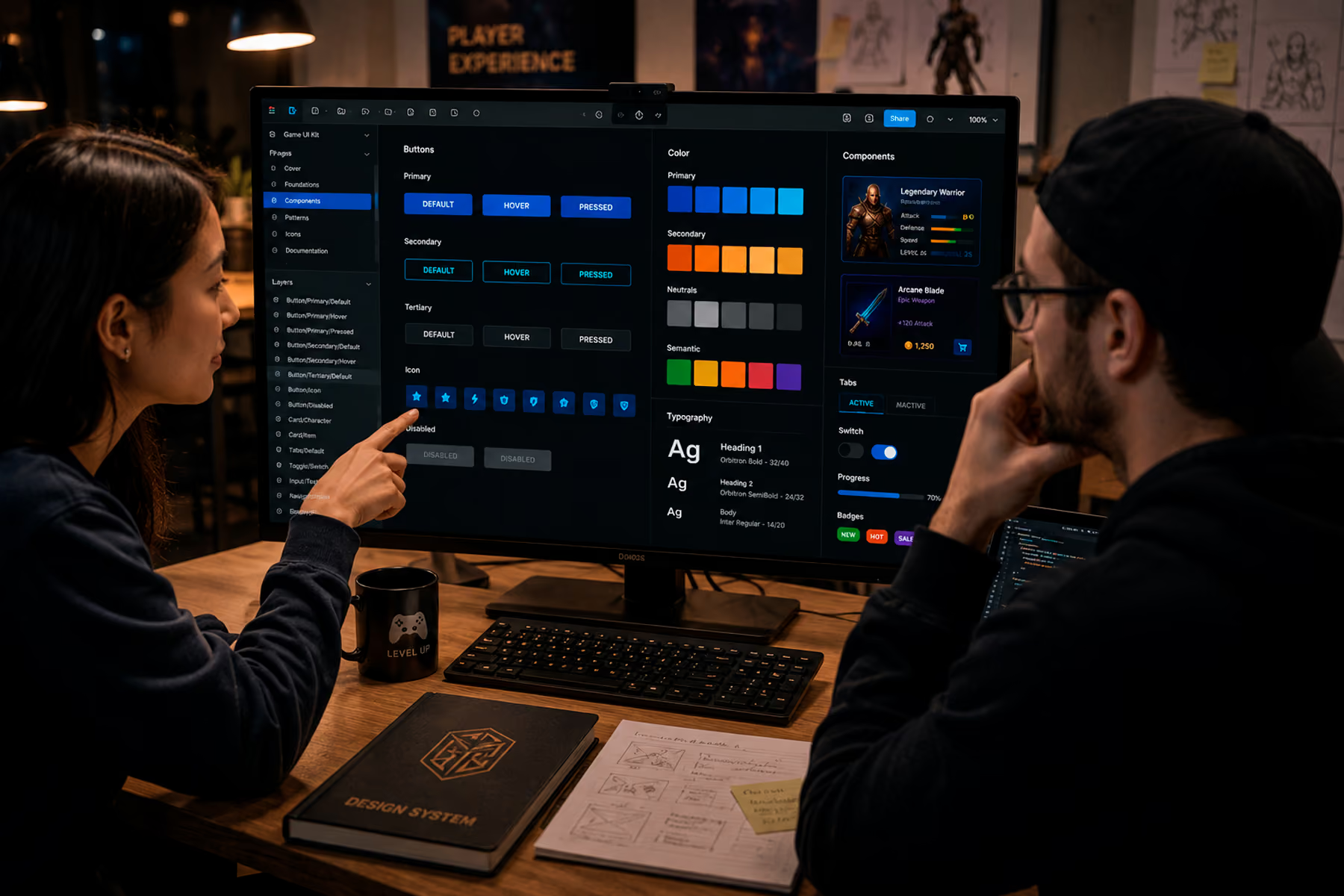
Red Flags Worth Walking Away From
They quote before they have seen the product. A price for a redesign, given without looking, is a price for a fixed number of screens. Which is fine if that is what you want, and a warning if you thought you were buying diagnosis.
They agree with everything in the first call. You have a problem you cannot solve. If an outside expert sees no issues in your framing of it, either they are not looking or they are not telling you.
Priced strictly per screen. This aligns their incentive with producing more screens, which is precisely opposite to the discipline. The core of good interface work is removal, and nobody gets paid for the screen they talked you out of.
No research line item. If research does not appear in the proposal, it will not happen in the project, and you are buying assumptions rendered attractively.
Everything in their portfolio looks the same. A survival horror interface and a farming sim interface should not resemble each other. A vendor whose games all look like their house style is applying a template, and your game is about to receive it.
They cannot say no. Related to the disagreement question and worth its own flag. The value of an outside partner is the outside part. A vendor who has never lost an argument with a client has never had one.
What It Costs and Why the Range Is So Wide
Published rates in this market run from roughly $25 an hour to well over $100, and the spread is not a quality gradient. It is a category gradient.
The bottom of that range is art production in a low-cost region and it is often genuinely good art. The top is a team with product and research capability in a high-cost market. Both are correctly priced for what they are. Comparing them on rate is comparing a printer to a publisher.
The number that matters is not the hourly rate, it is the cost of the wrong answer. A cheap redesign of the wrong thing costs you the fee plus six months plus the retention you did not fix. We break the economics down properly in our guide to game UI/UX design cost.
The related decision, whether to hire rather than contract at all, is covered in our guide to hiring game UI/UX designers. For some studios the honest answer is that you do not need a vendor, you need a permanent design lead, and a good vendor will tell you that.

Final Thoughts: Buy the Category You Actually Need
The single most useful thing in this guide is the first section. Most bad outcomes in this market are not vendor failures. They are category mismatches, where a buyer with a product problem hired an art shop, got exactly what they paid for, and concluded that design does not work.
Work out which problem you have before you shop. If your interface is ugly and your numbers are fine, hire the art shop and enjoy the value. If your numbers are bad and nobody knows why, no amount of art will help you, and hiring an art shop because they were cheaper is the most expensive decision available.
Then ask the removal question. It is the fastest test in the business, it takes ninety seconds, and almost nobody asks it.
See Whether We Are the Right Category for You
If your game has a number that is bad and no explanation for it, that is the problem we work on. Wandr has designed for game creation platforms, real-money gaming products, esports tools, and character systems, including rebuilding the trust architecture for MPL as they entered the US market. See how our game UI/UX design team works, or send us the product and we will come back with the top friction points we would fix, ranked. Free, and if the answer is that you need a different kind of vendor, we will say so.
