Buildbox

We turned a two-week UX audit into an embedded partnership that rebuilt Buildbox’s first-run experience, launched its first design system, and gave the team its own UX practice.

INDUSTRY
Gaming
PLATFORM
Desktop app
SIZE
SERIES C
GAMING
·
SCALE-UP
·
UX Audit & Product RedesignS. Market
At a glance

A two-week audit that became an Embedded Partnership

Jul-Aug 2020
01
‍
Product and DesignOps Audit
A two-part UX and Design Operations audit of Buildbox 3 and the internal product team, delivered with a full user-journey map of the new-creator experience.
Oct-Dec 2020
02
‍
Product Redesign
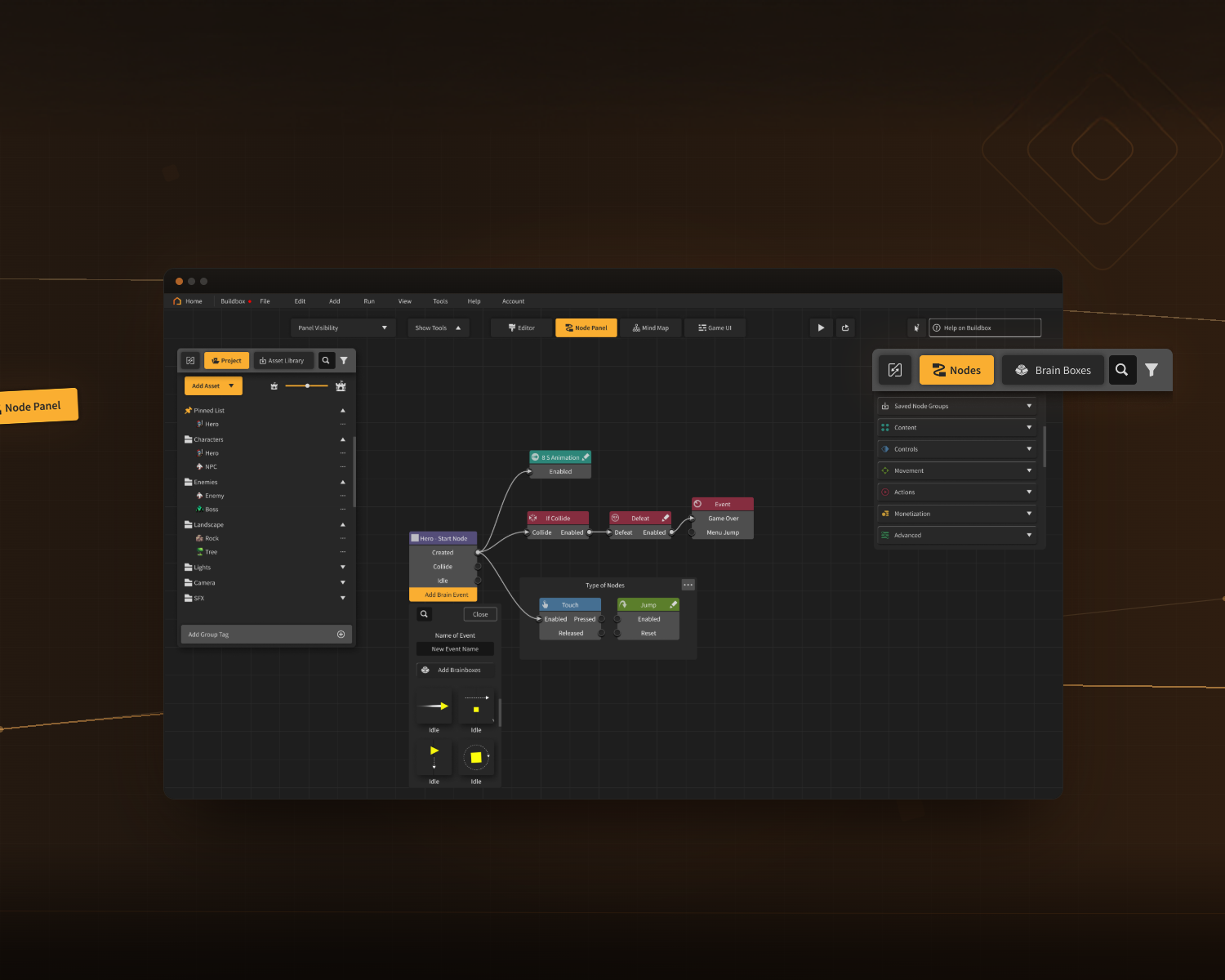
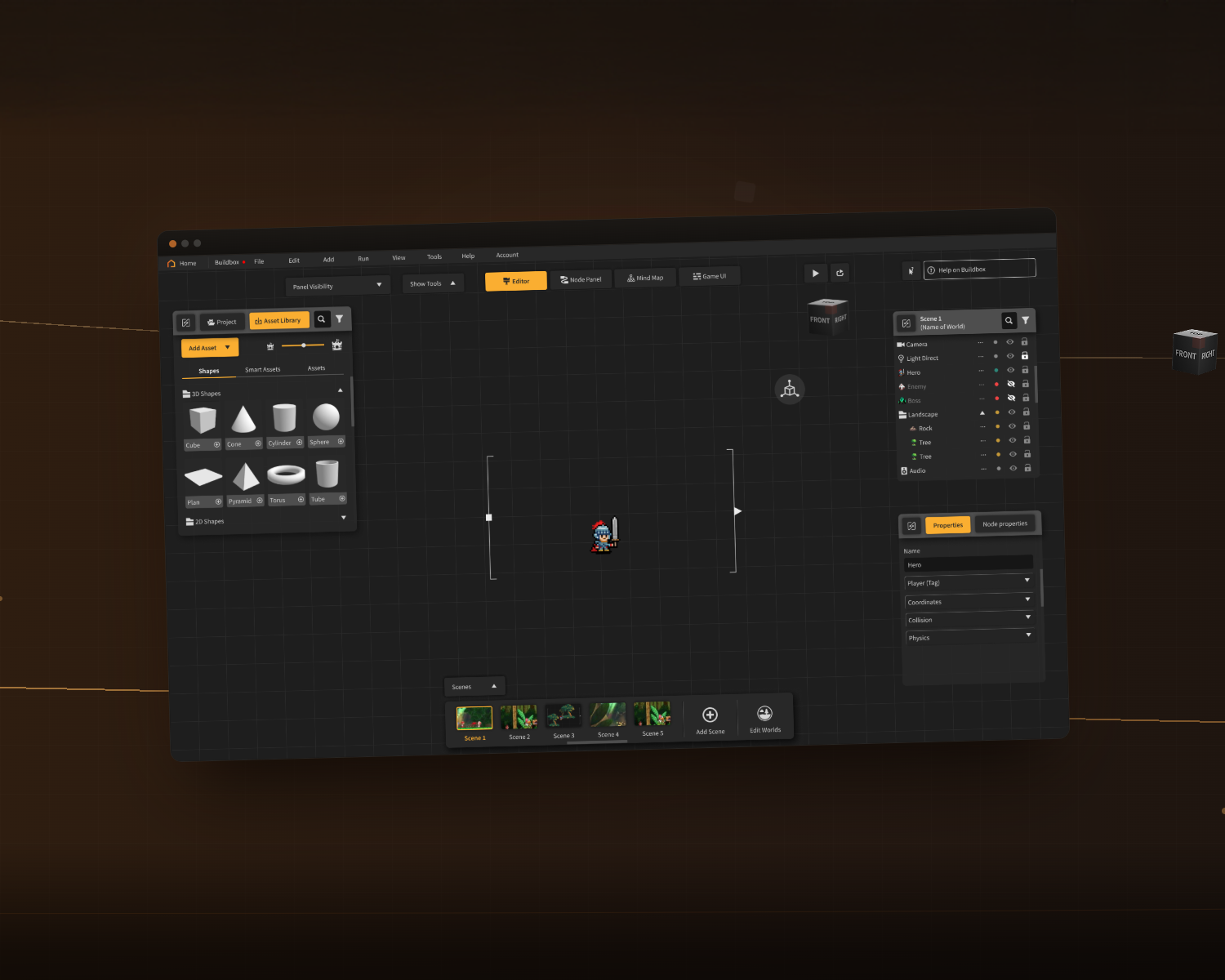
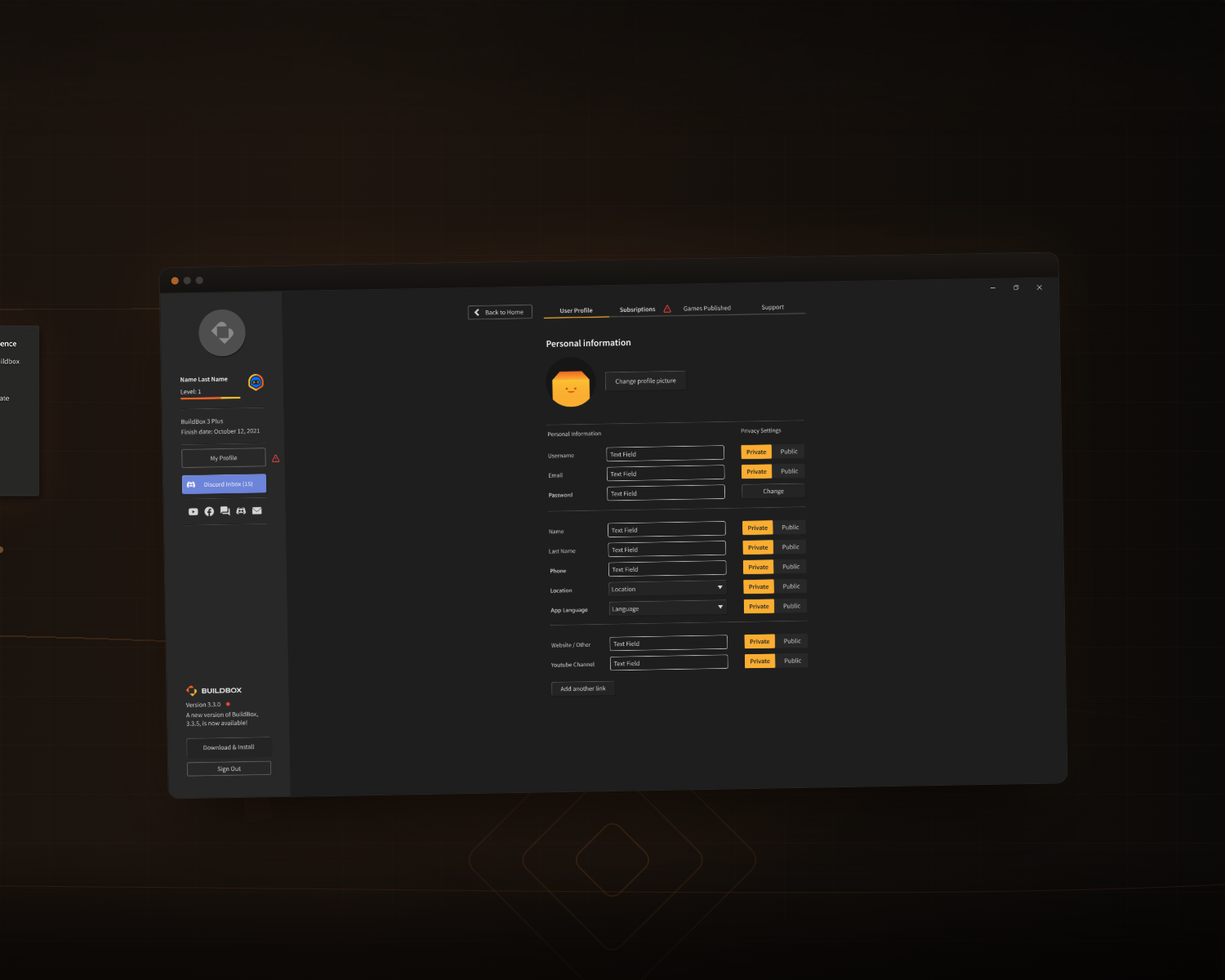
Rebuild new-user onboarding and the editing panel, redesign the user profile, design the "Evolution" retention journey, and stand up the Graphite design system.
Jan-Jun 2021
03
‍
Embed
Work alongside the client’s external engine rebuild to implement UX/UI as the technology shifted, and extend the system across profiles, achievements, and the level-up flow.
Drag / scroll →
team
Dev Team Integration
Strategy, research, design, design ops
research
10 interviews
Power users and first-time creators
output
Graphite
Comprehensive Design System
Engagement
~11 months
Three contracts, Jul 2020 to Jun 2021
The Client

The no-code tool that

lets anyone Build a Game.

MPL Gaming player base

Buildbox is a no-code, drag-and-drop platform that lets people with no programming background build and publish games to iOS, Android, Steam, and more. Founded in 2014 by Trey Smith and Nik Rudenko, it became one of the best-known names in no-code game creation. Games built in it, like Color Switch with more than 100 million downloads, reached the top of the app stores, and in 2019 Buildbox was acquired by AppOnboard to anchor its no-code push.

By 2020, with Buildbox 3 newly launched and the platform now free, the challenge had shifted from getting people in to keeping them. Acquisition was strong. Retention was not. Buildbox came to WANDR to make the tool easy enough that a first-timer could reach a finished game, without stripping away the power its veterans relied on.


2014
Founded by Trey Smith and Nik Rudenko
180+
Countries worldwide
Millions
Of games built by non-coders
The Challenge

The tool had no trouble attracting creators. It had trouble keeping them.

A no-code platform that was easy to sign up for and hard to succeed in was losing people in the first session, while the team that built it had no way to see why.

Problem 01

Retention, not acquisition, was the real problem.

Buildbox had no trouble getting people in the door, and conversion from free was fine. Users churned right after the trial, before the product had earned a reason to stay, and leadership wanted to lift the lifetime value of the users it already had.

Problem 02

A steep learning curve lost first-time creators before their first game.

The opening tutorial gave no context and could not be skipped, the interface offered few visual cues, and new users could not tell core panels apart or remember what each button did. Excitement at sign-up turned to frustration long before anyone shipped a finished game.

Problem 03

Even power users were not fully sold on the new version.

The current release, Buildbox 3, had not yet won over the loyal base, who still trusted Buildbox 2 and hit walls at iOS publishing through Xcode, Android performance, and lost work with no autosave. For harder games, some quietly switched to Unity.

Problem 04

A product team with no UX engine.

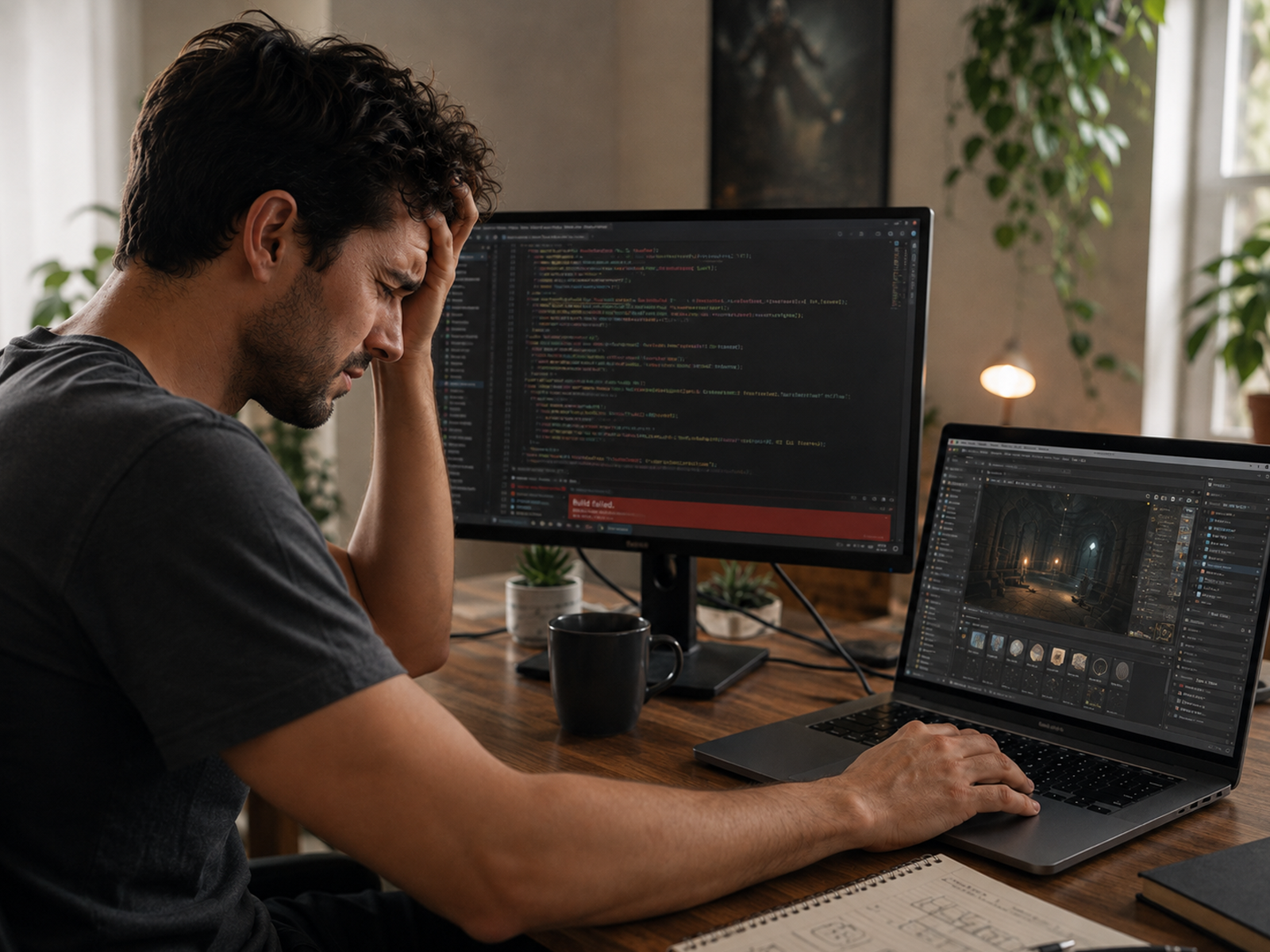
Buildbox had talented visual designers but no UX practice, no research or testing habit, and an engineering-led workflow that shipped features by assumption. As one team member put it, “we just deliver what we think.” There was no internal system for learning what users actually needed.

Problem 05

Scalability.

MPL needed a system, not a one-off page. Without a shared design language and component library, every new segment, promotion, or market would mean rebuilding from scratch. The experience had to scale as fast as the roadmap.

Drag / scroll →
Before / After

Same tool, rebuilt for

The First Build.

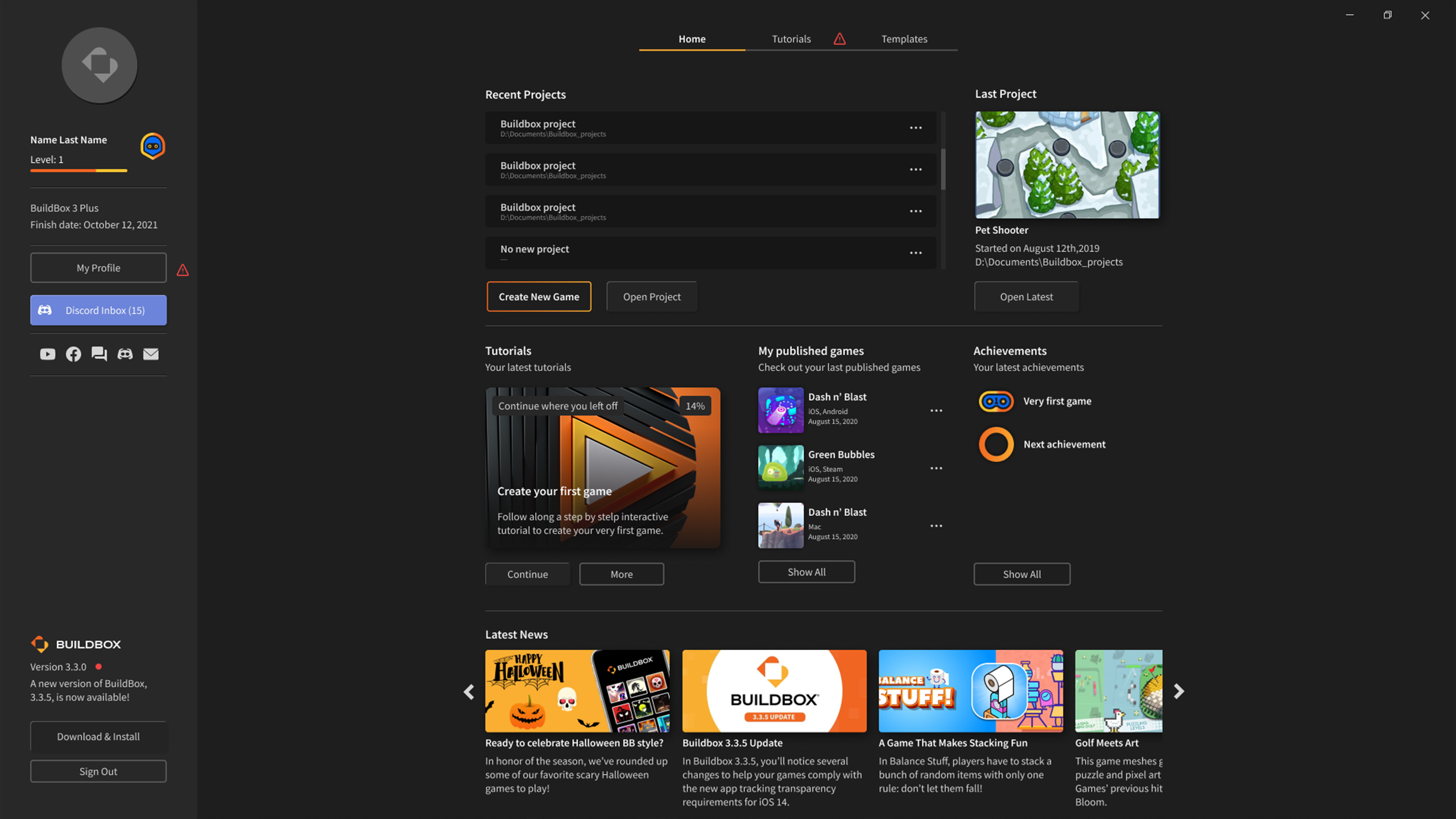
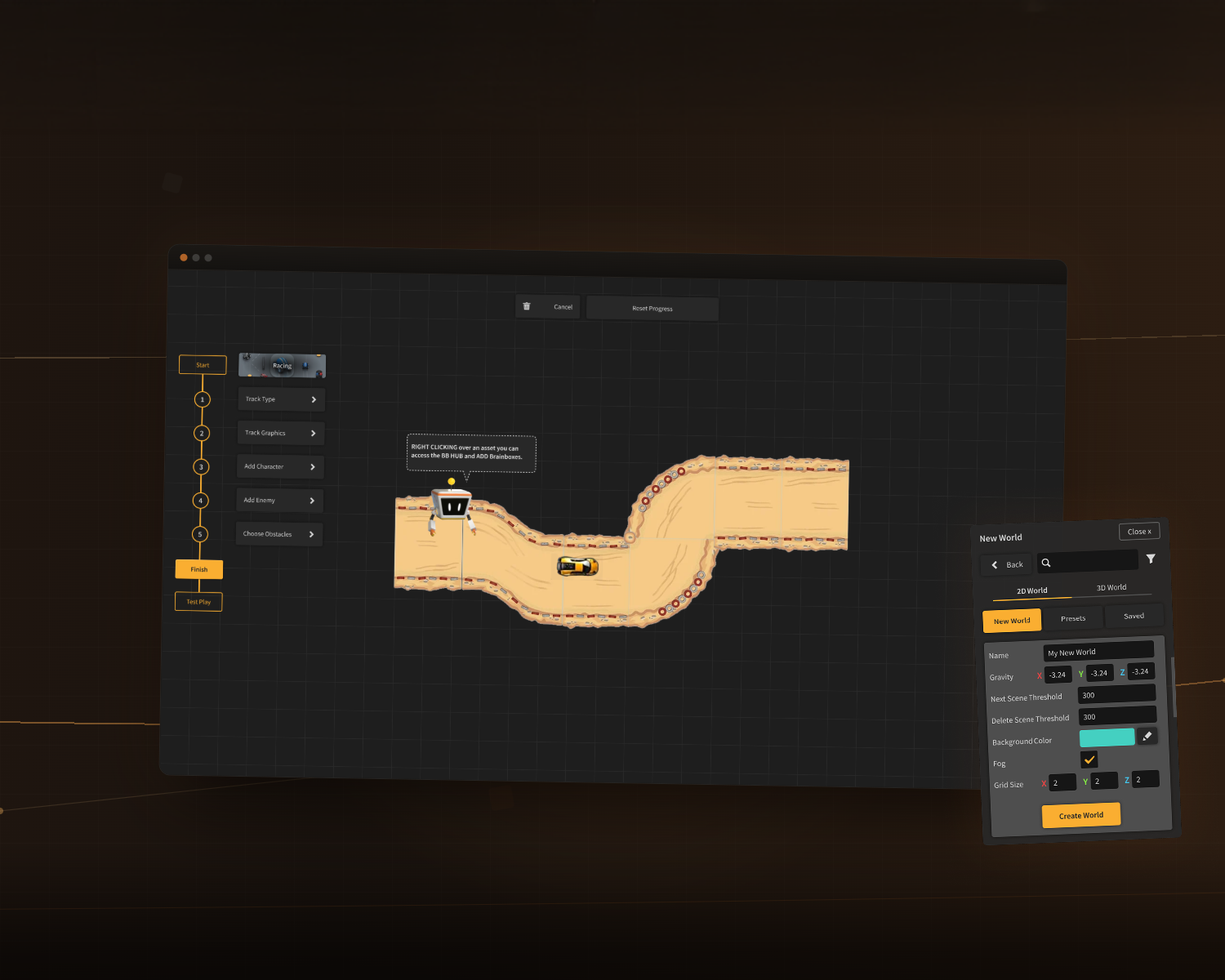
Drag the handle to see how the new-creator experience changed, from a blank, unguided editor that left first-timers lost into a curated onboarding that walks them to a finished, publishable game.

Before redesignBefore redesign
After redesignAfter redesign
Before
After WANDR
Our Role

From a fresh-eyes audit to an embedded team.

01
Product and Design Operations UX audit of Buildbox 3 and the internal design team
02
User research and moderated interviews with power users and first-time creators
03
Usability testing across the core creation flows
04
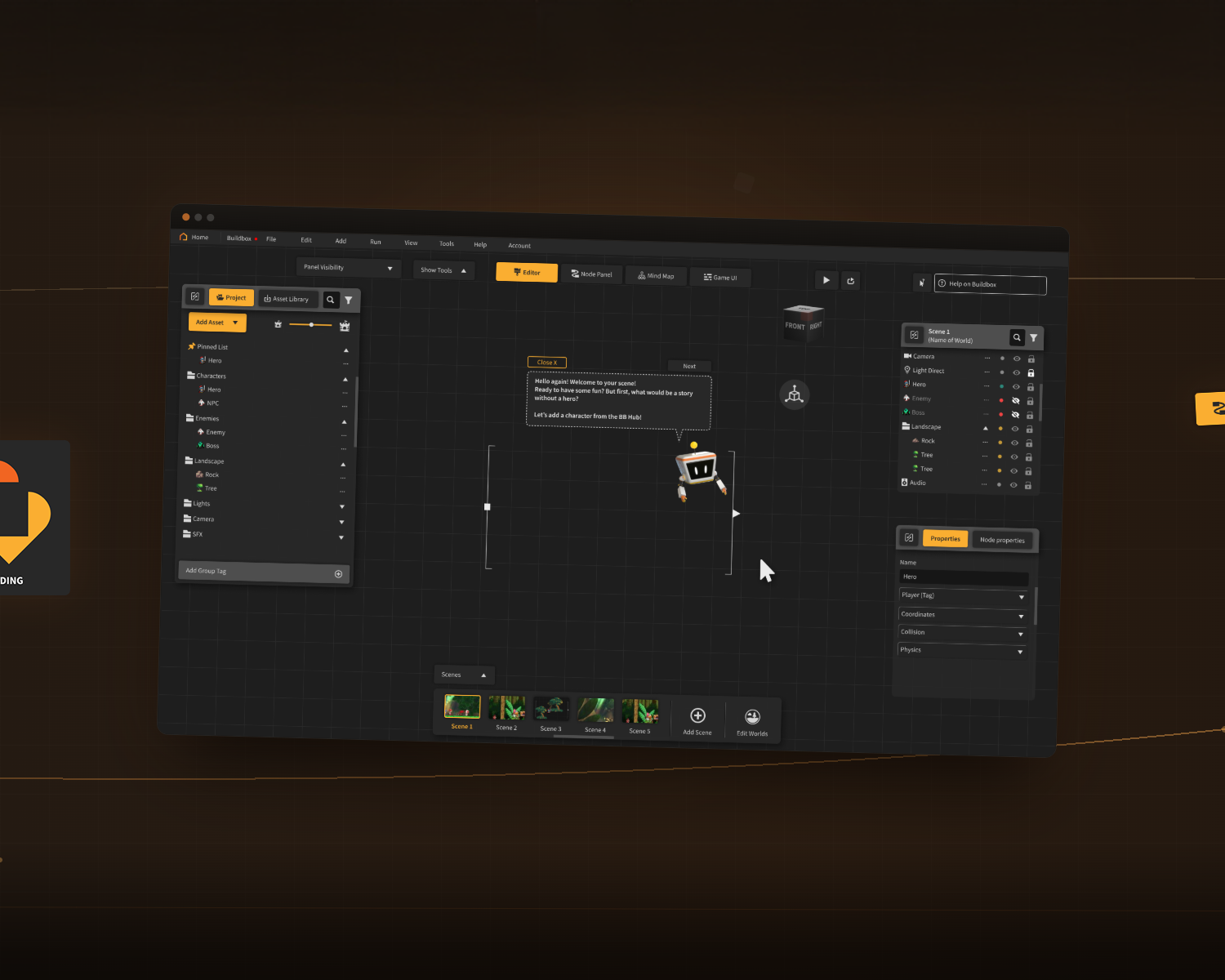
UX/UI redesign of new-user onboarding and the editing panel
05
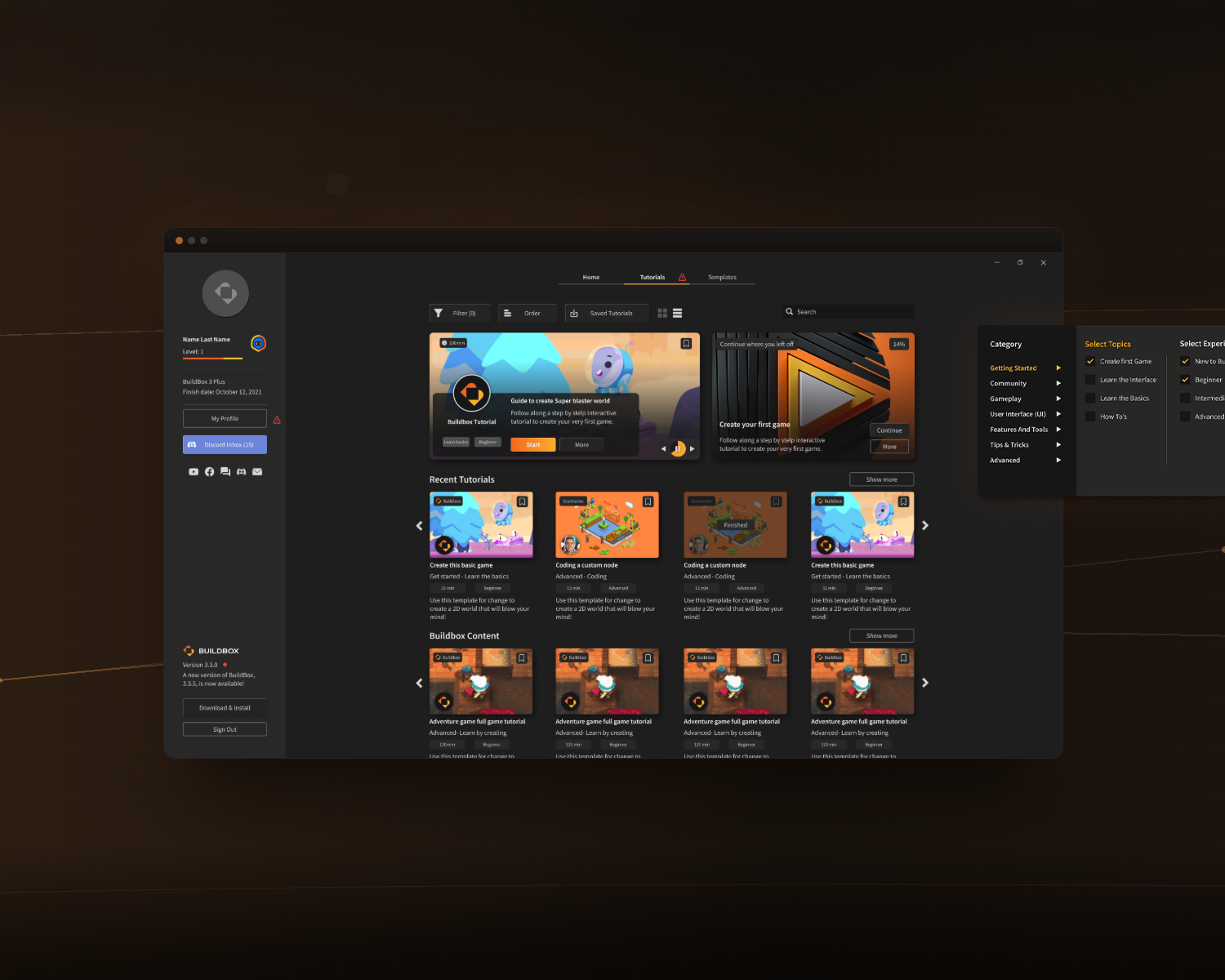
The “Evolution” user journey and a retention flow, with a gamified profile and milestones
06
The Graphite design system: components, icons, badges, achievements, profiles, and a level-up system
07
A design-thinking process and design-ops playbook to help scale the internal team
08
Embedded delivery alongside the client’s external engine rebuild
Research

We talked to the people quitting, and the people staying, before we redesigned anything.

WANDR ran ten moderated interviews, eight with experienced power users and two with first-time creators, and paired them with a heuristic audit of Buildbox 3 and its internal design operations. The goal was to separate what the product did well from what quietly pushed creators out, rather than design on assumption.

01
Power users

Loyal to the brand, not yet to the new version.

Power users adopted Buildbox specifically to avoid code and called it their first choice, yet many still trusted Buildbox 2 over 3 and hit hard walls at Xcode publishing, Android performance, and a missing autosave that lost their work. “I hate to code, that’s why I chose Buildbox,” one said, even as another admitted the issues “make me stick to Buildbox 2.”

02
First-time creators

Lost before the first build.

New creators said the opening tutorial gave no context and should be skippable, could not tell the mind map from the node panel, and could not remember what each button did. “The first tutorial doesn’t give you any context,” one noted. “What do I do now?” asked another.

03
Internal team

A product team with no UX engine.

The Design Operations audit found strong visual designers but no UX practice, no research or testing habit, and an engineering-driven workflow that produced a constant waterfall of bugs. Marketing was all promotional, with no content to help people actually build.

Two creators, opposite ends of the same tool.

Persona 01
Casual gamer persona

The power user.

Josh, 35, a self-taught pro who has built games for five years. Hates to code, values Buildbox’s speed, and advocates for it, but loses projects to instability and switches to Unity when a build gets complex.

power user
anti-code
Speed-first
Persona 02
Committed player persona

The first-time creator.

Eno, 26, six months in, learning game creation out of curiosity. Wants a no-code way to build his first game and share it with friends, but feels lost in the interface and unsure where to start.

first-timer
no-code
Needs guidance
The Strategy

Make the first game easy. Keep the tool powerful.

3 Principles →
01

Onboard.

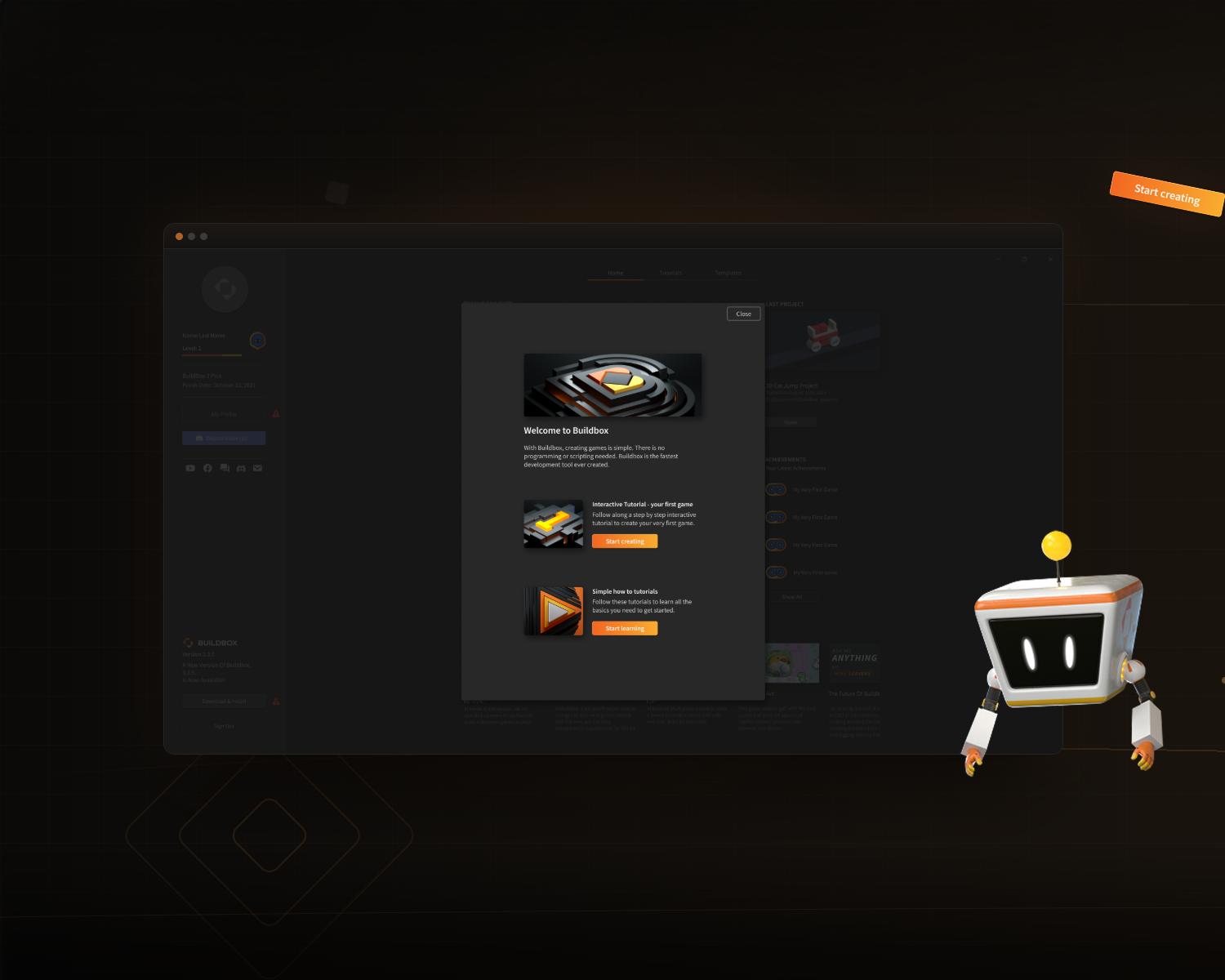
Replace the context-free first tutorial with a curated, interactive walkthrough that escorts a new creator all the way to a published game, with a clear option to skip it and return later.

02

Guide.

Add the discoverability the product lacked: hover states, in-context hints, and visible milestones, so users always know what to do next. Prevent errors rather than fix them after the fact.

03

Motivate.

Turn progress into a reason to stay. A gamified profile levels up with each accomplishment, from Newbie to Super Rookie, surfaces shareable achievements, and gives creators a home for the games they have made.

Principle 01 of
→ Continue scrolling
THE KEY INSIGHT

The tool was never too hard. The first ten minutes were.

Buildbox did not lose people because the platform could not make great games. Its veterans proved every day that it could. It lost them in the first session, before anyone reached a win. Rebuilding onboarding fixed the exact moment users were most likely to quit. Giving the company a UX practice meant the fix would keep paying off. A better tutorial helps one cohort of creators. A product team that designs around real user behavior improves every release after it.

MPL redesign surface
Screen 01 of 08
→ Scroll horizontally
Outcomes

What the work moved.

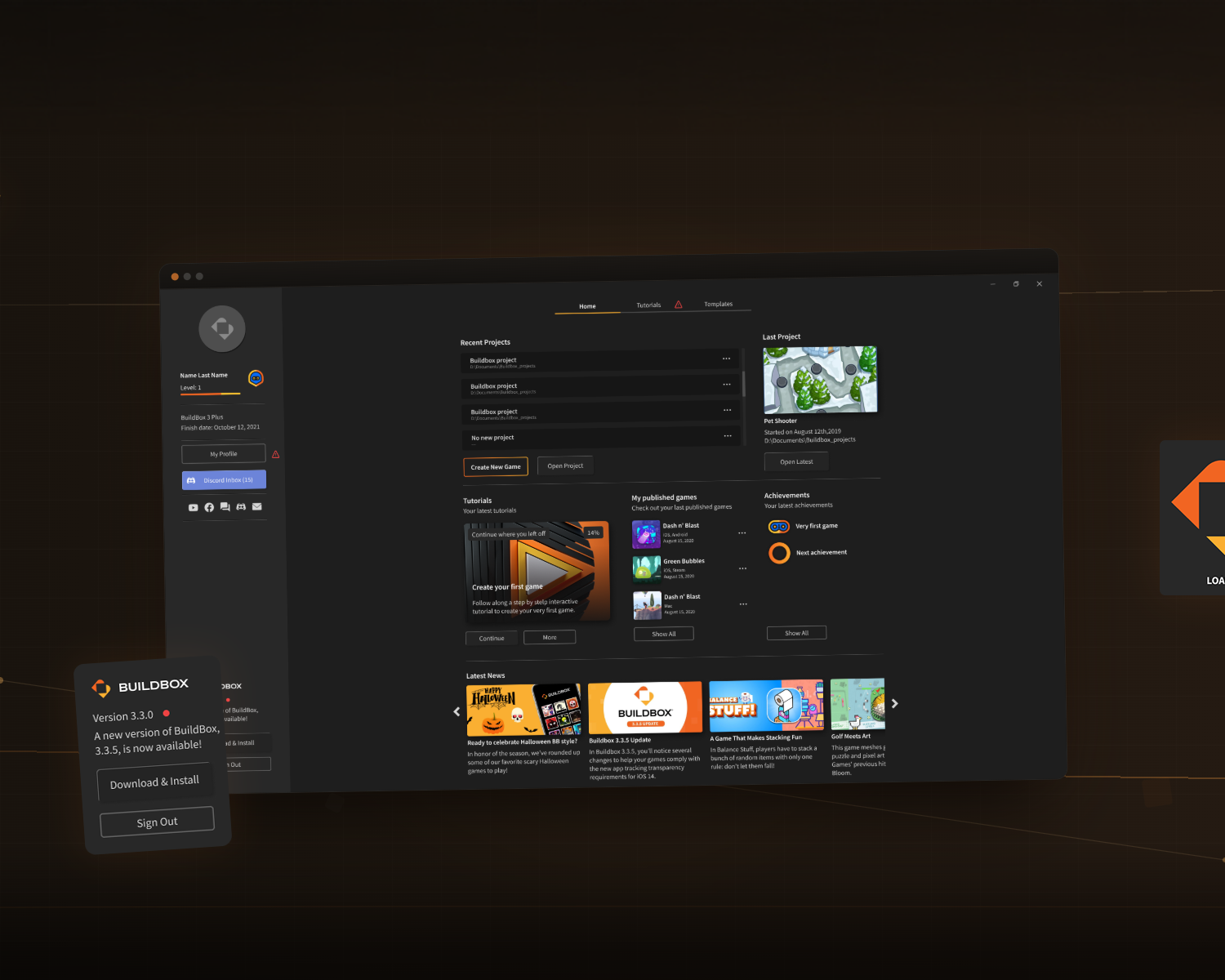
By the end of the engagement, Buildbox had a rebuilt first-run experience, its first documented design system, and, for the first time, a UX practice its own team could run.

01 · Onboarding
Rebuilt
A guided first-run journey to a finished game curated, skippable, milestone-led
02 · Practice
0 → 1
No UX practice before. Now the team has a process to run its own research and testing.
03 · Validation
4.7 / 5  
How testers rated finding their way around the redesign
04 · Organization
DesignOps
A process to help ship product faster between design and development team

Client Voice

In their words.

“
I really liked WANDR’s hands-on approach, and it was huge that they were flexible too. That was the kind of engagement I was looking for: a partner rather than just a vendor.
Doug Manson
SVP of Design, Buildbox
Up next

Another story worth reading.

Buildbox case study preview
Next Case Study

Team Solo Mid - Vibe

Gaming
·
 UI/UX Design - MVP
Read next case