

User Research &
Usability Testing That Shows You What People Actually Do

WANDR embeds user research and usability testing directly into your product process, giving product teams the clarity, evidence, and confidence to build the right things before committing to development.

"WANDR is customer-focused. When we make changes, they give us good advice on how to make those changes efficiently."
Thomas Fiss, Executive at Tracer Labs
"Working with WANDR changed how we think about product design entirely. They pushed our thinking further than we expected."
Abraham Gomez, Co-Founder, DonateHello
"They hit every milestone and delivered on time. The team is very skilled and they provide best-in-class service."
Aston Teague, Co-Founder, Crowdlink
LA - Silicon Valley - Austin - Miami - Mexico City

User Research & Usability Testing Services Built on a Decade of Real User Behavior

Most product decisions get made on assumption, then get expensive to reverse.

We're a UI/UX design agency with 10+ years of user research and usability testing experiences, built on 500+ products shipped.

At some point you stop being surprised by what users do and start recognizing the same mismatch between what teams assume and what users actually need. That pattern recognition makes our research faster and our findings sharper.

And we don't deliver observations. We deliver decisions: clear priorities, tradeoffs, and next steps you can act on this sprint.

Dotted world map showing Wandr locations
Proven impact

User research and
usability testing,
in practice.

Two case studies where the cost of finding out early was a fraction of the cost of finding out late.

FINTECH · MVP Development

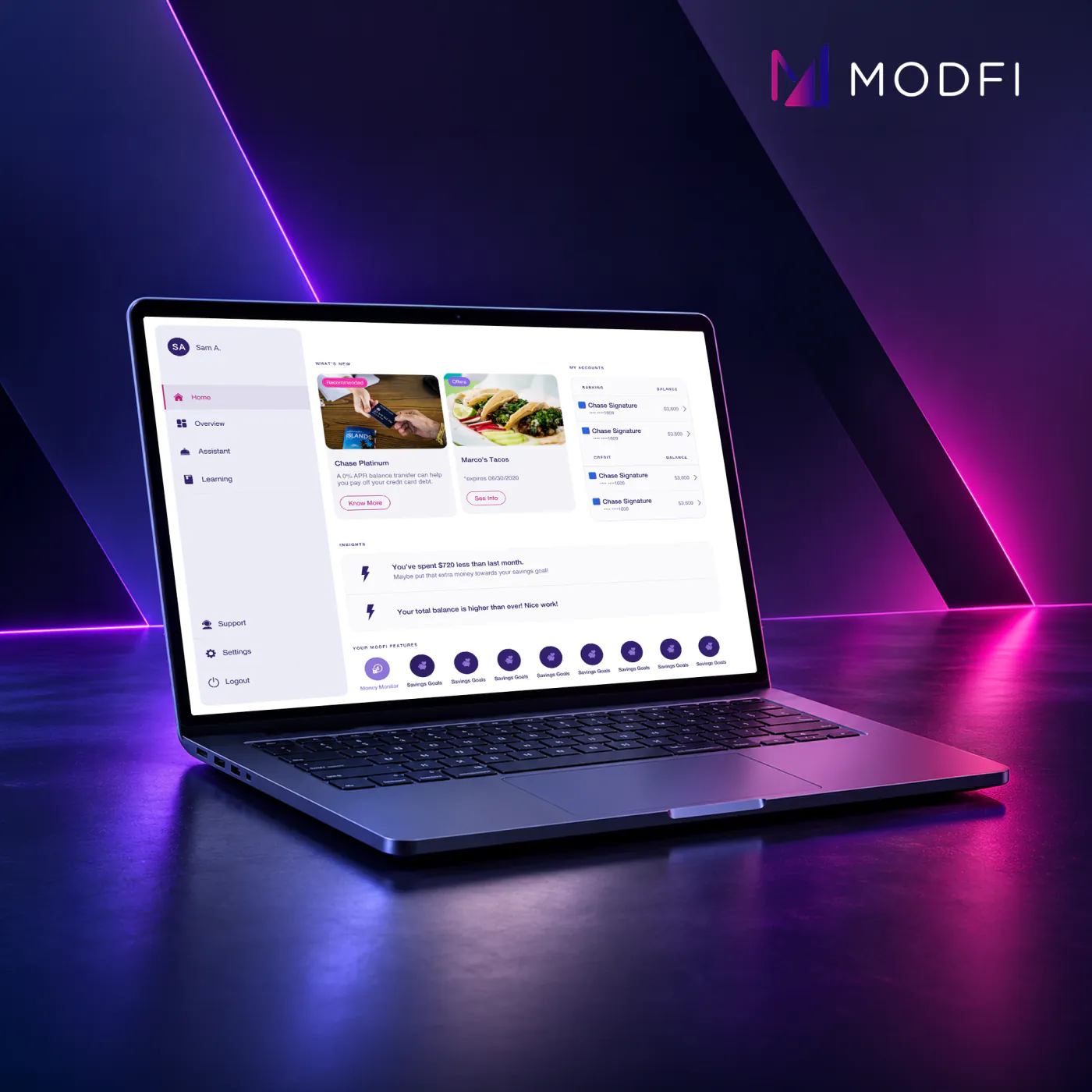
ModFi

$4.1MSeed round raised on the prototype and pitch deck we designed.

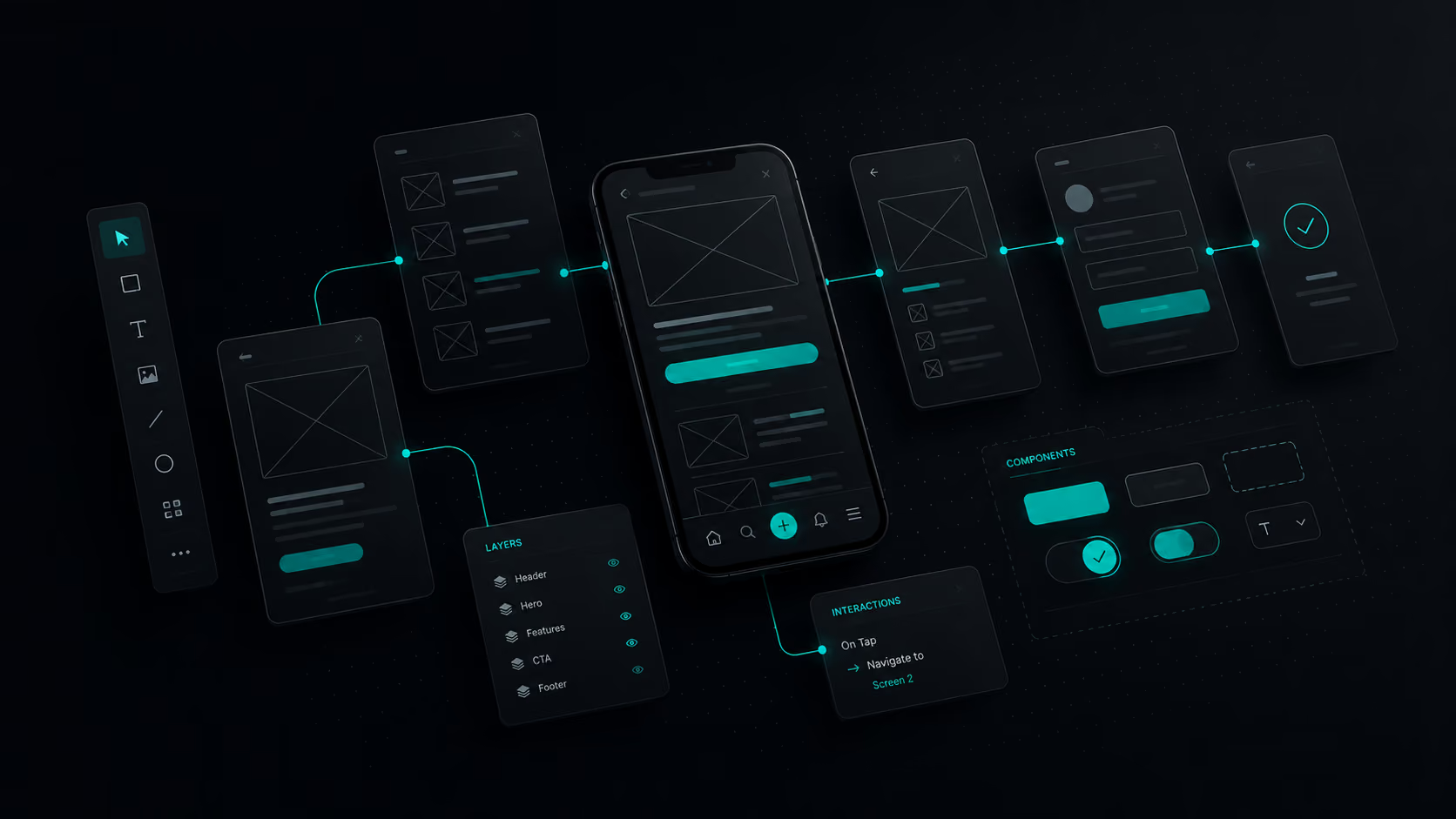
A fintech targeting "everyday consumers," with three personas written before anyone had spoken to a user. No validated audience. No agreed price. Over two years we ran the interviews, named the buyer, and built the product and design system around them.

"They do quality work, and always help us solve challenges that arise. They are agile and accommodating to our specific needs."LEIGH ERICKSON · CREATIVE DIRECTOR, MODFI
See full case study
ModFi · FintechModFi · Fintech
PRIVACY TECHNOLOGY · MVP Development

TrustID (Tracer Labs)

FUNDEDNew round secured post-engagement · NVIDIA Inception, Sept 2025

Patented privacy infrastructure with nothing for a person to actually use, in a market where the average user faces 700+ consent pop-ups and juggles 100+ logins a year. No flows. No brand. No way in. We researched consent fatigue, then built the identities, the integrated product flows, and the sites that carried it to investors and launch.

 "Their ability to translate groundbreaking technology into intuitive, human-centered experiences has been critical to our success."PATRICK MOYNIHAN · PRESIDENT, TRACER LABS
See full case study
TrustID · MVP DevelopmentTrustID · MVP Development
Case 01 / 02
Drag / scroll
By the numbers

A decade of user research
and usability testing, in numbers.

200+
user research engagements completed
3000+
usability testing sessions run
03Case Study
$3.2M
seed funding raised using WANDR research assets (Crowdlink)
04IMPACT
41%
avg reduction in post-launch usability issues
05Sample Size
6
users needed to uncover majority of usability issues per round
06Track RECORD
500+
products delivered across a decade
See case study
Trusted by
WWFMFAMFAMFAMFAMFAMFAMFAMFAMFAMFAMFAMFAMFAMFAWWFMFAMFAMFAMFAMFAMFAMFAMFAMFAMFAMFAMFAMFAMFA
The reality

Most products don't fail on tech.
They fail on assumptions

user research would have caught.

01 / 04
85%

of usability problems can be identified with just 5 users in a structured usability test.

Nielsen Norman Group
01 / 04
$1

spent on UX research returns up to $100 in avoided development costs — a 9,900% ROI.

Forrester Total Economic Impact
01 / 04
50%

of engineering time is wasted on rework caused by issues that user research would have caught before development.

IBM Systems Sciences Institute
01 / 04
1 in 3

products fails not because of bad engineering — but because teams built something users didn't understand or couldn't use.

Forrester Research

User Research, End to end.

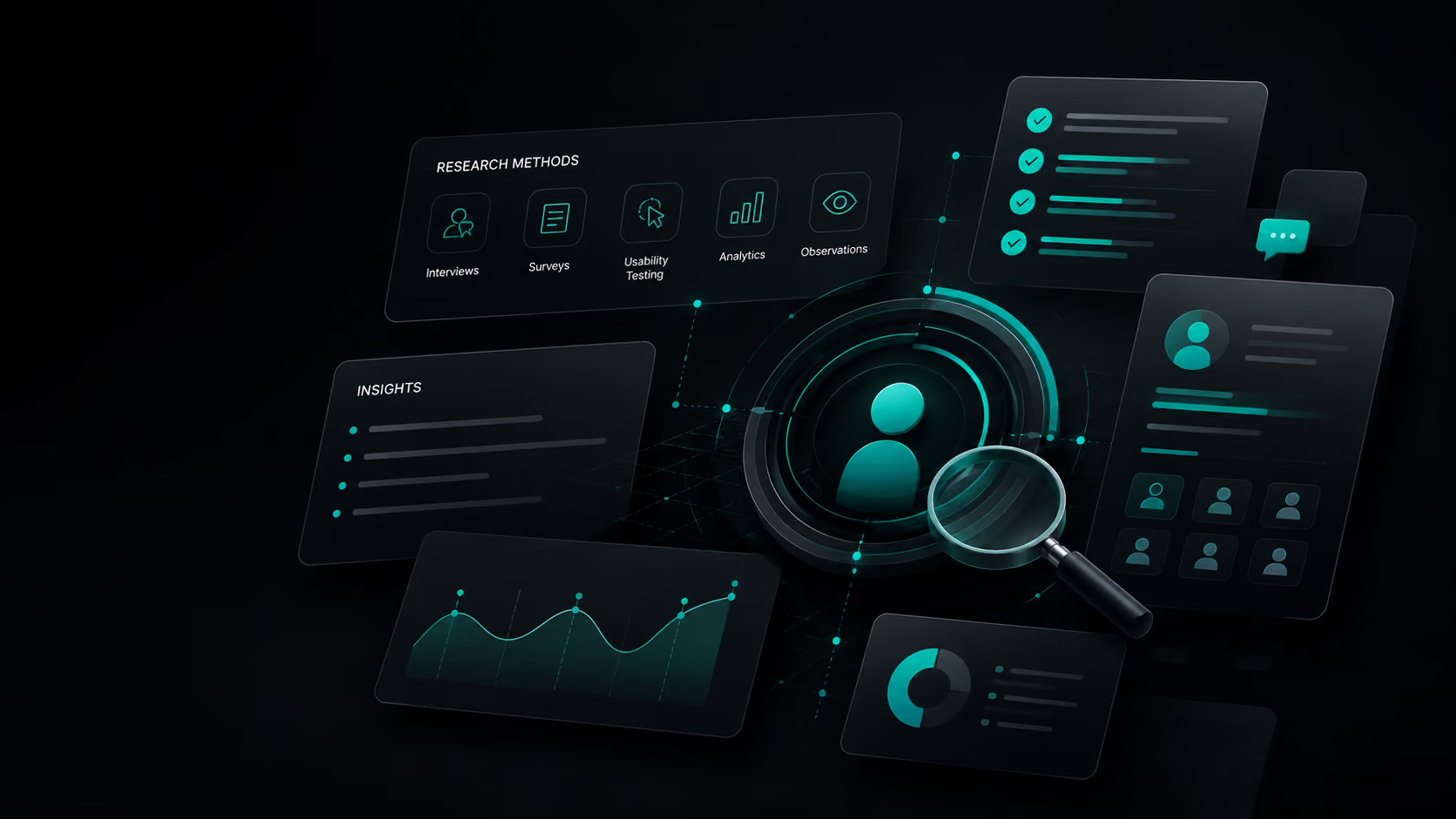
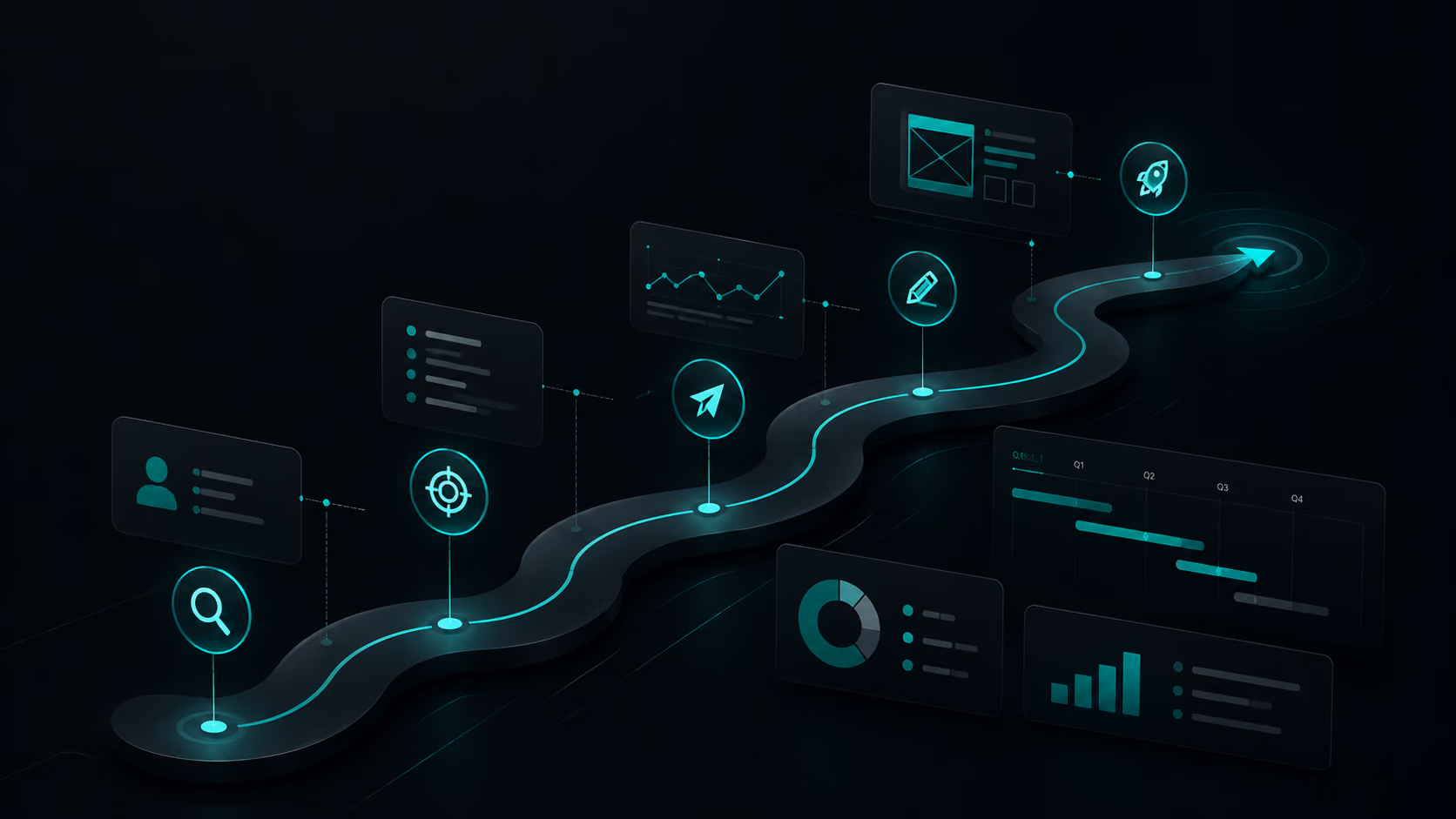
Every research engagement starts with the decisions your team actually needs to make, not exploratory noise. Then we build a research plan around those decisions and go find the answers.

5 phases →
Phase 01Discover
01

Research Framing & Alignment

We align on business goals, research questions, hypotheses, and success criteria. This ensures research is focused on decisions that matter… not questions teams already know the answer to.

Phase 02Plan
02

Secondary Research & Data Review

We review existing analytics, prior research, customer feedback, and market context. What you already have often tells us where to look first.

Phase 03Design
03

User Recruitment & Test Design

We recruit target users based on defined personas and use cases. We handle screening, scheduling, and incentives. Then we design a structured test script focused on validating assumptions and uncovering real friction.

Phase 04Deliver
04

Moderated Usability Testing

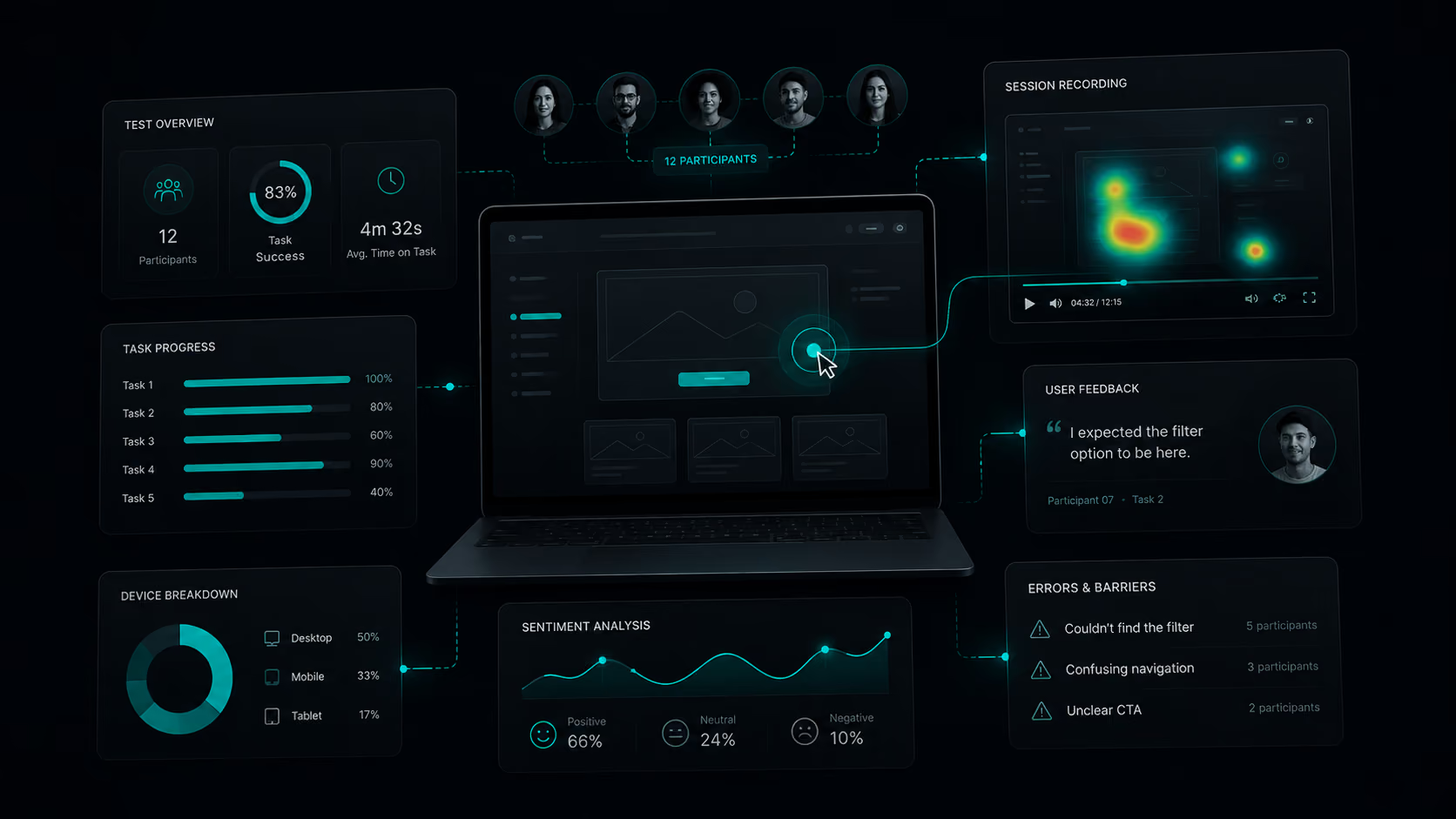
We run live, moderated sessions to observe real user behavior. Sessions are documented with notes, recordings, and annotated timestamps, capturing decision points, confusion, and behavioral patterns as they happen.

Phase 05Measure
05

Insights, Analytics & Reporting

We synthesize qualitative findings with supporting data, identify patterns by impact and frequency, and deliver clear recommendations your team can act on immediately, not a 60-page report nobody reads.

Phase 01 of 05
→ Continue scrolling
What you get

Your user research and
usability testing deliverables

Everything needed to plan, run, and apply research with real impact, tied directly to product decisions, not filed in a folder.

Wireframing and prototyping preview
01 / 06User Recruitment

User Recruitment

screening, scheduling, and participant incentives handled entirely by us

Wireframing and prototyping preview
02 / 06Test Plan & Script

Test Plan & Script

structured, consistent testing scripts aligned to your specific research questions

Wireframing and prototyping preview
03 / 06Moderated Usability Testing

Moderated Usability Testing

live sessions with real users, documented with notes and recordings

Wireframing and prototyping preview
04 / 06Insights & Analytics

Insights & Analytics

behavior pattern analysis, severity assessment, and frequency mapping

Wireframing and prototyping preview
05 / 06Usability Summary Report

Usability Summary Report

key findings, user quotes, and recommendations designed to directly inform product decisions

Wireframing and prototyping preview
06 / 06Research Readout & Stakeholder

Research Readout & Stakeholder Walkthrough

live session to align your product, design, and engineering teams around the findings

Compare

How Our User Research and Usability Testing Services compares

Internal User ResearchOne-Off Research Sprint
SpeedSlow — competing prioritiesFast but shallowFast and thorough
ObjectivityLow — too close to the productMediumHigh — external perspective
ActionabilityVariable Often sits unusedTied to product decisions and roadmap
ContinuityInconsistenOne-timeEmbedded throughout sprints
Team alignmentRarely aligns stakeholdersLimitedStructured to create shared understanding
PushbackUnlikely to challenge leadershipUnlikely to risk the contractWe challenge bad ideas
What our clients say
Verified Clutch reviews.

They were honest and caring. We pushed them really hard about halfway through for some pretty significant changes, and their engagement manager did a good job of communicating with us and staying involved. While their skills were valuable, it was ultimately their client management and interaction that impressed us.

Brett McLaughlinCTO, sticky.io
See full Clutch review

The user feedback that we got from their prototype testing was all very positive. And I really like their hands-on approach because it made them feel more like a partner. It was huge that they were flexible, too. That made for amazing customer service.

Doug MansonSVP of Design , Buildbox
See full Clutch review

They hit every milestone and deliverables within the timeframe we planned. They clearly know what they’re doing. From the beginning, they’ve done a great job. They provide a first-class service. The team is very skilled and they worked hard to deliver what we wanted.

Aston TeagueCo-founder, Crowdlink
See full Clutch review
Why Wandr?

Why Our User Research & Usability Testing Services

Actually Move the Needle

01 · Cadence

Continuous, not one-time.

Usability testing is not a one-time activity. We embed research directly into your design sprints, so findings inform decisions in real time, not after the fact. Every WANDR design engagement includes usability testing as a core deliverable, not an optional add-on.

01
02 · Method

Behavioral evidence, not opinions.

We observe actual user behavior through interviews, task-based testing, and qualitative synthesis. We don't ask users what they prefer. We watch what they do. Preference is unreliable. Behavior isn't.

02
03 · Deliverables

Outcomes, not reports.

Every research engagement ends with a clear set of priorities, tradeoffs, and next steps your team can act on in the next sprint. If the findings don't connect to a decision, we keep digging until they do.

03
The difference

Same product vision.
A research foundation
that actually de-risks it.

Zoe Financial came to us with a vetted network of top-5% advisors and real product-market fit. but an onboarding flow that lost people before they ever reached one. Here's what changed.

BeforeAfter
Before WANDR Zoe Financial:
  • Self-scheduling conversion stuck at 8%, against the company's own 20% target
  • Prospects dropped out when onboarding asked for financial details before earning them
  • A brand that didn't signal trust in a category where trust is the entire conversion
  • Three audiences — prospects, advisors, and Zoe's own team — served by one undifferentiated experience
After WANDR Zoe Financial:
  • 175% lift in self-scheduling conversion, from 8% to 22%
  • Onboarding resequenced so value comes before the ask, validated across two rounds of user testing
  • A tailored path and proof points for each of the three audiences
  • Design system that kept a fast-scaling team consistent across site, onboarding, and dashboard
Zoe Financial·Wealth planning·Fintech
Who this is for

You understand that every feature built on an assumption that turns out to be wrong is a sprint wasted, a budget burned, and a user lost. You're ready to stop guessing and start knowing.

We work with CTOs, Head of Product, and founders who are at a decision point, before a major build, before a launch, after adoption metrics signal something is wrong, or when stakeholders can't agree on what users actually need. You don't need someone to validate what you already believe. You need someone to go find out what's true.

First Step
Not ready to commit? Let us review your analytics first.

Send us your data. We'll identify the top 3 UX friction points costing you activation and retention. Free, no pitch, no obligation.

Get your free analytics review
Sample report
your-product.com/signup

Get started in seconds.

1No value prop above fold
2No password rules shown
3CTA hierarchy unclear
User Research & Usability Testing Services
Frequently asked.

Click any question to expand. If yours isn't here, write to us.

  1. Most usability testing rounds need 5–8 participants. Nielsen Norman Group research found that five users uncover roughly 85% of usability problems in a given round, so small samples run frequently beat one large study. We scope larger studies when you need quantitative validation or coverage across distinct audience segments.
  2. Yes. We recruit from your existing user base or source external participants matched to your target personas, and we handle screening, scheduling, and incentives. Recruiting is usually the slowest part of a research engagement, so managing it in-house is how we keep rounds running every few weeks rather than every few months.
  3. User research and usability testing inform concrete product decisions: whether a problem is real, where users get stuck, which flows need refinement, and whether a design is ready for development. Every engagement ties to roadmap sequencing and risk reduction before investment, rather than producing insight with no decision attached.
  4. Most product teams should run lightweight usability testing every few weeks, with deeper user research at major milestones. Run it before building something new, before launching, and whenever adoption or performance signals are unclear. Research is most valuable continuously, because the point is validating decisions while they're still being made.
  5. Qualitative user research is enough when you need to understand why something happens — why users hesitate, misread, or drop off. Quantitative data matters when you need to measure how often it happens, compare at scale, or track change over time. Qualitative identifies the problem; quantitative confirms its magnitude.
  6. Usability testing distinguishes real problems from preference by measuring behavior instead of opinion. When multiple participants fail the same task, hesitate at the same step, or misread the same element, that's a usability issue. Stated likes and dislikes are inconsistent between people; observed task failure isn't. We report on task success, time to completion, and friction points.
  7. A UX audit is an expert evaluation of your existing product, identifying friction through heuristics, behavioral data, and competitive benchmarking. User research puts real users in front of real tasks to reveal how people actually behave. The two are complementary: an audit tells you where to look, research tells you why it matters and how much.
  8. We embed user research inside your existing sprints rather than running it as a parallel workstream. Our researchers work with product, design, and engineering from framing through synthesis, so findings arrive while decisions are still open. Research delivered after a decision is documentation, not input.
  9. Yes. Many teams engage WANDR for user research and usability testing alone, then hand findings to their own designers and engineers. Others run research with us and continue into design. The research is a standalone deliverable either way, not a lead-in to a larger project.
Let's look at your users together.

Let’s talk to your users.

We'll tell you what's in their way.

Send us your product or analytics and we'll identify the top 3 UX friction points costing you activation and retention. Free, no pitch. If it makes sense to work together, great. If not, you leave with a clear picture of what to fix and where to start.

Our blog

User Research and Usability Testing related reading.