

A Cybersecurity Website Design Agency for the
Most Skeptical Buyers in Software

WANDR designs the digital experience security buyers actually evaluate: the site, the product, and the system underneath both. A decade of research-led work for cybersecurity companies, including three years embedded with Tenable through its public offering.

"They understand what enterprise product teams need to see."
Natti Zick, Director of Design, Tenable
"They brought clarity, speed, and senior-level thinking when we needed it most."
Alex Dunbrack, COO & Co-founder, Vectrix
"It was refreshing and a joy to work with WANDR."
Ty Short, VP of Product, Fortress Information Security
LA - Silicon Valley - Austin - Miami - Mexico City

A Cybersecurity Web Design Agency That Has Shipped Inside Security Products.

Ten years. 500+ products shipped. Security buyers evaluate a vendor the way they evaluate a risk: methodically, with high scrutiny, and with almost no tolerance for anything that reads as inexperience. A site or product that doesn't communicate authority in the first session doesn't get a second one.

We spent three years embedded inside Tenable's product design organization, through its move from private high-growth to NASDAQ-listed, building the design system that hundreds of its designers and engineers still work from. We unified three siloed platforms into one product concept for Fortress Information Security, which protects seven of the ten largest publicly owned U.S. utilities. And we redesigned a Y Combinator CASB that Cloudflare acquired months later.

That matters because most agencies pitching security companies have only designed the marketing site. We've worked inside the products your buyers will be using at three in the morning.

Dotted world map showing Wandr locations
Proven impact

Cybersecurity web design that held up under enterprise scrutiny.

Two case studies that illustrate what embedded UX with research, strategy and execution looks like when it ships.

ENTERPRISE CYBERSECURITY · PRE & POST-IPO

Tenable

IPOOne governed design system in place across the portfolio for the public offering.

Tenable's portfolio had grown fast across Nessus, Tenable.io, Tenable.sc, and Lumin, and the same interface problems had been solved several different ways. No shared source of truth. Engineers rebuilding components from scratch. We embedded senior product designers inside the org across two engagements, built a planar interaction framework for extreme data density, and formalized the patterns into the documented IRIS design system, while the company prepared to go public.

"WANDR has been our design partner through our most critical growth phase, including our public offering. They understand what enterprise product teams need to see."Natti Zick, Director of Design, Tenable
See full case study
Tenable - ENTERPRISE CYBERSECURITYTenable - ENTERPRISE CYBERSECURITY
CRITICAL INFRASTRUCTURE · SUPPLY CHAIN SECURITY

Fortress Information Security

3 → 1Three siloed platforms unified into one product concept, green-lit by leadership.

Fortress protects seven of the ten largest publicly owned U.S. utilities, and its customers had quietly stopped opening the platform. A single software analysis returned 300 vulnerabilities of which roughly 20 mattered, delivered as a 200-page monthly report with no deltas called out. One utility had dropped continuous monitoring entirely, saying they had nobody to sift through it. We ran 21 interviews across Fortress' internal teams, security officers at six utilities, and industry SMEs on a federal SBOM standard that hadn't been published yet, then designed Fortress Fusion in 14 weeks, including one of the three platforms we were never granted clearance to see.

"The WANDR team impressed us right away, quickly understanding a complex business, engaging our stakeholders, and delivering value. It was refreshing and a joy to work with WANDR."Ty Short, VP of Product, Fortress Information Security
See full case study
Fortress Information Security · CRITICAL INFRASTRUCTUREFortress Information Security · CRITICAL INFRASTRUCTURE
Case 01 / 02
Drag / scroll
By the numbers

Ten years of UI/UX design, quantified.

500+

products designed and delivered
across a decade

Hundreds

of designers and engineers working from
a system we built

03Task success
91%

task-success rate in usability testing with security professionals, across eight redesigned core flows (Vectrix).

04Activation
+76%

lift in user activation after the redesign (Vectrix).

05PACE
14Wks

from discovery to a prototype that cleared leadership review (Fortress Information Security).

06Milestone
IPO

design system in place for the public offering, NASDAQ: TENB (Tenable).

See case study
Trusted by
WWFMFAMFAMFAMFAMFAMFAMFAMFAMFAMFAMFAMFAMFAMFAWWFMFAMFAMFAMFAMFAMFAMFAMFAMFAMFAMFAMFAMFAMFA
The reality

Security buyers run a trust audit on you

before they agree to talk.

01 / 04
6  to 10

decision-makers in the average enterprise software purchase, each evaluating you independently before the first conversation.

Gartner B2B Buyer Survey
01 / 04
67%

of the buying journey happens digitally before a prospect ever speaks to sales.

SiriusDecisions / Forrester
01 / 04
70%

of digital products fail because of poor user experience, not poor technology.

Forrester Total Economic Impact
01 / 04
5×

more expensive to fix a design problem after launch than to design it correctly upfront.

IBM Systems Sciences Institute

Research first. Trust architecture second.
Design third.

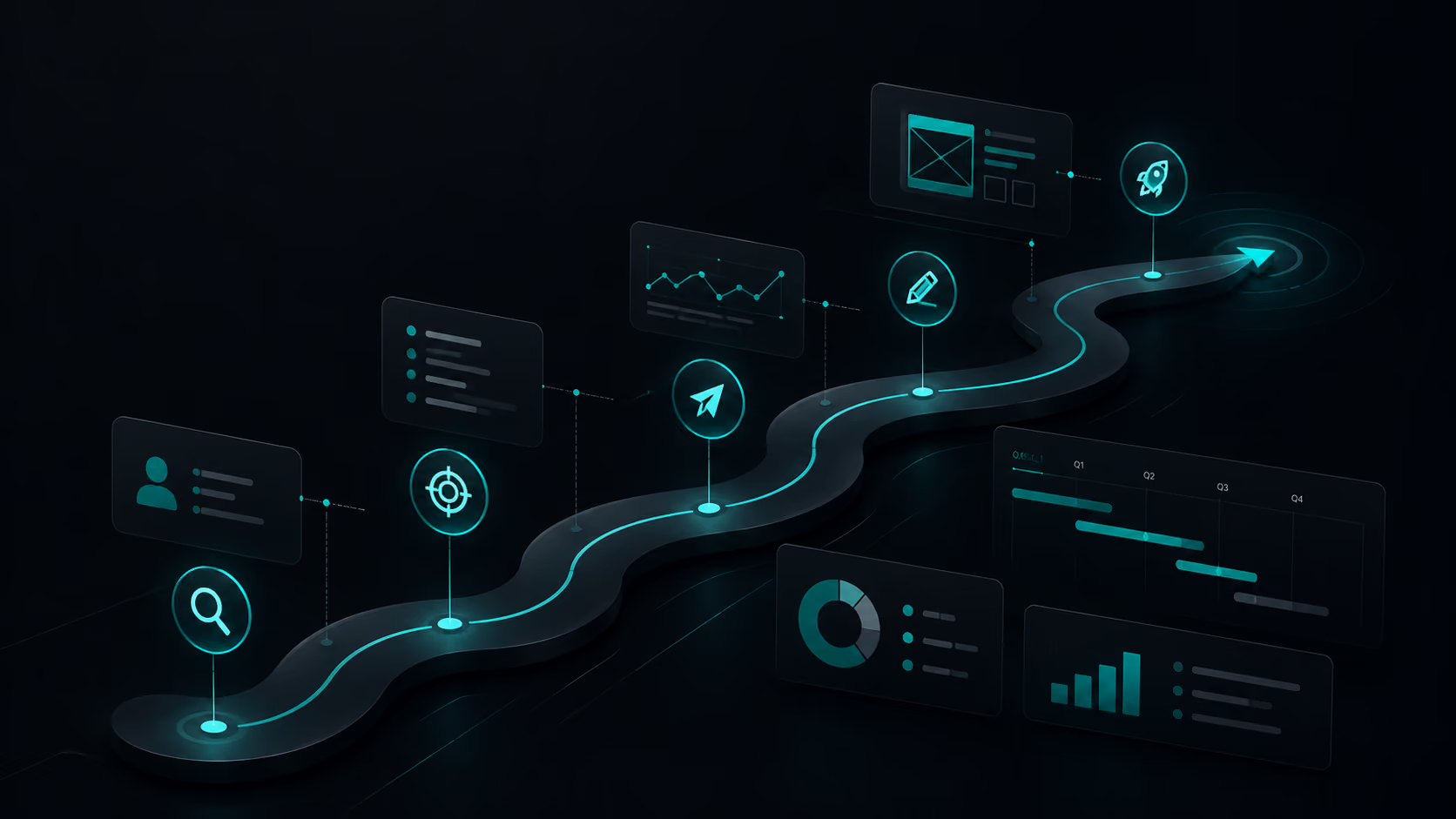
Every engagement starts by auditing what you have against how security buyers actually evaluate vendors, then mapping the trust gaps costing you conversations. We design against that evidence rather than against an opinion in the room.

5 phases →
Phase 01Discover
01

Diagnose

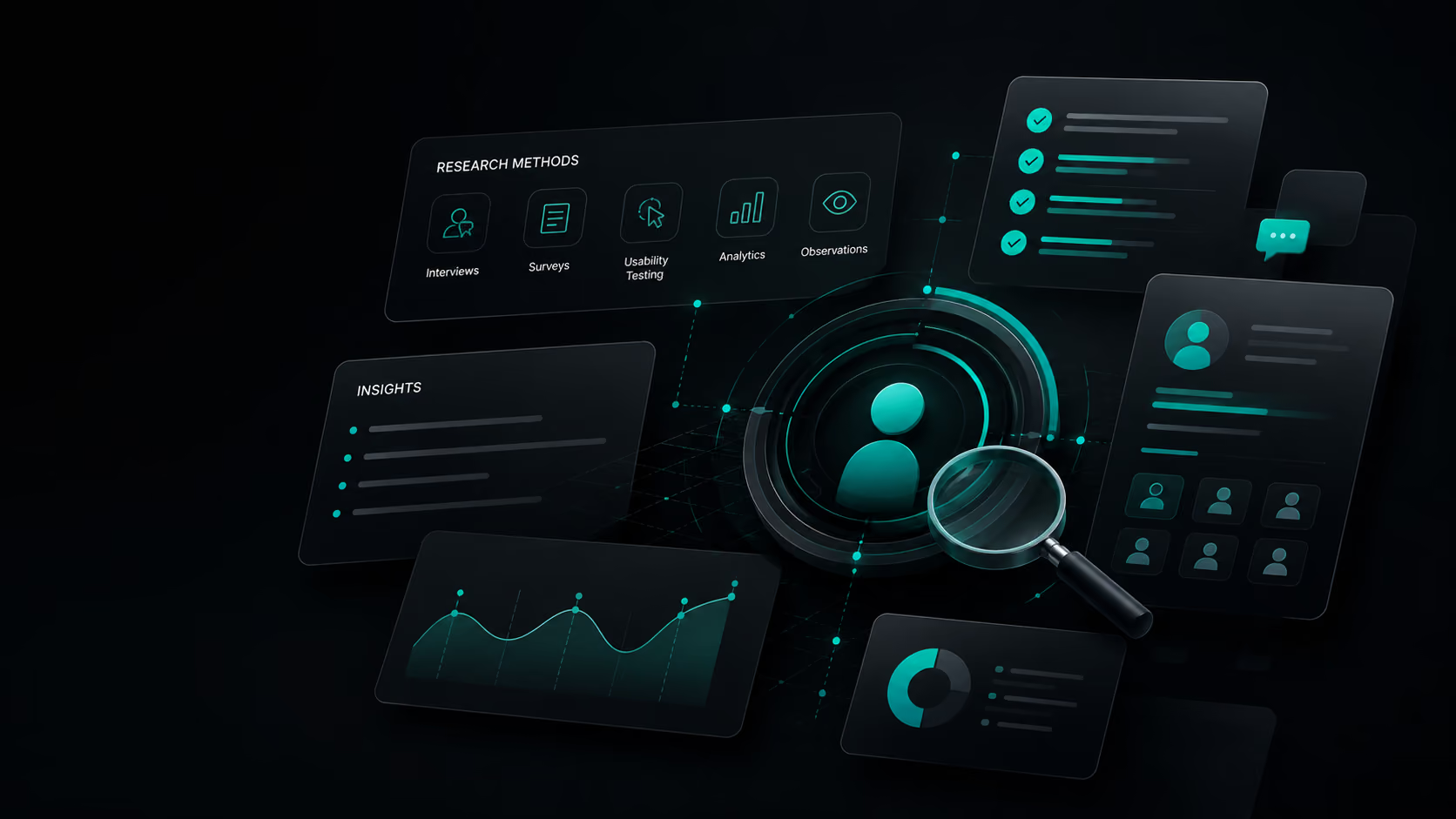
We audit the site and the product against security buyer benchmarks. Where do enterprise prospects drop off? Where is credibility architecture failing? Where are you losing deals before sales knows the prospect visited?

Phase 02Plan
02

Buyer & User research

Interviews with the people who actually evaluate you. On Vectrix that meant eight in-depth interviews with security professionals that produced something unexpected: the product didn't fit any existing category, so part of the job became defining and owning a new one.

Phase 03Design
03

Trust Architecture & Strategy

Compliance signals, proof points, and technical depth sequenced for the order buyers actually assess them. Written down before a screen is designed, with each assumption stated so it can be challenged.

Phase 04Deliver
04

Design & Validation

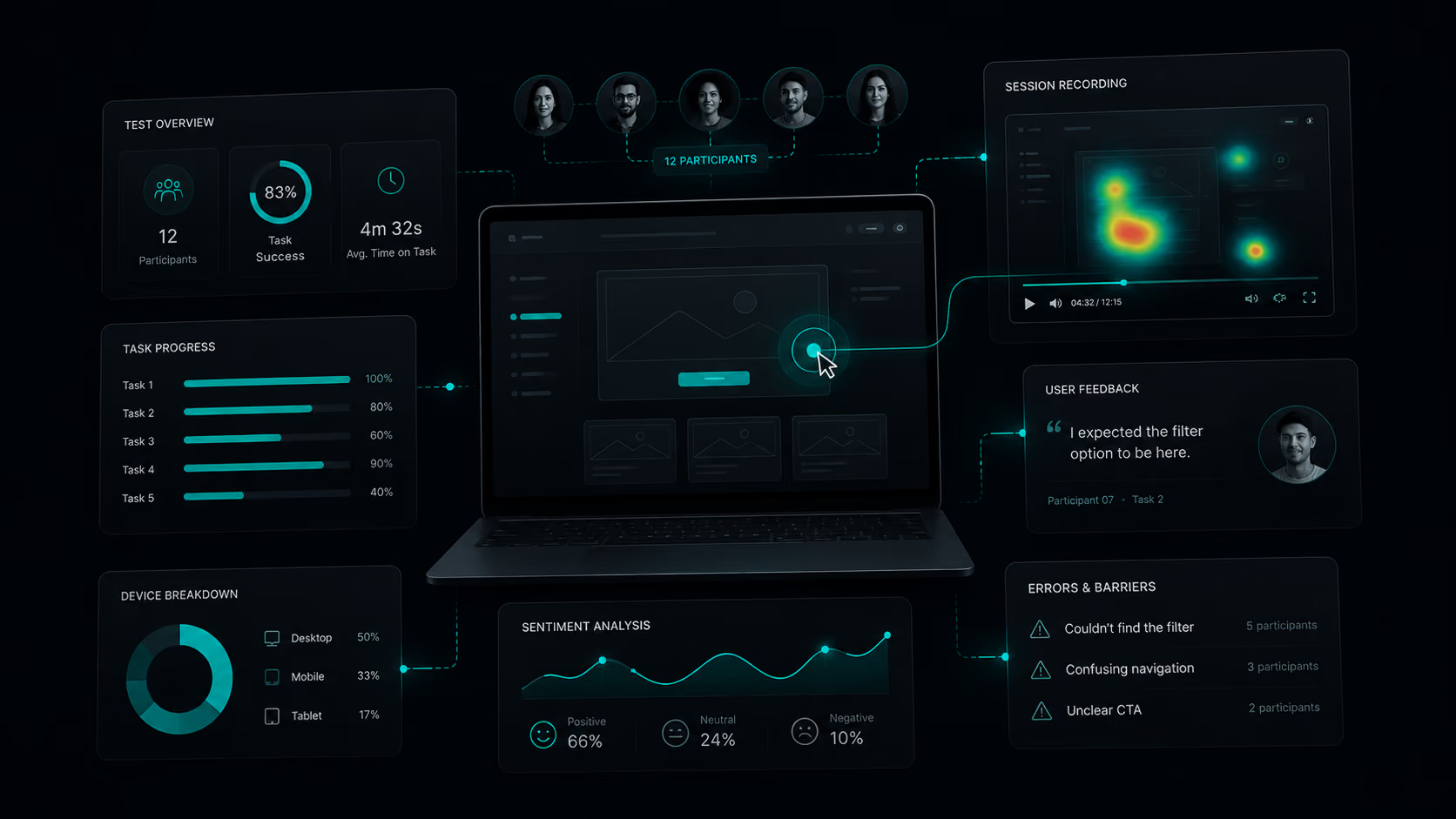
Interfaces for mixed technical fluency, from the security engineer who lives in the tooling to the risk analyst evaluating on cost and outcomes. Then tested. Vectrix's redesigned flows were run by five security professionals across eight tasks before handoff.

Phase 05Measure
05

System & Handoff

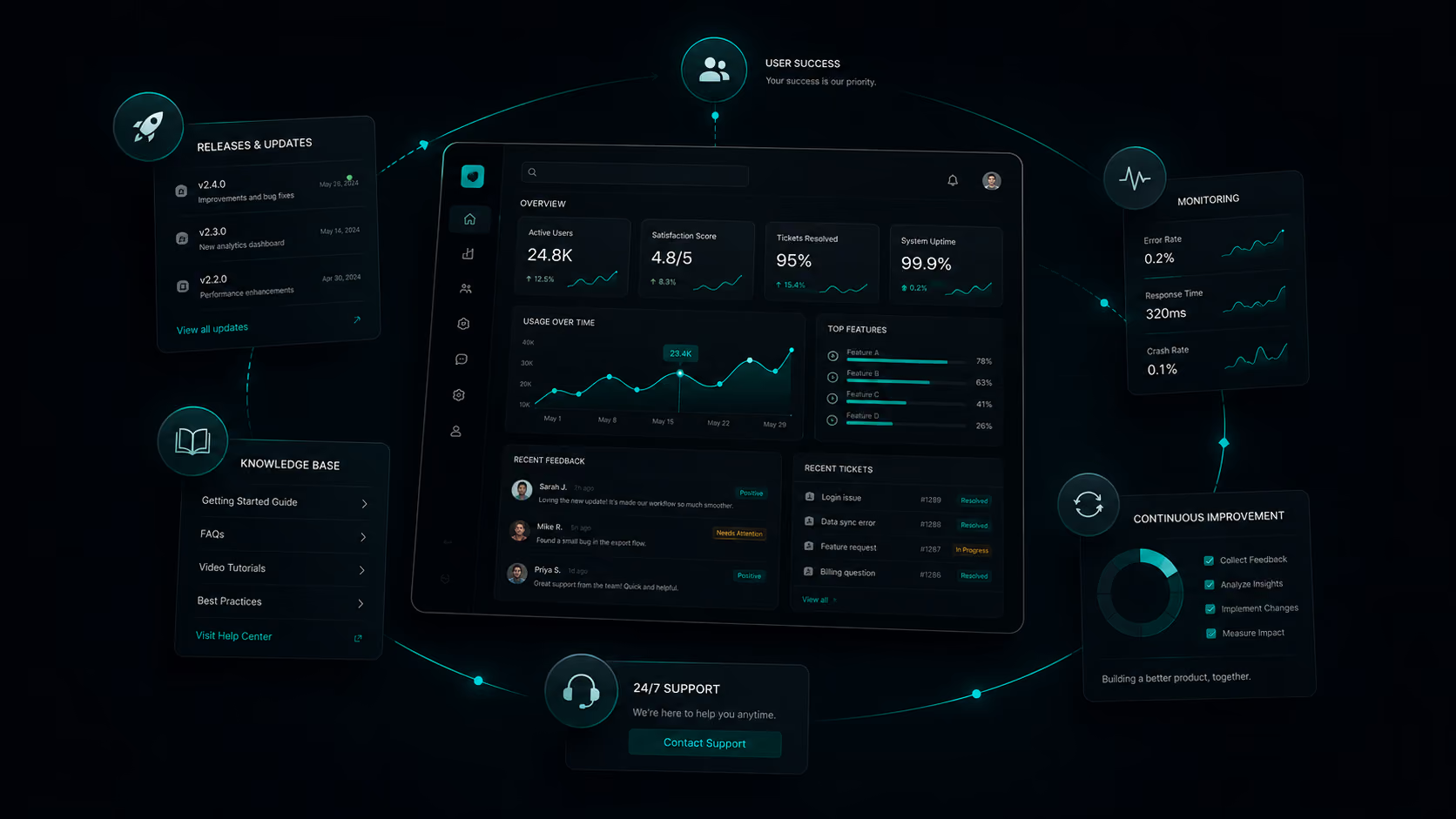
A documented design system with governance, so consistency holds as the portfolio grows. For Tenable that meant a component set hundreds of designers and engineers could build against instead of reinventing.

Phase 01 of 05
→ Continue scrolling
Deliverables

What you get with WANDR's
cybersecurity web design services

Scoped to where credibility is actually breaking down, whether that's the site, the product, or the system underneath both.

Wireframing and prototyping preview
01 / 06UX Audit & Buyer Research

UX Audit & Buyer Research

interviews with the roles on your security buying committee, competitive teardowns, and a documented map of where credibility is failing

Wireframing and prototyping preview
02 / 06Product UX for Data-Dense Interfaces

Product UX for Data-Dense Interfaces

tables, advanced search, filtering, saved views, and system states designed for analysts working across thousands of assets under time pressure

Wireframing and prototyping preview
03 / 06Trust & Credibility Architecture

Trust & Credibility Architecture

compliance signals, certifications, and proof points sequenced for how security buyers assess risk, integrated into the information hierarchy rather than parked on a compliance page

Wireframing and prototyping preview
04 / 06Design Systems & Component Libraries

Design Systems & Component Libraries

a governed source of truth with documentation and named ownership, so consistency holds as the product portfolio grows

Wireframing and prototyping preview
05 / 06Website & Marketing Experience

Website & Marketing Experience

the surfaces a CISO, an IT director, and a procurement officer each evaluate differently, designed so all three find what they need without a demo request

Wireframing and prototyping preview
06 / 06Usability Testing & Handoff

Usability Testing & Handoff

validation with real security professionals before build, plus documented specs and a design system that transfers to you in full

Compare

How our cybersecurity web
Design Agency compares

In-House DesignerGeneral Agency
Category knowledgeDeep, but only your productLearning on your budgetEmbedded inside security products through an IPO
Data densityBuilt by people who already know itSimplified until analysts lose functionLayered so depth reveals without losing place
Mixed fluencyDesigned for the engineer in the roomOne persona, usually the executiveEngineer, manager, and analyst in the same flow
Compliance signalsLegal reviews it at the endA page nobody reachesStructural, sequenced before the ask
ValidationRare, competing with ship datesProxy users, if anyTested with working security professionals
Design systemWhatever accumulatedScreens, not a systemGoverned, documented, with named owners
AccountabilityCompeting with the roadmapDelivery is the deliverableA metric agreed at kickoff, guaranteed
What our clients say
Verified Clutch reviews.

Their ability to understand our unique business was very impressive. We have a fairly complex business model and were concerned that they wouldn't be able to understand it enough to create an effective design — but they quickly built an understanding of who we are.

Marc YountPresident & CCO · Field Agent
See full Clutch review

Partnering with WANDR has been transformational. Their ability to translate groundbreaking technology into intuitive, human-centered experiences has been critical to our success with both investors and early adopters.

Joannah SmallPatrick Moynihan, President, Tracer Labs
See full Clutch review

They were honest and caring. We pushed them really hard about halfway through for some pretty significant changes, and their engagement manager did a good job of communicating with us and staying involved.

Brett McLaughinCTO, Sticky.io
See full Clutch review
Why Wandr?

Cybersecurity Web Design That Earns the Enterprise Conversation.
And We Guarantee It.

01 · The team

Designers who have worked inside security products, not just around them.

Three years embedded in Tenable's product design org through its public offering. A CASB redesigned and user-tested nine weeks before Cloudflare acquired it. Critical infrastructure protection for government and enterprise stakeholders.

01
02 · THE METHOD

Buyer evidence, not brand guidelines.

We start with the people evaluating you. On Vectrix, eight interviews revealed the product didn't fit any category on the market, which changed the roadmap and the go-to-market story, not just the screens. The client's own reflection afterward: they thought the early UX work wasn't important, and it showed them what was losing their users.

02
03 · Terms

Performance guarantee.

If your product or site doesn't improve on the primary metric we agree on at kickoff within your first year post-launch, we keep working at no additional cost until it does.

03
The difference

Same powerful platform.
Rebuilt to be adopted.

Vectrix was a Y Combinator seed-stage team with a real API-driven CASB and an experience that assumed everyone had the depth of knowledge its own engineers did. In nine weeks we ran the product-market-fit research, redesigned all eight core flows, and tested the prototype with five security professionals. Here's what changed.

BeforeAfter
Before WANDR
  • First-run onboarding took 74 minutes, and new users struggled to tell whether the system was even working
  • No defined buyer and no category the product fit into, which made both roadmap and go-to-market harder to build
  • Trust broke at pricing and permissions, the two moments users had to commit
  • One set of flows serving both advanced security engineers and less technical risk analysts
After WANDR
  • 91% task success across the eight redesigned core flows in usability testing, with a System Usability Scale of roughly 83
  • Onboarding cut from 74 minutes to 24, with activation up 76%
  • A new category defined, à la carte cloud security, plus a target buyer the roadmap could follow
  • Acquired by Cloudflare in February 2022, with the full team joining
Vectrix·CLOUD SECURITY (CASB)·Y COMBINATOR
Who this is for

You understand that in security, your digital experience isn't a marketing asset. It's a trust audit buyers run on you before they agree to a conversation, and you don't get told when you fail it.

We work with CMOs, VPs of Product, Heads of Design, and founders at cybersecurity companies. Whether you're preparing for a funding round or a public offering, entering a new market, scaling an enterprise sales motion, or carrying a product whose interface no longer reflects the company you've become, we start with the buyers running the audit and design backward from what they need to see.

First step

Not ready to talk? Let us audit what you have first.

We'll identify the top three trust and conversion gaps costing you enterprise conversations, and what to fix first. Free, no pitch, no obligation.

Get a free UX audit
Sample report
your-product.com/signup

Get started in seconds.

1No value prop above fold
2No password rules shown
3CTA hierarchy unclear
Cybersecurity Website Design Agency
Frequently asked.

Click any question to expand. If yours isn't here, write to us.

  1. Security buyers evaluate vendors the way they evaluate risk, and they are looking for specific evidence in a specific order before they engage at all.  Three things follow from that:  The buying committee is unusually adversarial. A CISO assessing strategic fit, an IT director looking for integration and architecture specifics, and a procurement officer justifying spend upward each need different proof. Requiring a demo to get the technical depth reads as evasion, not gating. Compliance is structural, not a page. SOC 2, ISO 27001, FedRAMP, NIST, and sector-specific frameworks belong in the core information hierarchy. A compliance page most visitors never reach creates the trust gap it was meant to close. Specificity is the trust signal. Named clients, analyst recognition, and case studies with real outcomes carry weight in this category precisely because vague claims are so common in it.
  2. Because the evaluation happens before contact and the failure is silent. Two-thirds of the buying journey is done digitally before anyone speaks to sales, so a site that fails the trust test doesn't generate a rejection. It generates nothing.  The patterns we find most often:  Trust signals sequenced after the ask. Proof placed where the layout had room rather than where skepticism peaks. Technical depth buried. The IT director can't verify the architecture claim, so the vendor drops off the shortlist without ever knowing they were on it. The product contradicts the pitch. A polished marketing site leading to an interface that assumes the user is an engineer. Vectrix's platform could do a great deal and exposed all of it directly, and first-time users couldn't tell whether the system was working.
  3. Four things move the number more than anything else:  Whether the work is the site, the product, or both. How many buyer roles need their own path and proof, and how far apart their technical fluency sits. How much primary research is required, and whether you can give us access to security professionals or we recruit them. Whether a design system is in scope. A system costs more upfront and less over time.  We scope and price before work starts, and we'll say directly if a smaller engagement would serve you better.
  4. Yes, and inside the products rather than only around them. We spent three years embedded in Tenable's product design organization across two engagements, through its move from private high-growth to NASDAQ-listed, building the pattern library that became the IRIS design system.  We also redesigned Vectrix, a Y Combinator CASB acquired by Cloudflare in February 2022, and have designed for Fortress Information Security in critical infrastructure protection, plus Troinet and Drawbridge in managed security services and cyber risk management.
  5. By layering rather than simplifying. Vulnerability management surfaces enormous volumes at once, assets, vulnerabilities, scans, findings, and an analyst works inside that all day.  For Tenable we built a planar interaction framework that layers visualization, detail content, and actions, so depth reveals without the user losing their place, plus table and grid patterns engineered for large security datasets with advanced search, filtering, and saved views built in. The instinct to simplify is usually wrong here. Analysts need density; what they can't tolerate is disorder.
  6. Compliance signals go into the core information hierarchy, surfaced where buyers assess them rather than isolated on a dedicated page.  Enterprise buyers treat compliance credibility as part of their first-session assessment. If a site communicates product capability without addressing the frameworks it supports, buyers read the omission as a risk signal rather than an oversight. The fix is sequencing: the certification appears at the moment the claim it backs is being made.
  7. With progressive detail and plain language, so the same flow works at both ends of the fluency range.  Vectrix's buyers ran from very advanced hands-on engineers to risk analysts evaluating on cost and outcomes, and the same flows had to serve both. The engineer moving fast was tripped up by unclear permissions. The analyst needed the pricing model to make sense before anything else. Designing for the average of those two people produces a product that fails both.
  8. Look for evidence they've worked inside security products, not just on security marketing sites. The two problems share a vocabulary and almost nothing else.  Five questions worth asking before you sign:  Have you designed the product or only the website? An agency that has never handled a data-dense security interface will simplify yours until it stops working. Can you show before-and-after data from a security client? Screenshots are easy. Verified outcomes are not. How do you validate with security professionals? They're hard to recruit and rarely have time. Ask how a past engagement actually did it. How do you handle compliance in the information architecture? If the answer is a compliance page, they haven't thought about it. What metric will we measure, and when? An agency unwilling to name one before starting is unlikely to be measured against one afterward.
  9. Both. Our team can build it, or we hand off to your engineers with documented specs, interactive prototypes, and a component library. At Tenable our designers worked inside the client's own tools and workflow as an extension of the team, with engineering-ready specifications throughout.  Engineering is in the conversation before design decisions lock, so technical constraints shape the work instead of surfacing during implementation.
  10. Results depend on the problem, and the ones we can document are specific. Vectrix's redesigned flows tested at 91% task success with a System Usability Scale of roughly 83, onboarding fell from 74 minutes to 24, and activation rose 76%. Fortress went from three siloed platforms its customers had stopped opening to a single product concept that cleared leadership review in 14 weeks.  We agree on your outcome metric at kickoff, whether that's enterprise lead quality, activation, task success, or adoption. Then we back it: if the product doesn't improve on that metric within your first year post-launch, we keep working at no additional cost until it does.
Let's look at your product together

Show us what buyers see.

We'll show you what they're deciding.

Request your free audit and within 72 hours we'll schedule a 30-minute call to walk you through exactly where your digital experience is losing enterprise buyers and what it's costing your pipeline. No commitment required. If it makes sense to work together, great. If not, you leave with everything we found and a clear roadmap to fix it.

Ready to go further?

Our blog

Cybersecurity Web Design related reading.