

A Healthcare App Development
Company built for the day-30 user

Most healthcare apps don't fail on code. They fail on compliance, integration, and the clinician who tried it once and went back to the old way. WANDR designs and builds HIPAA-compliant, FHIR-connected products that get adopted, with one team that owns both the experience and the engineering.

"Their ability to understand our unique business was very impressive."
Marc Yount, President & CCO, Field Agent
"I'm really surprised with their turnaround times."
Isabella Guerrero, Founder, Sponzo
"They really make it their job to understand the product and vision."
Dakota Young, Founder & CEO, Boon
LA - Silicon Valley - Austin - Miami - Mexico City

A Healthcare App Development Company That Designs and Builds

Ten years. 500+ products shipped. Long enough to know where healthcare projects actually break. Not in the build. In the audit nobody scoped for, the EHR integration that was treated as a side quest, and the clinician who abandoned the tool because it added three clicks to a packed shift.

We designed the equipment-tracking products piloted at Cedars-Sinai and Keck Medicine of USC, took a behavioral health app that scores anxiety and depression from a person's voice from clinical MVP to a tested consumer product in eight weeks, and rebuilt a compliance platform serving 15,000+ healthcare organizations.

We're not a design agency that hands wireframes to a dev shop, and we're not an offshore code factory. One team owns the experience and the engineering, which is the only reliable way to stop the two from drifting apart.

Dotted world map showing Wandr locations
Proven impact

Healthcare app development that made it into real clinical workflow.

Two case studies that illustrate what embedded UX with research, strategy and execution looks like when it ships.

HOSPITAL OPERATIONS · EQUIPMENT TRACKING
Complete OR

$1.5MSeed round raised as Digital Medical Tech, on the brand and two products we designed.

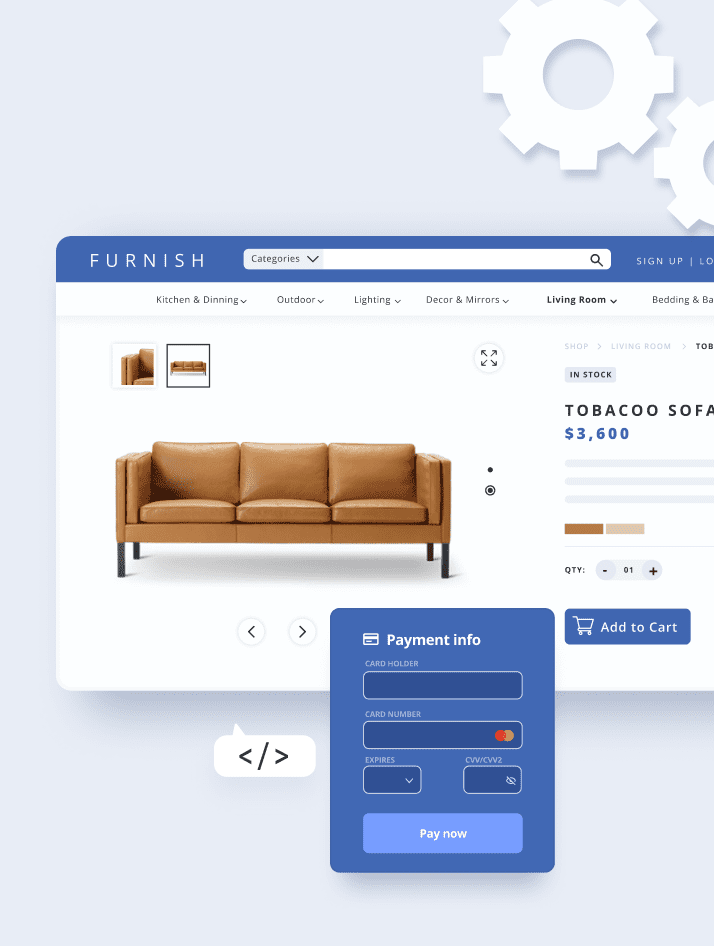
Transporters handle 12–100 pieces per shift, often gloved and always mid-task. And hospitals lose track of equipment they already own, then rent or rebuy it. Because tracking is only as accurate as the movements people actually record, we rebuilt the brand and designed two products from scratch: a mobile app for transporters and a BLE-powered web dashboard for managers.

The platform went into pilot at Cedars-Sinai, Keck Medicine of USC, and a Stryker distributor, and Digital Medical Tech graduated the Cedars-Sinai Accelerator powered by Techstars in 2019.
See full case study
HOSPITAL OPERATIONS · EQUIPMENT TRACKINGHOSPITAL OPERATIONS · EQUIPMENT TRACKING
BEHAVIORAL HEALTH · AI VOICE · B2B2C

Ellipsis Health

$26MSeries A closed five months after handoff, on the product we researched, designed, and tested.

Ellipsis Health detects anxiety and depression from under 60 seconds of speech. The science worked; the experience didn’t. In eight weeks, we redesigned the MVP around research with users and clinicians, then validated the core experience across 12 tasks. By making a clinical product feel less clinical, we built enough trust for every tester to complete the voice recording the product depends on.

The August 2021 round brought Ellipsis Health's total funding to $31M. In 2025 the company raised a further $45M for its Sage care platform, backed by Salesforce, Khosla Ventures, and CVS Health Ventures.
See full case study
BEHAVIORAL HEALTH · AI VOICE · B2B2CBEHAVIORAL HEALTH · AI VOICE · B2B2C
Case 01 / 02
Drag / scroll
By the numbers

A decade of healthcare app development, in the field.

500+

products designed and delivered
across a decade

3,000+

usability testing sessions run across a decade

03Testing
10+

years designing and building for healthcare

04Usability
93%

of tested task attempts completed, 41 of 44 across eleven measured tasks
(Ellipsis Health).

05Activation
+76%

lift in user activation after redesign (Vectrix).

06LEADS
+23%

inbound leads in the first month after relaunch (MedTrainer).

See case study
Trusted by
WWFMFAMFAMFAMFAMFAMFAMFAMFAMFAMFAMFAMFAMFAMFAWWFMFAMFAMFAMFAMFAMFAMFAMFAMFAMFAMFAMFAMFAMFA
The reality

The build is the easy part.

Adoption is where healthcare apps die.

01 / 04
$7.42M

average cost of a healthcare data breach in 2025, the highest of any industry for fourteen years running. Security and HIPAA are architecture, not features you add later.

IBM Cost of a Data Breach 2025, via HIPAA Journal
01 / 04
~90 Days

is how long most health app users last before they stop opening it. Adoption, not code, decides whether the product survives.

Sahha health app retention analysis
01 / 04
5x

more expensive to fix a design problem after launch than to design it correctly upfront.

IBM Systems Sciences Institute
01 / 04
$172.67B

projected Health app market by 2035, growing at double digits annually. The demand is real and the bar for what clinicians will tolerate keeps rising.

Precedence Research

Design and compliance first. Code second.

Every engagement starts by mapping the clinical goal, the users, the data, and the compliance and integration constraints the product has to live inside. We design against real risk before writing production code.

5 phases →
Phase 01Discover
01

Discovery & Diagnosis

Users, jobs to be done, workflows, and the HIPAA, FHIR, and EHR realities you're building into. Where will adoption break? Where will compliance bite? We find both early, because both get expensive later.

Phase 02Plan
02

Research With the People Who Have to Use It

Clinicians and patients, not proxies. On Ellipsis Health that meant eleven depth interviews across three generational segments plus an expert panel with two practising clinicians, on a subject most people won't discuss with a stranger. It's a recruitment problem before it's a research one.

Phase 03Design
03

Strategy & Architecture

A prioritized roadmap tied to outcomes, plus platform choices, integration plan, security model, and an MVP scoped to prove value fast without boxing in the future.

Phase 04Deliver
04

Design & Build

Accessible, trustworthy interfaces for patients and clinicians, engineered on HIPAA-compliant infrastructure with FHIR and EHR integration. Designed around real conditions: interruption, urgency, and a transporter managing a hundred items who needs a button they can hit with a thumb.

Phase 05Measure
05

Launch, Measure & Scale

Engagement, retention, task completion, and clinical outcomes, instrumented before launch. On CompleteOR that meant shipping the mobile app into the market first and learning from real use before we designed the manager's dashboard, so the two products read as one system rather than two tools sharing a logo.

Phase 01 of 05
→ Continue scrolling
Deliverables

What you get with WANDR's
healthcare app development services

Scoped to your clinical goal, your compliance surface, and the systems you don't control.

Wireframing and prototyping preview
01 / 06Discovery, Workflow & Mapping

Discovery, Workflow & Compliance Mapping

users, jobs to be done, and the HIPAA, FHIR, and EHR constraints documented before anything is designed

Wireframing and prototyping preview
02 / 06User Research & Usability Testing

User Research & Usability Testing

sessions with real patients and clinicians, including the hard-to-recruit ones, run against clickable prototypes before build

Wireframing and prototyping preview
03 / 06Product & Interface Design

Product & Interface Design

patient and clinician experiences designed for real conditions, accessible, and built to be opened again on day 30

Wireframing and prototyping preview
04 / 06HIPAA-Compliant Architecture

HIPAA-Compliant Architecture

encryption in transit and at rest, access controls, audit logging, HIPAA-eligible cloud with signed BAAs, designed in from the first decision

Wireframing and prototyping preview
05 / 06FHIR & EHR Integration

FHIR & EHR Integration

SMART on FHIR plus integrations with Epic, Cerner, and Oracle Health, designed around read and write scopes, real-world data quirks, and clinician workflow

Wireframing and prototyping preview
06 / 06Engineering & Delivery

Engineering & Delivery

iOS, Android, and web built by the team that designed it, or handed to your engineers with documented specs, a design system, and full ownership of every file

Compare

How our healthcare
App development compares

In-House TeamGeneral Agency
Starting pointThe roadmap and the clinical specYour brief, taken at face valueUsers, workflow, and the compliance surface
HIPAA & securityHandled, competing with ship datesReviewed near the endArchitecture from the first decision
EHR integrationDeep, if you have the peopleTreated as a side questCore work, designed around real data quirks
Design and codeSame team, no handoffDesign agency to offshore dev shopOne team owns both
Clinical researchRare, and hard to scheduleProxy users, if anyTested with the people who'll use it
AdoptionAssumed once it shipsNot their problem after launchDesigned for, instrumented, iterated
AccountabilityCompeting with the roadmapDelivery is the deliverableA metric agreed at kickoff, guaranteed
What our clients say
Verified Clutch reviews.

Within the first month, we were able to complete the first iteration of the mobile prototype. Considering the learning curve and the volume of work, we found that impressive. They really make it their job to understand the product and vision, while pushing out a consistent stream of excellent work.

Dakota YoungCEO, Boon
See full Clutch review

They were honest and caring. We pushed them really hard about halfway through for some pretty significant changes, and their engagement manager did a good job of communicating with us and staying involved.

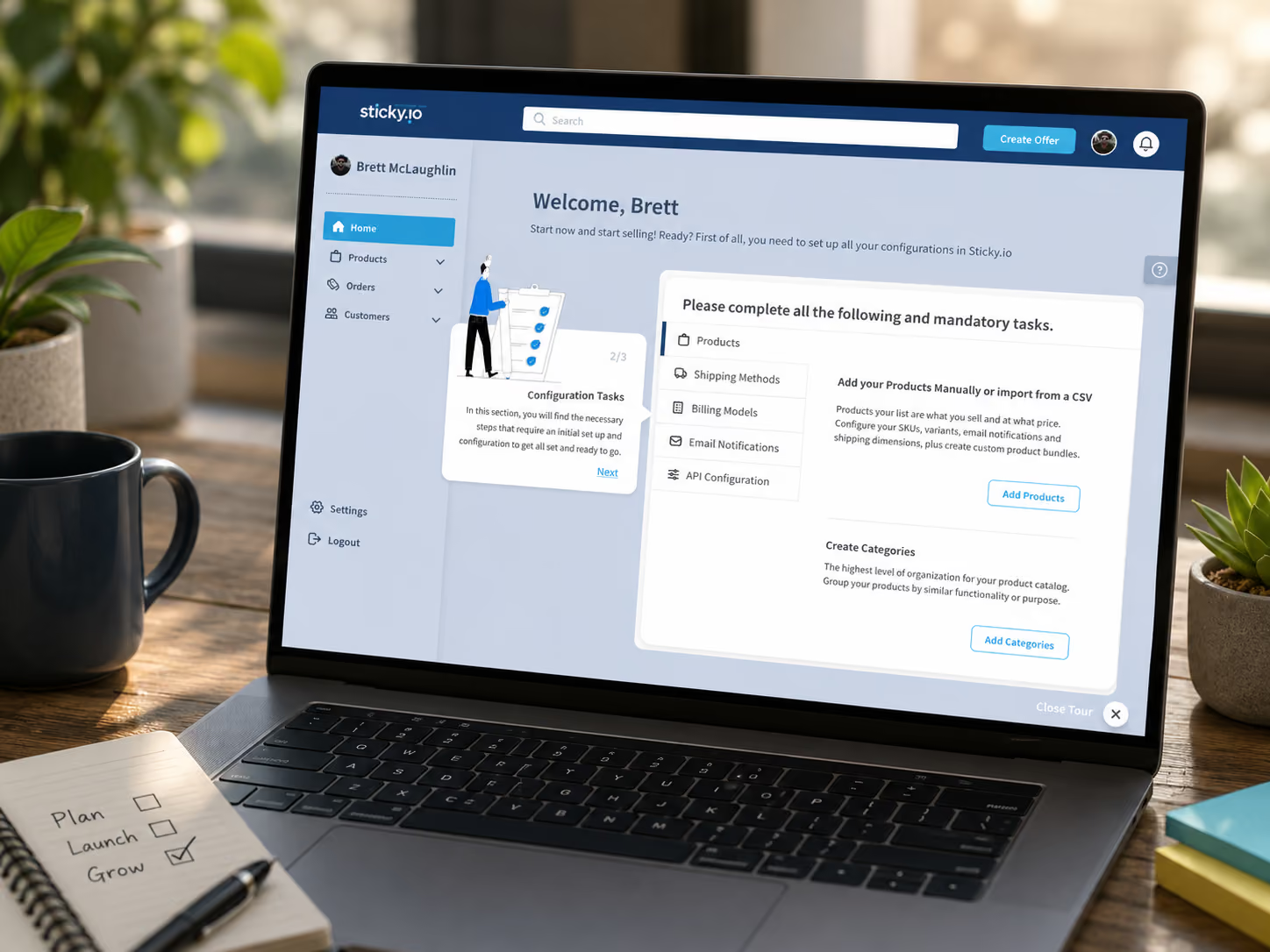
Brett McLaughinCTO, Sticky.io
See full Clutch review

WANDR has a diverse team that fills every niche that a company may need. They showed a genuine interest in designing something beautiful and effective, and they took the time to understand our business, asking important questions to help guide design choices.

Alexandra NormanProduct Manager, PetPartners, Inc.
See full Clutch review
Why Wandr?

A Healthcare App Has to Ship, Comply, and Get Adopted.
We Build for All Three.

01 · The team

Design-led, and we write the code.

One team owns the experience and the engineering, so nothing is lost between a design agency and an offshore dev shop. The classic failure is a beautiful spec that meets the stack and turns out to be unbuildable. When the people shaping the experience are the ones shipping it, that conversation happens before the design is locked.

01
02 · the method

HIPAA and security as architecture.

FHIR and EHR integration as core work, not a side quest. And a working assumption that clinicians abandon anything that slows them down, which is why we design around interruption and urgency rather than ideal conditions.

02
03 · Terms

Performance guarantee.

If the product doesn't improve on the primary metric we agree on at kickoff within your first year post-launch, we keep working at no additional cost until it does.

03
The difference

Same platform. Understood in five seconds.

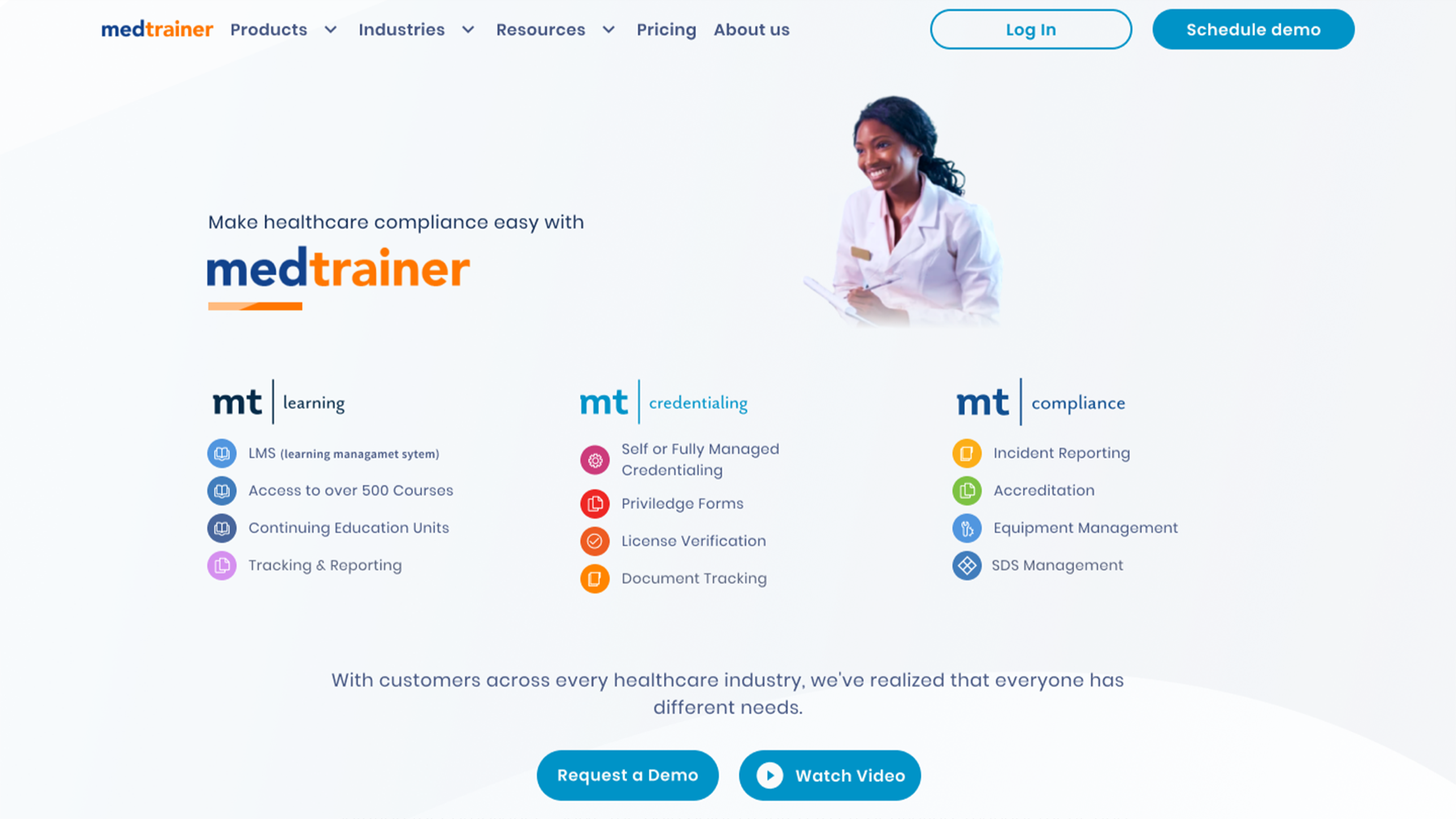
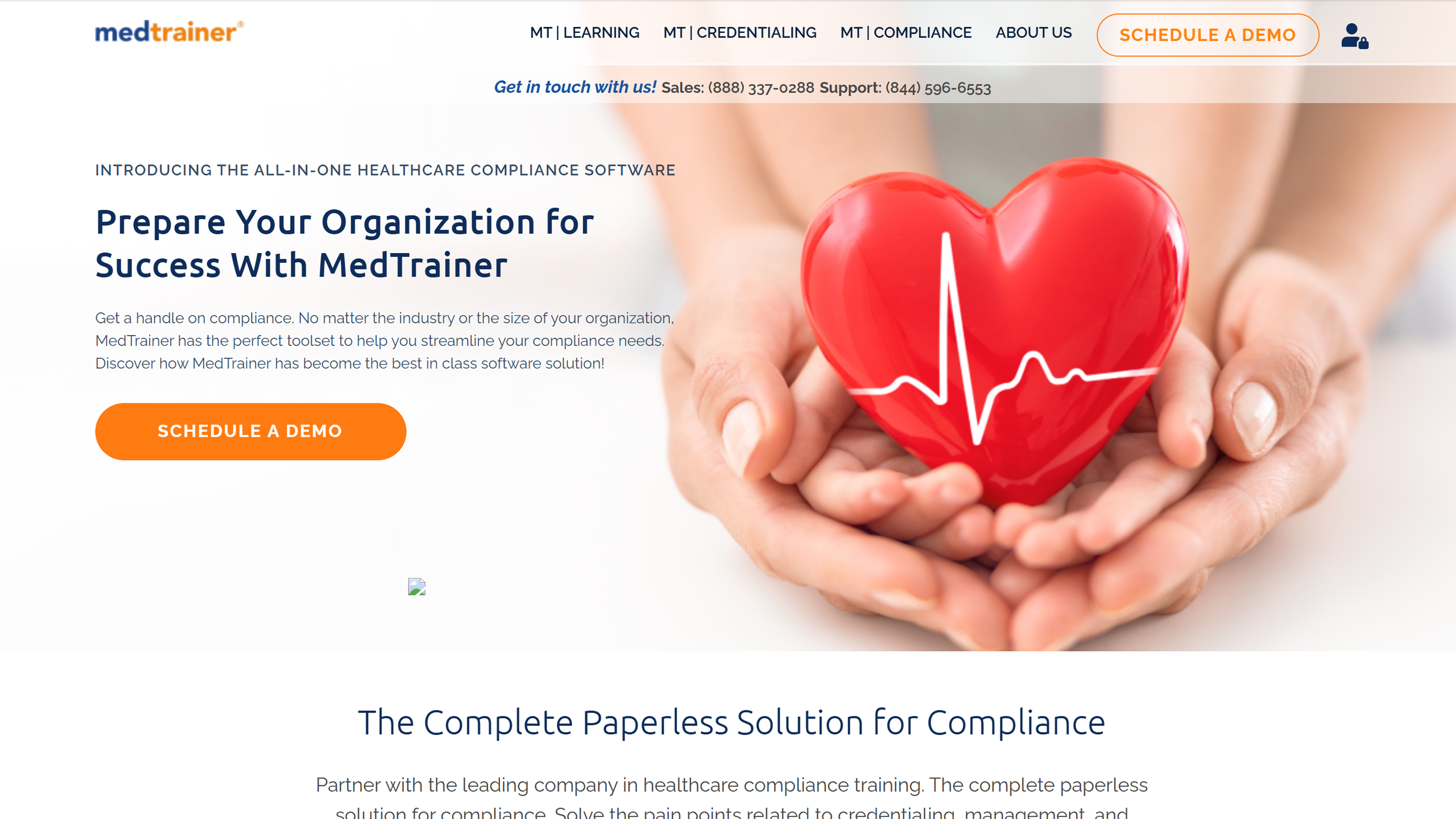
MedTrainer's compliance platform served 15,000+ healthcare organizations and 300,000+ professionals, and its own site couldn't explain it. Strong organic traffic arrived, failed to grasp what the product did, and left. Here's what changed.

BeforeAfter
Before WANDR
  • Roughly 43,000 landing sessions producing about 40,000 drop-offs, with almost no movement between pages
  • Three product lines, Learning, Credentialing, and Compliance, and a site that never made the range legible
  • Dead clicks on elements users expected to be links, and dead ends where buyers should have gone deeper
  • One undifferentiated experience for an audience whose needs are highly specific by healthcare setting
After WANDR
  • 3 of 3 users described what the product does in a 5-second test, before reading a word of copy
  • +23% inbound leads in the first month after relaunch
  • A new information architecture built on the three product pillars, plus an industry selector surfacing the right tools for each buyer's setting
  • 12 responsive templates across three breakpoints on one documented design system
Medtrainer·HEALTHCARE COMPLIANCE·HEALTH TECH
Who this is for

You know that shipping is only half the job. The app also has to pass compliance, integrate with systems you don't control, and earn adoption from people whose day is already full. Every failed audit, every abandoned onboarding, every clinician who tried it once and went back to the old way is a pilot that stalled and runway spent on something that didn't stick.

We work with heads of product, digital health founders, and medtech and provider leaders. Whether you're a Series A startup racing to a defensible MVP, a medtech company pairing software with hardware, or a health system replacing a legacy tool clinicians route around, we design for the users and the compliance team at the same time, because both have to trust it.

First step

Not ready to talk? Get a free product teardown first.

In a short session we'll show you where your healthcare app or concept is most at risk on adoption, compliance, or integration, and what to address first. Free, no pitch, no obligation.

Get your free audit
Sample report
your-product.com/signup

Get started in seconds.

1No value prop above fold
2No password rules shown
3CTA hierarchy unclear
Healthcare App Development
Frequently asked.

Click any question to expand. If yours isn't here, write to us.

  1. HIPAA and security become architecture rather than features, EHR interoperability becomes core scope, and the product has to serve people whose tolerance for friction is close to zero.  Three things follow from that:  The app serves several people with different definitions of success. The patient who needs it to feel simple on a hard day. The clinician who abandons anything that adds clicks to a packed shift. The compliance officer signing off on data handling. And the executive watching whether it moves a real number. You're building into systems you don't control. Value usually depends on data living in an EHR, so an app that can't exchange data cleanly stays a demo. Real conditions aren't ideal conditions. A transporter moving a hundred pieces of equipment a shift is gloved, walking, and already late. Every second the app costs them is a scan that quietly doesn't happen, and a dashboard that slowly stops telling the truth.
  2. Because they were built to ship rather than to be adopted, and most users are gone within about 90 days.  The patterns we see most often:  The workflow was assumed, not observed. A tool designed for how the process should work loses to the shortcut clinicians already use. Integration treated as phase two. By the time the EHR work starts, the architecture has made it expensive, and the product sits in a pilot that never expands. Trust never got established. In behavioral health especially, the experience has to earn the disclosure it asks for. Secondary research put privacy at the top of the barriers to adopting mobile health apps, at 61%, ahead of time investment at 24%. On Ellipsis Health that put the privacy explanation and a check on whether the user was somewhere comfortable ahead of the microphone, and testers called both essential rather than obstructive.
  3. Four things move the number more than anything else:  Platform scope. One mobile app is a different problem from mobile plus a clinician web dashboard. How many integrations, and whether the systems are cooperative. FHIR-native is faster than a legacy interface. Compliance surface. The volume of PHI touched and the audit requirements attached to it. Whether hardware is involved. CompleteOR ran across four phases from 2017 to 2019 because beacon-based indoor tracking had to work before the software mattered. Ellipsis Health, software only with the model already built, ran eight weeks.  Most engagements start with a focused MVP to prove value quickly, which keeps early cost predictable and reduces the risk of building the wrong thing.
  4. Yes, and that's the point of the model. One team owns the experience and the engineering, so there's no lossy handoff between a design agency and a separate dev shop.  We also work alongside your in-house engineers when that fits, providing design and architecture leadership through the build. On CompleteOR we owned brand and product design across both applications while our development partner built the beacon tracking system. On Ellipsis Health, which had engineers but no design function, we handed off a single-source-of-truth Figma design system organized so their front-end team could build from it rather than reinterpret it.
  5. Yes, and it's designed that way from the first architecture decision rather than certified at the end. Encryption in transit and at rest, access controls, audit logging, HIPAA-eligible cloud with signed business associate agreements, and breach-aware design.  HIPAA is a way of building, not a certificate you buy. With the average healthcare breach now costing $7.42M, the cheapest time to get security right is before production code exists.
  6. Yes. FHIR and SMART on FHIR, plus integrations with Epic, Cerner, and Oracle Health, are core to how we build rather than a later phase.  We design around read and write scopes, real-world data quirks, and clinician workflow, so the integration feels invisible instead of bolted on. The failure mode is an app that technically connects but forces a clinician to reconcile two systems in their head.
  7. Yes, including clinician dashboards and patient portals, and we help you choose the platform strategy rather than defaulting to one stack.  Sequencing matters as much as platform. On CompleteOR we shipped the mobile app first, put it into the market for real testing, then designed the manager's dashboard with what we'd learned. Ellipsis Health ran adaptive mobile and tablet across iOS and Android from one system.
  8. By recruiting the actual people, which is usually the hard part rather than the research itself.  For Ellipsis Health we ran eleven depth interviews across three generational segments, added a panel of two practising clinicians for the industry view, and validated the prototype across twelve tasks. The client flagged the recruitment risk before kickoff, and they were right: the usual playbook of fast, high-volume usability recruitment isn't available when the subject is anxiety and depression.  For clinician and staff tools, sessions are built around real conditions rather than a quiet room: interruption, time pressure, and the shortcut people already use.
  9. Look for a partner that has shipped healthcare products, not one that has designed screens for them.  Five questions worth asking before you sign:  Show me a healthcare product you designed and shipped, and how it performed after launch. Portfolios are easy. Post-launch is not. How do you treat HIPAA and security? If the answer is a compliance review near the end, the architecture is already wrong. What's your real FHIR and EHR integration experience? Ask about a specific integration and what went wrong in it. Who writes the code? A design agency subcontracting to an offshore dev shop puts the handoff risk on you. What metric will we measure, and when? An agency unwilling to name one before starting is unlikely to be measured against one afterward.
  10. Results depend on the product, and the ones we can document are specific. On Ellipsis Health, all four testers completed the voice recording the product depends on, with 93% of task attempts completed across eleven measured tasks. CompleteOR went from nothing to two shipped products piloted at Cedars-Sinai and Keck Medicine of USC. MedTrainer saw 23% more inbound leads in the first month after relaunch.  We agree on your outcome metric at kickoff, whether that's engagement, 90-day retention, task completion, or a clinical measure. Then we back it: if the product doesn't improve on that metric within your first year post-launch, we keep working at no additional cost until it does.
Let's pressure-test your app idea together.

Tell us the concept.

We'll tell you where it breaks.

Book a discovery call. We'll walk through your users, your compliance and integration constraints, and where the biggest risks to adoption sit, then give you a clear view of what it takes to ship it right. No commitment required. If it makes sense to work together, great. If not, you leave with a sharper plan than you came in with.

Ready to go further?

Our blog

Healthcare App Development related reading.