
Design Thinking
Workshops for Innovation Teams

WANDR facilitates design thinking workshops that take cross-functional teams from misalignment and stalled momentum to clear priorities, shared direction, and actionable next steps in one or two days.

"WANDR's workshops go beyond theory. Every exercise is tied to a real decision."
Vanessa Wong, VP of Product at Poshmark
"WANDR brought fresh perspective and innovative thinking that helped our teams tackle problems we'd been circling for months. They know how to get a room of people aligned fast."
Luis Cordova, Marketing Communications Chief, AFWERX
“We got a whole new perspective of how we need to build our product after our workshop with Wandr. They taught us new ways of approaching the same problem and we really appreciate their energy and enthusiasm.”
Brian Rodriguez, Founder
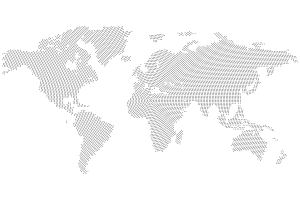
LA - Silicon Valley - Austin - Miami - Mexico City

Design Thinking Workshops Trusted by Adobe, The U.S. Air Force, and Poshmark

Ten years. 50+ organizations. We've facilitated design thinking workshops for early-stage founders, Fortune 500 product orgs, and U.S. Air Force teams, and after that many sessions you learn exactly where a workshop goes wrong.

Most facilitators don't build products nor work in tech. We're product designers and UX strategists first, so every exercise is grounded in how things actually get made and how a room of fifteen actually reaches a decision.

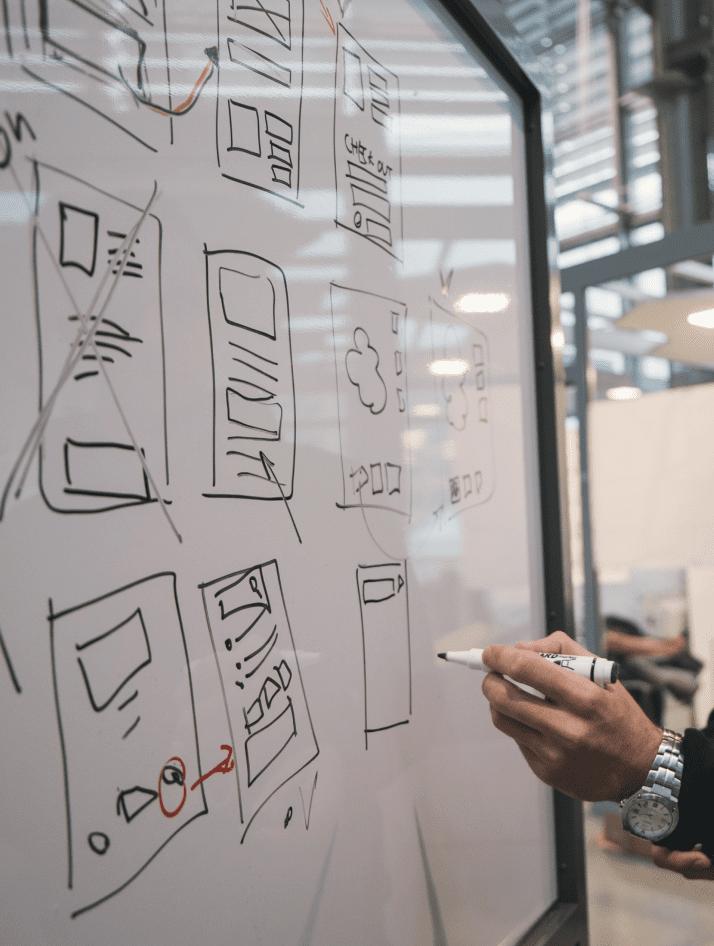
Which is why ours don't end with a wall of sticky notes. They end with problem statements, prioritized opportunities, and assigned next steps that carry into your work the following week.

Dotted world map showing Wandr locations
Proven impact
Design thinking workshop
in practice.

We've run workshops with organizations that have high standards and no patience for theory.

FORTUNE 500 · 3-Day Workshop

Adobe

SPONSOREDAdobe chose WANDR to teach design thinking to its own founder community.

Adobe sponsored a three-day design thinking workshop series for founders in its own community, ten per cohort, run across multiple groups. Founders learned the methods by building and testing real prototypes in Adobe XD over the three days rather than watching someone demo the process. They left with something they could run themselves, which was the point: a structured way to approach problems back at their own companies.

“We got a whole new perspective of how we need to build our product after our workshop with Wandr. They taught us new ways of approaching the same problem and we really appreciate their energy and enthusiasm.”Brian Rodriguez, Founder & Participant
See full case study
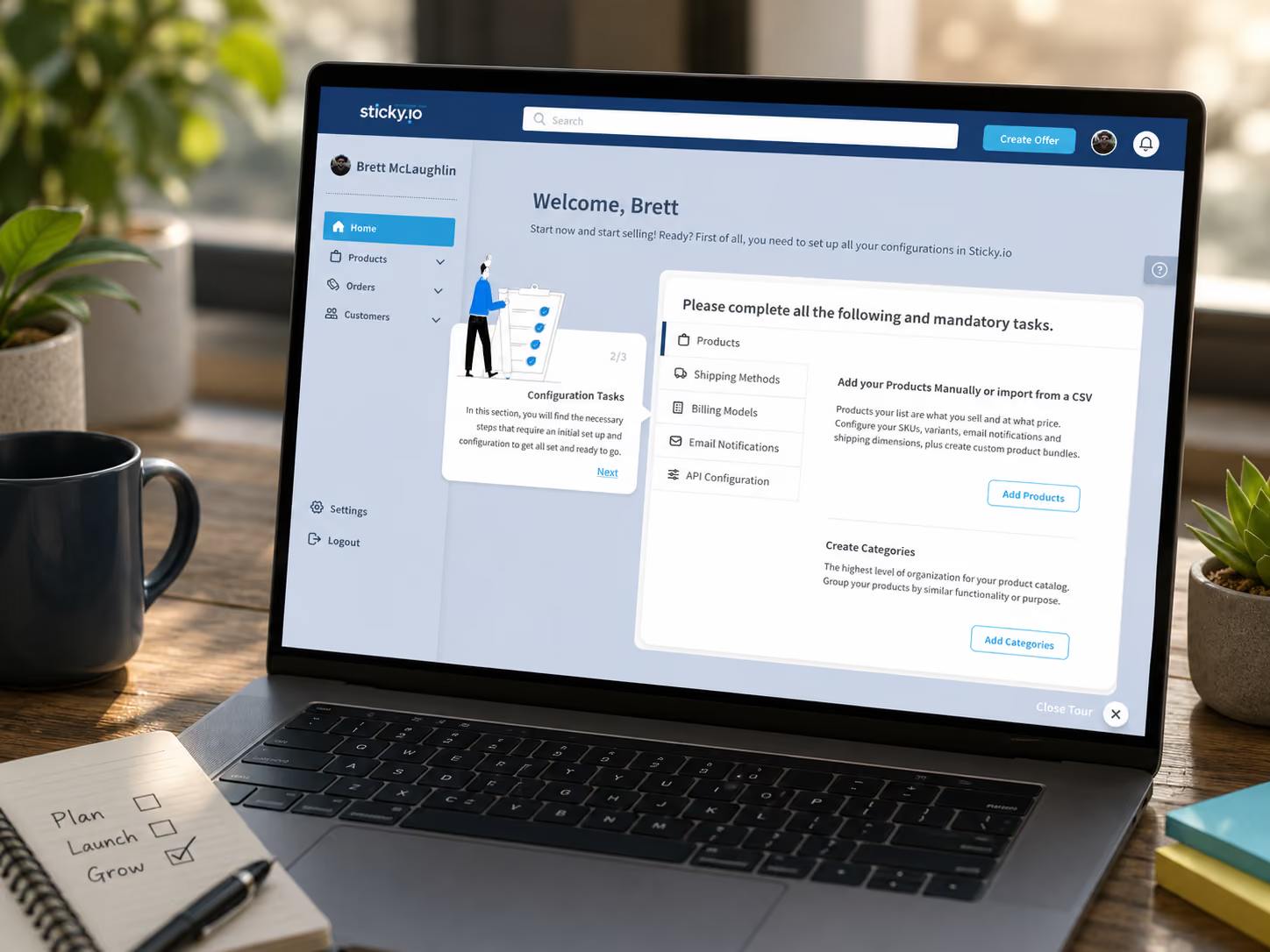
Sticky.io · Subscription commerceSticky.io redesign preview
FEDERAL GOVERNMENT · 1-Day Workshop

U.S. Air Force

RECURRINGMultiple teams, multiple sessions, across several years.

One-day design thinking workshops run with teams across the U.S. Air Force, repeatedly over several years. Different commands, different roles, different problems — some of which the teams had been working for months. The framework held across all of them, and it was taught so people could keep using it on their own decisions long after the session ended.

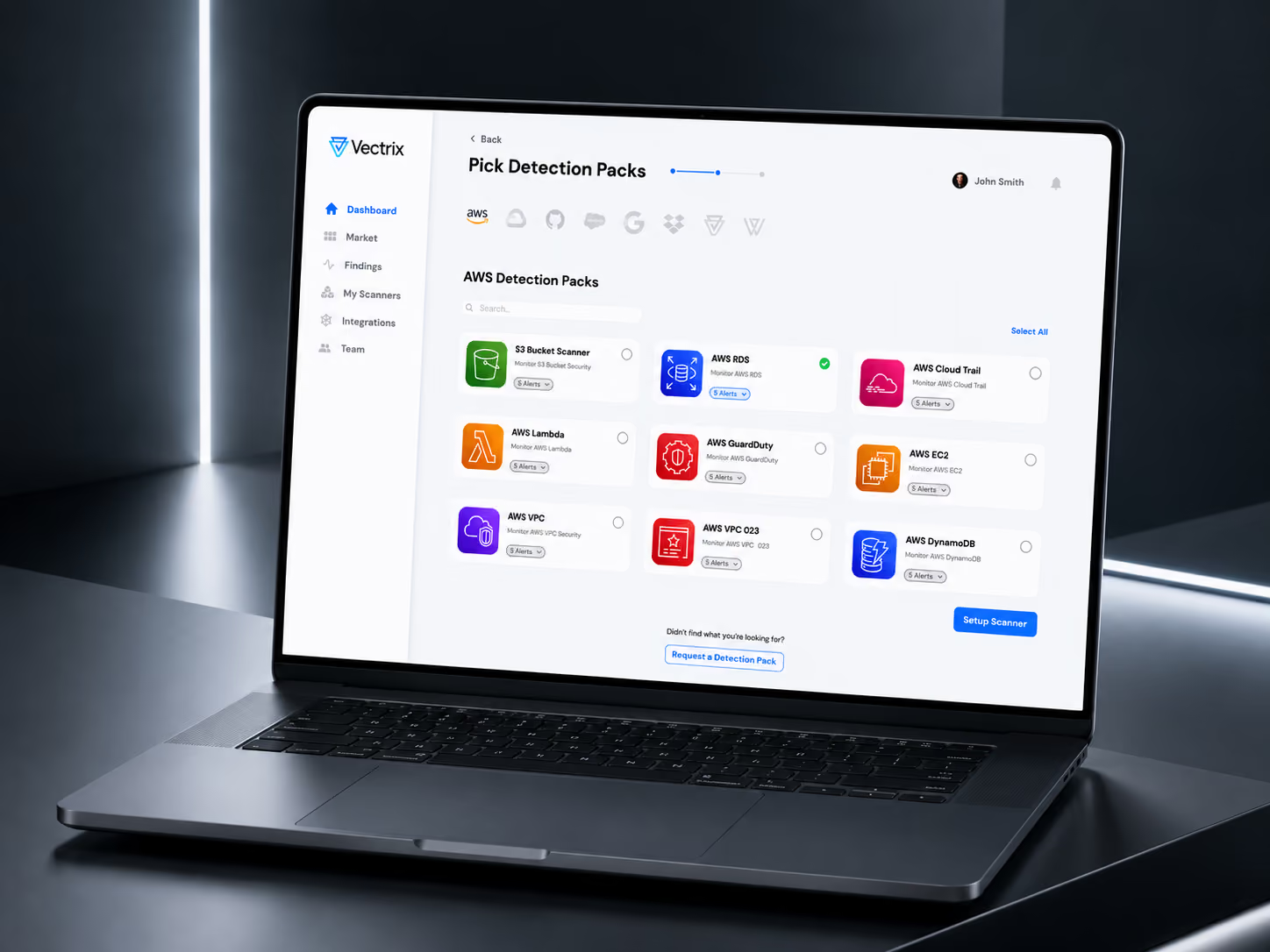
"Wandr understood the strategic value of design from the start — they helped us build a product story that resonated with both users and acquirers."Corey Mahoney · Founder, Vectrix
See full case study
Vectrix · Acquired by CloudflareVectrix product design
Case 01 / 02
Drag / scroll
By the numbers

Design thinking workshops that compound.

2000+
participants across every workshop we've run
50+
workshops facilitated across a decade
03Format
2 Days
from misalignment to a direction the whole room owns.
04Room-size
10-15
typical participants, enough for real friction without losing the thread.
05Output
3
problem statements, prioritized opportunities, assigned next steps.
06Case study
ADOBE
chose WANDR to teach design thinking to its founder community.
See case study
Trusted by
WWFMFAMFAMFAMFAMFAMFAMFAMFAMFAMFAMFAMFAMFAMFAWWFMFAMFAMFAMFAMFAMFAMFAMFAMFAMFAMFAMFAMFAMFA
The reality

The problem was never the ideas.

It was aligning on which one.

01 / 04
$75B+

estimated annual cost of misalignment in the workplace — wasted meetings, redundant work, and decisions that get reversed.

McKinsey & Company
01 / 04
86%

of employees and executives cite lack of collaboration and poor communication as the primary cause of workplace failures.

Salesforce State of the Connected Customer
01 / 04
3X

more likely to ship solutions that get adopted, when teams align on problem definition before ideation.

IDEO DESIGN THINKING RESEARCH
01 / 04
2 Days

is all it takes for a well-facilitated design thinking workshop to create the alignment that most teams spend months trying to achieve in meetings.

WANDR workshop data

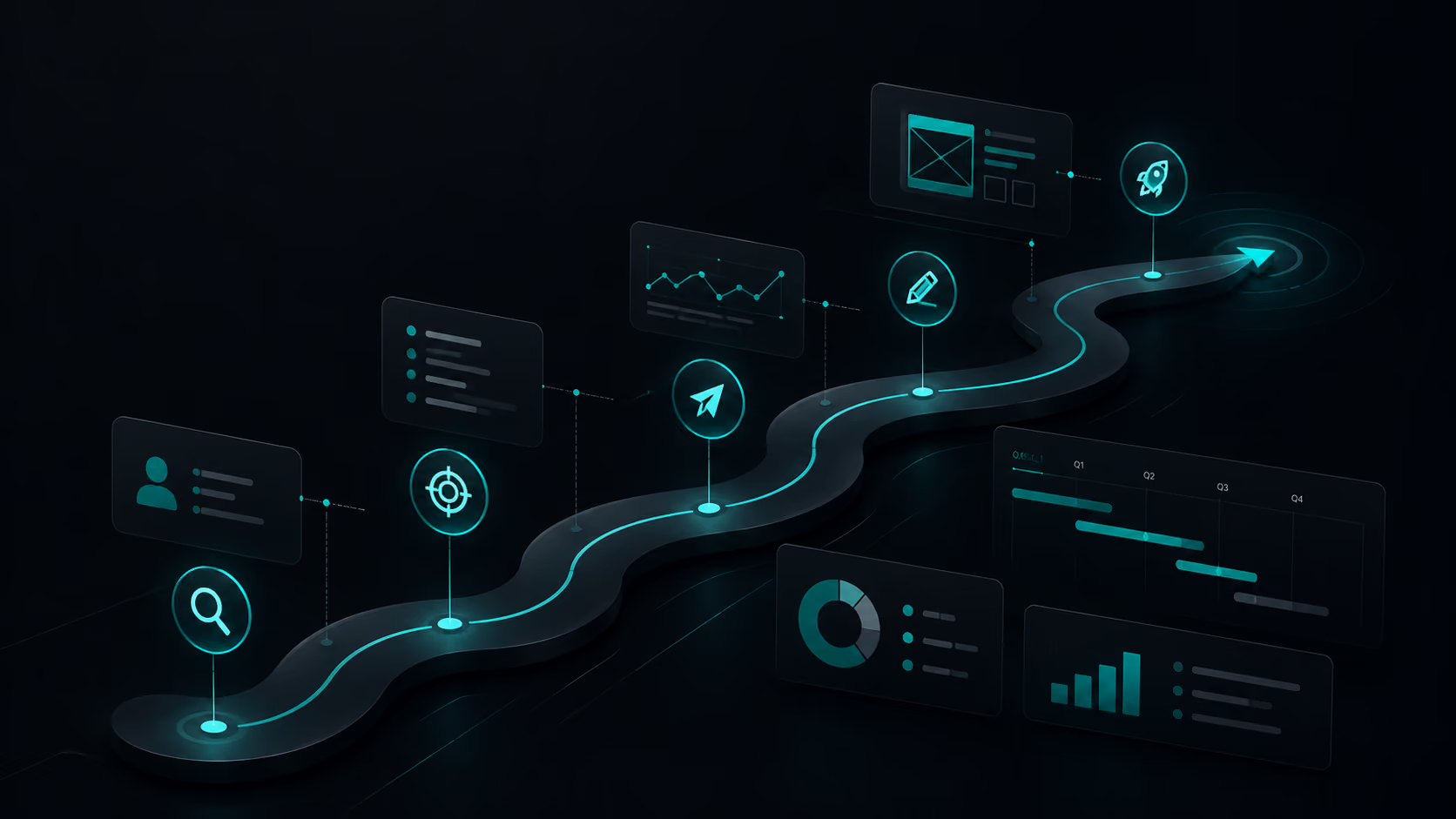
Our Design Thinking
Workshop Process

Every workshop is designed around the specific challenge your team is facing, not a generic agenda pulled from a template. We define the right format, the right exercises, and the right outcomes before anyone enters the room.

5 phases →
Phase 01Discover
01

Workshop Planning & Format

We define the right format upfront (one-day or multi-day, remote or in-person) based on your team's goals, size, and constraints. Every exercise is chosen for your specific situation, not recycled from a previous client.

Phase 02Plan
02

Problem Framing & Alignment

We align your team on the core problem, key assumptions, and success criteria before jumping into solutions. This step alone prevents most of the circular debates that kill workshop momentum.

Phase 03Design
03

Structured Ideation

Guided exercises help generate focused, high-impact ideas grounded in real product and business constraints, not abstract brainstorming that produces 200 sticky notes and zero priorities.

Phase 04Deliver
04

Prototyping & Exploration

Key ideas are turned into simple prototypes, flows, or Pecha Kucha presentations, making them tangible and easier for your team to evaluate, challenge, and build on.

Phase 05Measure
05

Synthesis & Next Steps

We distill insights, define clear next steps, and assign ownership  so the momentum from the workshop carries directly into your product, design, and engineering work the week after.

Phase 01 of 05
→ Continue scrolling
What you get

Every Design thinking workshop
is tailored to your team’s needs

A strong design thinking workshop delivers more than ideas. It creates the clarity and direction your product and development teams can act on immediately.

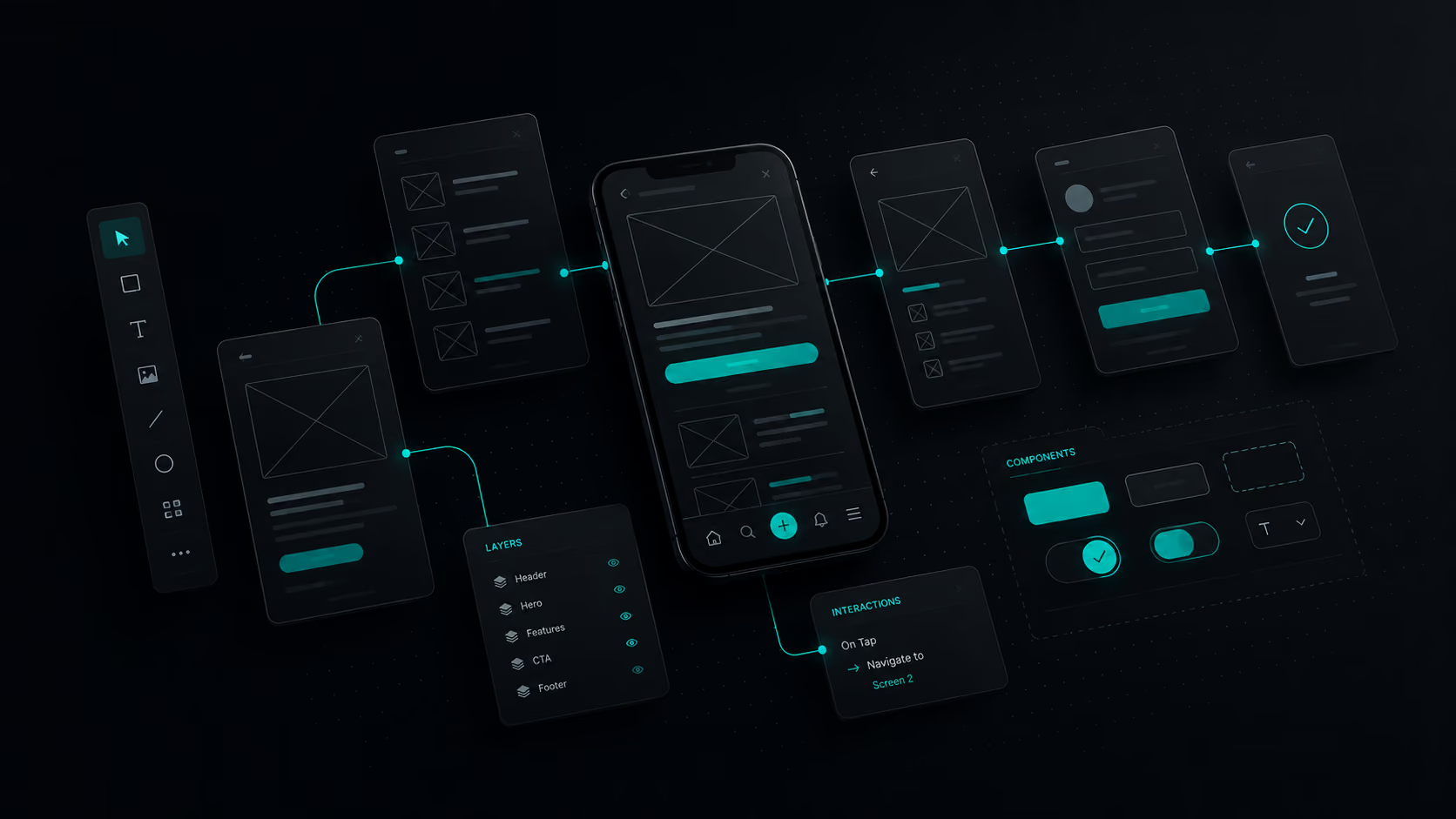
Wireframing and prototyping preview
01 / 06Problem Statements

Problem Statements

The problem the room agreed to solve, written down and rooted in real user needs. Usually two or three, sharp enough that nobody can reinterpret them next week.

Wireframing and prototyping preview
02 / 06Opportunity Map

Opportunity Map

Ranked opportunity areas scored against business and product goals, so the team knows what comes first and what's parked.

Wireframing and prototyping preview
03 / 06Solution & Concepts

Solution & Concepts

Early directions made concrete — sketches, flows, and rough prototypes your team can react to and hand to engineering.

Wireframing and prototyping preview
04 / 06Decision

Decision

What the room decided, what it rejected, and why. The document that stops the same debate reopening in six weeks.

Wireframing and prototyping preview
05 / 06Action Plan

Action Plan

Next steps with names attached and a sequence, not a wall of post-its nobody acts on.

Wireframing and prototyping preview
06 / 06Workshop Artifacts

Workshop Artifacts

Everything generated in the room, captured and organized — the boards, the exercises, and the raw material behind every decision.

Compare

How WANDR’s Design Thinking Workshop compares.

In-house FacilitationGeneral Facilitator
NeutralitySomeone in the room reports to someone else in itNeutral but unfamiliarNeutral, and briefed before day one
Product fluencyDeep, but only one team's viewProcess expertise, not productProduct designers and UX strategists first
PushbackHard to challenge your own leadershipUnlikely to risk the engagementWe challenge bad ideas
OutputsNotes and a Miro boardA well-run sessionProblem statements, priorities, assigned owners
ParticipationWhoever should facilitate can't contributeEveryone contributesEveryone contributes, including your leads
After the roomMomentum fades by the next sprintFacilitator leaves, work stallsWe can take the output into design and build
What our clients say
Verified Clutch reviews.

We've completed about 20 successful projects together at this point. Some of them have been well-reviewed on Clutch, which is an important metric. As a result of their support, we were able to close more deals and increase our revenue as well. Our partnership was a key factor in closing up to 10 of the projects we did together.

David BarlevCEO, Goji Labs
See full Clutch review

We flew out for a two-day brainstorming/whiteboarding session at their offices. We went through what we wanted to accomplish, what our message was, and what our product was. After this, they had an idea of the message we wanted to create around a brand and really creating the brand and the look and feel of that on the web. They designed and built a responsive website, which was fantastic.

Michael CaplovitzCEO, GotChkd
See full Clutch review

After we hired WANDR, I went to LA for the project kickstart meeting, where we spent two full days brainstorming the project, reviewing each detail on the project requirements. The project evolved very fast, they were very responsive and very easy to communicate, beyond expected in availability.

Marcio AlexandroniCTO, Areatec Tecnologia
See full Clutch review
Why Wandr?

Design Thinking Workshops
That End With Decisions,

Not Sticky Notes

01 · Who runs it

Product designers, not generic facilitators.

We are UX strategists and product designers first, which means every exercise we run is grounded in how products actually get built and how teams actually make decisions. We don't bring a generic workshop playbook. We bring a decade of product design experience into every room we facilitate.

01
02 · Our clients

Trusted by teams with no patience for theory.

Adobe chose us to represent design thinking to their own founder community. The U.S. Air Force brought us back across multiple teams. Poshmark's leadership spent two full days working through their 10-year vision with us. These aren't organizations that tolerate workshops that don't deliver.

02
03 · The method

The same framework behind every WANDR engagement.

Our design thinking workshop methodology is not a separate offering. It's how we start every client engagement at WANDR. Every product we've designed, every MVP we've shipped, every audit we've delivered started with this framework. That's not a credential. That's a track record.

03
The difference

Same team. A shared direction
they can actually execute on.

Most teams don't walk in short on ideas. They walk in unable to agree which one to build, so the same debate reopens every week. Here's what two days changes.

BeforeAfter
Before The Workshop
  • Strategy feels abstract, disconnected from what engineering is actually building
  • Stakeholders disagree on priorities, so every meeting restarts the same debate
  • Good ideas across the team, but nothing moves because nobody owns anything
  • Product, design, and engineering are solving different versions of the same problem
After The Workshop
  • One problem statement that product, design, engineering, and leadership all agree on
  • Prioritized opportunity areas tied to business goals and user needs, not personal preference
  • Early solution concepts with assigned owners and a clear path to execution
  • Momentum that carries into the following week, because it ended with next steps, not a PDF
This is what every WANDR design thinking workshop delivers·regardless of whether you're a 3-person startup·or a cross-functional enterprise team.
Who this is for

You understand that the most expensive thing in a product organization isn't bad design… it's misalignment. Every week your team spends debating the wrong question, rebuilding something that could have been decided in a room, or shipping something nobody agrees was the right priority is a week of runway you don't get back

We work with Innovation Leaders, VPs of Product and founders who know their team is capable  and just needs a structured session to get everyone pointing in the same direction. Whether you're kicking off a new product, realigning after a pivot, or breaking a strategic deadlock, a design thinking workshop is the fastest path from ambiguity to momentum.

First step

Not sure which workshop format is right for your team?

Tell us what your team is working through (a new product, a strategic pivot, a cross-functional alignment challenge) and we'll recommend the right format, length, and structure for your specific situation.

30 minutes. No commitment. Just clarity on whether a workshop is the right next step.

Book a workshop consultation
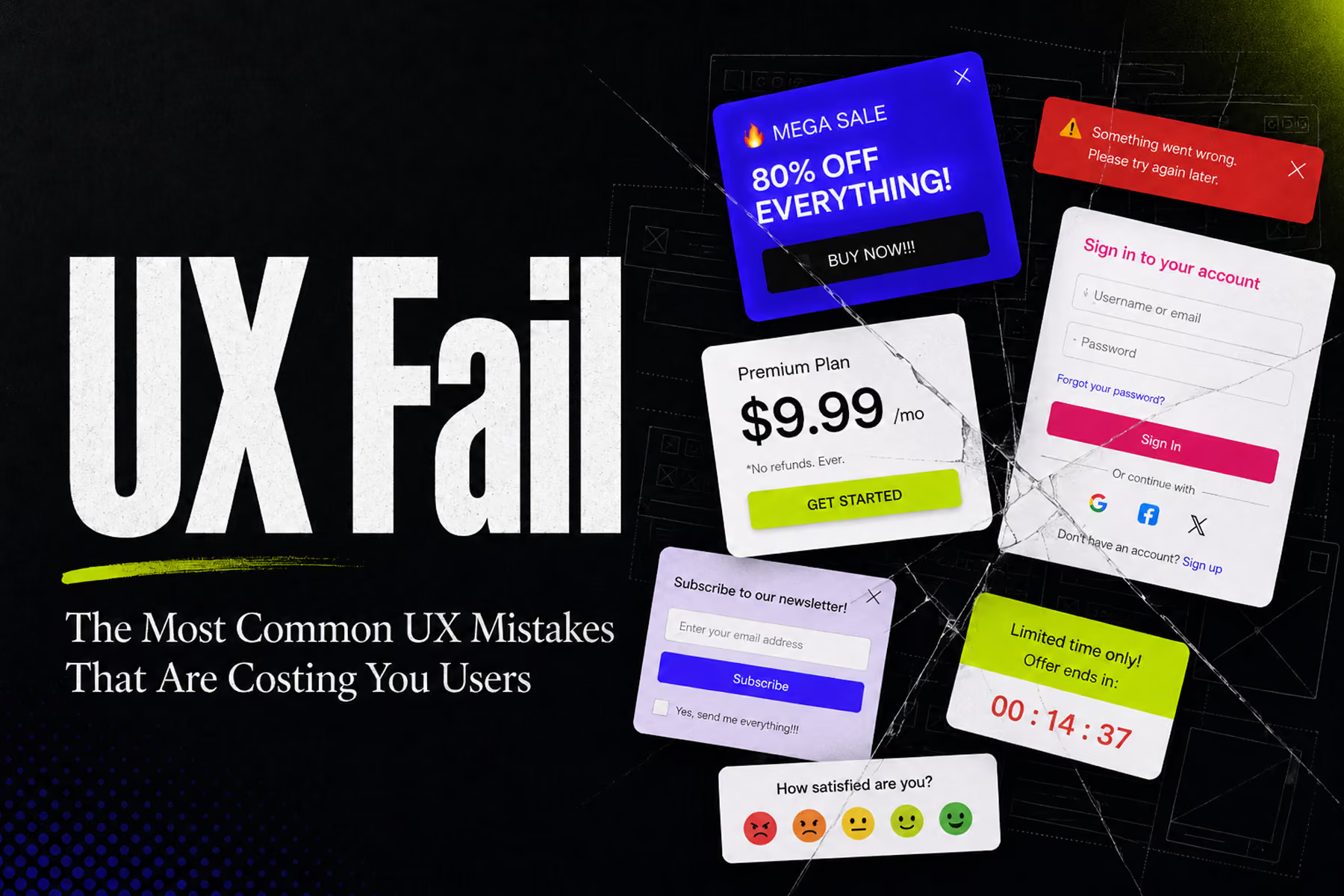
Sample report
your-product.com/signup

Get started in seconds.

1No value prop above fold
2No password rules shown
3CTA hierarchy unclear
Design Thinking Workshops
Frequently asked.

Click any question to expand. If yours isn't here, write to us.

  1. Design thinking workshops work best with cross-functional teams: product managers, designers, engineers, and a decision-maker with authority to commit. Ten to fifteen people is the practical range — enough for real disagreement, small enough that everyone contributes. The specific mix depends on the challenge, which we work out with you during planning.
  2. A design thinking workshop moves through structured activities: problem framing, ideation, prototyping, and synthesis. Every exercise ties to a real product decision rather than a general creativity exercise. Our Poshmark offsite ran Future Mapping, BHAG definition, How Might We, Crazy 8s, and Pecha Kucha pitches. Adobe sessions combined the methodology with live prototyping in Adobe XD. Each agenda is built for the specific team and challenge.
  3. Most design thinking workshops run one to two full days. Product strategy workshops typically need two; multi-team enterprise alignment can require three. Half-day formats work for narrowly scoped problems. We set the format around what the challenge requires rather than what's easiest to get on calendars.
  4. Hire an external facilitator when stakes are high, alignment is weak, or teams are pulling in different directions. Adobe, the U.S. Air Force, and Poshmark all chose external facilitation, and all came back for more sessions. Internal facilitation works for incremental problems on teams that already agree. The tradeoff is that whoever runs the room can't fully participate in it, and internal facilitators rarely challenge their own leadership.
  5. Brainstorming produces ideas; a design thinking workshop produces decisions. Every exercise is tied to a real product constraint, and the session ends with prioritized opportunities and assigned owners rather than a list of possibilities. We're product designers and UX strategists first, so the output is shaped to move directly into design and engineering work.
  6. Design thinking workshops sharpen product strategy by forcing teams to define the problem, test assumptions, and rank priorities before resources are committed. The Poshmark leadership offsite defined a ten-year BHAG and surfaced the specific obstacles blocking it, giving the team a strategic foundation they could act on immediately.
  7. Every WANDR design thinking workshop delivers agreed problem statements, a ranked opportunity map, early solution concepts, a record of what was decided and rejected, and next steps with named owners. The captured boards and exercises come too, but the boards are the byproduct — the decisions are the deliverable.
  8. Design thinking workshop pricing depends on duration, number of participants, and whether the session is remote or in person. Single-day facilitated sessions sit at the lower end; multi-day enterprise engagements with pre-workshop research at the higher. We scope after understanding the challenge, and we'll tell you if a workshop isn't the right instrument for it.
  9. Yes. We've run remote design thinking workshops since 2020, including a two-day founder kickoff over Zoom and Miro at the start of lockdown. Remote sessions need tighter time-boxing and more pre-work than in-person, but they produce the same outputs and let you include people who couldn't otherwise attend.
  10. Your team leaves with owners assigned and a sequence to work through, so execution starts the following week rather than after another round of alignment meetings. Some teams take it from there. Others continue with WANDR into design and build, since the same team that framed the problem is already up to speed on it.
Let's get your team aligned.

Let's figure out

What you actually need

Tell us what your team is working through. We'll recommend the right workshop format and tell you honestly whether facilitation is the right next step or whether a different engagement would serve you better.

Ready to go further?

Our blog

Design Thinking Workshop related reading.