
Your product is growing. Your design system
should be too

A decade building component libraries and design systems for product teams that need consistency, speed, and a single source of truth. Not templates. Research-led systems that teams actually use, built for the way your design and engineering teams work.

"Three years as our embedded design partner through our public offering. They understand what enterprise product teams need."
Natti Zick, Director of Design at Tenable
"WANDR built our entire global design system. The consistency across our platform is something we couldn't have achieved without them."
Subha Shetty, VP of Product Management Fanatics
"While their skills were valuable, it was ultimately their client management and interaction that impressed us."
Brett McLaughlin, CTO, Sticky.io

A Design System Agency Built on a Decade of Enterprise outcomes

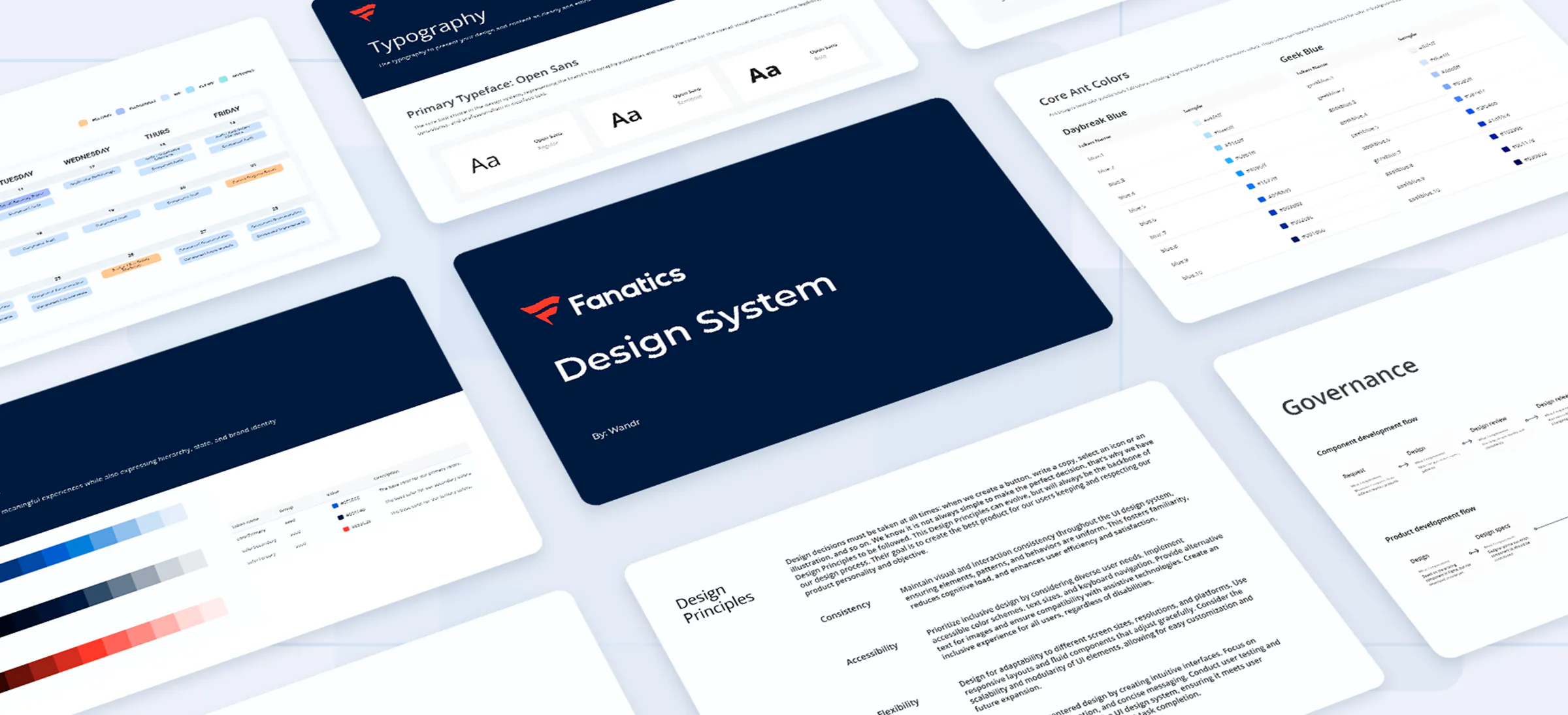
We built the entire global design system for Fanatics, one of the world's largest sports commerce platforms. We consolidated the global design system for Tenable, a publicly traded enterprise cybersecurity company, across a three-year embedded partnership that spanned their public offering. We have built, audited, and scaled component libraries for product teams across fintech, healthcare technology, B2B SaaS, and enterprise software.A design system only delivers value if teams use it. Most fail not because the components are poorly designed but because the organizational infrastructure around the system was never built. We design systems and the adoption frameworks that make them stick.Whether you are building a system from scratch, consolidating fragmented component libraries across a growing product suite, or preparing a design system that will survive a scaling engineering team, you deserve a design system agency that understands the operational complexity, not just the design deliverables.

Dotted world map showing Wandr locations
Proven impact

UI/UX work that
moves the needle.

Two case studies that illustrate what embedded UX with research, strategy and execution looks like when it ships.

B2B SaaS · Subscription Commerce Platform

Sticky.io

95%Satisfaction score on the redesigned prototype with legacy users.

A complex platform serving two very different buyer types — with no UX/UI on staff. Zero personas. Zero validated flows. In 3 months we established design operations, built a design system from scratch, and redesigned the merchant and admin interfaces.

"While their skills were valuable, it was ultimately their client management and interaction that impressed us."Brett McLaughlin · CTO, Sticky.io
Sticky.io · Subscription commerceSticky.io redesign preview
Cybersecurity · SaaS

Vectrix

Acquiredby Cloudflare. Designed the product they acquired from Vectrix.

WANDR partnered with Vectrix from early-stage to help design a product compelling enough to attract one of the world's leading technology companies. Product strategy, end-to-end UX, and a design system built to ship quickly without sacrificing rigor.

"Wandr understood the strategic value of design from the start — they helped us build a product story that resonated with both users and acquirers."Corey Mahoney · Founder, Vectrix
See full case study
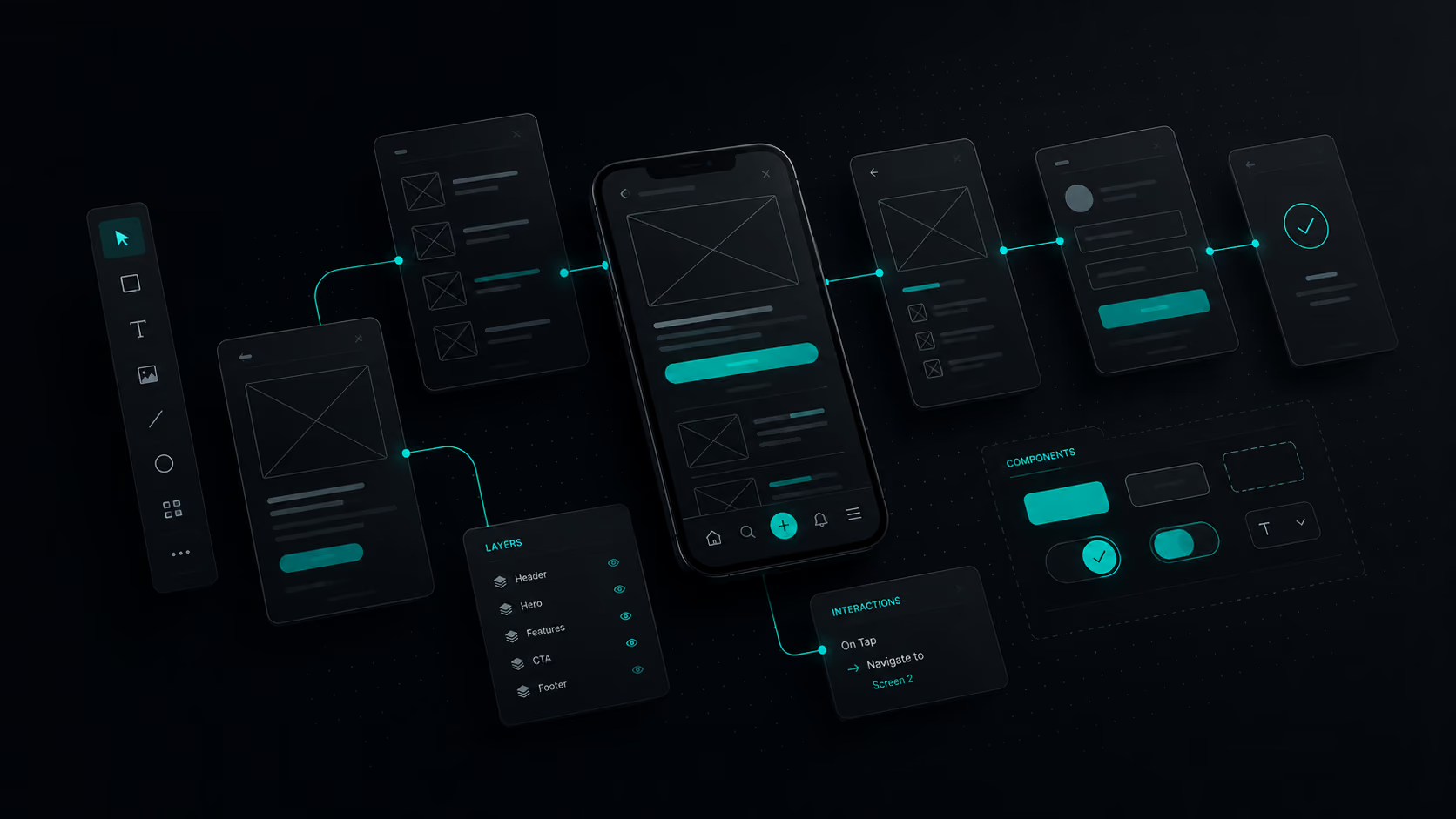
Vectrix · Acquired by CloudflareVectrix product design
Case 01 / 02
Drag / scroll
By the numbers

Senior UX  work that compounds.

3 Yrs
embedded design system
partnership with Tenable
1
entire global design system
built for Fanatics
100+
design system and component library engagements delivered 
500+
successful projects delivered 
50%
avg reduction in design-to-development handoff time
06Buildbox · Case study
41%
more users reached first success milestone.
See case study
Trusted by
WWFMFAMFAMFAMFAMFAMFAMFAMFAMFAMFAMFAMFAMFAMFAWWFMFAMFAMFAMFAMFAMFAMFAMFAMFAMFAMFAMFAMFAMFA
The reality

Most digital products fail
not because of bad tech
but because of bad UX.

01 / 04
30%

Teams without a design system spend up to 30% of their design and development time recreating UI decisions that already exist elsewhere in the product.

Forrester Research
02 / 04
3 to 5

The average enterprise product has 3 to 5 separate component libraries in various states of maintenance, created independently by teams that did not have a shared system to build from.

Nielsen Norman Group Design Systems Survey
03 / 04
50%

Companies with mature design systems ship new features up to 50% faster than those without.

Figma State of Design Systems Report
04 / 04
0×

Design-led companies outperform industry benchmarks by 2:1 over a five-year period.

McKinsey Design Index
Our Design System Agency Process

Audit First. System Second. Adoption Third.

Every design system engagement starts the same way: we assess what exists, understand how your teams actually work, and identify where inconsistency and friction are creating the most cost before proposing a single component.

01

Audit and Alignment.

We audit your existing UI, workflows, and team structure. Where is inconsistency creating rework? Where are designers and engineers solving the same problem in different ways? Where does the current system break down? We find it before we design anything.

02

Foundation Definition.

We define the core principles, design tokens, visual foundations, and component standards that will govern the system. Foundation decisions are made with engineering input before component work begins, because changing them after is expensive.

03

Component Design and Documentation.

We design reusable components with clear guidelines for usage, states, behavior, and accessibility. Every component is built against real product workflows, not theoretical use cases.

04

System Integration.

The system is structured to integrate with your existing design and development environment, whether that is Figma, Storybook, a specific frontend framework, or a combination of tools your engineering team already uses.

05

Adoption and Enablement.

We ensure the system is intuitive, discoverable, and easy for teams to use. Adoption does not happen automatically. We build the onboarding materials, governance model, and feedback process that turns a design system from a deliverable into an organizational standard.

Phase 01 / 05
Process
What you get

End-to-end UI & UX design
tailored to your product.

Six services that flex to your stage — from research and strategy through to validation and post-launch iteration. Combine what you need.

01 / 06UX Research

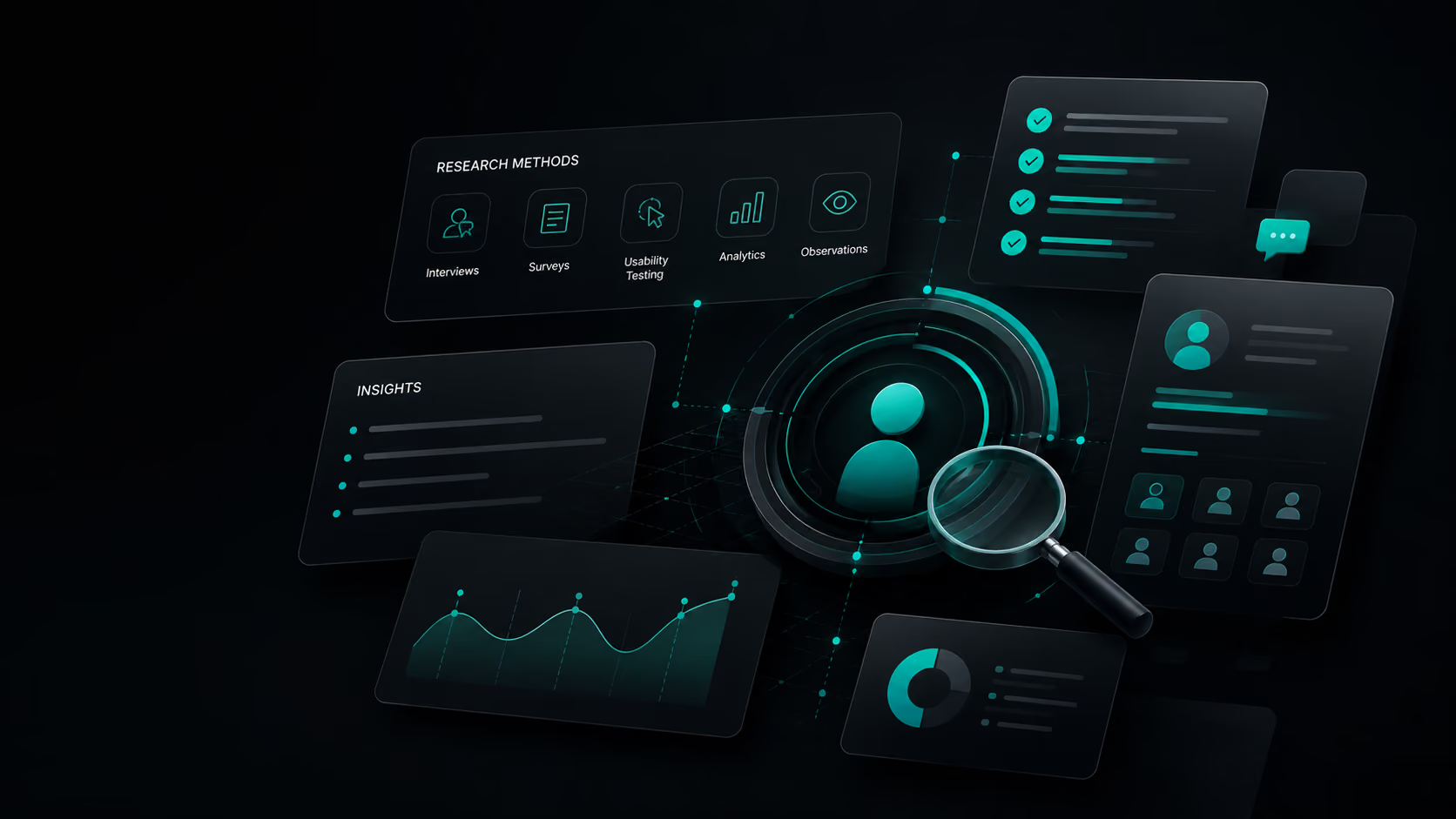
UX Research & Insights

User interviews · Research reports · Opportunity maps

02 / 06UX Strategy

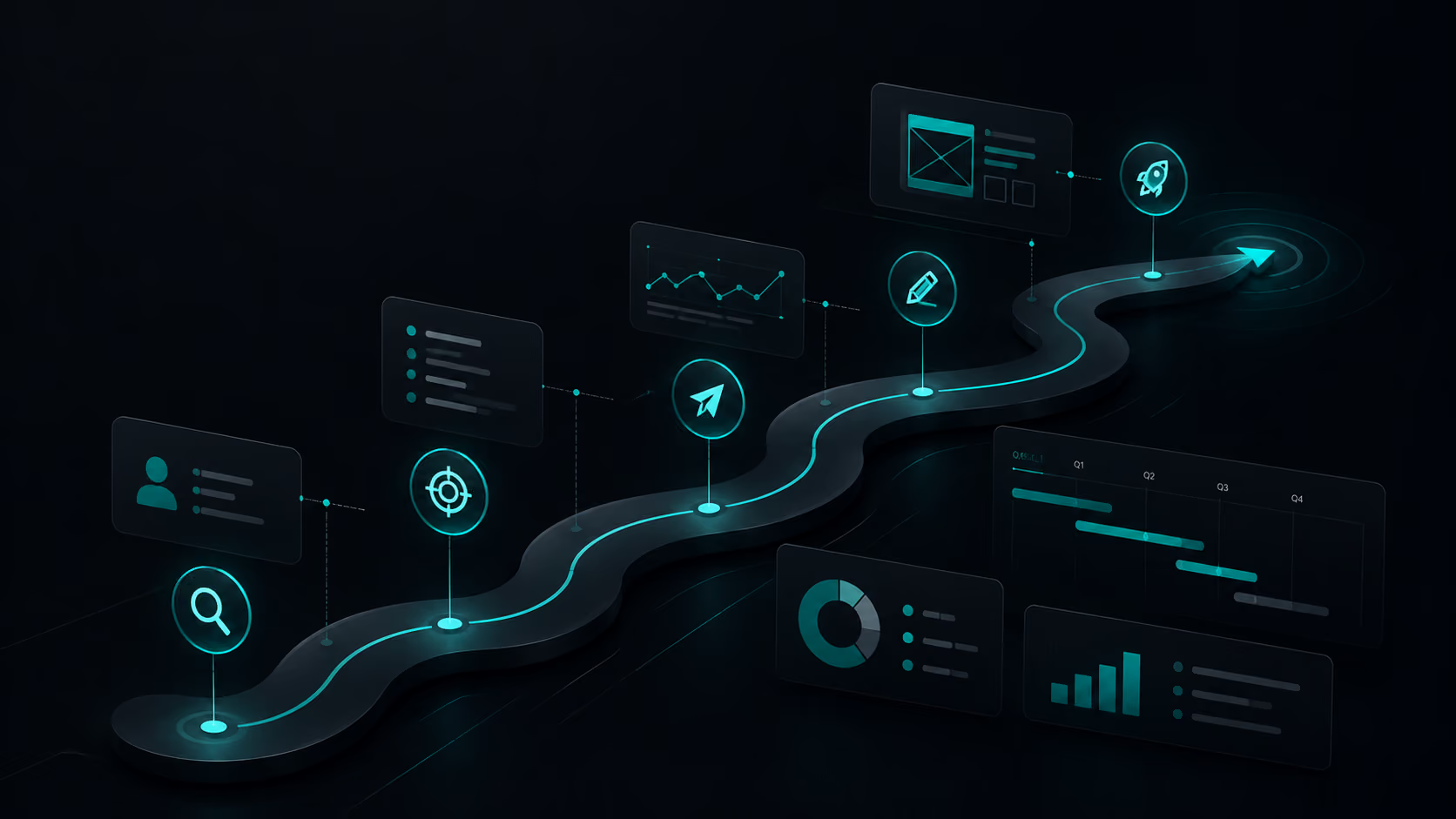
UX Strategy & Roadmapping

Journey maps · User flows · Product guidance frameworks

03 / 06Wireframing

Wireframing & Prototyping

Information architecture · Wireframes · Interactive prototypes

04 / 06UI Design

UI Design & Design Systems

High-fidelity screens · Component libraries · Design systems

05 / 06Usability Testing

Usability & Testing Validation

Structured testing with real users before development

06 / 06Post-Launch Support

Post-Launch
Support & Iteration

Ongoing optimization based on real user behavior and performance data

Compare

How WANDR's UI/UX
design agency compares.

In-House UI/UX HiringTraditional Agencies
Speed to startSlow hiring cyclesHeavy onboarding processReady within days
ScalabilityHard to scale up or downFixed team, fixed scopeFlexible engagement size
RiskRisky long-term hireNo product ownership post-deliveryEmbedded partner with accountability
PerspectiveToo close to the productDetached, vendor-styleOutside objectivity with inside commitment
Product thinkingExecution-focusedDelivery-focusedStrategy + execution
PushbackUnlikely to challenge leadershipUnlikely to risk the contractWe challenge bad ideas
What our clients say

Verified Clutch reviews.

Why Wandr?

Design System Services That Perform. Guaranteed.

01 · Seniority

Enterprise-Grade Design System Expertise

A team that has built entire global design systems for Fanatics and consolidated enterprise design systems for Tenable through a three-year embedded partnership. We understand the organizational complexity of design systems at scale, not just the design deliverables.

02 · Evidence

Research and Engineering Aligned

We involve engineering in foundation and architecture decisions before component work begins. A design system built without engineering input will not be adopted at scale. Every engagement includes explicit engineering alignment as a non-negotiable phase.

03 · Guarantee

Performance Guarantee

If your design system does not measurably reduce design-to-development friction within the first product cycle after adoption, we keep working at no additional cost until it does.

The difference

Same product. Experience
users actually understand.

Buildbox came to us with a no-code game development platform used by millions — but with friction that was costing them activation. Here's what changed.

Before redesign
After redesign
Before Wandr — Fanatics:After  Wandr — Fanatics:
Before Wandr — Fanatics:
  • Multiple component libraries in different states across product teams
  • No shared source of truth for design tokens, color, spacing, or typography
  • Designers and engineers solving the same UI problems independently
  • New features accumulating visual inconsistency with every release
After Wandr — Fanatics:
  • Single global design system serving all product teams across markets
  • Complete token architecture governing color, spacing, typography, and states
  • Shared component library with clear usage guidelines and engineering alignment
  • New features built from a consistent, scalable foundation
Fanatics·Global Sports·Commerce Platform
Who this is for

You understand that inconsistency in your product is not a visual problem. It is an operational one that compounds  with every new hire, every new feature, and every new market.

We work with Directors of Design, Heads of Product, and CTOs who understand that every designer solving a UI problem that already has a solution elsewhere in the product, every engineer rebuilding a component that exists in a different codebase, and every sprint slowed down by design-to-development misalignment is not a workflow inefficiency. It is accumulated cost that a well-built design system eliminates. Your product will keep growing. The question is whether your design system grows with it or becomes the thing that holds it back.

Free tool

Not ready to talk? Start with a free audit.

5 minutes. We will identify the top three design system gaps that are creating friction for your design and engineering teams right now, free, no pitch.

Get a free design system audit
Sample report
your-product.com/signup

Get started in seconds.

1No value prop above fold
2No password rules shown
3CTA hierarchy unclear
Design System Agency

Frequently asked.

Click any question to expand. If yours isn't here, write to us.

  1. A design system agency builds, consolidates, and scales the component libraries, design tokens, usage guidelines, and governance frameworks that allow product teams to design and build consistently at scale. The best agencies go beyond component deliverables to include the adoption infrastructure, engineering alignment, and governance models that determine whether a design system gets used or gets bypassed.
  2. A component library is a collection of reusable UI elements. A design system includes the component library plus the principles, tokens, usage guidelines, and governance framework that govern how and when those components are used. A component library answers "what do we build with." A design system answers "how and why we build it that way."
  3. Internal teams can build design systems, but they consistently underestimate the organizational complexity involved: stakeholder alignment across design and engineering, adoption infrastructure, governance models, and version management. The teams that succeed with internal builds typically have dedicated design system ownership and significant experience with the process. Engaging an agency accelerates the work, reduces the risk of wrong sequencing, and brings cross-industry pattern recognition that internal teams rarely have.
  4. A typical design system engagement runs between four and twelve weeks depending on product complexity, team size, and system maturity. Building from scratch takes longer than formalizing existing components. Consolidation projects, like Wandr's work with Tenable, run longer because they involve audit, migration planning, and multi-team alignment alongside the design work.
  5. Adoption is built into our process, not bolted on at the end. We develop onboarding materials, component discovery documentation, a governance model for handling change requests, and a feedback process that allows teams to surface problems without those problems getting lost. A design system that teams work around is not a design system. Adoption infrastructure is as important as component quality.
  6. If your design system does not measurably reduce design-to-development friction within the first product cycle after adoption, we keep working at no additional cost until it does.
  7. Look for an agency that leads with an audit and organizational alignment phase before any design work begins, involves engineering in foundation decisions, and has a clear adoption and governance delivery alongside the component library. Ask to see examples of design systems that are still in active use, not just screenshots of deliverables.
  8. Design systems eliminate redundant work at every level: designers stop recreating patterns that already exist, engineers stop rebuilding components that are in other codebases, and QA stops catching inconsistencies that a shared standard would have prevented. Companies with mature design systems ship features up to 50% faster than those without, and the compounding effect on engineering velocity grows as the product and team scale.
Let's look at your product together

Show us.
We'll show you what to fix.

Request your free design system audit. Within 72 hours we will schedule a 30-minute call to walk you through exactly where your design and engineering teams are losing time to inconsistency and what a well-built system would change. No commitment required. If it makes sense to work together, great. If not, you leave with everything we found and a clear roadmap to fix it.

Ready to go further?

Our blog

Design System Related Articles