

A mobile app design agency
That helps you acquire, retain and engage
your users.

WANDR embeds senior designers into your product team to design iOS and Android products that earn the second open, not just the install. Ten years, 500+ products shipped, every decision tested on a real device.

"The app has satisfied all project requirements, resulting in a sleek and well-functioning product."
Dan Quirk, Head of Marketing, ScaleMatters
"Not only are we very happy with their work, but we also got new friends. WANDR guys are amazing."
Marcio Alexandroni, CTO, Areatec Tecnologia (DigiPare)
"They hit every milestone and delivered on time. The team is very skilled and they provide best-in-class service."
Aston Teague, Co-Founder, Crowdlink
LA - Silicon Valley - Austin - Miami - Mexico City

A Mobile App Design Agency Built on Shipped Apps, Not Concept Reels.

Ten years. 500+ products shipped. Enough mobile app design engagements to know that the screens are rarely the problem. The sequence is. What you ask for, when you ask for it, and what the user has been given in return by that point.

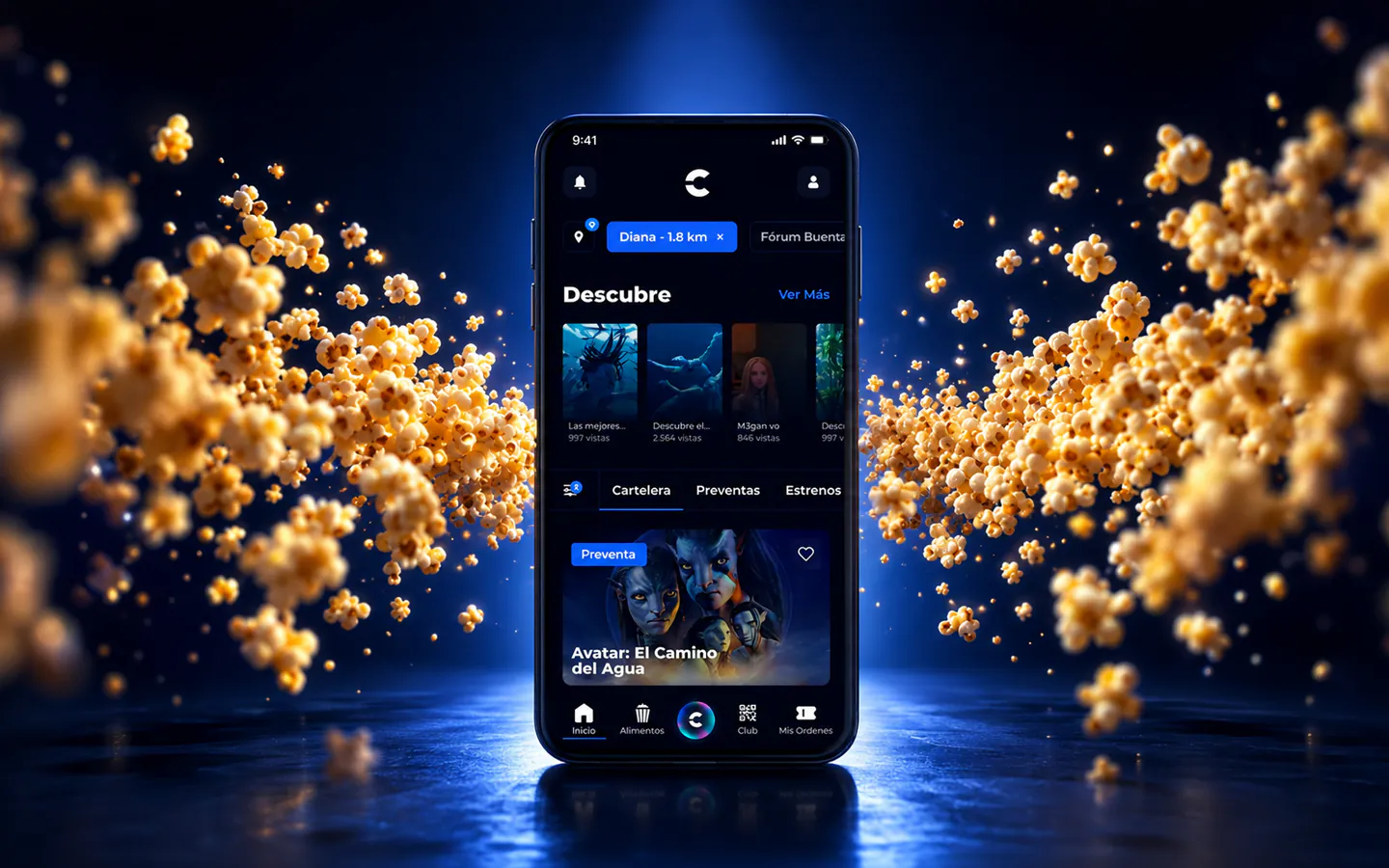
We've designed mobile apps across fintech, ecommerce, entertainment, transportation, healthcare technology, and enterprise software, including one app that replaced roughly fifty city-specific parking products and another that sells tickets for the fourth-largest cinema chain on earth.

We don't design mobile apps that demo well. We design mobile apps that get opened again on day four.

Dotted world map showing Wandr locations
Proven impact

Mobile app design that moved the number.

Two case studies that illustrate what embedded UX with research, strategy and execution looks like when it ships.

ENTERTAINMENT · GLOBAL CINEMA CHAIN

Cinépolis

25%increase in online ticket sales after the mobile and web purchase flow was rebuilt.

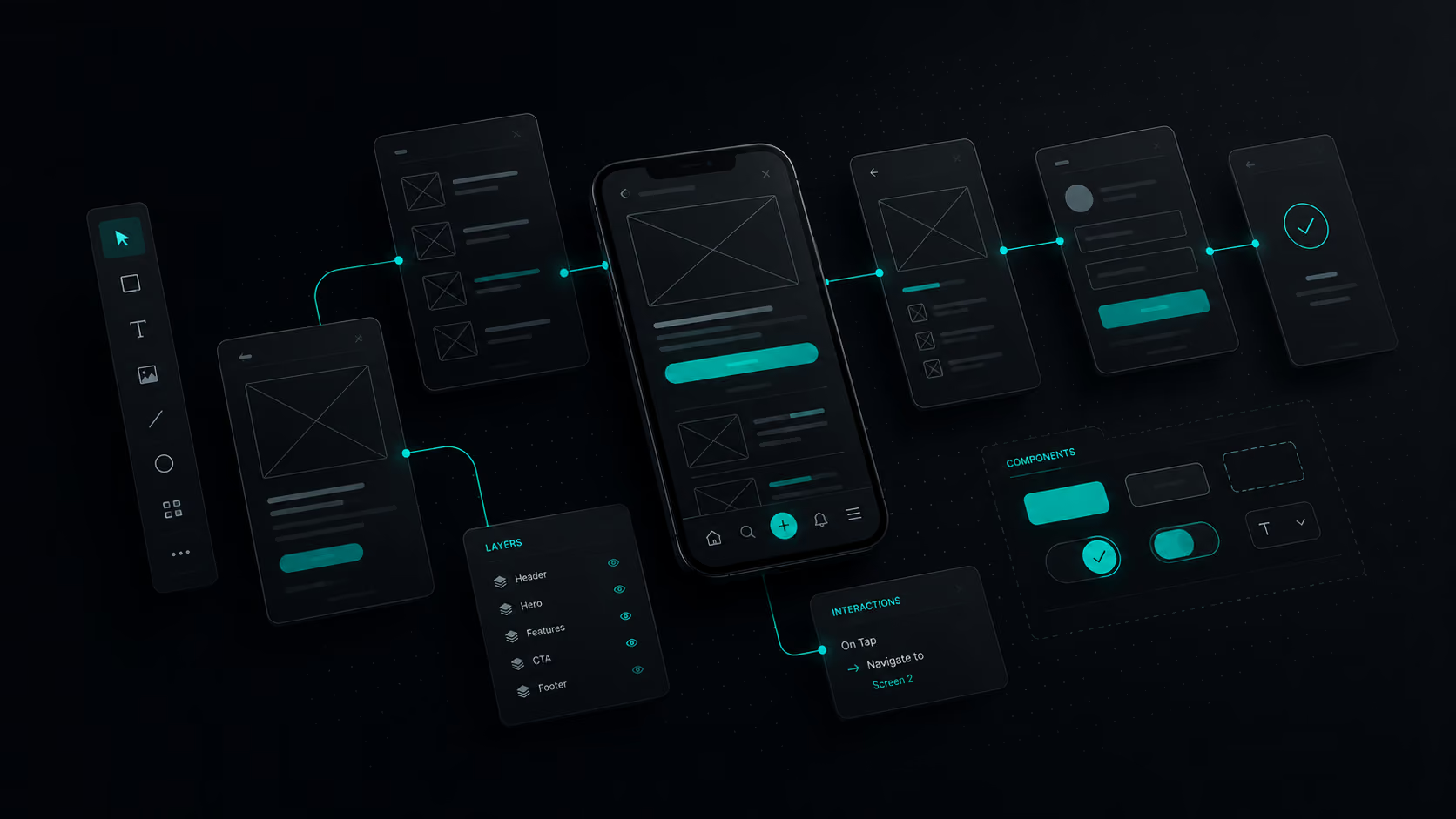
The fourth-largest film exhibitor in the world was losing ticket sales to a competitor because customers could not finish checkout on their phones. Zero user testing. Zero research. No design system. We embedded a product team, rebuilt the purchase flow, and built one design system spanning app, web, kiosk, and back office across five markets, so a component fixed once stopped being rebuilt three more times.

"The quality of the design system was impressive, and we found new insights about our own customers that we simply did not have before."Armando Herrera, Head of UX, Cinépolis
See full case study
Cinepolis · EntertainmentCinepolis · Entertainment
GAMING · MVP DEVELOPMENT & BRANDING

StoryFire

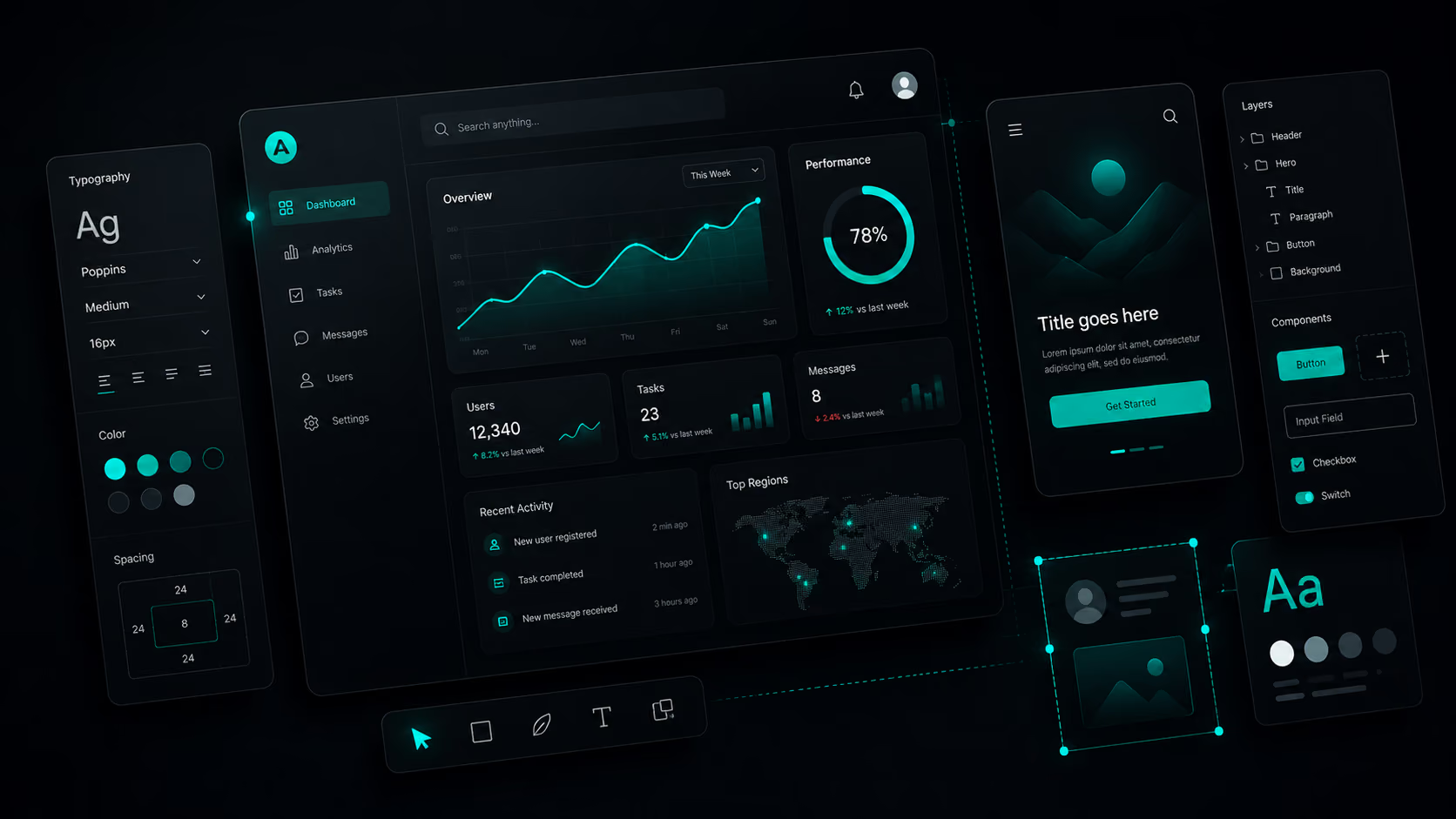
40,000+downloads in the first 48 hours on the App Store, from a brand, product, and gamified MVP designed and tested in two weeks.

A YouTube creator with five million followers, a launch date locked to a film release, and nothing to point that audience at. We worked on site with a co-founder for two weeks. A survey of 8,500 fans settled the platform question before design started, and two rounds of testing with the creator's own teenage audience rewrote the reward system before anyone built it.

"We gave WANDR an idea and two weeks. They sat in the room with us and came back with a brand, a build-ready product and proof from our own fans that it would land. Forty thousand people downloaded it in the first two days."Brian Spitz, Co-Founder, StoryFire
See full case study
Storyfire · GamingStoryfire · Gaming
Case 01 / 02
Drag / scroll
By the numbers

A decade of mobile app design,  quantified.

500+
products designed
and delivered
3000+
usability testing
sessions run
03Revenue
25%
increase in online ticket sales after the rebuilt mobile purchase flow (Cinépolis).
04Retention
93%
reduction in cancellation rate after A/B testing the flow (Synchrony).
05Retention
40K+
downloads in the first 48 hours, from a two-week MVP sprint (StoryFire).
06Funding
$3.2M
seed raised on the prototypes and deck (Crowdlink)
See case study
Trusted by
WWFMFAMFAMFAMFAMFAMFAMFAMFAMFAMFAMFAMFAMFAMFAWWFMFAMFAMFAMFAMFAMFAMFAMFAMFAMFAMFAMFAMFAMFA
The reality

Downloads were never the hard part.

The second open is.

01 / 04
77%

of users abandon an app within three days of installing it.

Andrew Chen / Quettra
01 / 04
25%

of downloaded apps are opened exactly once and never again.

Localytics
01 / 04
5x

cheaper to fix an experience problem during design than after development is complete.

IBM Systems Sciences Institute
01 / 04
$100

returned for every $1 invested in UX, an ROI of 9,900%.

Forrester Total Economic Impact Study
Researchfirst. Screens second.

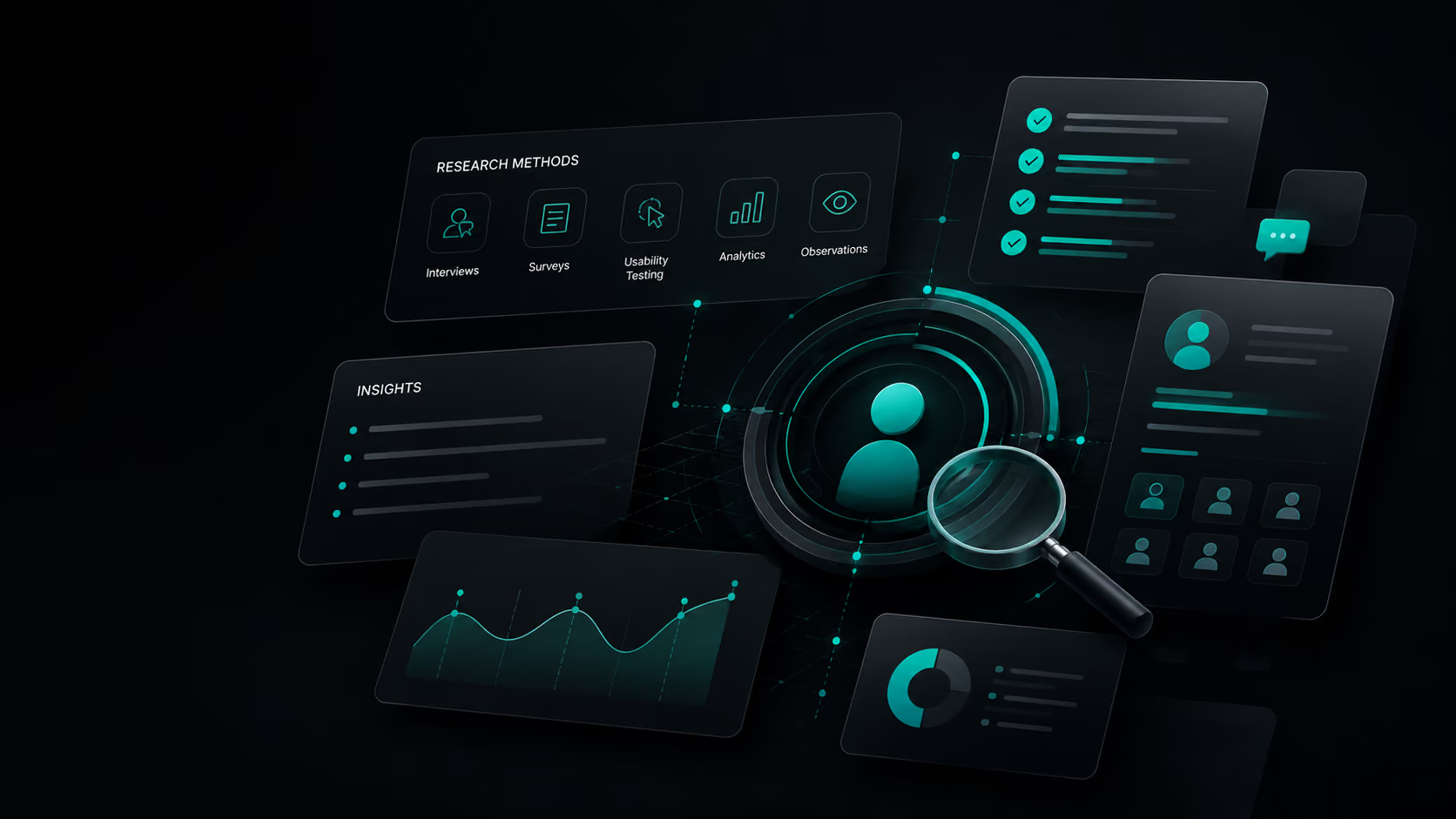
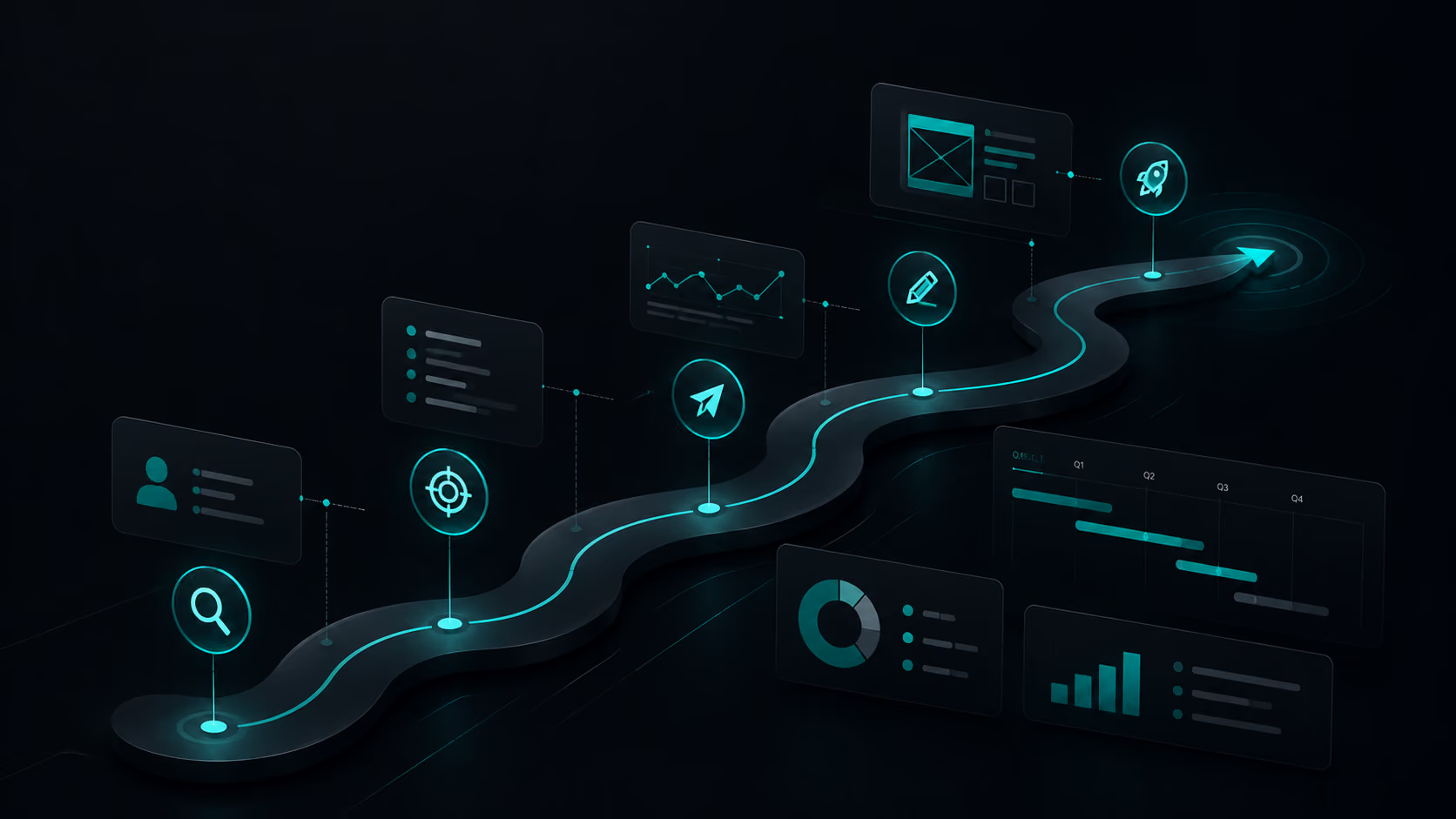
We find out what your users are actually trying to do on a phone, in the context they're doing it, before we design a single screen. Then we validate it with real people while changing it is still cheap.

5 phases →
Phase 01Discover
01

Discovery & Alignment.

We align with your stakeholders on business goals, platforms, users, success metrics, and technical constraints. Which platform leads, what the app has to do offline, what your stack can support. Design decisions start grounded in real context, not assumptions about what mobile users want.

Phase 02Plan
02

Research & Insights.

We gather and synthesize user research, competitive teardowns, store reviews, and existing behavioral data alongside your team. Your one-star reviews are a research asset most teams never read properly. We do.

Phase 03Design
03

Design & Prototyping.

We work iteratively inside your workflows, creating flows, wireframes, and interactive prototypes that run on a real device. Design decisions get made collaboratively, not revealed at the end. Thumb reach, touch targets, states, and edge cases are designed, not discovered in QA.

Phase 04Deliver
04

Testing & Validation.

We validate on-device with real users, measuring task success, time to first value, and where people hesitate or quit. Every meaningful decision is tested before engineering commits to it. No surprises at handoff.

Phase 05Measure
05

Ongoing Iteration.

Mobile app design doesn't stop at launch. We keep working with your team to analyze post-launch behavior, read what changed in the reviews, and optimize activation and retention as the product evolves.

Phase 01 of 05
→ Continue scrolling
What you get

What you get with WANDR's
mobile app design services

End-to-end mobile app design for iOS and Android, scoped to your product maturity, platforms, and business goals.

Wireframing and prototyping preview
01 / 06Mobile UX Research

Mobile UX Research & Insights

user interviews, store review analysis, behavioral data, opportunity maps

Wireframing and prototyping preview
02 / 06App Strategy & Feature

App Strategy & Feature Prioritization

journey maps, user flows, and a defensible answer to what ships first

Wireframing and prototyping preview
03 / 06Wireframing & Prototypes

Wireframing & Interactive Prototypes

information architecture through device-ready prototypes you can hand a user

Wireframing and prototyping preview
04 / 06iOS & Android UI Design

iOS & Android UI Design

high-fidelity screens designed against platform conventions, not one layout stretched across both

Wireframing and prototyping preview
05 / 06Developer-Ready Handoff

Developer-Ready Handoff

specs, states, edge cases, and assets, with engineering in the conversation from the start

Wireframing and prototyping preview
06 / 06Support & Iteration

Post-Launch Support & Iteration

Ongoing optimization based on real user behavior and performance data

Compare

How our mobile app design agency compares

In-House UI/UX HiringTraditional Agencies
Speed to startSlow hiring cyclesHeavy onboarding processReady within days
Platform depthDepends who you hiredOne layout stretched across bothiOS and Android designed on their own terms
EvidenceWhatever the team already believesPortfolio polish, little researchTested on-device before build
HandoffInternal, but often undocumentedFiles delivered, engineers translateEngineering in the room from day one
Design systemDeprioritized under roadmap pressureScreens, not a systemComponents, tokens, and a named owner
PushbackUnlikely to challenge leadershipUnlikely to risk the contractWe challenge bad ideas
What our clients say
Verified Clutch reviews.

Within the first month, we were able to complete the first iteration of the mobile prototype. Considering the learning curve and the volume of work, we found that impressive. The deliverables are of high quality. The end product is impressive, as well as their entire approach.

Dakota YoungFounder & CEO, Boon
See full Clutch review

My team had a lot of input in terms of design and copy because we had certain standards for our company. They wanted to see our company succeed and celebrated our wins with us, and that was very encouraging. We could see they were invested in the project. They didn't just want to collect their fee and move on.

Joannah SmallFounder · Caraleya
See full Clutch review

The app has satisfied all project requirements, resulting in a sleek and well-functioning product. The WANDR team was proactive and easy to work with throughout the rapid development process. They would often make changes during meetings rather than waiting for the next call.

Dan QuirkHead of Marketing, ScaleMatters
See full Clutch review
Why Wandr?

A Mobile App Design Agency Has to Move Retention.

And We Guarantee It

01 · THE TEAM

Senior designers from day one.

ou work directly with designers and strategists who have shipped mobile products across consumer fintech, ecommerce, transportation, and enterprise. No juniors learning platform conventions on your dime. No account managers between you and the work.

01
02 · METHOD

Tested on a device, not admired in Figma.

A mobile flow that reads well on a desktop monitor tells you almost nothing. We test prototypes on real phones with real users, measuring task success and time to first value. We challenge assumptions, including yours, including ours.

02
03 · TERMS

Performance guarantee.

If your app doesn't show measurable improvement in the primary metric we agreed on within 90 days of launch, we keep working at no additional cost until it does. We set the success criteria at kickoff so there's no ambiguity later about what we were working toward.

03
The difference

Thirty apps to cover fifty cities.We designed one.

Areatec came to us with a parking app carrying nearly fifty city-specific rule sets, while the closest competitor was shipping thirty separate apps to solve the same problem. Here's what changed.

BeforeAfter
Before WANDR · DigiPare
  • Paying for a single parking space ran through thirteen distinct stages
  • Around 50 municipalities, each with its own tariffs, time limits, and credit units, with the driver left to absorb the difference
  • The closest competitor had solved fragmentation by shipping more than 30 separate apps, one per city
  • A brand still promising "the digital blue zone" as bike locking and scooter charging were being added
After WANDR · DigiPare
  • One interface designed to serve roughly 50 cities without forking the product per municipality
  • Repeat parking reduced from a thirteen-stage flow to a few taps, using saved vehicles and named shortcuts
  • Parking and bike locking unified under one mental model instead of two separate apps
  • Areatec rebuilt its backend services to match the new design system
Digipare·SMART PARKING·TRANSPORTATION
Who this is for

You understand that every extra tap in onboarding, every permission asked before it was earned, every one-star review saying "confusing" is a design decision that didn't start with the user. Installs are the easy part. You're ready to fix what happens after.

We work with CTOs, Heads of Product, and founders whose mobile app has more potential than the current experience is delivering. Whether you're facing low day-7 retention, an activation drop nobody can explain, a redesign you can't afford to get wrong, or a new app that has to land the first time, we start with your users and design backward from there.

First Step
Not ready to commit? Let us review your app first.

Send us your app. We'll identify the top 3 UX friction points costing you activation and retention. Free, no pitch, no obligation.

Get your free app UX review
Sample report
your-product.com/signup

Get started in seconds.

1No value prop above fold
2No password rules shown
3CTA hierarchy unclear
Mobile App Design Agency
Frequently asked.

Click any question to expand. If yours isn't here, write to us.

  1. Cost depends on scope, but the variables are predictable. A focused audit of one flow is a fixed, contained engagement. A full app design scales with the number of platforms, how many user types the app serves, how much research is required, and whether a design system is part of the work.  A UX audit of one major flow is $499. Most full engagements start at $10,000.  Four things move the number more than anything else:  How many platforms. iOS and Android are not one design job priced twice, but they are not two unrelated jobs either. Tablet and wearable surfaces add real scope. How many distinct user types. A single consumer persona is not the same problem as a consumer app plus an operator console plus an admin view. How much primary research is needed. If you already have behavioral analytics and access to users, we move faster. Whether you need a design system or a set of screens. A system costs more upfront and considerably less over the following year.
  2. Look for evidence of thinking, not just visual polish. Most mobile app design portfolios show finished screens in a device mockup. Very few show the reasoning that produced them, and the reasoning is what you're actually buying.  Five questions worth asking before you sign:  Have you shipped an app in my category, at my stage, with my constraints? A consumer social app and a regulated fintech app are different problems wearing the same rectangle. Can I use something you designed, on my phone, right now? Ask for a live app in the store, not a case study PDF. Screens are easy to produce; a product still in use is not. What happens when the designs reach engineering? Handoff failures are the most common way app engagements go wrong. Ask specifically how they work with mobile developers and how states and edge cases get specified. How do you decide what to fix first? If the answer is a severity score rather than business impact, you'll get a list instead of a plan. What does success look like, and when do we measure it? Retention, activation, task success. An agency unwilling to name a metric before starting is unlikely to be measured against one afterward.  The strongest signal is an agency willing to tell you when you don't need them, or when a smaller engagement would serve you better.
  3. A focused redesign of one critical flow runs two to four weeks. A full mobile app design engagement, from research through a tested, developer-ready prototype, typically runs six to twelve weeks. Our MVP engagements are guaranteed at eight weeks.  The variable is research depth and the number of platforms, not screen count. We work in two-week sprints, each closing with a review, so you see the app taking shape while there's still time to change it. When the date genuinely cannot move, we compress: StoryFire went from concept to a branded, user-tested, build-ready iOS MVP in two weeks on site, because the launch was tied to a film release and the window was fixed.  We give you a firm timeline during scoping, before the engagement starts.
  4. An in-house designer works within a single product context. They learn your app deeply, which is valuable, but they only ever see one way of solving a problem. An agency brings pattern recognition from across hundreds of products, an outside view on decisions your team stopped questioning, and a senior team ready to start immediately.  There's also a math question. A senior product designer costs six figures a year plus benefits, takes four to six months to hire, and roughly a year to reach full productivity. If the work is a defined push rather than a permanent function, that's a heavy commitment to make before you know what you need.  Hire in-house when mobile design is a permanent, always-on function and you can absorb the wait. Hire a freelancer when the work is a contained set of screens you've already specified. Hire a mobile app design agency when the problem isn't fully defined, when the work spans research through delivery across two platforms, or when you need capacity that doesn't disappear if one person becomes unavailable. If you want an embedded senior designer inside your team without the hiring risk, that's our staff augmentation model, matched within 72 hours.
  5. Yes, both. And mostly yes, they need to differ, in the places users have already learned.  Navigation patterns, back behavior, system dialogs, date and file pickers, share sheets, and typography defaults carry platform expectations that users don't consciously notice until you break them. Your brand, layout, information architecture, and content stay shared. The platform-native layer is where we diverge.  The exception is enterprise and internal tooling, where consistency across a mixed device fleet often matters more than platform convention. We make that call with you during scoping rather than applying a rule.
  6. Design is our core service, and most clients take the designs to their own engineering team or to a development partner. We also place front-end and back-end engineers through our staff augmentation model when you need build capacity alongside design.  Either way, engineering is in the conversation before design decisions are locked. Technical constraints shape the work instead of surfacing during implementation, and when a decision carries real build cost, we flag it while it's still cheap to change. There is no moment where finished designs get thrown over a wall.
  7. Yes, and it's one of the more common reasons teams call us. The risk is real. A redesign that delights new users while breaking the muscle memory of the people who already pay you is a net loss.  We handle it by separating the two audiences in research. With Buildbox, a no-code platform used by millions, new users were abandoning before finishing a first project while legacy creators knew the tool cold. The audit combined heuristic evaluation, funnel analytics, heatmaps, and session replays to isolate exactly where new users dropped off, so onboarding could be rebuilt without rewriting what experienced users relied on. Result: 41% more users reached their first success milestone.  Where the risk is high, we validate with both cohorts before launch and stage the rollout so the data arrives before the full audience does.
  8. By product outcomes, not aesthetics. For mobile that usually means activation and time to first value, day-1 / day-7 / day-30 retention, task success rate, conversion through the flow that makes money, and reduced friction signals like rage taps, support tickets, and store review themes.  We agree on the primary metric at kickoff, before any design work starts, so there's no ambiguity later about what we were working toward.  Then we back it. If your app doesn't show measurable improvement in that metric within 90 days of launch, we keep working at no additional cost until it does.
  9. AI has made producing screens fast and cheap. It hasn't made deciding what to build any easier, and that's where most apps fail.  What AI does well: generating layouts, producing component variations, and accelerating the mechanical parts of visual design. What it doesn't do: talk to your users, explain why your day-7 retention dropped last quarter, tell you which of three plausible onboarding sequences matches how your customers actually behave, or push back when a stakeholder wants a permission prompt on the first screen.  The failure pattern we see most is an app where every screen was generated in isolation. Each one looks fine. Patterns drift, the same action behaves differently in three places, and the whole thing feels subtly wrong without anyone being able to say why. That's a systems problem, not a rendering problem, and no amount of prompting fixes it after the fact.  If you need screens produced, AI will get you there faster than we will. If you need to know which screens to produce and in what order, that's still research and judgment.
  10. You do. All design files, research findings, prototypes, design systems, and documentation belong to you and transfer at the end of the engagement.
Let's look at your app together.

Show us your app.

We'll show you what's costing you the second open.

Send us your app and we'll identify the top 3 UX friction points costing you activation and retention. Free, no pitch. If it makes sense to work together, great. If not, you leave with a clear picture of what to fix and where to start.

Ready to go further?

Our blog

Mobile App Design related reading.