Crowdlink

A $3.2M seed round, built on the investor-ready prototype and pitch deck WANDR delivered in four weeks, took Crowdlink from a business plan to a funded product.

PLATFORM
WEB APPLICATION
SIZE
SEED
Entertainment
·
WEB APPLICATION
·
MVP Development - Pitch Deck Design
At a glance

Idea to investor-ready in four weeks.

W5
W6
W7
W8
W9
W10
W11
W12
01
Weeks 1 — 2
Align & discover
workshop + kicks off the research (8 interviews, 104-survey)
02
Weeks 3 — 4
Define
personas, competitive map, information architecture
03
Weeks 5 — 7
Design & test
the two-sided prototype, tested with creators and fans
04
Week 8
Package.
prototypes, pitch deck, closing report
Drag / scroll →
SPRINT
4 weeks
Business plan to investor-ready
interviews
8 Interviews
Four fans, four creators & agencies
SURVEY
104 Responses
During research across the target market
package
3 Deliverables
Prototype, pitch deck, research report
At a glance

8 weeks, from research to handoff.

W1
W2
01
Weeks 1 — 2
Research
User research · Competitive audit · Site analysis
W3
W4
02
Weeks 3 — 4
Strategy
Trust architecture · 6 principles · Landing strategy
W5
W6
W7
03
Weeks 5 — 7
Design
20+ templates · Design system · Component library
W8
04
Week 8
Handoff
Roadmap · Tokens · Specs
Drag / scroll →
team
2 + 1
Designers · Strategy lead
research
9 audits
3 personas · 1 trust architecture
output
20+ templates
Home · Bingo · Categories · Blog
Engagement
WCAG 2.1 AA
Accessibility standard
The Client

Affiliate marketing meets street team.

Marketing Technology
MPL Gaming player base

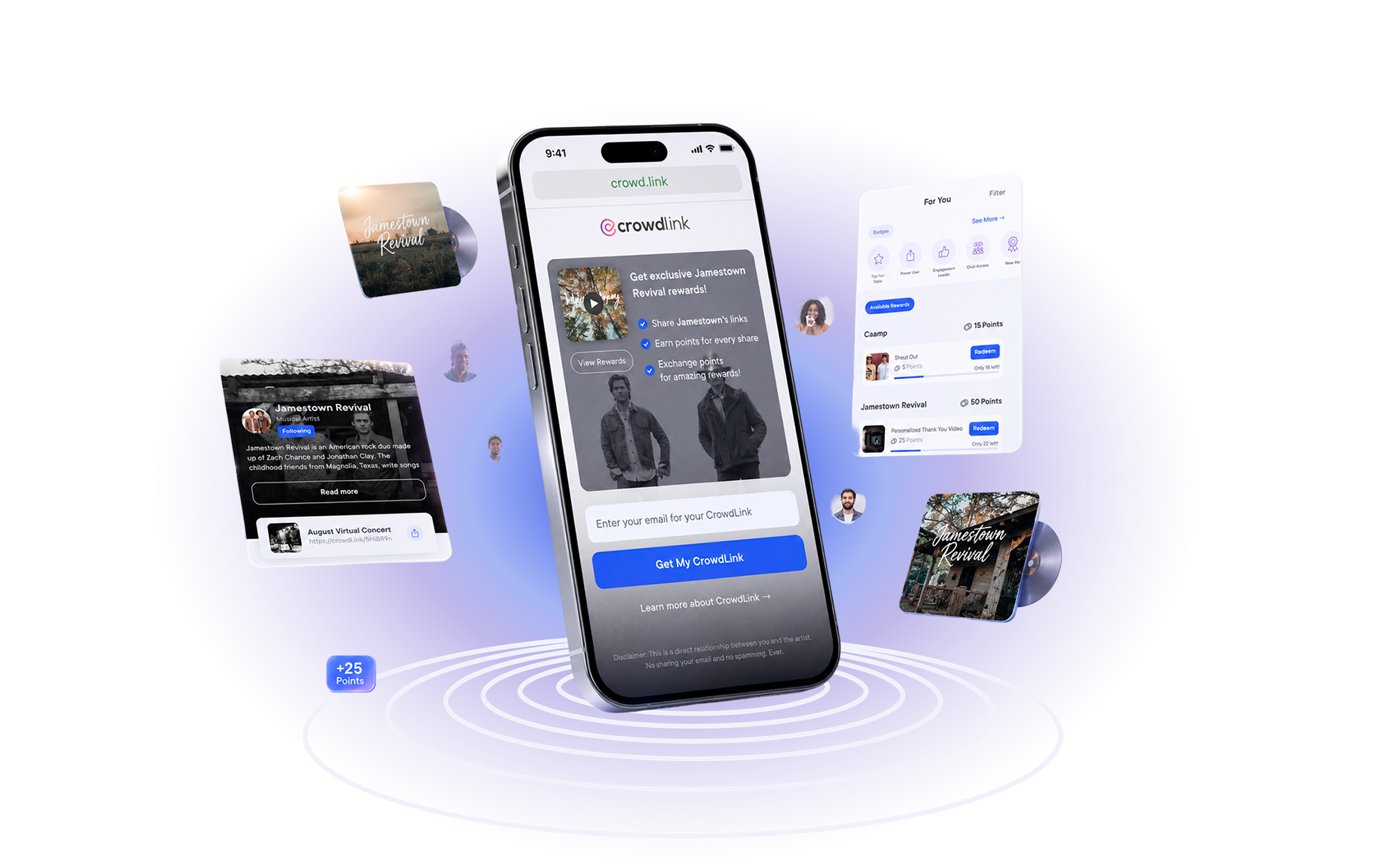
Crowdlink is a digital marketing platform for the creator economy, founded in 2018 by two entertainment insiders: Jonathan Clay, of the Americana duo Jamestown Revival, and artist manager Aston Teague, later joined by co-founder Donnie Gerault. The idea was simple to say and hard to prove: creators generate unique, trackable links, their fans share those links for rewards, and every share drives measurable buzz. The more a fan shares, the bigger the reward, and the bigger the reach for the creator.

When they came to WANDR, the founders had conviction, a market thesis, and a rough deck. What they did not have was a validated product or the investor-ready assets to raise the money that would build it.


2018
Founded in Austin, Texas
2 Founders
From music industry
50M+
Creators worldwide
The Challenge

A big idea that no one had yet made investable.

Two founders with a compelling thesis needed to become fundraise-ready fast: validate the idea, define the product, and package it well enough to open investor conversations, all inside a four-week window.

Problem 01

Conviction, but no validated product.

Crowdlink had a strong belief and a market thesis, but no tested product and no defined MVP. It was unclear which features to build first, or whether real users on either side actually wanted the thing.

Problem 02

A two-sided model to prove.

The product only works if the value lands for creators and for fans at the same time. Creators want cheaper reach and data; fans want recognition and rewards. If either side did not show up, the flywheel would never spin.

Problem 03

A crowded, well-funded field.

Crowdlink was entering a space defended by Facebook and Instagram and dotted with niche players like Surkus, SocialToaster, and Patreon. Standing out required a sharp, defensible value proposition, not just another link tool.

Problem 04

A hard fundraising deadline.

To fund the build and hit their target of being ready by late 2020, the founders needed an investor-ready prototype and pitch deck in about four weeks. The clock, not the feature list, set the scope.

Our Role

From business plan to

Investor-ready product.

01
A remote strategy workshop, value proposition, target users, roadmap, and risks
02
User journey mapping across the creator and fan sides
03
User research, eight interviews across the target market, plus a 104-response survey
04
A competitive landscape map and four research-grounded personas
05
Information architecture and the two-sided product design
06
A creator analytics dashboard and a native-share fan flow, in a cohesive identity
07
Interactive prototypes for both the fan and creator journeys, tested with real users
08
An investor pitch deck and a closing report
Research

We validated the idea before Designed It.

Rather than design on instinct, WANDR pressure-tested six assumptions with the people who would use the product. Eight interviews across the target market, four fans and four creators and digital agencies, opened the sprint, a 104-response survey sized the pattern, and a competitive map showed where Crowdlink could actually win.

01
interviews

Both sides wanted the same thing, from opposite ends.

Four fans and four creators and agencies were interviewed in depth. Creators needed cheaper reach and proof it worked: "it’s a lot of work to spread the word about a show, but most people don’t see it." Fans wanted to be recognized for promotion they were already doing for free.

02
surveys

Fans share on love, not incentives.

A 104-response survey confirmed the pattern: fans share only for artists they truly believe in. "If the music is good I am willing to share. If it’s not, nothing in the world will make me." The takeaway for design: rewards had to feel like recognition, never a payout.

03
ASSUMPTIONS

The current creator journey was clunky and everywhere at once.

Testing six assumptions surfaced the real pain: creators juggle too many platforms, generating and sharing links was "a super clunky experience," and choice-heavy landing pages were "a big dropoff." Sharing had to be effortless and live wherever the fan already was.

Four profiles, two sides of one loop.

Persona 01
Casual gamer persona

Jamie, the casual fan.

A student who discovers new artists constantly and shares in private group chats. Hates losing a link a friend sent her. “Typically if it’s just one song I send it in a group chat.”

Casual fan
Private sharing
Discovery
Persona 02
Committed player persona

Sam, the super fan.

A young professional who wants to be an artist’s number-one fan and be recognized for it. Frustrated by getting all his “ducks in a row” across too many platforms.

Super fan
Wants recognition
Multi-platform
Persona 03
Office-context player persona

Mackenzie, the solo creator.

A singer-songwriter who runs her own marketing, then realizes a big campaign barely reached anyone. Shares her whole self and wants real reach.

Solo creator
DIY Marketing
Wants reach
Persona 03
Office-context player persona

Bill, the creator with a team.

A busy musician focused on the craft, with a team for marketing. Wants to connect with and reward fans, and dislikes contests that “feel icky.”

Team creator
Time-poor
Wants tracking
The Strategy

Own the connection. Design both sides. Make it

Fundraiseable

3 principles →
Principle 01Trust
01

Own connection, not transaction.

The competitive map put every rival in the transactional corner (link shorteners, contest tools) or the purely social one. The whole social-and-emotional quadrant sat empty, exactly where fans said they lived: "they want a connection, not a transaction." Crowdlink was designed to own it.

Principle 02Segment
02

Design both sides as one loop.

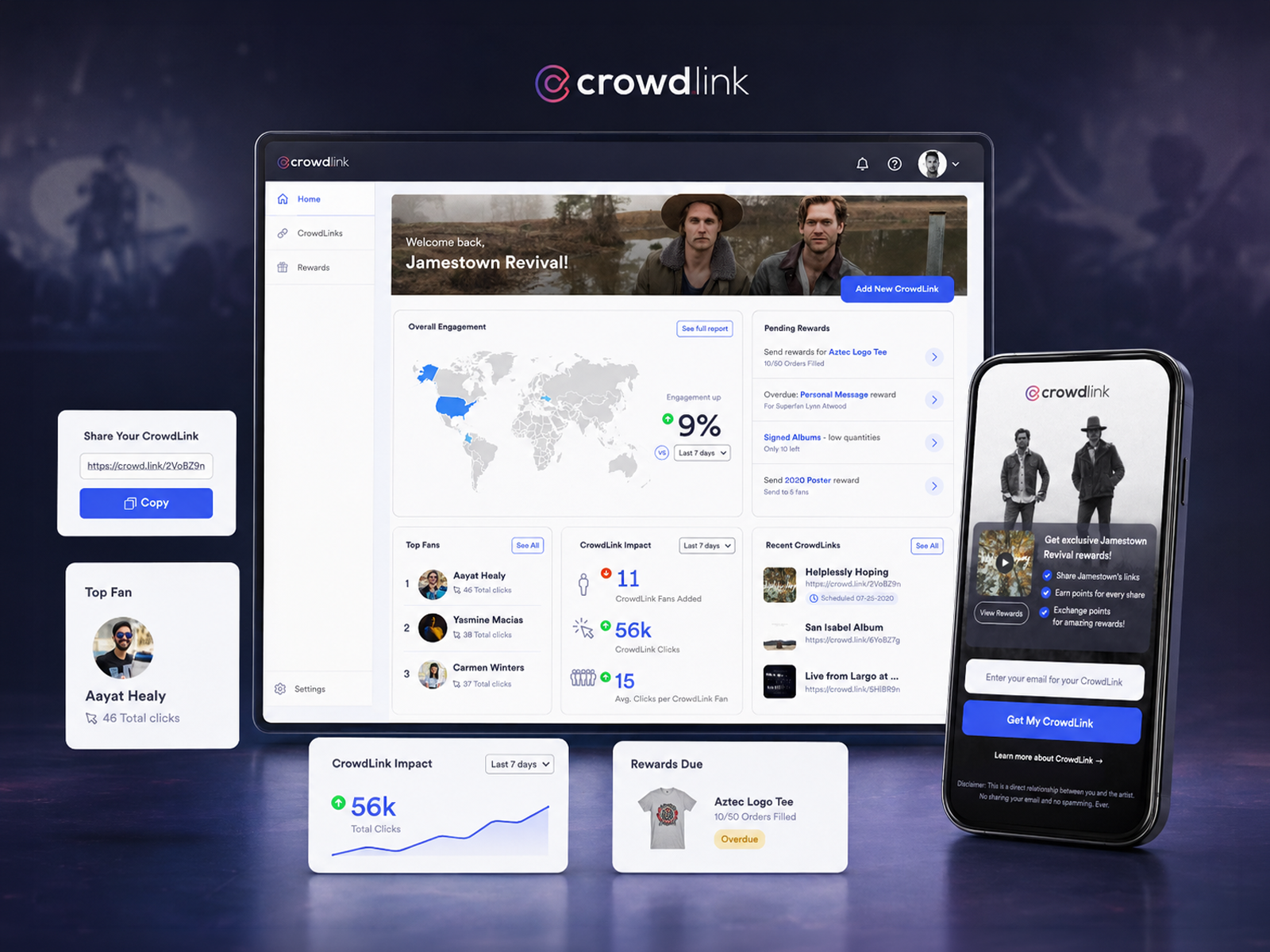
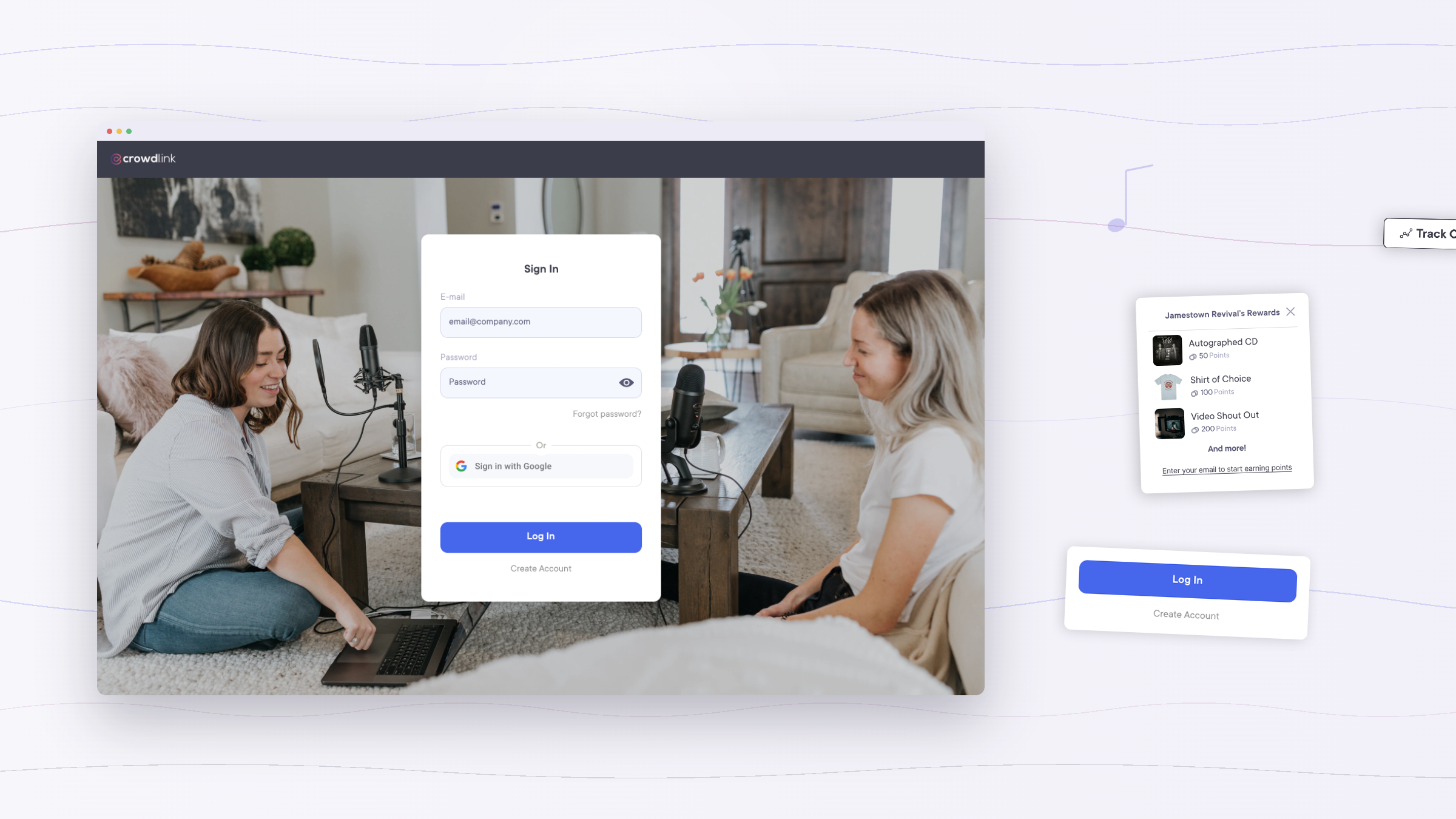
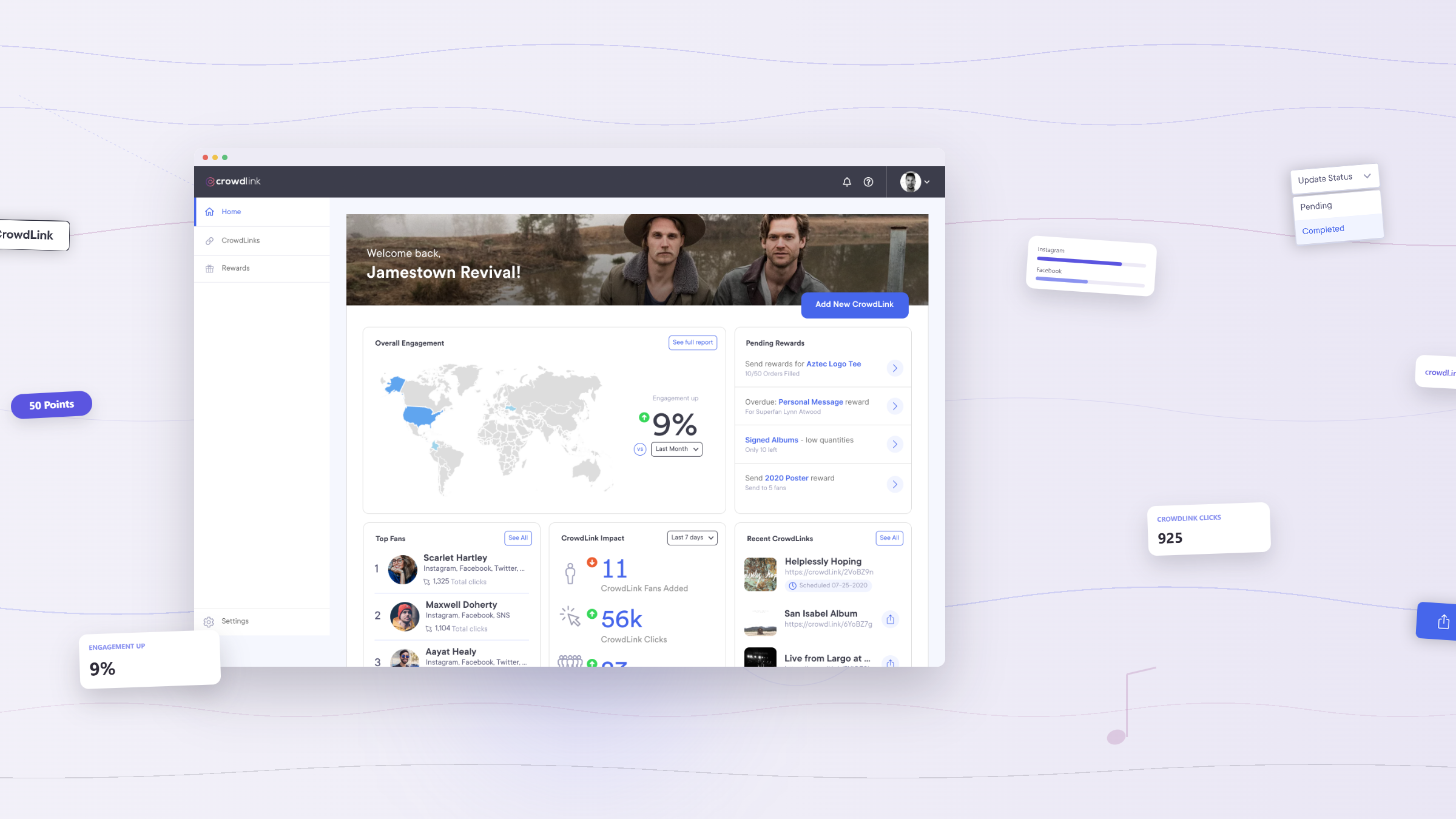
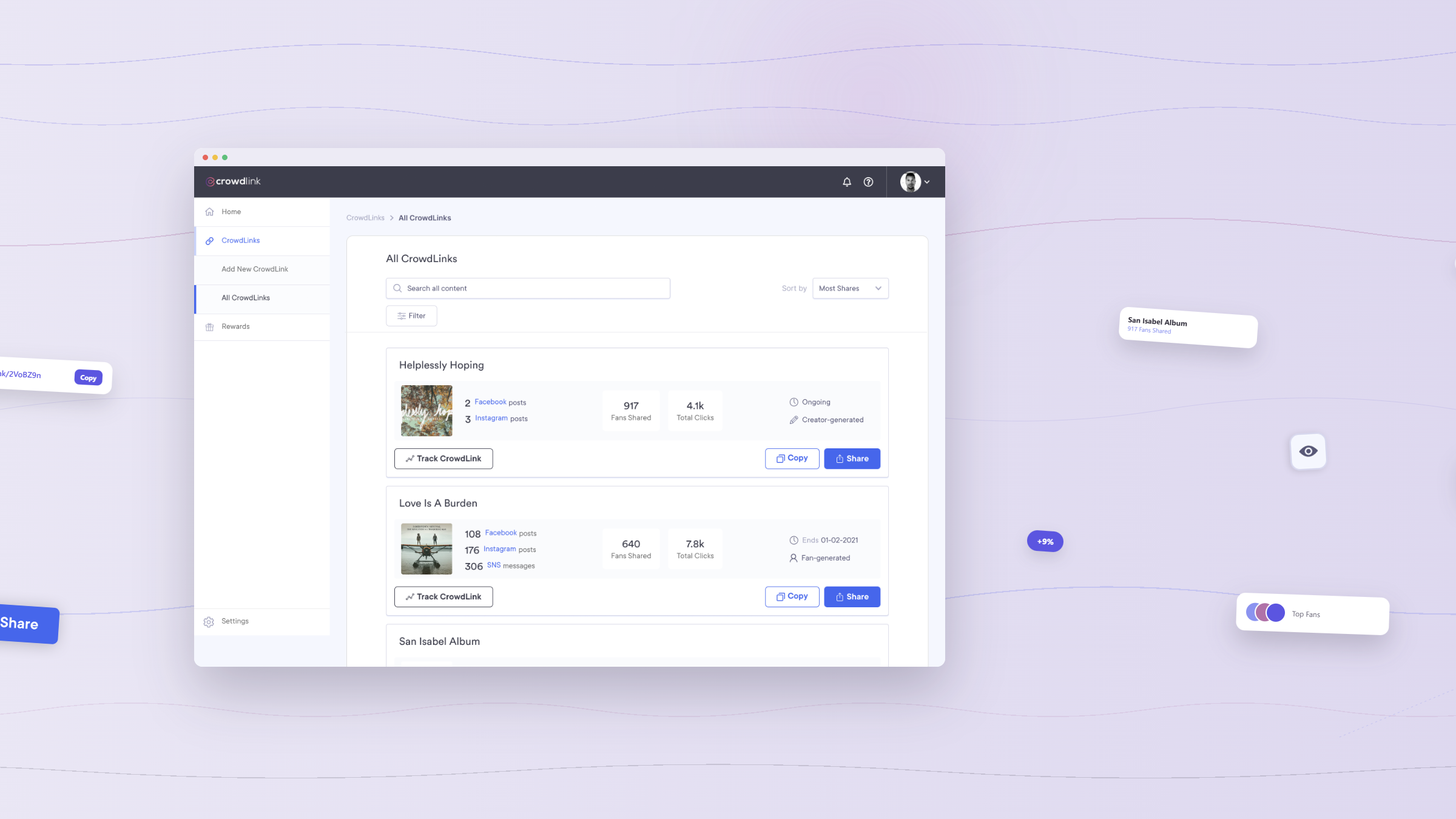
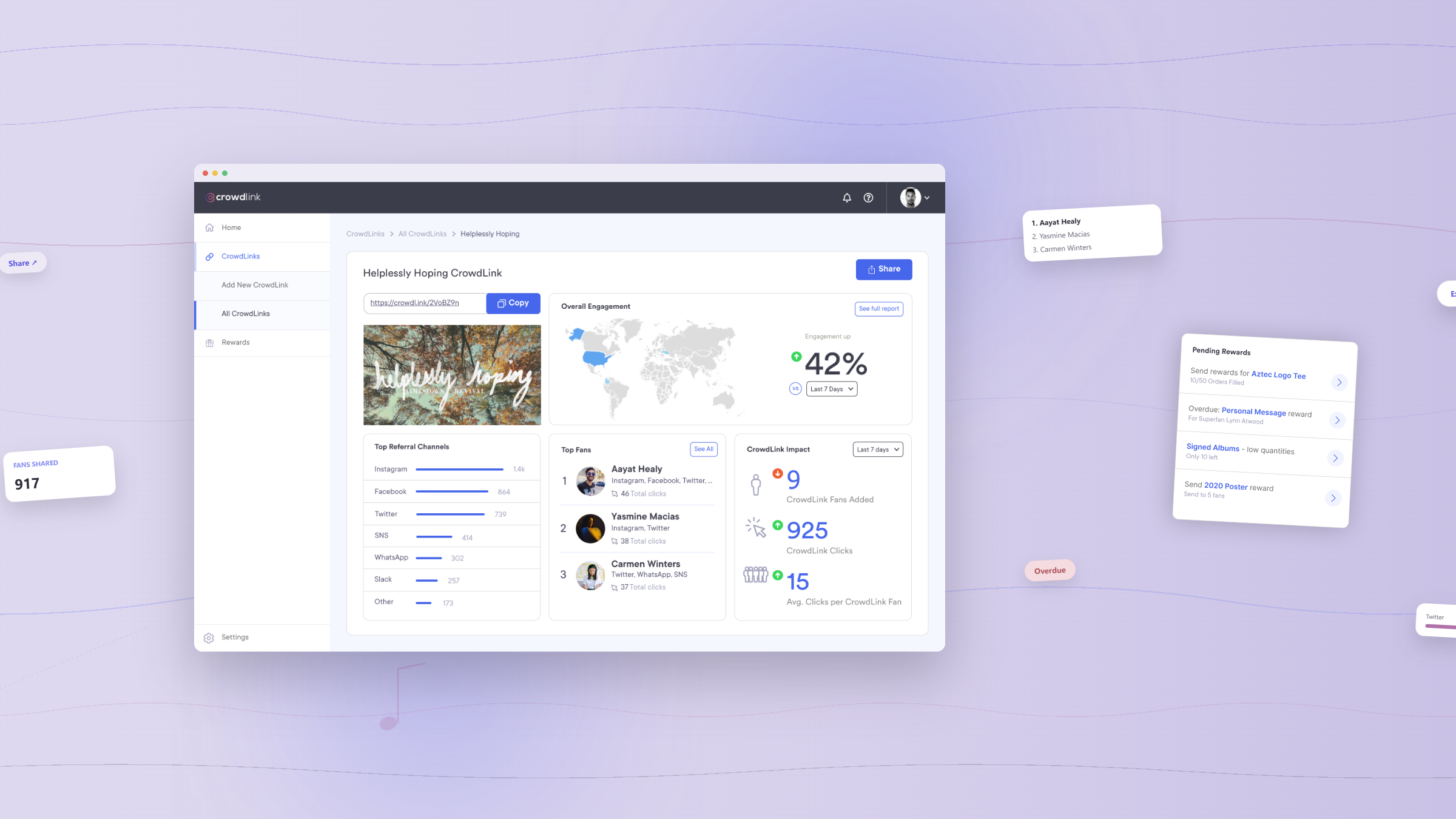
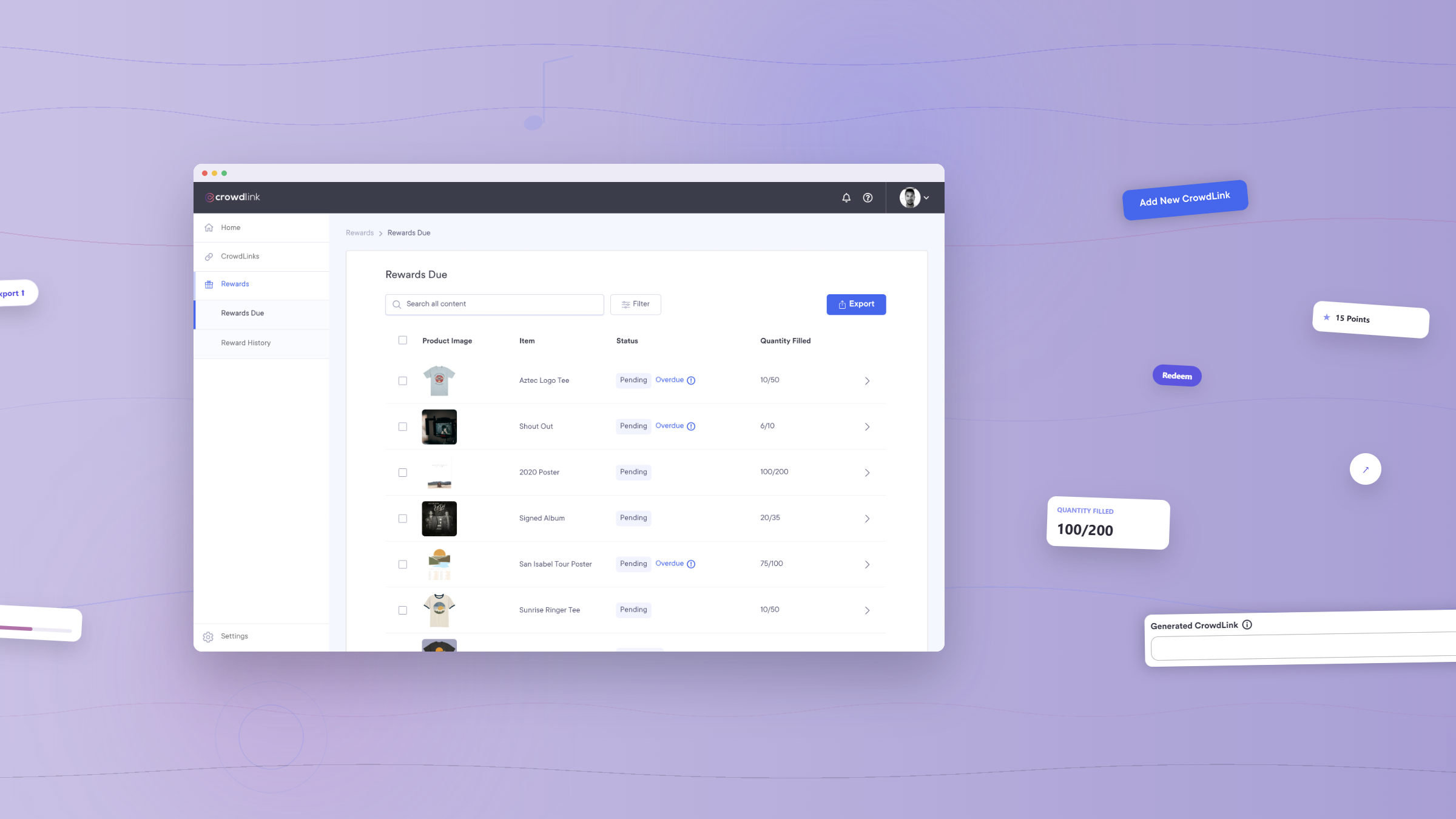
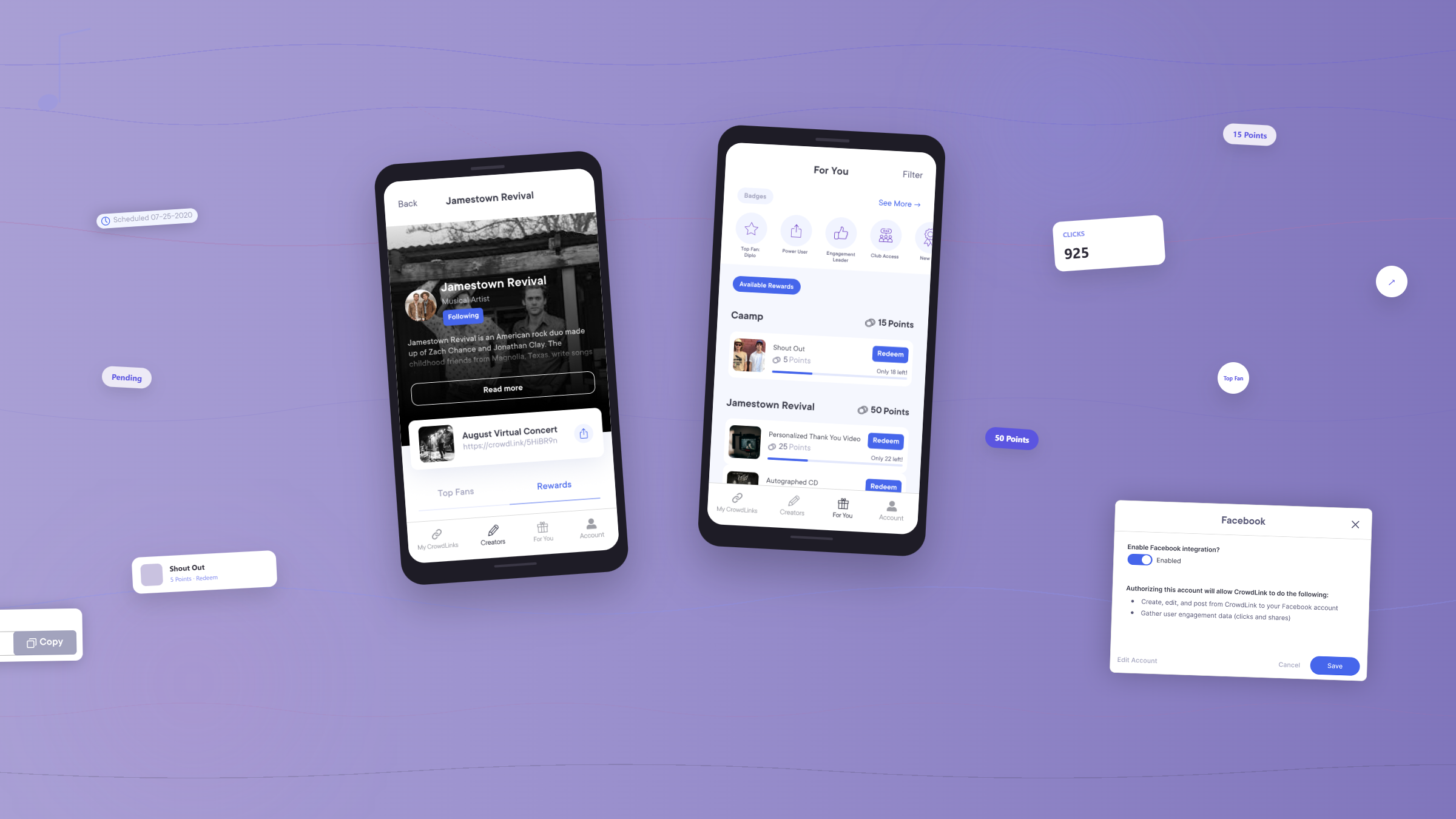
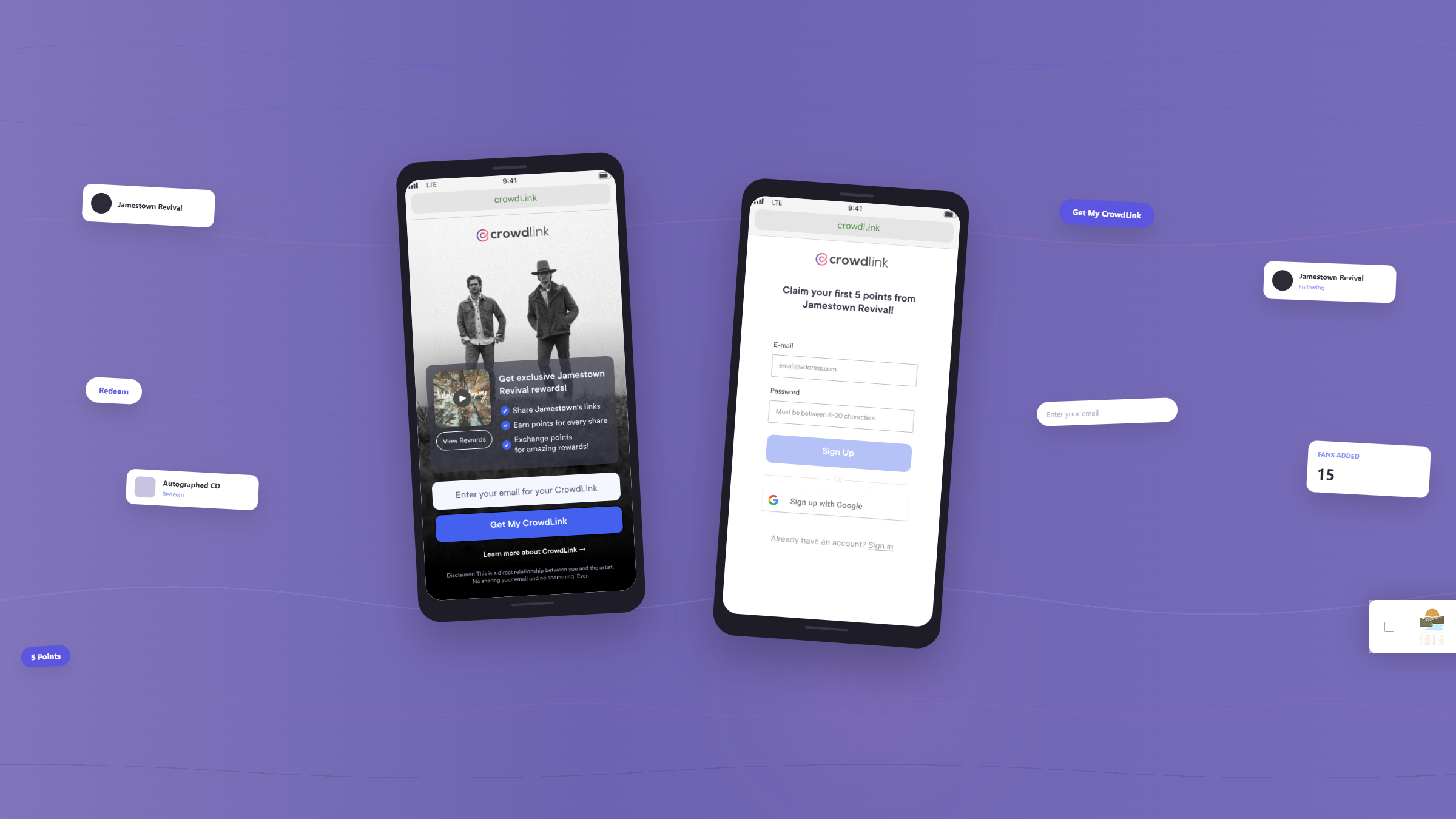
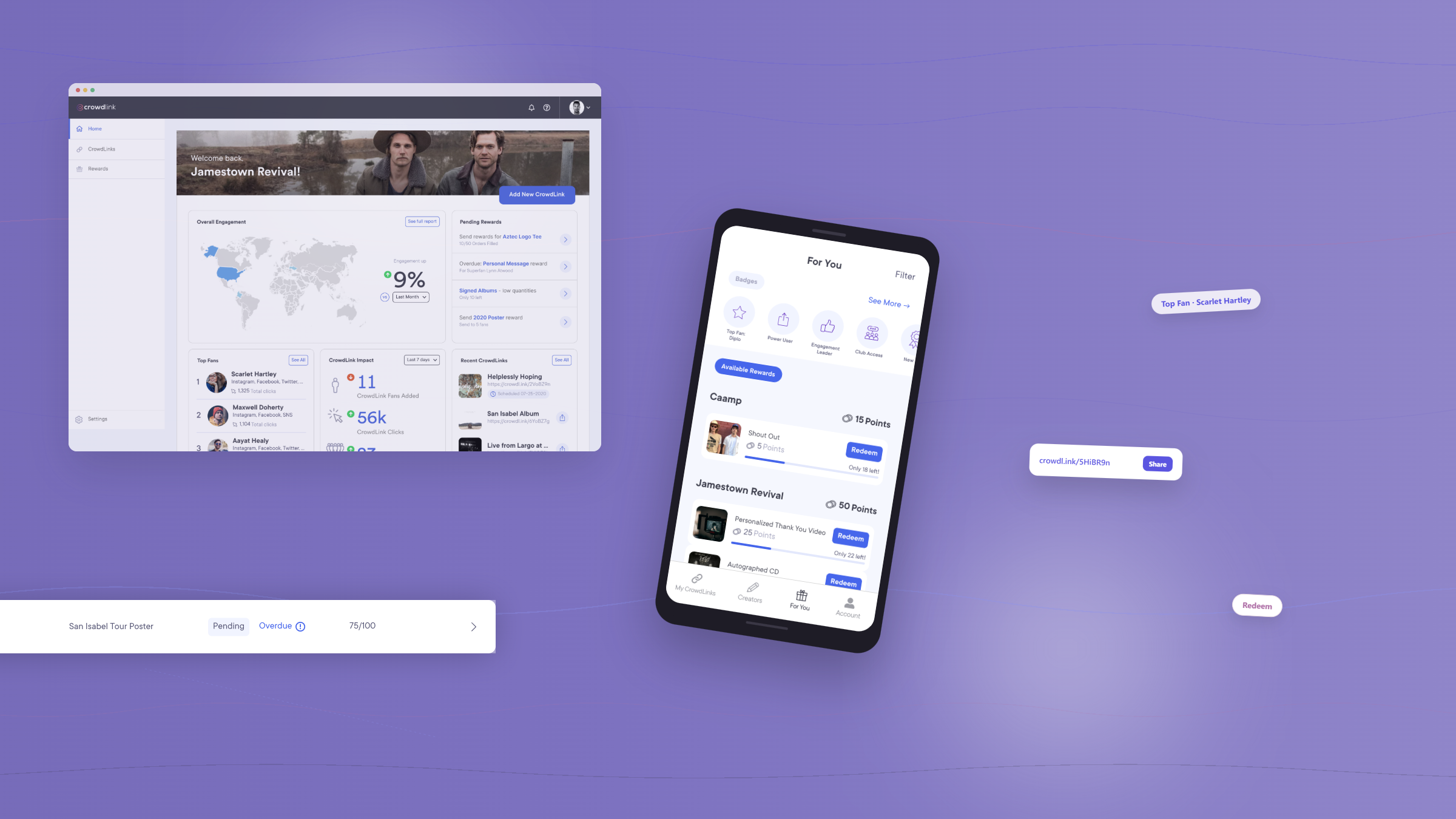
The creator side lets an artist add content, generate trackable crowdl.ink links, set reward tiers, and read a real analytics dashboard of top channels, top fans, and impact. The fan side plugs into the phone’s native share sheet so sharing is effortless, then counts every click toward points and rewards. Fans "loved the ability to share privately and have it count."

Principle 03Bingo
03

Make it fundraiseable.

The flows became interactive prototypes for both the fan and creator journeys and a cohesive visual identity, then went into an investor pitch deck built to raise, tight enough to demo live and polished enough to put in front of investors.

Principle 01 of 03
→ Continue scrolling
THE KEY INSIGHT

They want a connection,

not a transaction.

The tools to shorten a link or run a contest already existed. What no one had built was a way for a fan to promote an artist they love and be recognized for it. The research kept returning to the same line, "they want a connection, not a transaction," and the competitive map showed the entire social-and-emotional corner sitting open. That, not another link shortener, was the product worth funding, and the reason two first-time founders could walk into investor rooms with something genuinely differentiated.

MPL redesign surface
Screen 01 of 08
→ Scroll horizontally
Outcomes

What the work Moved

By the end of the sprint, Crowdlink had a validated two-sided product, an investor-ready pitch package, and the foundation to raise. The company went on to do exactly that.

01 · Funding
$3.2M
Seed round raised on the prototype and deck built in the sprint
02 · Validation
2-sided
Creator and fan flows tested with users
03 ·Product
0 → 1
Thesis to validated, testable MVP
both sides tested with real users
04 · Launch
2021
Shipped to iOS and Android, still operating today as Crowdmout

Crowdlink raised a $3.2M seed round on the prototype and pitch deck WANDR built, as the founders confirmed directly to the WANDR team. The raise is the founders’ achievement; WANDR built the fundraising assets, not a direct design result.

Client Voice

In their words.

The final design was elegant and was exactly what we were looking for. They hit every milestone and delivered on time.
Aston Teague
Co-Founder, Crowdlink
See full Clutch review
Up next

Another story worth reading.

Buildbox case study preview
Next Case Study

Cinepolis UI/UX Design

Entertainment
·
Mobile app · Website
Read next case