
A Nonprofit Website Design
Agency That Turns Visitors Into Donors

WANDR designs nonprofit websites around how supporters actually decide, not around what a template makes easy. Ten years of research-led web design for nonprofits and NGOs, and 30% more donations on average across 15+ engagements.

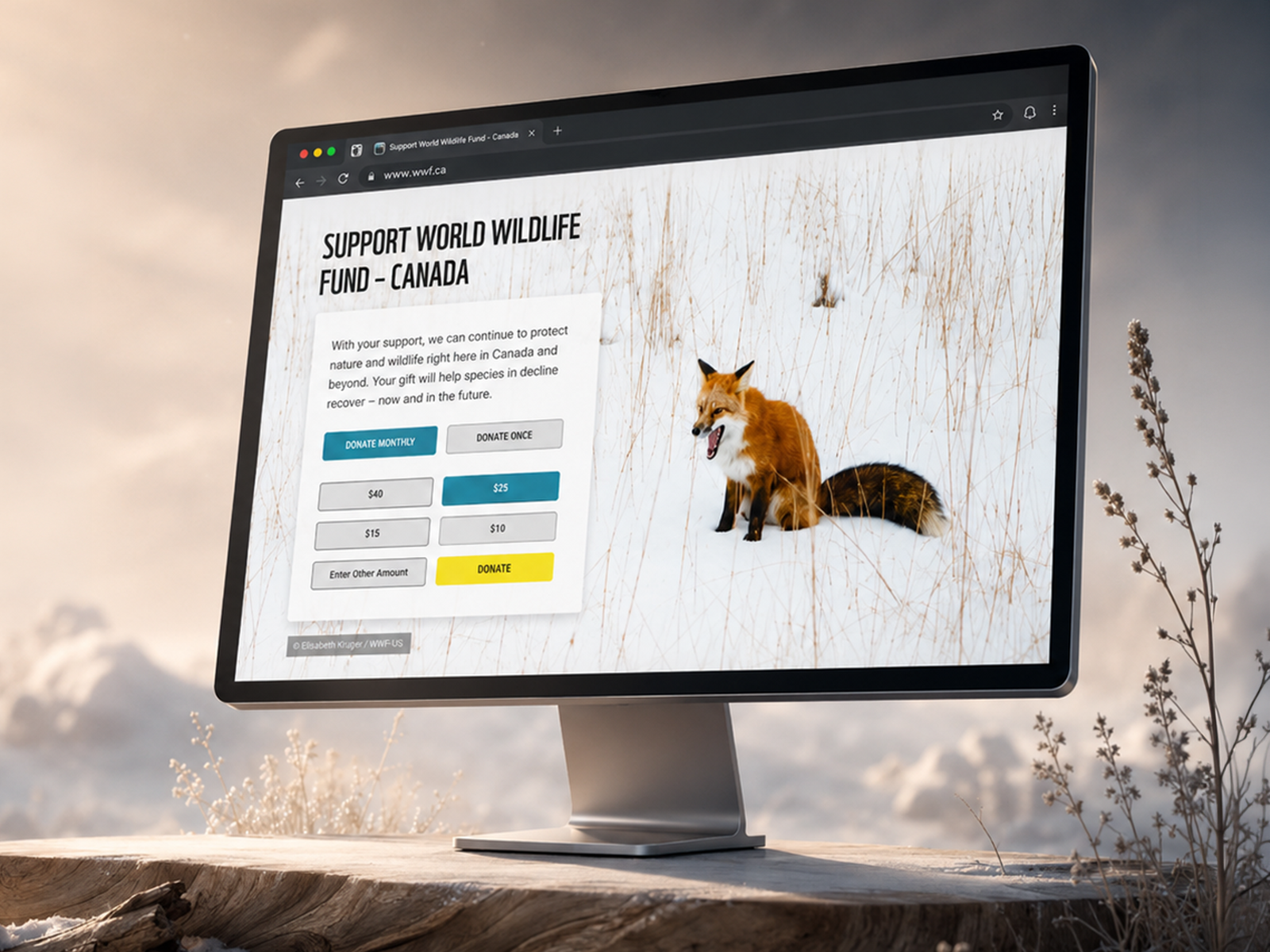
"We've seen a lot more traffic coming to WWF.ca since the redesign, and our conversion rate on our donor forms is up."
Vanessa Turpin, Sr. Manager Digital Marketing, WWF-Canada
✱
"They felt like a true partner, not just a vendor."
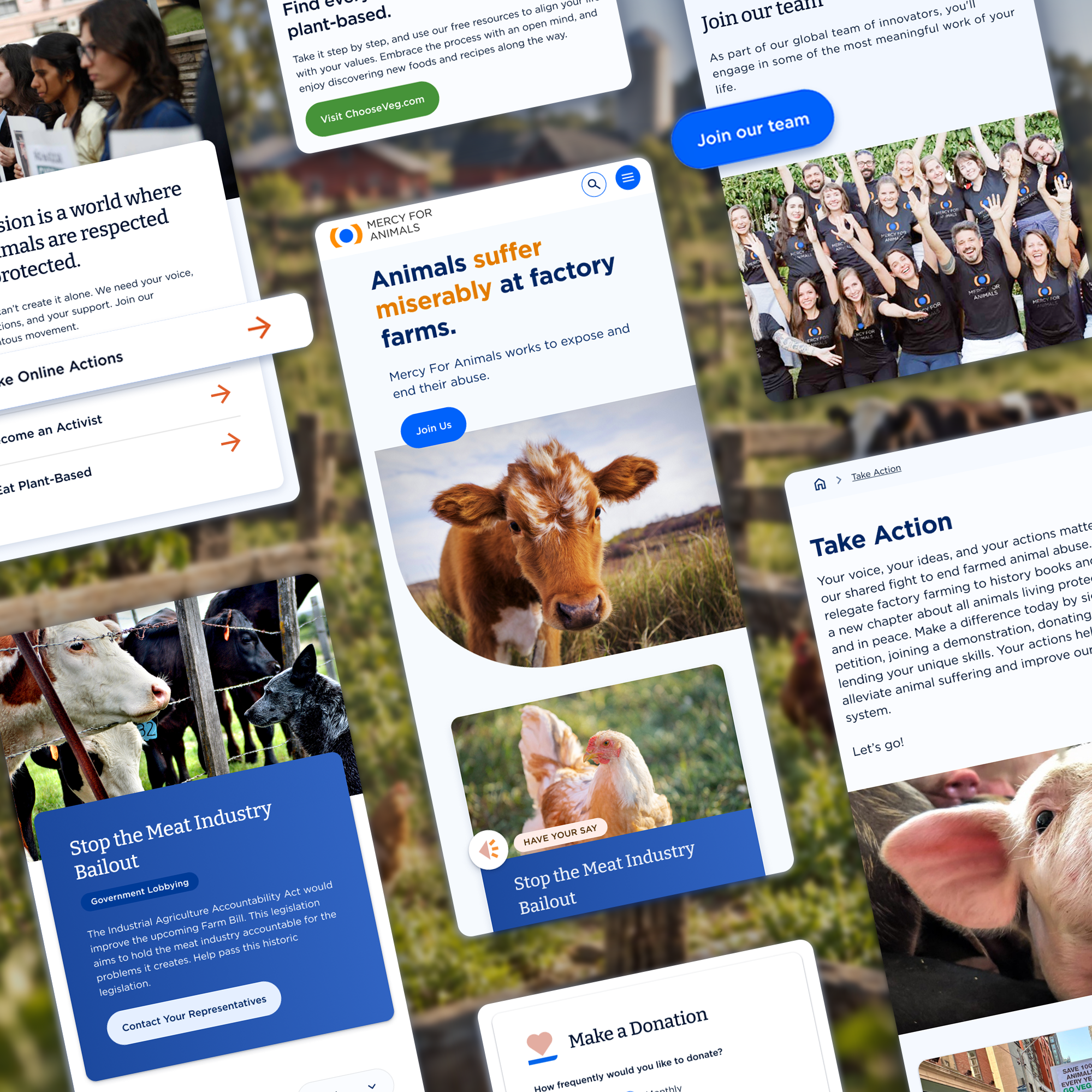
Shweta Sood, Global VP of Marketing and Communications, Mercy For Animals
✱
"They're the kind of partner that makes you realize how much you were leaving on the table before."
Abraham Gomez, Co-Founder, DonateHello
✱
Woman-owned. Woman-led. Mission-driven.

A Nonprofit Website Design Agency Built on a Decade of Donor Conversion

Ten years. 15+ nonprofit engagements. 30% more donations on average. After that many rebuilds the failure points stop being surprises: the donation flow with four steps too many, the homepage speaking to everyone and landing with no one, the campaign page that earns the click and loses the gift.

We've designed for nonprofits and NGOs alongside SaaS, fintech, enterprise software, and federal government, and we bring the same research-first standard to all of them. The difference in this sector is what you're asking for. A commercial site asks for a purchase. A nonprofit website asks for trust first, and money second.

We don't hand over a prettier site. We hand over a donation experience that converts, a platform your own team can run without a developer, and a number we agreed on before we started.

Dotted world map showing Wandr locations
Proven impact

Nonprofit website design that actually increased donations.

Two case studies that illustrate what embedded UX with research, strategy and execution looks like when it ships.

NONPROFIT · GLOBAL CONSERVATION

WWF-Canada

37%Increase in digital donations after the mobile-first funnel redesign.

WWF-Canada was excellent at being found and poor at converting the people it found. Organic search drove 63% of sessions but converted at 0.28%, and mobile carried a third of traffic while generating a seventh of the revenue. Four platforms. One locked global brand. We rebuilt the donation funnel inside a brand system we weren't allowed to change, then unified the site, store, and three Living Planet portals into one WordPress multisite the internal team runs itself.

"We've seen a lot more traffic coming to WWF.ca since the redesign, and our conversion rate on our donor forms is up thanks to Wandr's new designs."Vanessa Turpin, Senior Manager, Digital Marketing, WWF-Canada
See full case study
WWF - NONPROFIT
NONPROFIT · GLOBAL ANIMAL PROTECTION

Mercy For Animals

+32%Increase in donations in year one, with supporter actions up 17%.

Six regional sites, six versions of the same organization, and a 90% drop-off at the primary donation decision point. No research-backed picture of donor behavior. We ran the interviews and journey analysis, rebuilt the donor path so trust was established before the ask, consolidated 12+ bespoke campaign pages into three templates, and migrated 326 pages with more than 90% of search equity intact.

"WANDR brought structure, clarity, and research-backed insight to a very complex digital challenge. They felt like a true partner, not just a vendor."Shweta Sood, Global VP of Marketing and Communications, Mercy For Animals
See full case study
MFA - NONPROFIT
Case 01 / 02
Drag / scroll
By the numbers

A decade of nonprofit website design, on the record.

500+
products designed and delivered
30%

average increase in donations across our nonprofit practice 15+ — nonprofit and NGO engagements delivered across a decade

03Donations
+37%

increase in digital donations after the funnel redesign (WWF-Canada).

04Migration
90%

of SEO equity preserved across a 326-page platform migration (MFA).

05REACH
+375%

monthly organic visits after redesign and rebrand, from 628 to 2,980 (Swipe Out Hunger).

06ACCESSIBILITY
WCAG

built into the component library on every nonprofit engagement, not retrofitted before launch.

See case study ↗
Trusted by
WWF logoMercy For Animals logoGeneral Electric logoFortress Information Security logoMercado Libre logoCinépolis logoBuildbox logoFanatics logoTenable logoSamsung logoAdobe logoIBM logoSynchrony logoTeam SoloMid logoU.S. Air Force logoU.S. Space Force logoWWF logoMercy For Animals logoGeneral Electric logoFortress Information Security logoMercado Libre logoCinépolis logoBuildbox logoFanatics logoTenable logoSamsung logoAdobe logoIBM logoSynchrony logoTeam SoloMid logoU.S. Air Force logoU.S. Space Force logo
The reality

Your donors are not the problem.

The seven steps between them and the gift are.

01 / 04
17%

of donors who reach a nonprofit donation page actually complete the gift. The other 83% is a design problem, not a fundraising one.

Forrester Research
01 / 04
65%

average bounce rate on a nonprofit website, close to double what is considered acceptable for a commercial site.

IBM Systems Sciences Institute
01 / 04
$100

returned for every $1 invested in UX, an ROI of 9,900%.

Forrester Total Economic Impact Study
01 / 04
70%

of digital products fail because of poor user experience, not poor technology.

Forrester Research
Evidence first.
‍Design second.

Every nonprofit website design engagement starts the same way. We read your analytics, talk to your supporters, audit what you already have, and find where donation intent is leaking. Then we design against that evidence rather than against an opinion in the room.

5 phases →
Phase 01Discover
01

Audit & Alignment.

Three days inside everything you have: the current site, the analytics if they exist, the content, the donation integrations, and the competitive landscape. We agree on the metric this work has to move before any design begins.

Phase 02Plan
02

Stakeholder Interviews & User Research

We reverse-engineer your user types from the outcomes you need, then challenge them with real research. We cap it at four user types, because over-segmenting a donor base does more damage than ignoring it. On WWF-Canada that meant nine audience segments narrowed to four distinct asks.

Phase 03Design
03

Flow Mapping Before Page Design

We map every path from entry point to conversion and challenge each step in it. Does this step need to exist? What happens to completion if we remove it? The flow determines the design, not the other way around.

Phase 04Deliver
04

Design, Build & Migration

Trust architecture, mobile-first layouts, and a donation flow built for the moment of decision. WordPress or Webflow, integrated with a purpose-built donation platform, with accessibility designed into the component library. Content migration is planned so a redesign doesn't cost you years of search authority.

Phase 05Measure
05

Analytics, Launch & Handoff

Every conversion goal is tracked before the site goes live, so day one of data is useful data. You get a modular CMS your team can run without opening a developer ticket, and post-launch support sized to what you actually need.

Phase 01 of 05
→ Continue scrolling
Deliverables

What you get with WANDR's
‍nonprofit website design services

Scoped to your organization's size, audiences, and platform. Not a package.

Wireframing and prototyping preview
01 / 06UX Audit & Analytics Review

UX Audit& Analytics Review

where donation intent is leaking, documented against real behavioral data rather than opinion

Wireframing and prototyping preview
02 / 06User Research & Donor Mapping

User Research& Donor Journey Mapping

stakeholder interviews, validated user types, and a mapped path from entry point to gift for each one

Wireframing and prototyping preview
03 / 06Donation Flow Optimization

Donation Flow Optimization

rebuilt giving experience, reduced steps, recurring giving surfaced, and donation platform integration cleaned up

Wireframing and prototyping preview
04 / 06Website Design & Design System

Website Design & Design System

full site design mobile-first, plus a reusable component library your team can extend without us

Wireframing and prototyping preview
05 / 06Analytics Setup & Support

Analytics Setup & Support

every conversion goal tracked before launch, with ongoing content management sized from a few hours a month to a full-time placement

Wireframing and prototyping preview
06 / 06Full ownership

Full Ownership

every design file, research finding, prototype, and the design system itself transfers to your organization, on a CMS your team can run without a developer

Compare

How our nonprofit website Design Agency compares

DIY Builder or VolunteerGeneralist Web Agency
Starting pointA template you adaptYour brief, taken at face valueYour analytics and your donors
Donation FlowWhatever the platform shipsStyled, rarely restructuredRebuilt around the moment of decision
Multi-audienceOne path for everyoneSegmented until it fragmentsEvery audience served, one flow they self-select in
Migration riskSearch authority lost quietlyHandled by whoever builds itPlanned, measured, 90%+ preserved
After launchNobody owns itEngagement ends, site driftsA CMS your team runs, plus support
AccountabilityYours aloneDelivery is the deliverableA metric agreed at kickoff, guaranted
What our clients say

From our nonprofit clients

No. 01
“

WANDR understood that our work is about dignity as much as access. They gave us a website and a brand that finally match the scale of our mission, warm, credible, and built to grow with us.

Rachel Sumekh
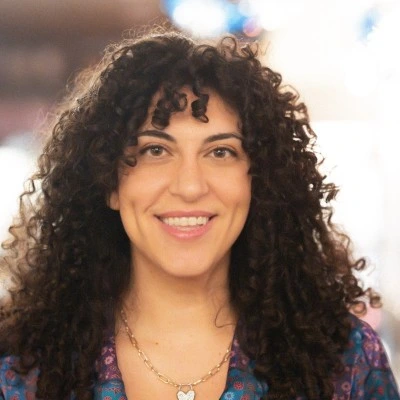
Rachel SumekhFounder, Swipe Out Hunger
No. 02
“

WANDR brought structure, clarity, and research-backed insight to a very complex digital challenge. Their work helped us unify our global sites, improve supporter engagement, and make better decisions grounded in real user behaviour. They felt like a true partner, not just a vendor.

Shweta Sood
Shweta SoodGlobal VP of Marketing and Communications, Mercy For Animals
No. 03
“

Working with WANDR changed how we think about product design entirely. They pushed our thinking further than we expected.

Abraham Gomez
Abraham GomezCo-Founder, DonateHello
Why Wandr?

A Nonprofit Website Has to Raise Money.
‍And We Guarantee It.

01 · The team

Senior designers who take the mission seriously.

You work directly with the people doing the work, and they've solved this specific problem across 15+ nonprofit engagements. No juniors learning on your restricted grant. No account manager between you and the designer.

01
02 · The method

Research-driven, not assumption-driven.

We start with your supporters, not your brief. Every decision is grounded in observed behavior and tied to a measurable outcome. We challenge assumptions, including leadership's. On one engagement we tested a client's certainty that a region would never support their cause and found an untapped audience actively looking for an organization like theirs.

02
03 · Terms

Performance guarantee.

If you don't see a meaningful increase in the metric we agree on at kickoff within your first year post-launch, we keep working at no additional cost until you do. We name the number before the work starts so there's no ambiguity about it afterward.

03
The difference

National-scale work.
‍
A website that finally read that way.

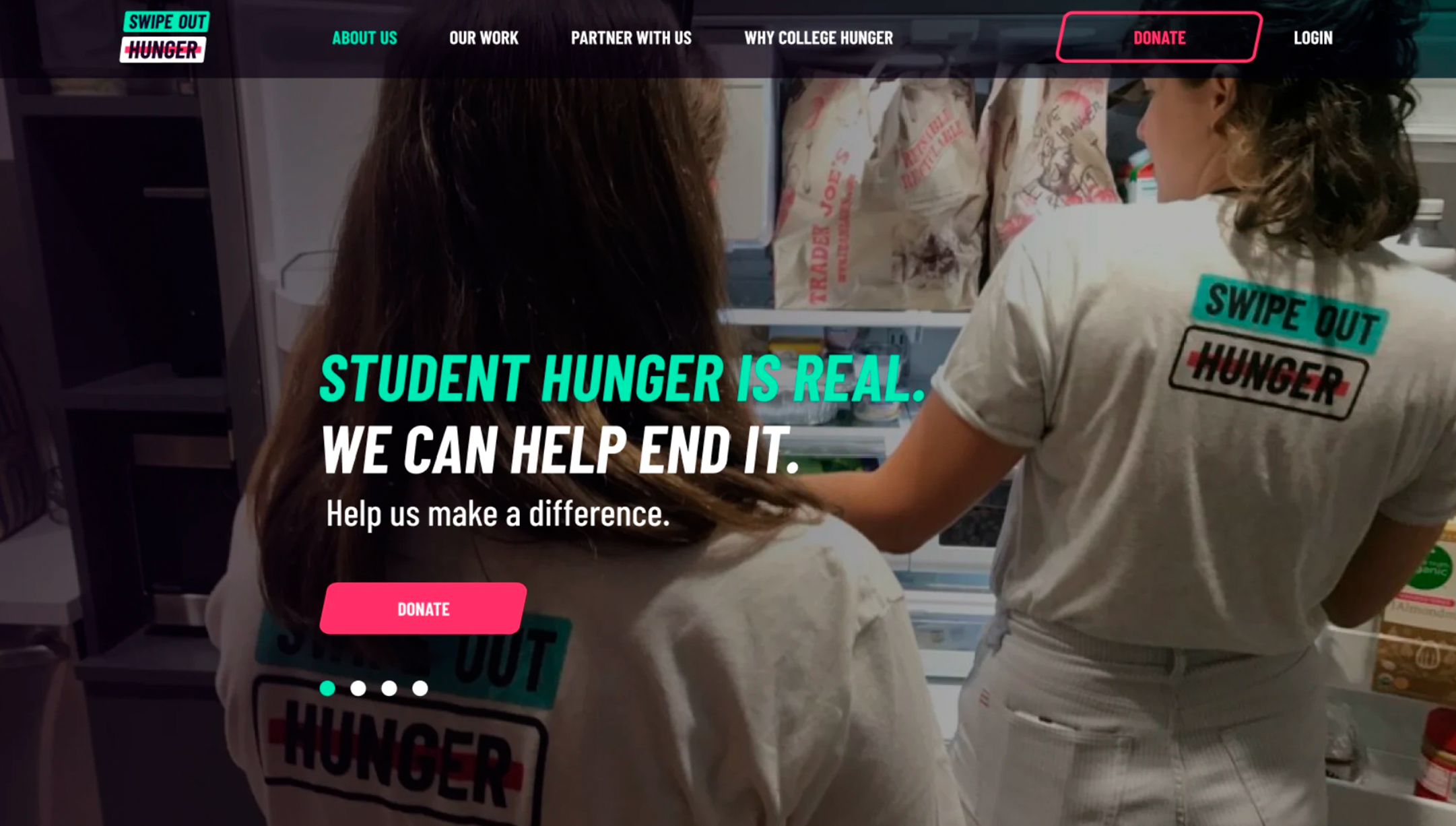
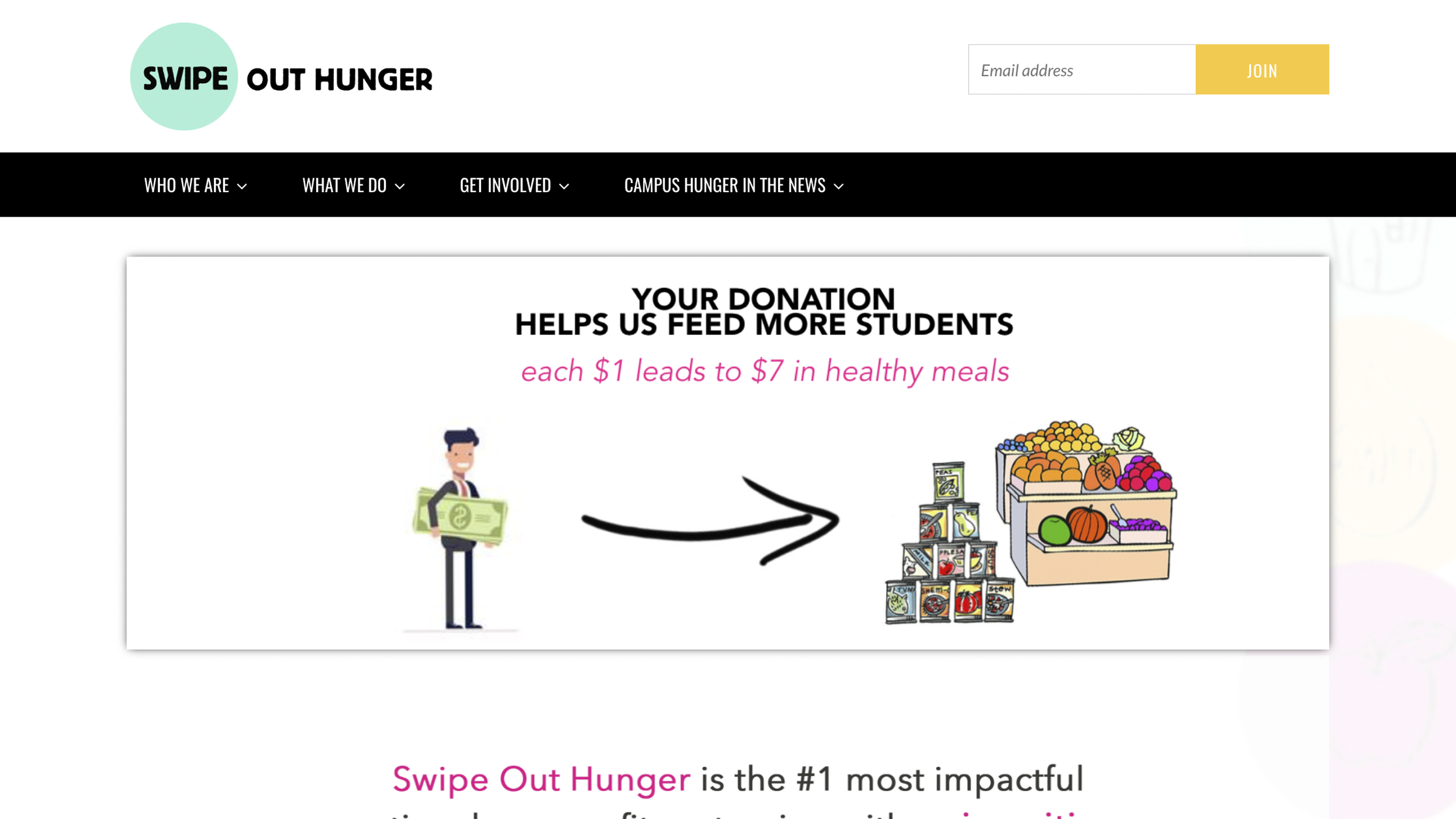
Swipe Out Hunger started in 2010 when UCLA students began donating unused meal swipes to classmates who needed them. By 2019 it was the leading national organization on student food insecurity, working across 1,000+ campuses, and its website still looked like the single-campus campaign it had grown out of. Here's what changed.

Nonprofit website redesigned by WandrNonprofit website redesigned by Wandr
Swipe Out Hunger screens designed by WandrSwipe Out Hunger screens designed by Wandr
BeforeAfter
Before WANDR
  • ✕A site that read as a campus project to the campuses, funders, and legislators deciding whether to back the work
  • ✕Students seeking help, campuses weighing a partnership, and donors evaluating an investment all arriving through one undifferentiated experience
  • ✕A brand that undersold both the urgency of the issue and the scale of the organization behind it
  • ✕628 monthly organic visits, with five keywords ranking in the top three
After WANDR
  • ✓+375% monthly organic visits, from 628 to 2,980
  • ✓+604% monthly branded search, from 384 to 2,702, as the organization became something people looked up by name
  • ✓Keywords in the top three positions up 180%, from 5 to 14, across a ranking footprint that grew 33%
  • ✓Distinct paths for students, campuses, donors, and advocates, plus a reusable design system handed to the organization's development partner to build from
SWIPE OUT HUNGER·STUDENT FOOD INSECURITY·WEBSITE REDESIGN & REBRANDSee full case study
Who this is for

You already know the website is the problem. The donor who abandoned the form, the campaign that earned the click and lost the gift, the board member who asks why traffic is up and giving isn't. What you don't have is a clear answer about which part to fix first.

We work with executive directors, development marketing leads, digital teams at nonprofits and NGOs, from national organizations to global institutions like WWF-Canada and Mercy For Animals. Whether you're facing a full nonprofit website redesign, a donation flow that underperforms, or a platform nobody internally can maintain, we start with your supporters and design backward from the action you need them to take.

First step

Not ready to commit? Let us look at your donation flow first.

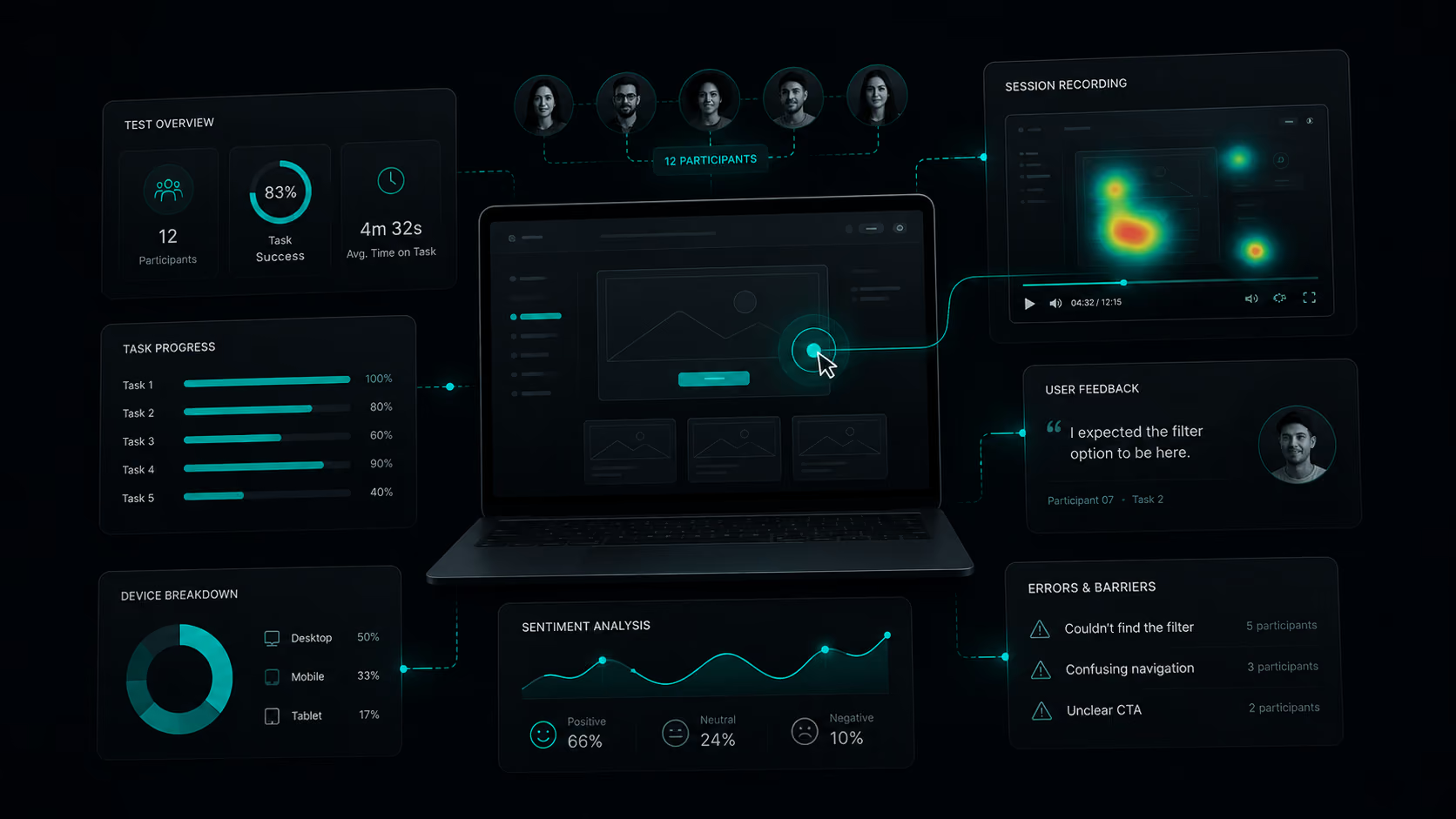
3 minutes. 12 questions. You'll get a personalized report showing exactly where your website is losing donors and what to fix first. Free, no pitch, no obligation.

Start your free diagnostic
Sample report
your-product.com/signup

Get started in seconds.

1No value prop above fold
2No password rules shown
3CTA hierarchy unclear
Nonprofit Website Design Agency
Frequently asked.

Click any question to expand. If yours isn't here, write to us.

  1. A commercial site asks for a purchase in exchange for something the visitor receives immediately. A nonprofit website asks someone to give money, time, or their name with no direct personal return. That is a higher trust bar, and it changes the design problem.  Three things follow from it:  Trust has to be built before the ask. Before someone submits payment details they need three answers: is this organization legitimate, will my money make a difference, and is this process secure. Effective nonprofit website design answers all three before the donation form, not after it. The site serves four people at once. The major donor weighing a significant gift, the first-time visitor deciding in seconds whether you are credible, the volunteer or activist looking for a way in that is not a donation form, and the funder or corporate partner assessing credibility before a conversation starts. Each needs a clear path without diluting the primary goal. Friction is fatal here. What a commercial visitor tolerates becomes an exit when there is nothing tangible on the other side of the form.
  2. Because people who have already decided to give leave before they finish. At Mercy For Animals we measured a 90% drop-off at the primary donation decision point, and the cause was architecture rather than apathy.  The three patterns we find most often:  Too many steps. We have audited flows that ran seven steps, and most people abandon around step three, right before entering payment information. Every extra step is another door out. Mobile treated as an afterthought. On WWF-Canada, mobile carried 34.7% of traffic and generated CA$7,035 against desktop's CA$45,906, bouncing at 75% with 49-second sessions. The fastest-growing surface was the weakest one. A broken or generic integration. A donation button that leads to an outdated third-party integration undoes everything upstream of it. That is not a missed gift, it is a damaged relationship.  A well-built flow strips fields, removes decisions, surfaces recurring giving as a first-class option, and reinforces impact at the moment of commitment.
  3. A full nonprofit website redesign, including research, UX, design, development, and launch support, typically runs $25,000 to $30,000 over three to four months. Donation flow optimization without a full rebuild starts at $10,000 and covers user mapping, flow rebuild for each user type, and integration cleanup.  Four things move the number more than anything else:  How many distinct audiences the site has to serve. Designing for donors alone is not the same problem as donors, volunteers, corporate partners, and program participants. How much primary research is required. If you already have analytics and access to supporters, we move faster. Whether development and migration are in scope, or design only. How many pages and campaign templates need to migrate, and what state they are in.  We work with organizations at every scale, from local and national nonprofits like Swipe Out Hunger and CEED Global to global institutions like WWF-Canada and Mercy For Animals. If your budget will not cover a full engagement, say so early and we will tell you which single piece of work returns the most at that number.
  4. A full redesign takes three to four months from kickoff to launch. Scoped work, like rebuilding the donation flow on a site that otherwise performs, runs four to six weeks.  The variable is research depth and migration complexity, not page count. A single-audience site with clean content moves faster than a six-region platform with a decade of accumulated pages, which is why we scope after the audit rather than before it.
  5. Yes, and it is often the better investment. If your site is structurally fine but donation conversion underperforms, a focused donation flow optimization delivers measurable results in four to six weeks without a full rebuild.  We will tell you honestly during the diagnostic which one your situation calls for. Most organizations who come to us convinced they need a full redesign turn out to have a problem contained to two or three flows.
  6. Look for evidence of results, not evidence of work. Most portfolios show finished screens. Very few show whether the screens changed anything, and that is what you are actually buying.  The right nonprofit website design agency starts with your data before touching design, understands how donor decisions get made, and measures itself against fundraising outcomes rather than aesthetics. Generic web agencies can build a nonprofit website. Specialized ones build nonprofit websites that raise money.  Five questions worth asking before you sign:  Can you show me before-and-after conversion data from a nonprofit client? Screenshots are easy to produce. Verified metrics are not. Does your process start with research or with mockups? An agency that goes straight to design is guessing, and multi-audience nonprofit sites punish guessing. How will you protect our SEO through the migration? This is where redesigns quietly cost organizations years of authority. Who actually does the work? Senior people in the pitch and juniors on the project is common. Ask who is assigned. What happens if the site does not produce results? The answer tells you how the agency thinks about accountability.  The strongest signal is an agency willing to tell you that a smaller engagement would serve you better.
  7. A freelancer is the right call for contained work when you already know what needs to be built. Lower cost, less overhead, and for a set of pages or a single flow it is often the sensible option.  An in-house hire makes sense when digital is a permanent, always-on function and you can absorb the hiring timeline and the salary.  An agency makes sense when the problem is not fully defined, when the work spans research through migration, or when you need capacity that does not disappear if one person becomes unavailable. Most nonprofit website projects need research, interaction design, visual design, development, and migration planning, which is more skill sets than one person carries.  If your budget only supports a freelancer, hire a good one and scope tightly. That beats an underfunded agency engagement.
  8. WordPress and Webflow both work well, and the choice usually comes down to who maintains the site after launch and how much campaign publishing your team does. We have built on both.  The more consequential decision is the donation platform. We recommend purpose-built tools such as Fundraise Up, Givebutter, or Donorbox over generic PayPal donation buttons or Stripe links. The generic options are not bad software, they were simply built for a different job, and they lack the credibility signals, donor experience, and reporting that giving requires.
  9. It can, and that is a planning failure rather than an inevitability. Content migration is the most commonly botched part of a redesign, and organizations lose years of accumulated search authority to it.  We plan redirects and content mapping before the build. On a 326-page migration for Mercy For Animals we preserved more than 90% of search equity and recovered the remainder within four weeks. Swipe Out Hunger's redesign went the other direction entirely, growing monthly organic visits from 628 to 2,980.  For existing donors, the risk is a giving flow that changes in ways regular supporters have to relearn, which is why we test the rebuilt flow with real supporters before launch rather than after.
  10. Against fundraising outcomes, not aesthetics. Donation conversion rate, total online donations, average gift, recurring giving sign-ups, volunteer applications, organic search traffic, and bounce rate on the pages that matter.  We agree on the primary metric at kickoff and configure analytics before launch, so the first day of post-launch data is useful data rather than a baseline you have to wait a quarter to build. Then we back it: if you do not see meaningful improvement in that metric within year one, we keep working at no additional cost until you do.
Let's look at your website together.

Show us your site.

‍We'll show you where the donations are going.

Send us your website and analytics and we'll identify the top 3 friction points costing you donations. Free, no pitch. If it makes sense to work together, great. If not, you leave with a clear picture of what to fix and where to start.

Ready to go further?

Our blog

Nonprofit Website Design related reading.