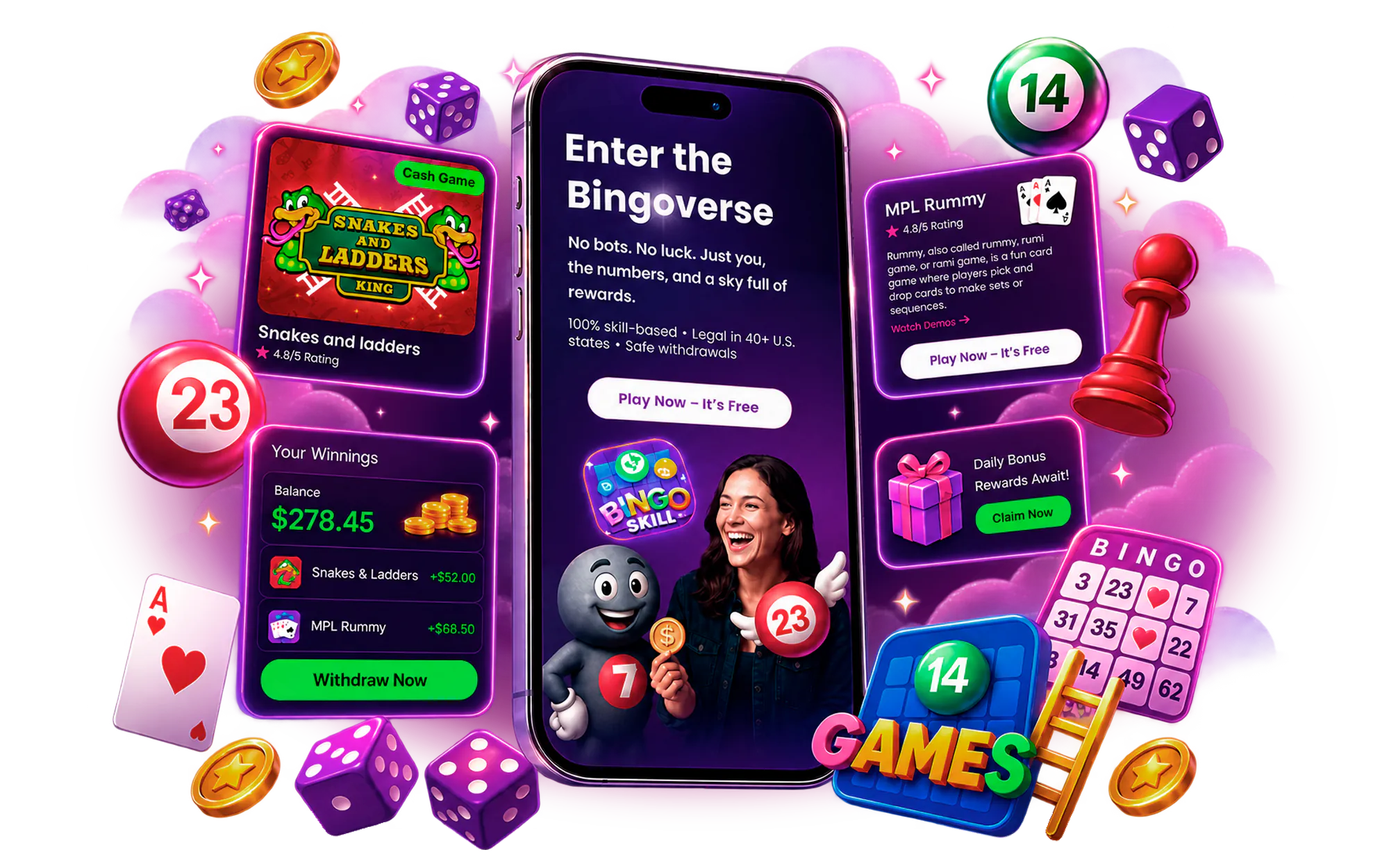
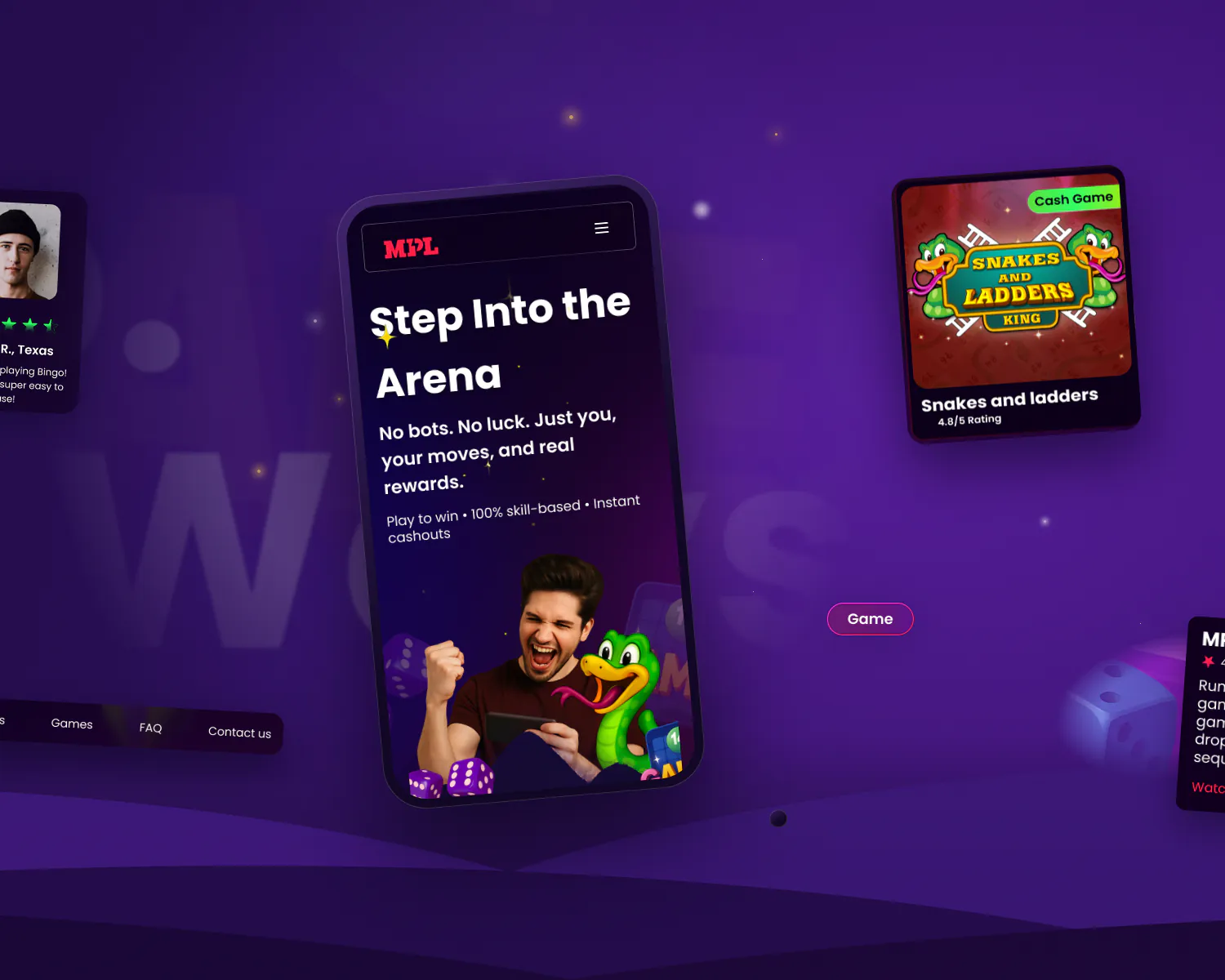
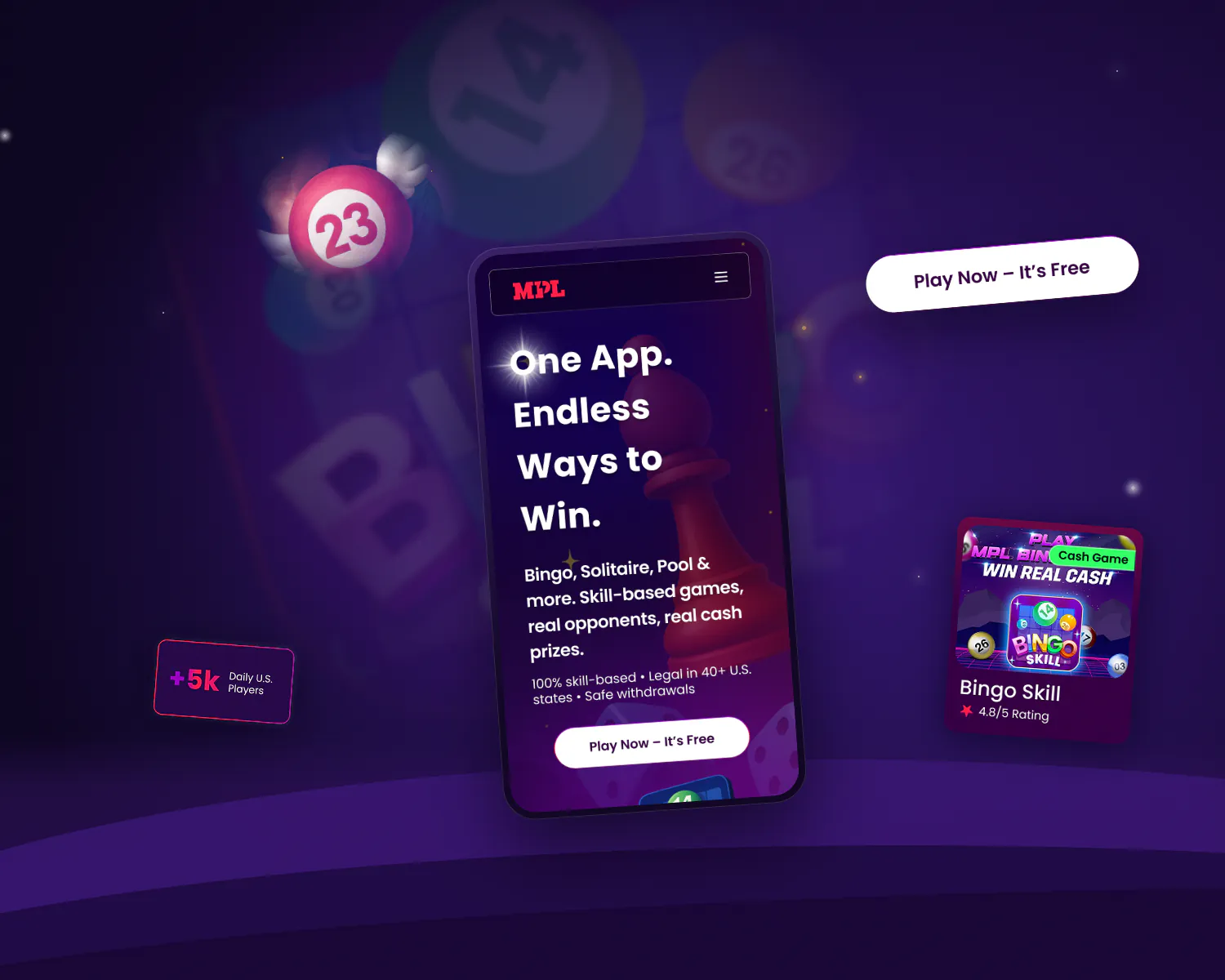
MPL

A 34% lift in trust perception among tested U.S. players in eight weeks, and 20+ page designs MPL's own engineers built against for the American launch.

INDUSTRY
Gaming
PLATFORM
WEBSITE
SIZE
ENTERPRISE
Gaming
·
website
·
UX Research & Website Redesign
At a glance

Eight weeks. Ten U.S. players. One Trust Architecture.

W1
W2
W3
W4
W5
W6
W7
W8
W9
W10
W11
W12
01
Weeks 1 — 2
Research
Screen and recruit ten American online bingo players, walk the live MPL site with them screen by screen, take apart the U.S. platforms they already trust, and map the legal landscape they are playing inside.
02
Weeks 3 — 4
Strategy
Turn the findings into a trust architecture: what a skeptical U.S. player needs to see, and in what order, before a download is even on the table.
03
Weeks 5 — 7
Design
Rebuild every surface against that architecture, from the home page and a dedicated bingo landing page through game categories, contact, policies, and blog.
04
Week 8
Handoff
Deliver page designs, a design system and component library, and an implementation roadmap ordered by gap severity, for MPL's in-house engineers to build against.
Drag / scroll →
team
3-person
Two designers and a strategy lead
research
10 interviews
U.S. bingo players across 10 states
output
20+ templates
Home, bingo, categories, policies, blog
PACE
8 weeks
Kickoff to documented handoff
The Client

A platform with 120 million players and No Foothold In America.

MPL · UX Research & Website Redesign
MPL Gaming player base

MPL, Mobile Premier League, is one of the largest skill-based mobile gaming platforms in its category. Founded in 2018 in Bengaluru, it reports more than 120 million registered players across India, the United States, Nigeria, and Brazil, and more than 60 games spanning fantasy sports, rummy, bingo, and casual titles. It became India's second gaming unicorn in 2021 at a $2.3 billion valuation.

MPL had launched in the United States in 2021, but its web experience was still speaking to the market that made it. It engaged WANDR in early 2025 for one strategic move: making the American entry work. At MPL's scale, that is not a marketing problem. In a category where money changes hands and the law changes at every state line, it is a credibility problem.


2018
Bengaluru, India
120M+ Players
India, U.S., Nigeria, Brazil
60+ Games
Skill-based, real-money and free-to-play
The Challenge

The site was built to show games. American Players Came Looking For Proof.

MPL had the product, the players, and the ambition to enter the U.S. What it did not have was a web experience built for the most skeptical consumer market in real-money gaming, where the first questions are about legitimacy and the questions about games come much later, if at all. Six problems surfaced the moment we put the live site in front of American players.

Problem 01

Nothing on the page proved the platform was legitimate.

The site mentioned legal compliance but displayed no U.S. gambling licenses, no security seals, no third-party certifications, and no responsible-gaming affiliations. One participant put it plainly: “I wish they had some official gambling licenses or trust badges displayed. I want to know if this site is actually legit before depositing money.”

Problem 02

Nothing showed that players actually get paid.

There were no player reviews, no testimonials, no winner stories, and no visible record of payouts, while processing times, fees, and withdrawal limits went unstated. “There’s no section showing real user reviews or recent winners,” one player said. “How do I know if people actually win and get paid?”

Problem 03

The homepage asked people to read when they wanted to scan.

Long paragraphs and heavy text buried the offer, games could not be filtered by type, nothing surfaced what was trending or most played, and the FAQ had no search and no expandable sections. “Way too much text on this site,” one participant said. “I just wanted to see a simple list of games and payouts.”

Problem 04

The download path raised the exact doubt it needed to close.

The main call to action was a QR code in a banner, with no direct button and no plain link for iOS or Android. In a category where players are already scanning for red flags, that reads as one. “It’s weird that there’s no direct download button,” a participant told us. “Makes me question if the app is even safe.”

Problem 05

Legality changes at ten state lines, and the site never said so.

Online bingo is illegal in ten U.S. states, Illinois, Indiana, Louisiana, Michigan, Nevada, New York, Oregon, South Dakota, Washington, and Wisconsin, with federal law adding its own layer on top. Terminology, promotions, payment methods, and support hours all read as built for another market too. In this category that gap does not read as a translation issue. It reads as risk.

Drag / scroll →
Before / After

Same platform, rebuilt for a market that Starts From Doubt.

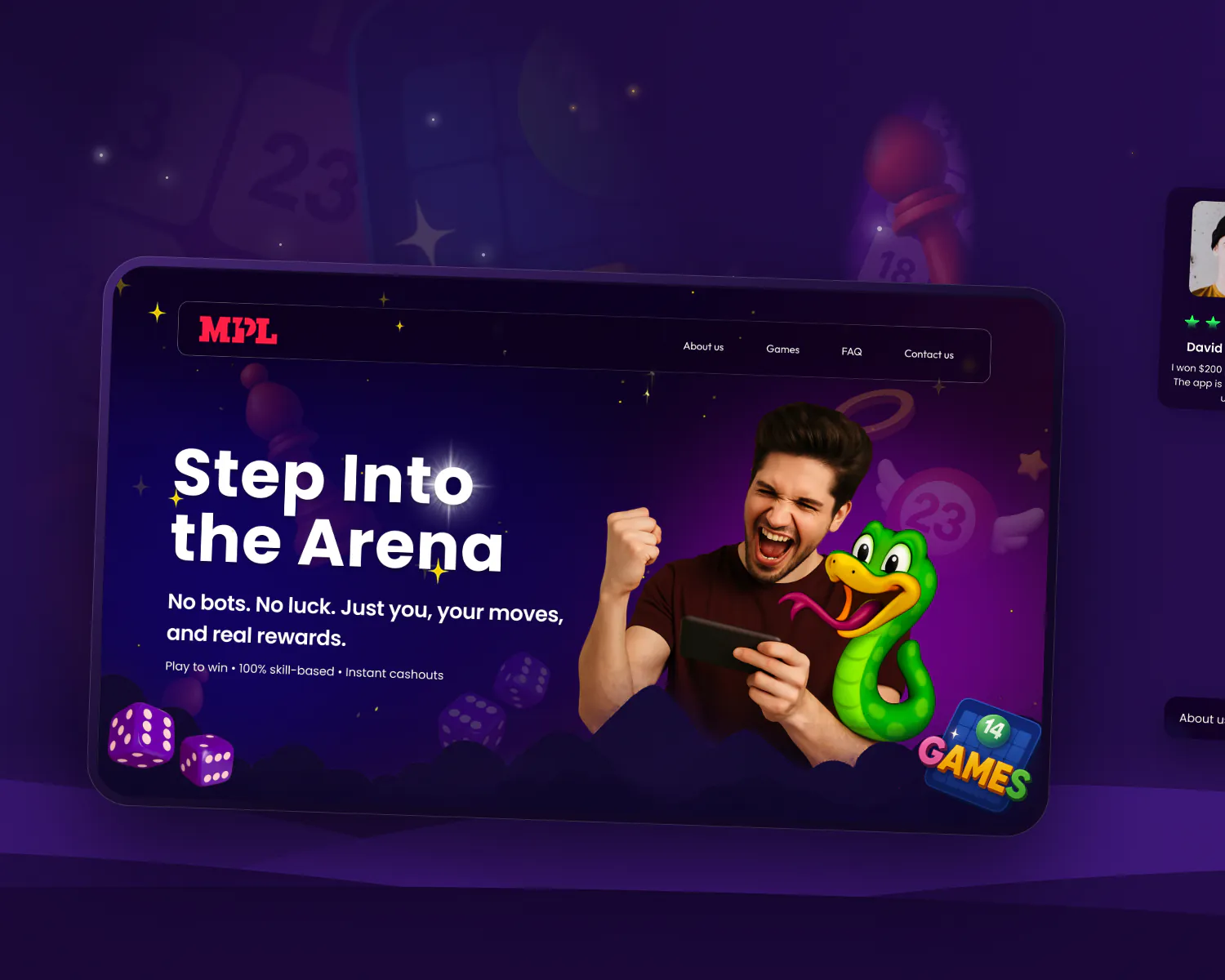
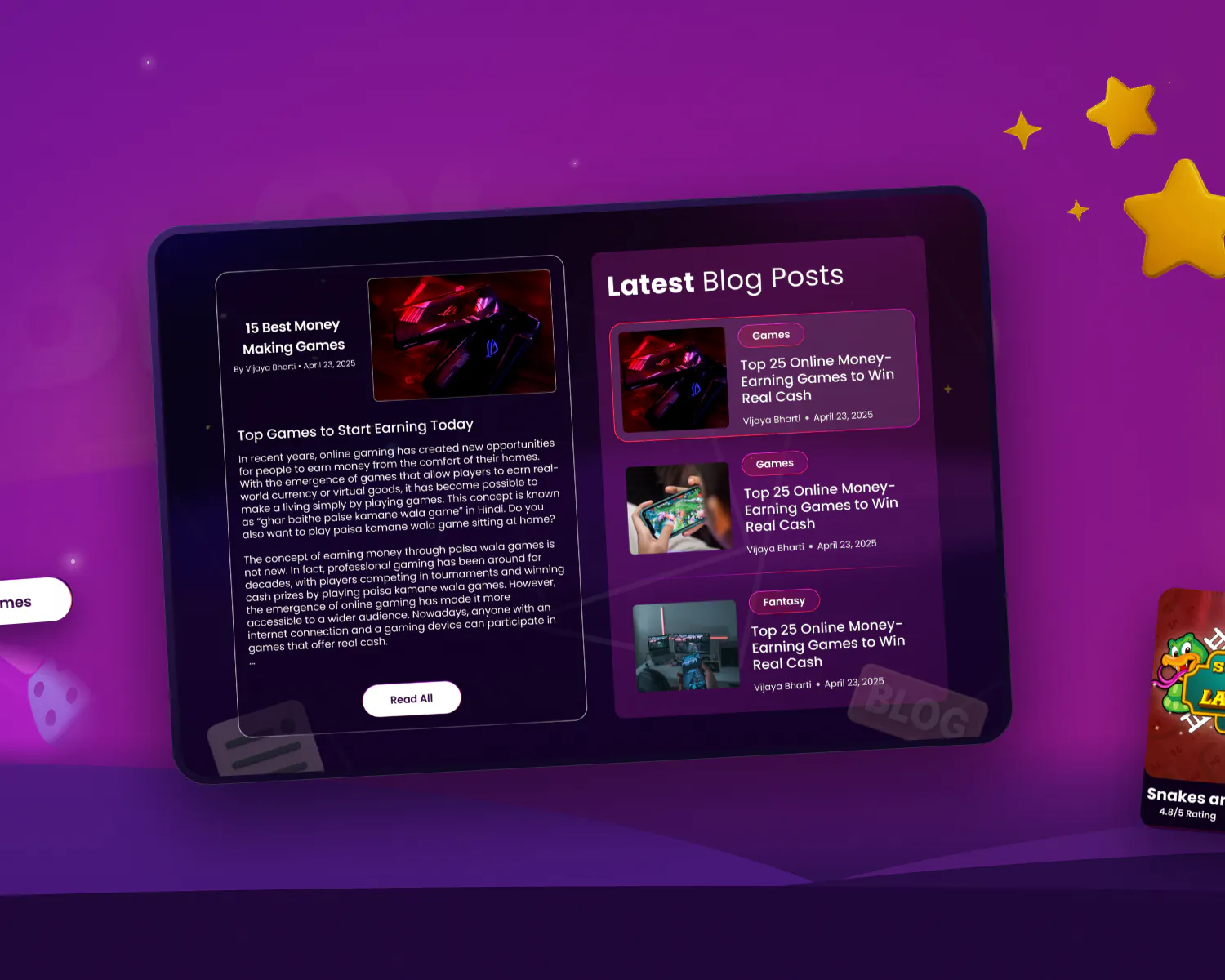
Drag the handle to see how the landing experience changed, from a games-first page written for an audience that already knew the brand into a credibility-first page written for players deciding whether to trust it at all.

Before redesignBefore redesign
After redesignAfter redesign
Before
After WANDR
Our Role

Research through handoff, No Code on our side.

01
Screener-based recruitment and ten in-depth interviews with American online bingo players
02
Live, screen-by-screen evaluation of the existing MPL experience with those players
03
Legal landscape review: state-by-state bingo legality and federal constraints
04
Competitive teardown of nine U.S. gaming platforms and three bingo competitors
05
Behavioral and cognitive models of how players decide, and three personas built on them
06
Design system and component library, documented for handoff
07
Usability testing of the proposed design across mobile and desktop
08
Phased implementation roadmap ordered by gap severity
Research

We put the live site in front of the Players It had to convince.

WANDR recruited through the places these players already gather, bingo and gaming forums, Reddit, and Facebook groups, then screened 13 respondents down to the 10 with the most useful mix of casual, regular, and competitive habits. Every one of them had played in the previous three months, and almost every device they named was a phone or a tablet.

The ten who came through were six women and four men across Florida, Ohio, Arizona, California, Texas, Michigan, Washington, Georgia, New York, and Pennsylvania, with one to five-plus years of online play behind them. Each 30-minute one-on-one session followed a discussion guide, pairing an open conversation about the sites they already trust with a live evaluation of MPL’s own.

01
INTERVIEWS

Trust came up before games did, in every session.

Across all ten conversations, participants worked the same checklist before a download was even considered: licensing and legal model, security and encryption, transparent odds and payouts, app-store rating and download count, and reviews from people like them. The questions they wanted answered above the fold were blunt ones. Is this legal in my state. Who operates it and where are they based. How fast can I withdraw. How do I know I will actually get paid if I win. Game variety mattered, but only after that list cleared.

02
TEARDOWNS

The American market had already set the bar, and it was a trust bar.

We took nine U.S. gaming platforms apart screen by screen, Epic Games, Roblox, Skillz, Activision Blizzard, AviaGames, Papaya Games, Zynga, World Winner, and Playtika, logging good practice and bad on each, then studied the three bingo operators competing directly for these players, Bingo Blitz, Blackout Bingo, and Big Cash. State availability information, an explained legal model, age verification, RNG certification, and visible security signalling were table stakes across the category. MPL surfaced almost none of them.

03
DISCOVERY

These players are found by other players, not by ads.

In the screener, 69.2% named friends or family recommendations and 69.2% named the app store as how they find games worth playing, against 53.8% for advertising and 23.1% for forums and reviews. Word of mouth and store credibility outrank paid acquisition in this audience, which is why social proof was treated as structure in the redesign rather than decoration.

One landing page, 3 very different players.

Persona 01
Casual gamer persona

The casual mobile gamer

Twenty-eight, Las Vegas, working part time and studying part time, playing on a two-year-old iPhone in the gaps of a long day. Deletes anything that pushes purchases at him or buries him in options, and downloads only what he can try for free first.

Phone-only
SHORT SESSIONS
Free to try
Persona 02
Committed player persona

The competitive gamer

Thirty-eight, Atlanta, teaches elementary school, plays across the newest iPhone and a gaming laptop to stay connected with friends and make a little on the side. Will not deposit into a platform whose return is unclear, and abandons any signup that asks for too much up front.

Deposits carefully
fast signup
Plays to win
Persona 03
Office-context player persona

The social bingo enthusiast

Fifty-four, Grand Rapids, office manager at a local insurance company, mostly on a two-year-old iPad. Comes for the ritual and the room as much as the win, and gets pushed away by bonus terms she cannot parse, chat nobody moderates, and apps her device struggles to run.

Tablet-first
community-led
Needs plain terms
The Strategy

Lead with credibility. Segment the entry.

Give Bingo Its own product.

3 principles →
Principle 01Trust
01

Trust.

Lead with credibility, not game count. The old site led with breadth. The new one leads with licensing, security, and fair-play signals, because that is the barrier standing in front of the first American install.

Principle 02Segment
02

Segment.

Split the landing experience by motivation. Casual, competitive, and bingo players do not share a funnel, so each gets copy, imagery, and social proof matched to what brought them.

Principle 03Bingo
03

Bingo.

Give bingo its own landing strategy. It has its own demographic, its own competitors, and its own purchase behavior, and American players compare it to a bingo hall, not to a menu of games.

Principle 01 of 03
→ Continue scrolling
THE KEY INSIGHT

Trust is not a section on the page.

It is the Architecture.

In a regulated, real-money category, players do not evaluate the platform the way they evaluate a consumer app. They evaluate it the way they evaluate a bank: regulatory visibility first, then fair-play evidence, then payment security, then responsible gaming, then social proof that does not read as marketing.

That sequence is not a content hierarchy, it is a decision sequence, and a page that interrupts it loses the player long before the games get a look. Every design decision was measured against a single question: does this earn a skeptical player's trust in under eight seconds? You cannot retrofit trust into a site that was designed for engagement.

MPL redesign surface
Screen 01 of 08
→ Scroll horizontally
Outcomes

What the work moved.

The engagement closed with a complete handoff package: 20+ page designs, the research documentation behind them, the trust architecture, a design system, and an implementation plan ordered by impact. Early testing of the redesigned landing experience against the U.S. persona moved the measures that gate a download.

01 · Trust
+34%
Self-reported trust perception the barrier standing in front of the first install
02 · Intent
+28%
Intent to download among first-time visitors on first exposure to the redesigned page
03 · Speed
−22%
Time to first meaningful action on bingo landing page to a deliberate next step
04 · Clarity
+41%
Comprehension of regulatory and fairness signals above the fold

Figures come from qualitative user testing run during the engagement and are reported as change against the pre-redesign experience; the underlying baseline and end values are not recorded in the research documentation on file. Research figures reflect the delivered scope: 13 screened respondents and 10 in-depth U.S. player interviews, nine gaming platforms and three bingo competitors torn down screen by screen, a state-by-state legal review, three behaviorally grounded personas, and a 19-point gap analysis across six categories. In-market performance validation sat with MPL’s team after handoff.

Client Voice

In their words.

WANDR rebuilt our U.S. experience around trust as the foundation. Every layer was aligned to reduce uncertainty and let a player decide with full information, and our team came away with a system to execute against without ambiguity.
Draft for client approval
MPL product leadership
See full Clutch review
Up next

Another story worth reading.

Buildbox case study preview
Next Case Study

Team Solomid - Vibe

Gaming
·
UI/UX Design - MVP
Read next case