


When product teams are under pressure to ship faster, adapt to shifting priorities, and maintain quality, the engagement model you choose matters. The debate between UX staffing and traditional design agencies isn’t about which is “better” in theory. It’s about which model aligns with how your organization actually operates.
At WANDR, we’ve led both project-based design engagements and embedded UX staffing partnerships for startups, enterprise teams, and even federal programs. What we’ve learned is simple: the model must match your product’s level of certainty and your organization’s ability to evolve.
Understanding the Design Agency Model Compared to UX Staffing
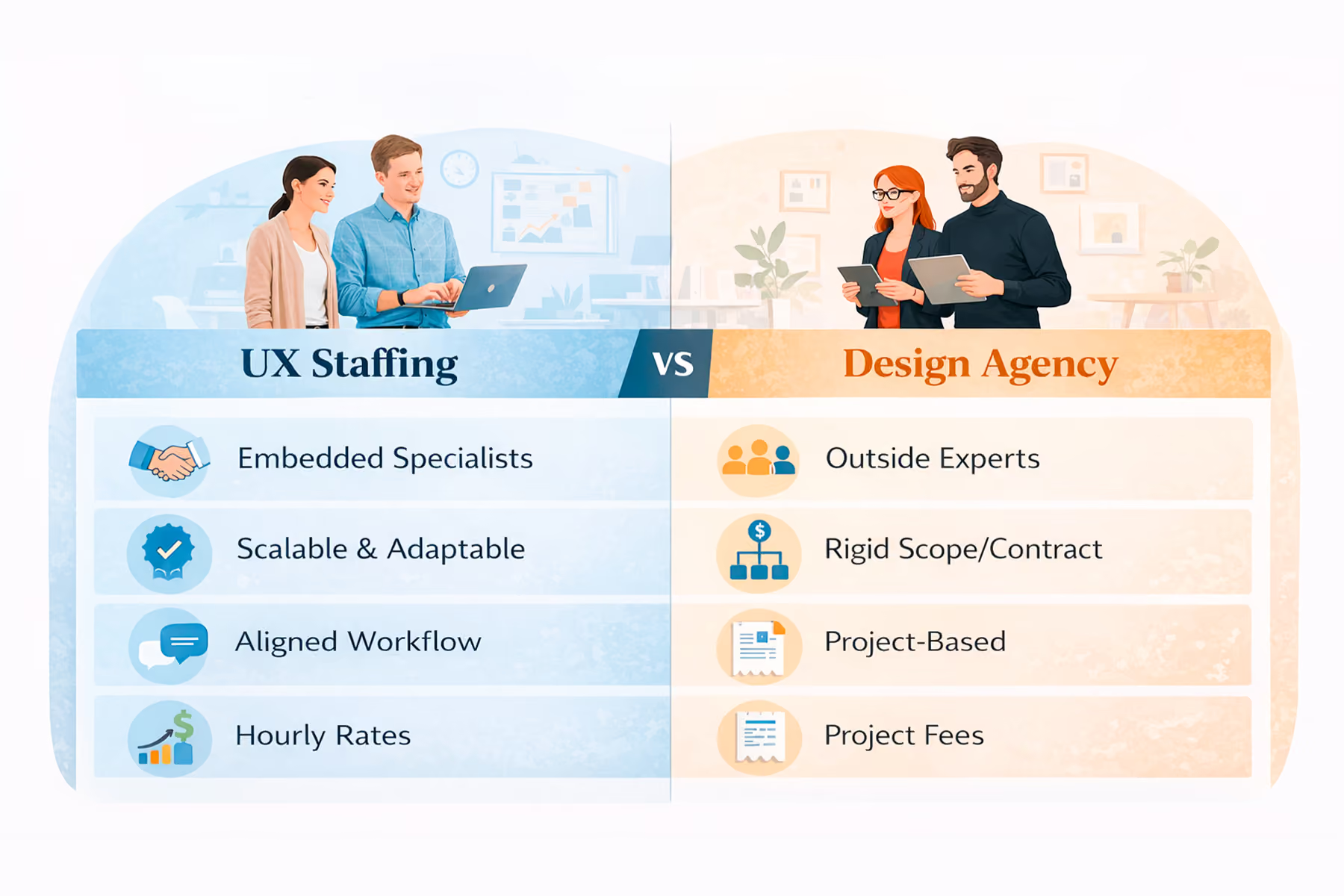
A traditional design agency engagement works best when:
- The scope is defined
- The timeline is fixed
- The deliverables are clear
- There’s a natural project end point
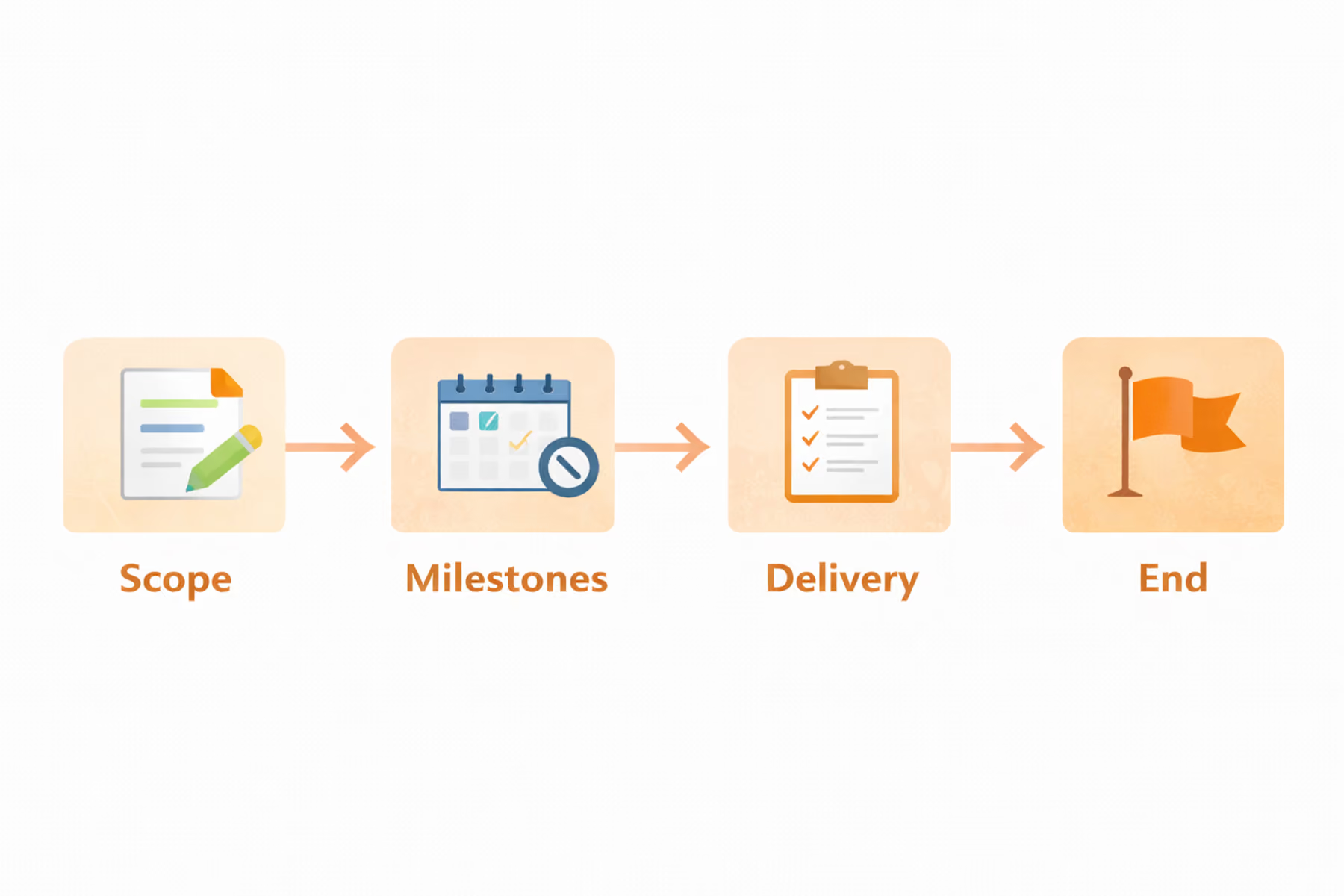
In these cases, an agency can structure the engagement around milestones and deadlines. You align on X, Y, and Z — and once delivered, the project closes.
This model provides clarity and control. For early-stage products that need structure to move from idea to something tangible, it can be the right starting point.
For example, with TracerLabs, we initially structured the engagement as a defined project. The team had an idea but needed direction, clarity, and a product foundation. We built toward a concrete milestone — getting something live and usable.
That structure mattered. Without clear milestones, early-stage teams risk “doing everything and nothing at the same time.”
If you’re launching a new initiative from scratch, the project model provides guardrails.
Where Design Agencies Struggle to Scale
The agency model becomes inefficient when:
- Product priorities shift frequently
- Multiple workstreams compete for attention
- Procurement cycles are complex
- Roadmaps change mid-quarter
Enterprise teams often don’t operate in a linear, milestone-driven way. One month, kiosk optimization is the priority. The next month, something changes and the web app becomes critical.
We saw this firsthand with Cinépolis. A kiosk initiative could be top priority — until market conditions or internal shifts required pivoting to web or mobile. Re-scoping every time priorities changed would have been operationally exhausting.
In large organizations, re-contracting and re-negotiating scope isn’t just inconvenient. It slows momentum.

What Makes UX Staffing Scalable
UX staffing embeds experienced designers directly into your team. Instead of re-scoping projects, you adjust focus in real time. When priorities change, your embedded UX team pivots with you.
That flexibility is what makes UX staffing scalable.
Rather than launching a new agency engagement every time a roadmap shifts, you maintain continuity. Designers operate inside your systems, attend your ceremonies, and evolve with your product.
According to research from McKinsey on product agility and Gartner on digital product teams, high-performing product organizations prioritize adaptability over rigid project structures. UX staffing supports that reality.

When UX Staffing Is the Better Model
UX staffing works best when:
- You have ongoing design needs
- Priorities evolve frequently
- Hiring internally is slow or risky
- You need execution starting week one
Instead of undergoing lengthy recruitment cycles, you plug in senior UX talent who can execute immediately.
We’ve seen this work at enterprise scale — including federal-level programs like our U.S. Air Force engagement — where continuity and adaptability were critical. Embedded teams moved with shifting priorities without halting progress.
If your product is alive and constantly evolving, UX staffing aligns with that rhythm.

The Hybrid Reality: Starting as a Project, Scaling with UX Staffing
One of the biggest misconceptions is that you must choose one model permanently.
In reality, many mature engagements evolve.
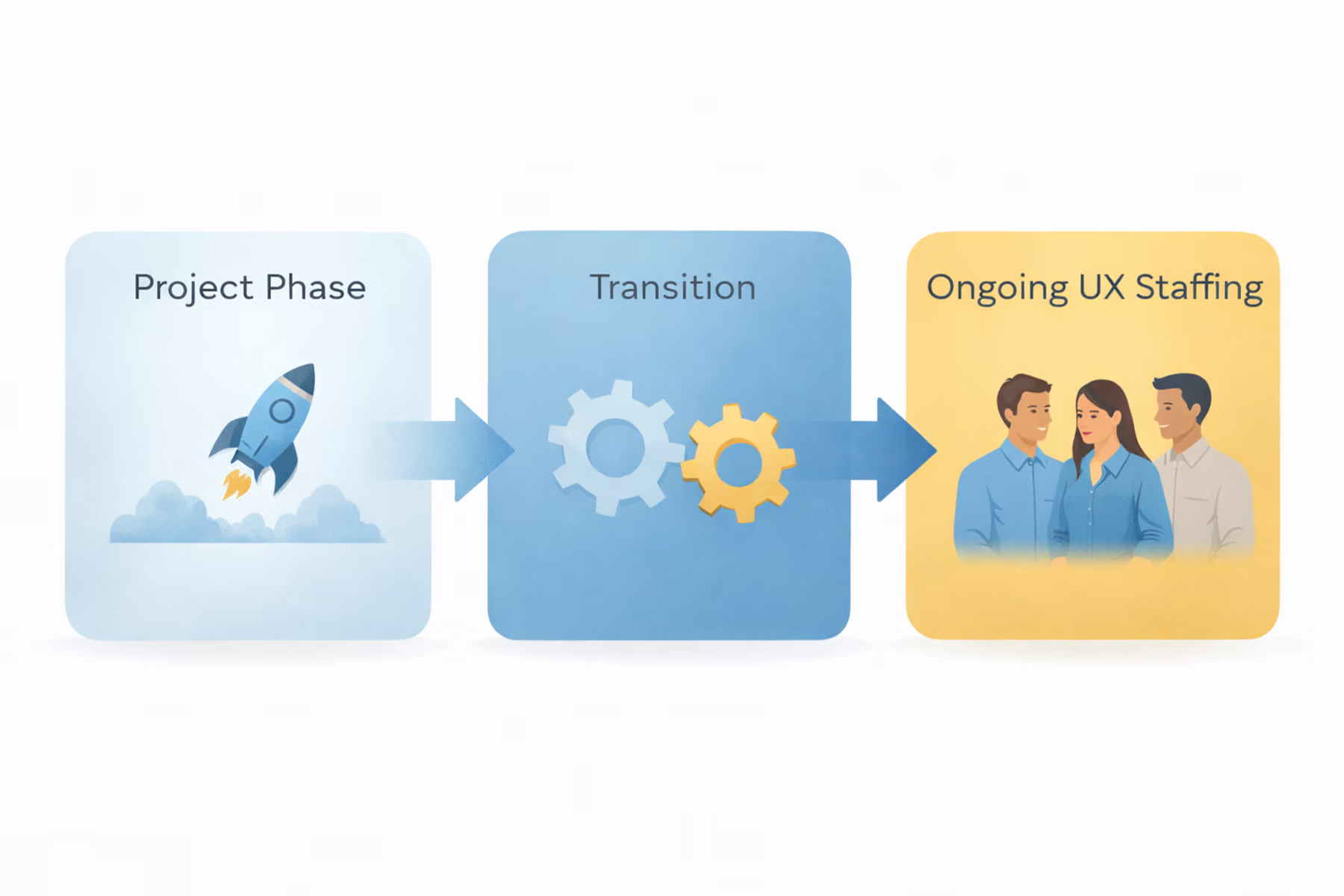
With TracerLabs, we began with a defined project to create structure and ship an initial product. Once that foundation was built, the engagement transitioned into UX staffing. As the product evolved, the team required ongoing support rather than milestone-based deliverables.
This phased approach works especially well for startups moving from zero to one — and then from one to scale.
If you’re curious how this shift impacts long-term cost efficiency, we break it down in our article: The Benefits of Staff Augmentation vs In-House Hiring: Why “Cheaper” Isn’t Always Cheaper
And if you’re still thinking UX staffing is only for short bursts, this perspective might challenge that: Why UX Staff Augmentation Isn’t Just a Short-Term Solution Anymore.
Cost, Risk, and Operational Complexity
Scaling isn’t only about headcount. It’s about reducing friction.
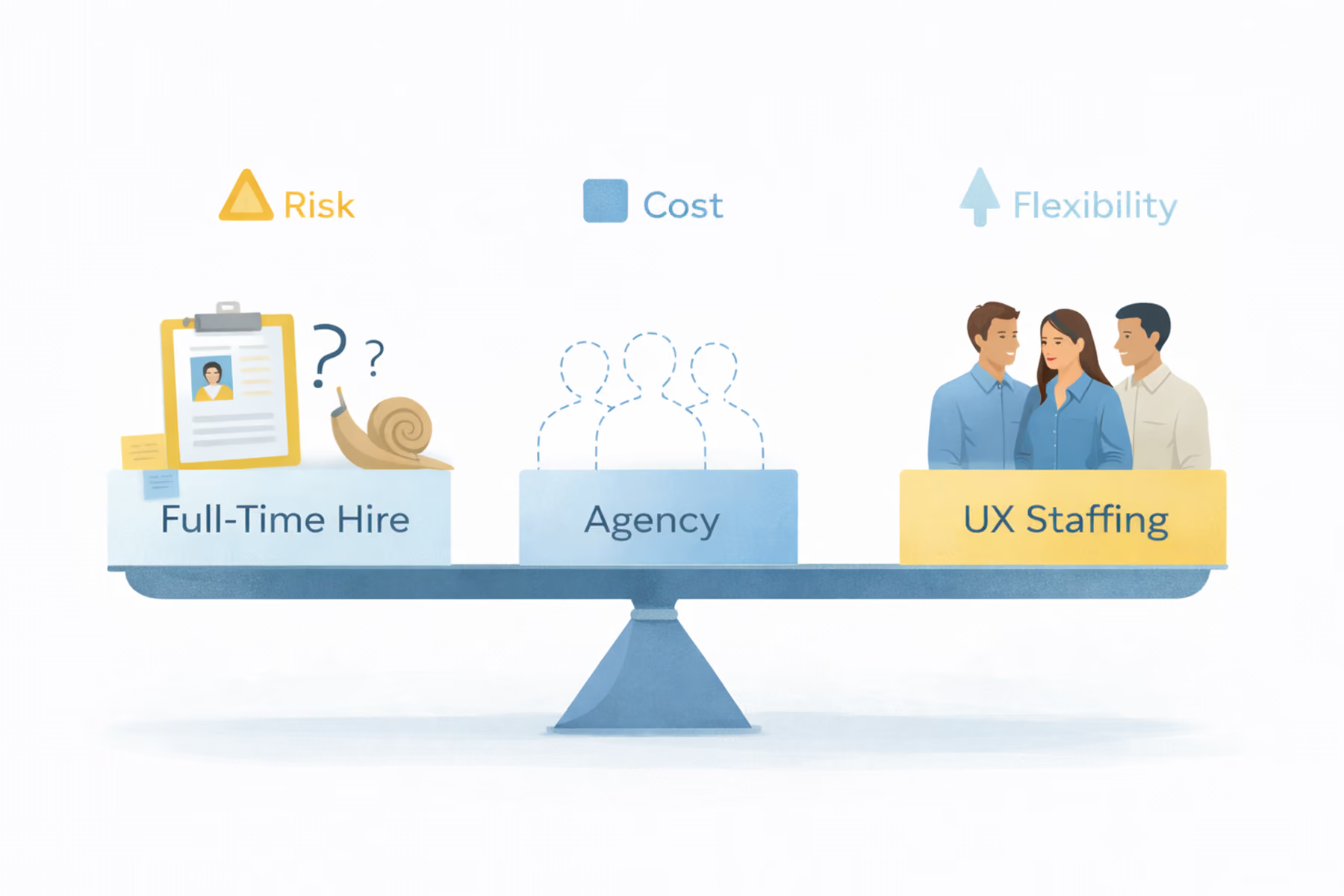
A full-time hire carries onboarding time, benefits, long-term commitments, and replacement risk. According to data from the U.S. Bureau of Labor Statistics, the cost of a bad hire extends far beyond salary when factoring in productivity loss and rehiring. UX staffing reduces that exposure.
If a resource isn’t aligned, replacement is handled without restarting your hiring process. Momentum stays intact. For enterprise teams navigating complex procurement cycles, this flexibility becomes a strategic advantage.
Final Thoughts on UX Staffing vs Design Agencies
The question isn’t which model is superior. It’s which model aligns with your product’s maturity and your organization’s operating reality.
If your roadmap is stable and finite, a project-based agency engagement makes sense. If your roadmap shifts and your work never truly “ends,” UX staffing scales better.
Product teams don’t fail because they lack ideas. They struggle because their structure can’t adapt as fast as their market does.
Ready to Scale with UX Staffing?
If your team needs embedded design expertise that moves at the speed of your product, explore our UI/UX Staff Augmentation Service Page.
Let’s align the engagement model to how your product actually operates.