


Fast-growing product teams don’t fail because they lack ambition. They fail because the wrong people get into the wrong roles and no one realizes it until velocity drops.
UX Designer Recruitment is one of the most underestimated risk points in scaling organizations. On paper, the process looks straightforward: define the role, post the job, screen candidates, interview, hire. In reality, it’s often slow, misaligned, and structurally flawed.
If you are scaling a startup or leading a product organization in growth mode, this article will help you understand where UX Designer Recruitment breaks down and how to avoid expensive hiring mistakes.

Why UX Designer Recruitment Breaks in High-Growth Environments
1. The Wrong People Are Assessing the Talent
This is the core issue.

In most companies, 80–90% of the UX Designer Recruitment process is led by HR teams, internal recruiters and Directors or VPs who no longer design hands-on The problem is subtle but critical. If the person evaluating a UX designer cannot execute the work themselves, they are relying on portfolios without deep technical interrogation, pre-written interview question and surface-level design challenges As our CEO at Wandr, Lina Silva often explains: “Don’t delegate hiring decisions to people who could not do the job themselves.”
Recruitment becomes a checklist exercise instead of a technical evaluation.
This is one reason why design mis-hires are common across startups and enterprises alike. According to research from the Society for Human Resource Management (SHRM), the cost of a bad hire can reach tens of thousands of dollars when factoring in productivity loss, rehiring, and onboarding time.
In fast-moving product teams, that cost compounds quickly.
2. UX Designer Recruitment Is Too Slow for Product Velocity
High-growth teams don’t have six months to find “the perfect designer.” Yet traditional UX Designer Recruitment often involves:
- Weeks of sourcing
- Multiple interview rounds
- Portfolio reviews
- Design exercises
- Final executive approvals
By the time the hire starts, the roadmap has already shifted.

The Project Management Institute has repeatedly emphasized that delays in resource alignment are one of the primary causes of project underperformance. When product timelines depend on design throughput, slow hiring cycles directly impact delivery.
Growth-stage companies need design capacity in weeks — not quarters.
3. The Risk Sits Entirely with the Hiring Company
Even when you “find the right person,” the risk still remains high.
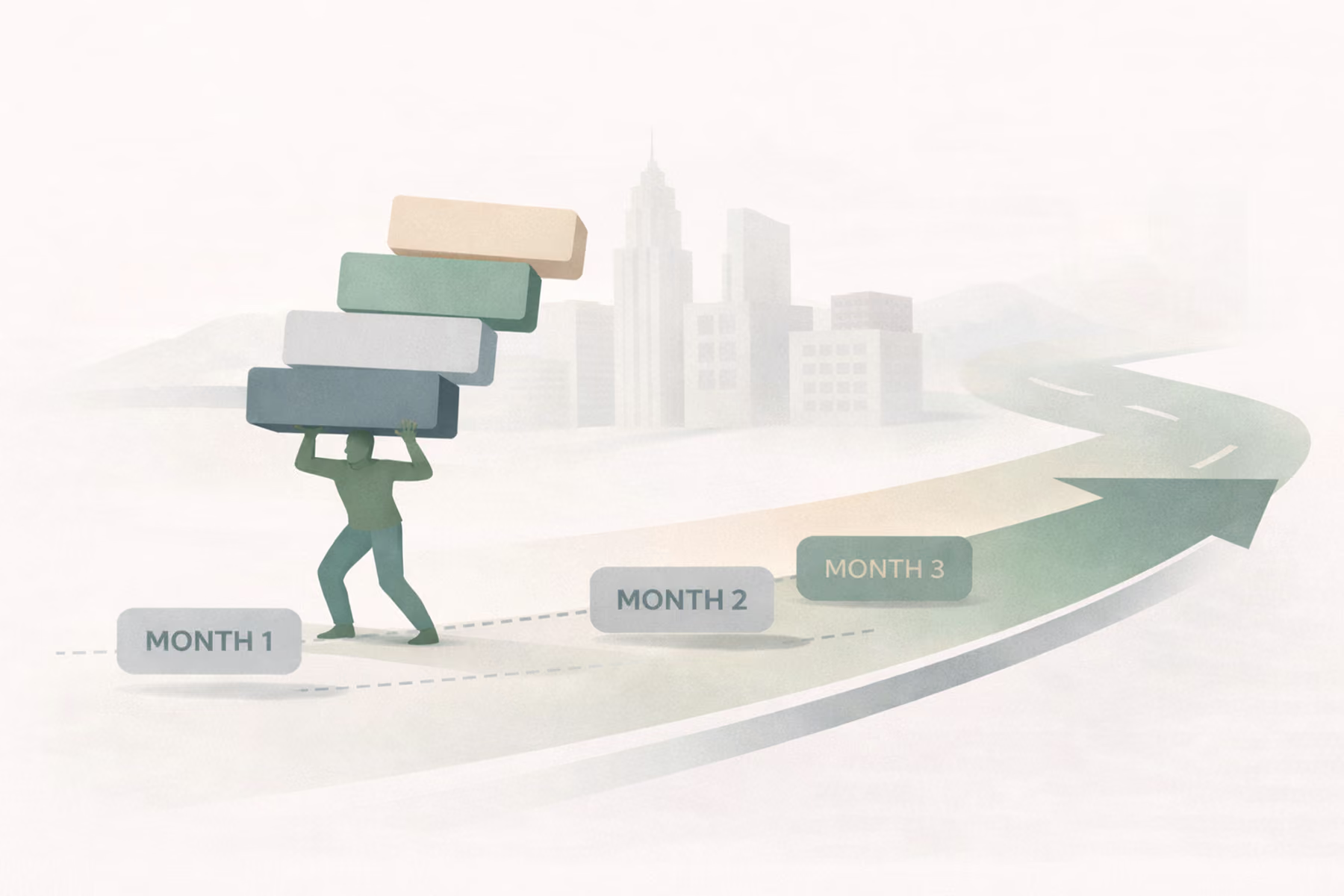
It often takes:
- 2–3 months to fully assess real performance
- Additional time to manage probation constraints
- Legal and financial costs to exit a misaligned hire
In some regions, termination complexity adds further friction. This means teams hesitate to make necessary changes and instead tolerate underperformance. High-growth teams cannot afford silent drag on performance.
The issue is not just hiring the wrong designer. It’s realizing it too late.
4. Recruitment Agencies Optimize for Volume — Not Accountability
Many recruitment firms operate on a volume model: source multiple candidates, present a shortlist then let the client decide.
But when the final decision is left entirely to the client, accountability is diluted.
The client still has to carry the technical validation responsibility, cultural fit validation and of course, the risk exposure. There is a difference between recruitment and responsibility. And that difference is what matters.
How Modern UX Staff Augmentation Solves UX Designer Recruitment Gaps
This is where the model shifts. Unlike traditional UX Designer Recruitment, a mature UX partner does not simply forward resumes. They use hands-on designers and developers to evaluate candidates. They recommend the best fit (instead of asking you to choose between five). They take responsibility for alignment and offer rapid replacement when needed.
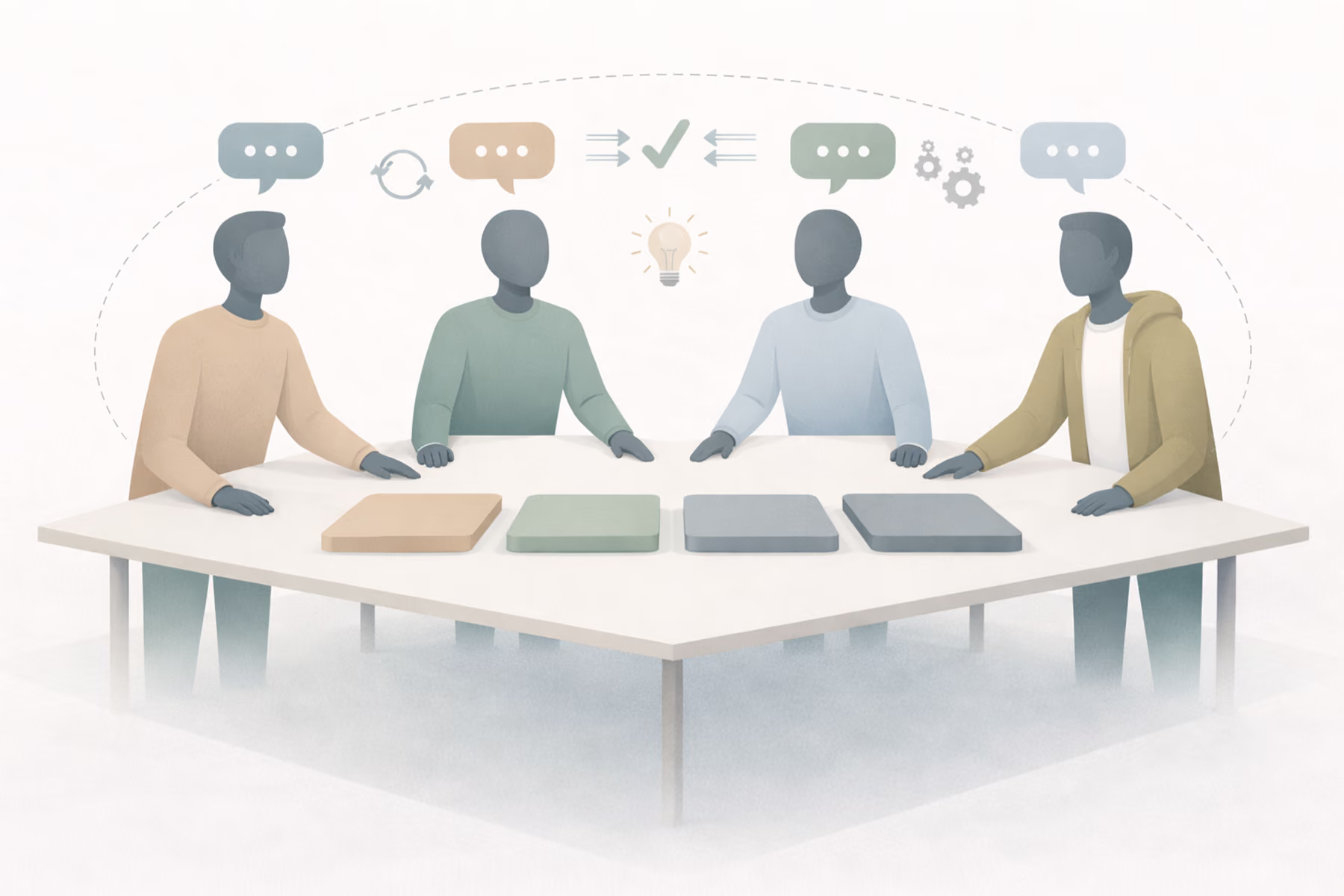
This approach reduces friction and risk simultaneously.
If you're evaluating structured support models, our UI/UX Staff Augmentation Services Page outlines how technical vetting and fast deployment work in practice. For a deeper look into assessment rigor, see How UX Staffing Agencies Should Recruit, Vet, and Onboard Designers.
Why High-Growth Teams Choose Staff Augmentation Over In-House UX Designer Recruitment
It’s not about outsourcing. It’s about reducing risk while preserving speed.
High-growth organizations often choose augmentation because:
- Recruitment cycles are shorter.
- Technical vetting is handled by practitioners.
- Replacements can happen within days — not months.
- Legal and administrative risk is absorbed by the partner.
When scaling teams rethink their structure, they often redesign their hiring model too. This is especially true in companies adjusting their design org architecture, as discussed in UX Design Team Structure in High-Growth Companies: Why Teams Add Staff Augmentation.
The core theme is consistent: reduce friction, increase accountability.
The Strategic Difference: Recruitment vs. Ownership
Recruitment fills roles. Ownership ensures outcomes.
A UX partner that can perform the job themselves, evaluate technical depth rigorously, stand behind the recommendation and replace quickly if needed, is fundamentally different from a sourcing agency.
For fast-growing teams, that difference directly impacts runway, roadmap execution, and morale.

Final Thoughts on UX Designer Recruitment for Fast-Growing Teams
UX Designer Recruitment is not broken because of talent scarcity. It’s broken because of structural misalignment in how teams assess and absorb risk. Fast-growing product organizations need hiring systems that match their operational velocity.
When recruitment is led by non-practitioners, slow to execute, risk-heavy, and detached from technical accountability, the result is rotation, frustration, and stalled growth. The smarter move is not simply hiring faster. It is redesigning the recruitment model itself.
Ready to Rethink Your UX Designer Recruitment Strategy?
If your product team is scaling and you cannot afford mis-hires, WANDR’s approach to UX staff augmentation reduces risk, accelerates deployment, and places technical accountability where it belongs.
Let’s build a design team that keeps pace with your roadmap.