


Drawbridge

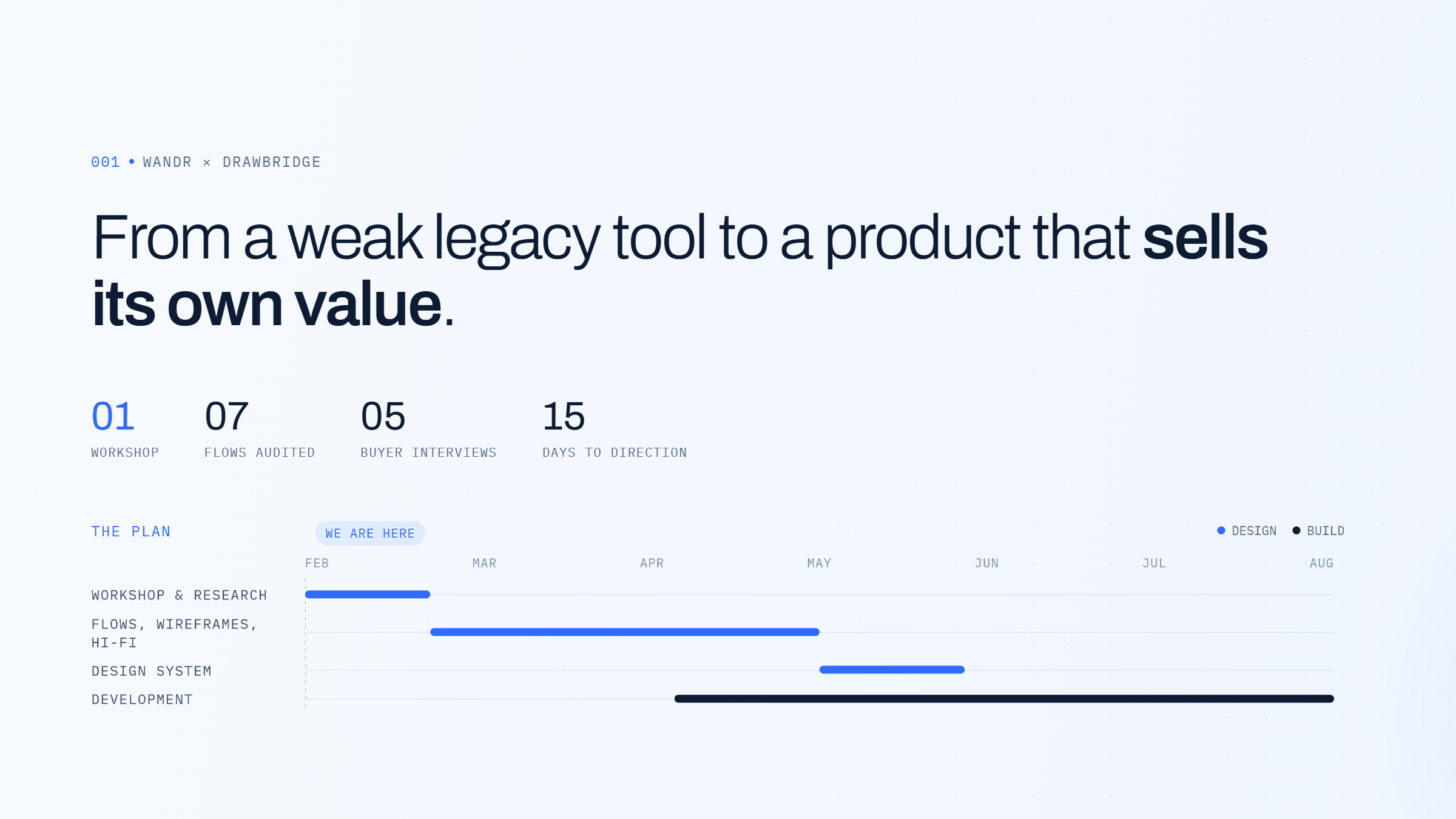
Seven core flows scored in three weeks gave Drawbridge the blueprint to turn a hands-on security service into self-serve software. It now serves 1,200+ investment firms.

PLATFORM
Web App
SIZE
Growth
goal

UX Audit - User Research

MPL Gaming
·
Real-money Platform
·
U.S. Market
At a glance

Three weeks, and a founder-led platform finally knew who it was for.

01
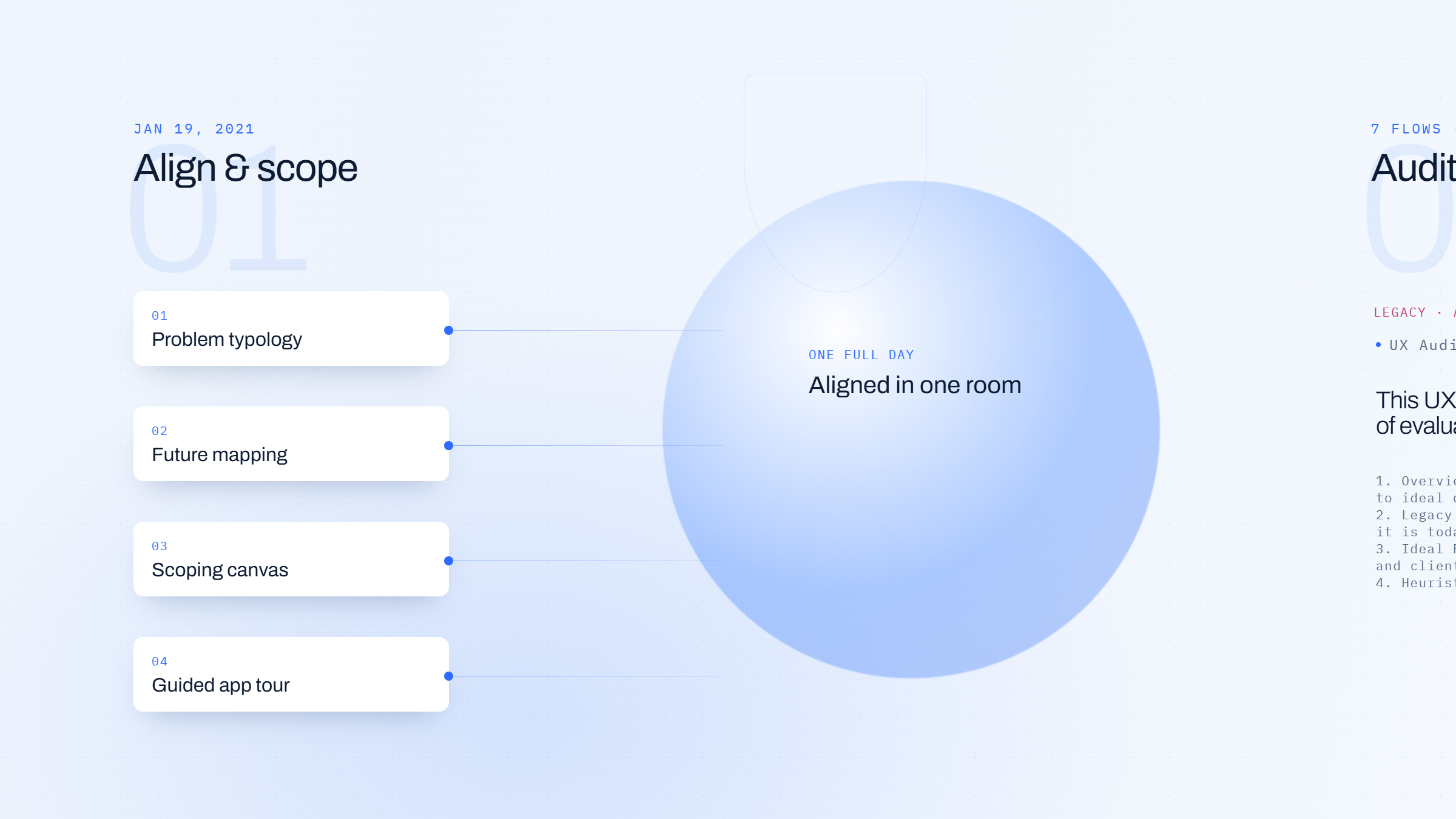
Align and scope.
 A full-day kickoff workshop on January 19, 2021 covering problem typology, future mapping and a scoping canvas, plus a guided tour of the live app to surface the team's own workarounds and long-term vision.
02
 Audit the product.
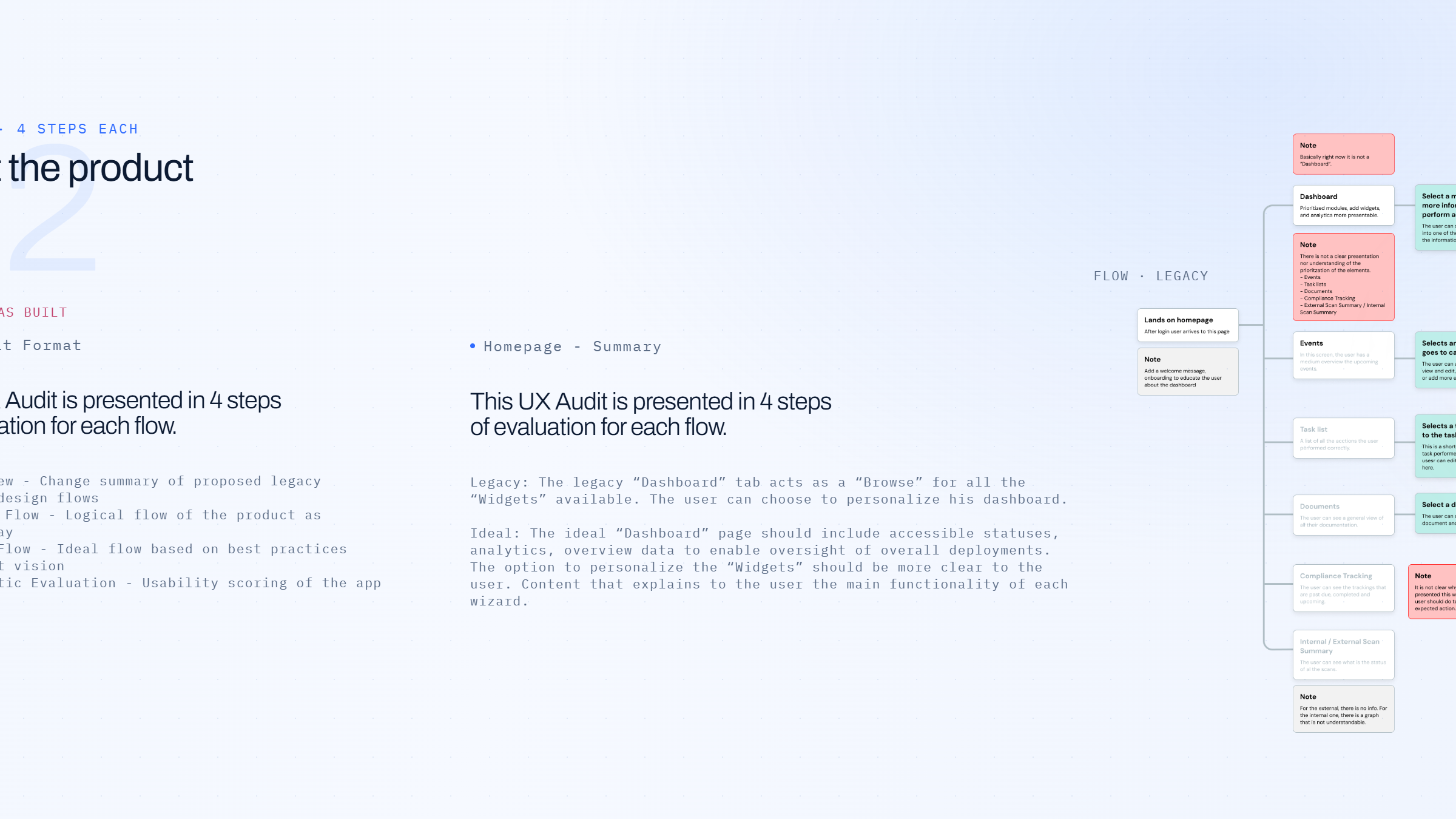
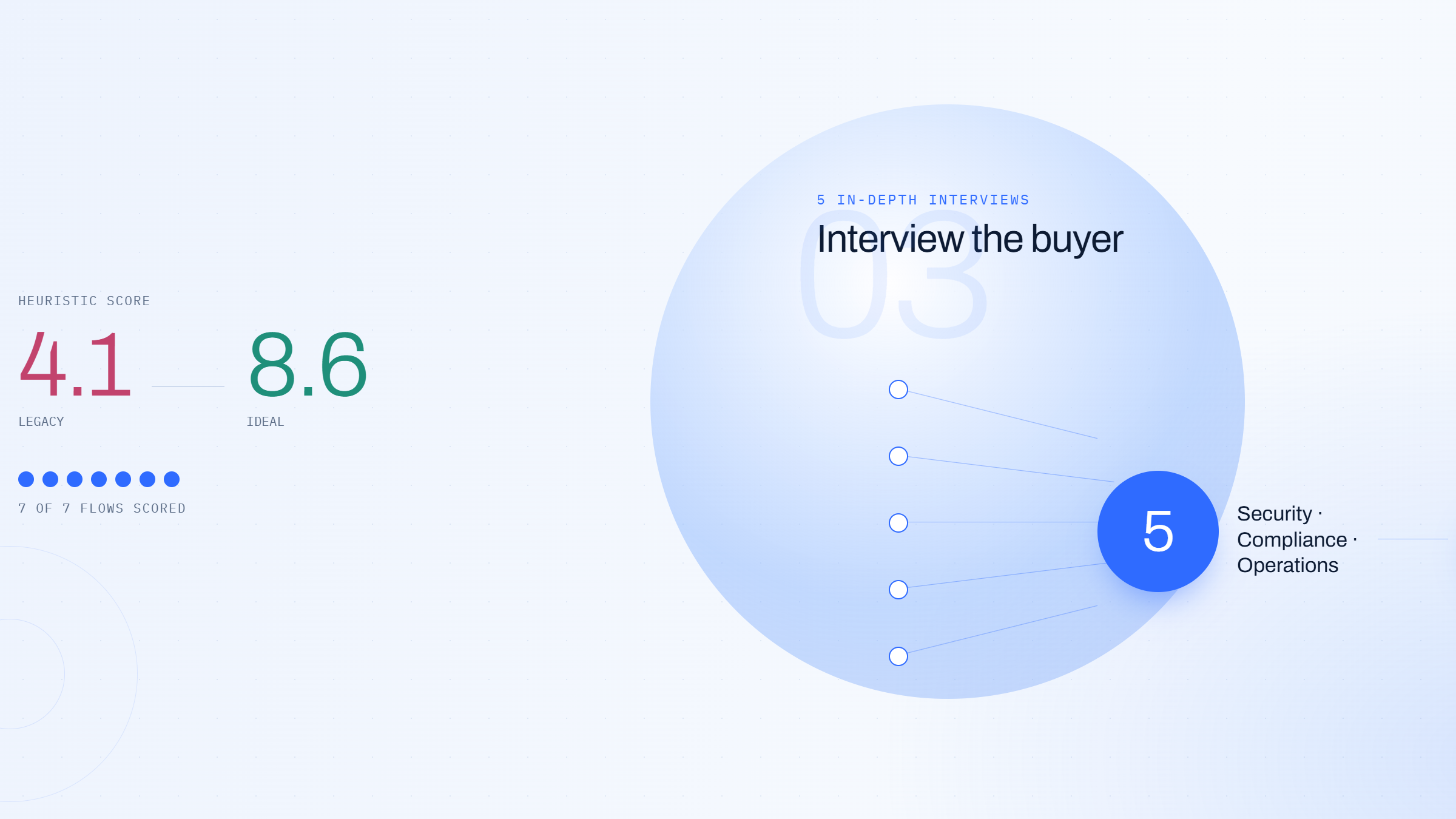
A heuristic UX audit of seven core flows, each documented in four steps: a change overview, the legacy flow as built, an ideal flow drawn from best practice and the client's vision, and a heuristic usability score.
03
Interview the buyer.
Five in-depth interviews with target customers in security, compliance and operations roles, debriefed and clustered into two personas with needs, attitudes and behaviors maps and a value proposition.
04
 Direct and measure.
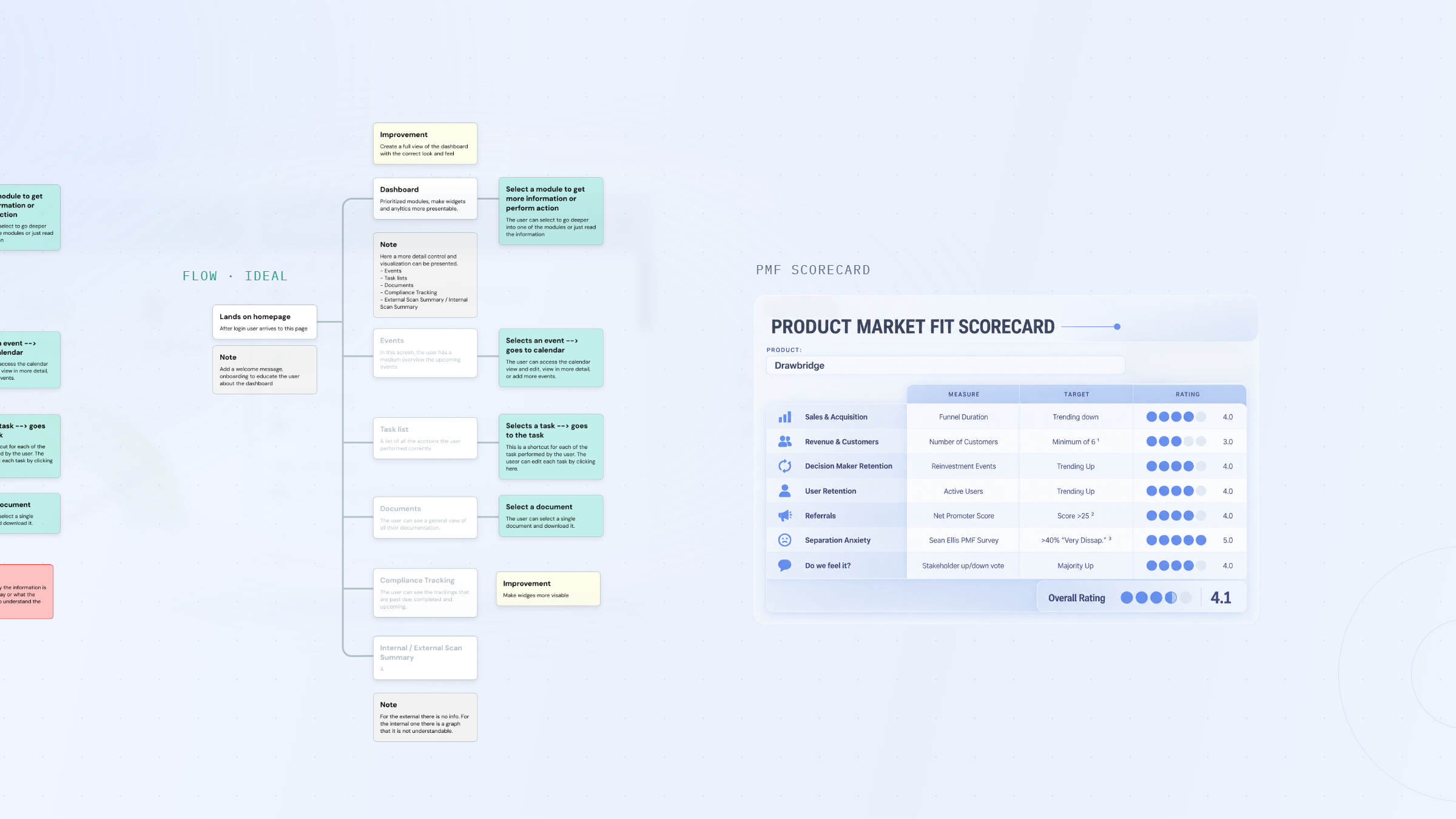
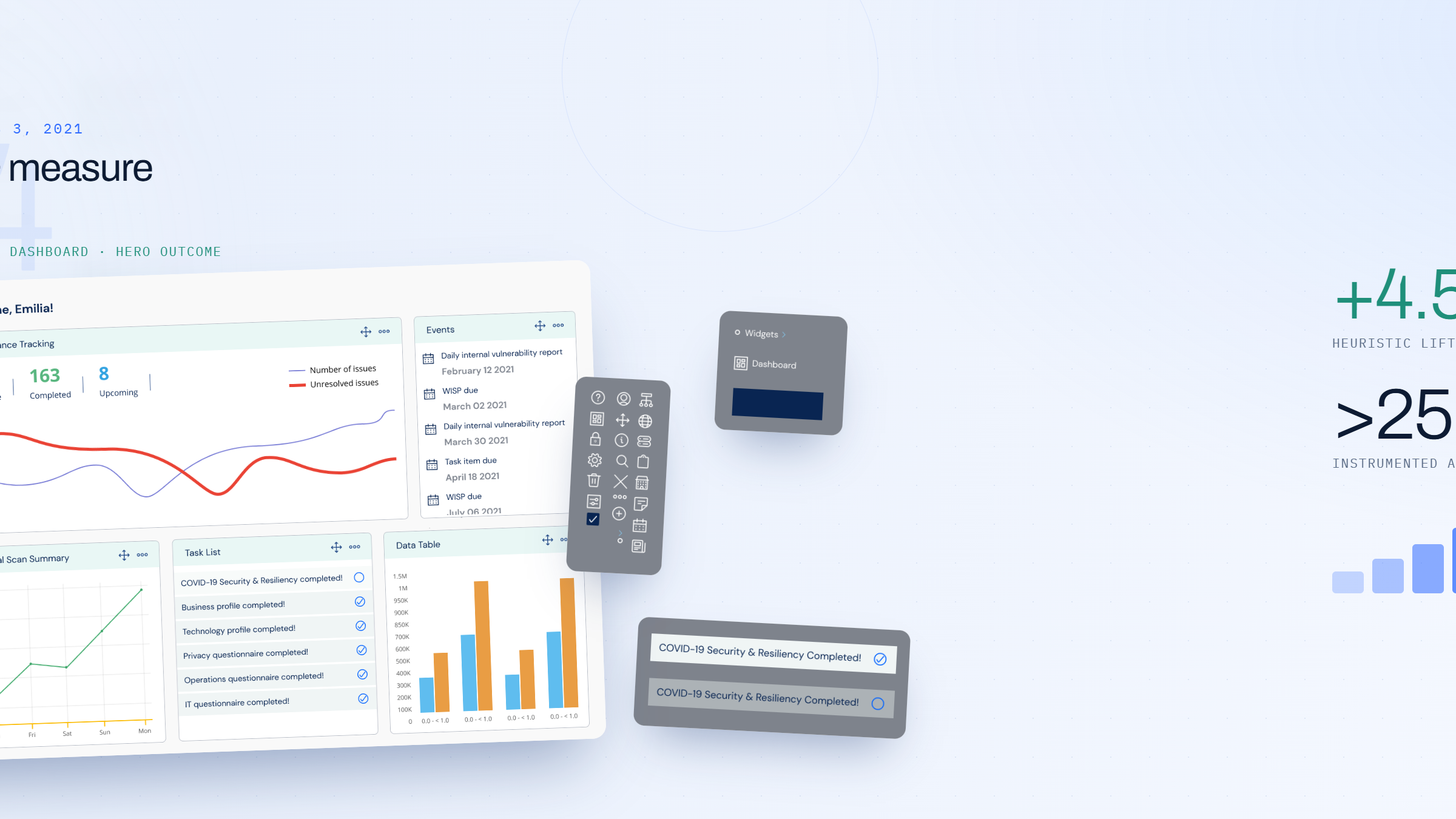
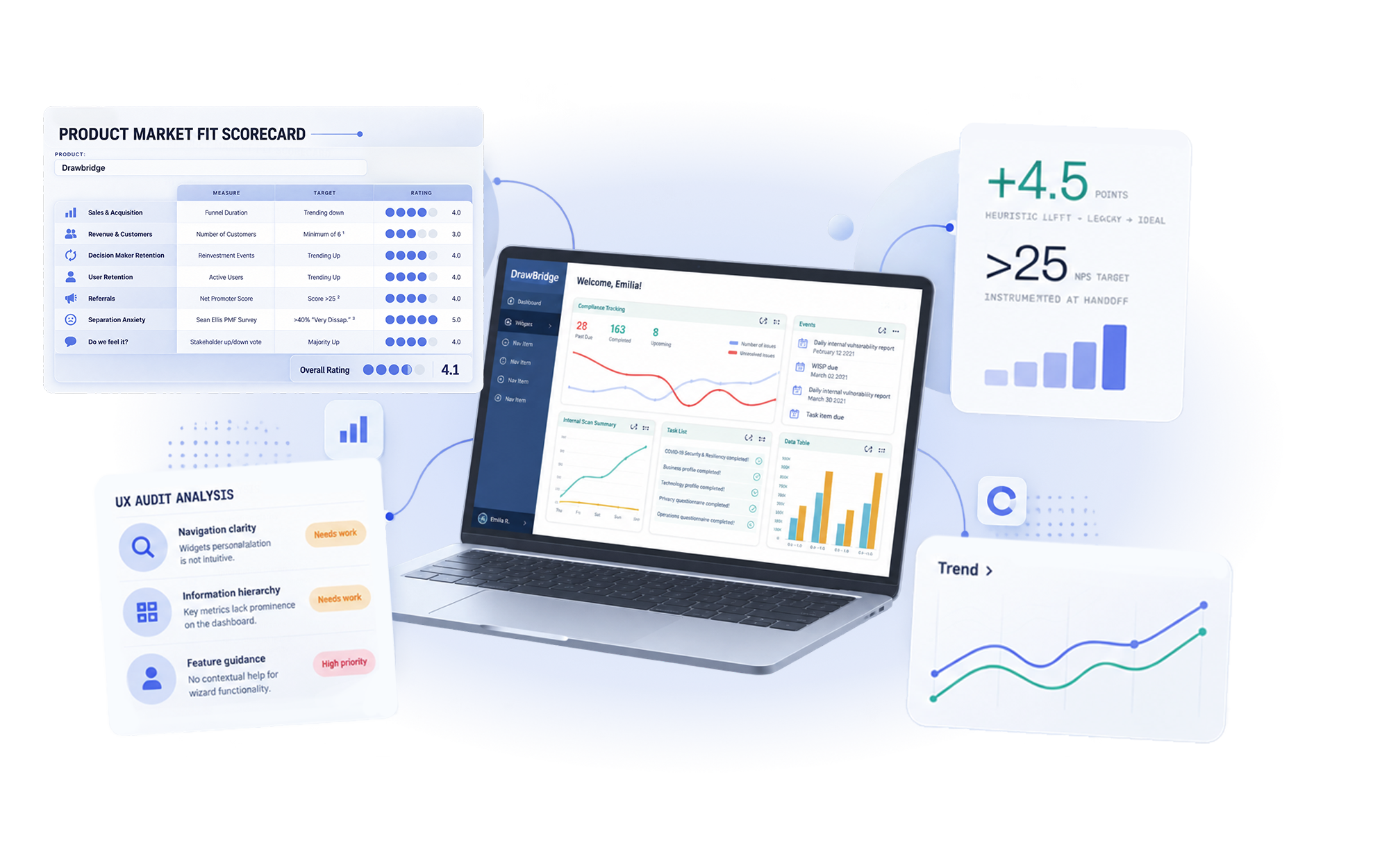
A redesigned, widget-based dashboard direction, plus a product-market-fit scorecard and an NPS survey, delivered to the Drawbridge leadership team on February 3, 2021.
Drag / scroll →
ENGAGEMENT
3 weeks
Kickoff January 19, final delivery February 3, 2021
EVIDENCE
5 interviews
Target buyers in security, compliance and operations
AUDIT
7 core flows
Each scored legacy against ideal
OUTPUT
4 deliverables
Audit, research report, UI direction, PMF toolkit
The Client

Cybersecurity built for the way financial firms are actually scrutinized.

MPL Gaming player base

Drawbridge builds cybersecurity and cyber-risk software purpose-built for the alternative investment industry: hedge funds, private equity and venture firms whose security posture is audited by their own investors. The platform lets a firm run its cyber program in one place, register and vet vendors, complete due-diligence questionnaires, monitor for vulnerabilities and keep its documentation defensible as regulation shifts.

When Wandr came in at the start of 2021, Drawbridge was doing something harder than a redesign. It was turning a high-touch, consultant-delivered security service into software a firm could run on its own. The platform already did a great deal. The open question was whether a new customer could understand any of it without a member of the founding team sitting beside them.

‍

2018
Founder-led, Palm Beach Gardens, Florida
1,200+ firms
Hedge funds, private equity and their portfolio companies
$1.7T
Client assets under management, 2023
The Challenge

A product born as a service, now asked to teach itself.

Drawbridge had deep security capability, a growing book of funds and real momentum. The interface still assumed the hand-holding of the services relationship the company was trying to outgrow, and the audit turned that into five specific failures.

Problem 01

The language was written for insiders.

The audit's first finding was the bluntest: the language is not clear. Section names did not say what the section did, and content was truncated behind ellipses rather than designed to fit. A customer who already knew the product could read it. A new one, arriving without a member of the founding team beside them, could not.

Problem 02

Several front doors to the same action.

 Navigation was not intuitive, and there were many different ways to arrive at the same action. That confused users, and it meant the team had coded and was maintaining features it did not need. The information architecture of the main menu had never been analyzed for what could be grouped.

Problem 03

The data was all there, and unreadable.

The graphs were not clear and the value of the information presented was not understandable. Color choices and contrast failed accessibility. A platform whose entire promise is that a firm can see its own security posture was showing the numbers without conveying what they meant.

Problem 04

The work still ran through the back office.

Vendors were added for customers on the back end rather than chosen by them. The same due-diligence questionnaires were sent to the same mutual vendors over and over. Risk reports were assembled by the consulting team and handed back as a PDF. Every one of those was a service task the software was meant to absorb.

Problem 05

No defined buyer to design around.

A services company knows its clients personally. A software company has to know its buyer in the abstract, and Drawbridge had no shared, evidence-based picture of who the self-serve user was, what they valued, or how they decided to buy.

Drag / scroll →
Before / After

Same deep platform, mapped for the redesign it needed.

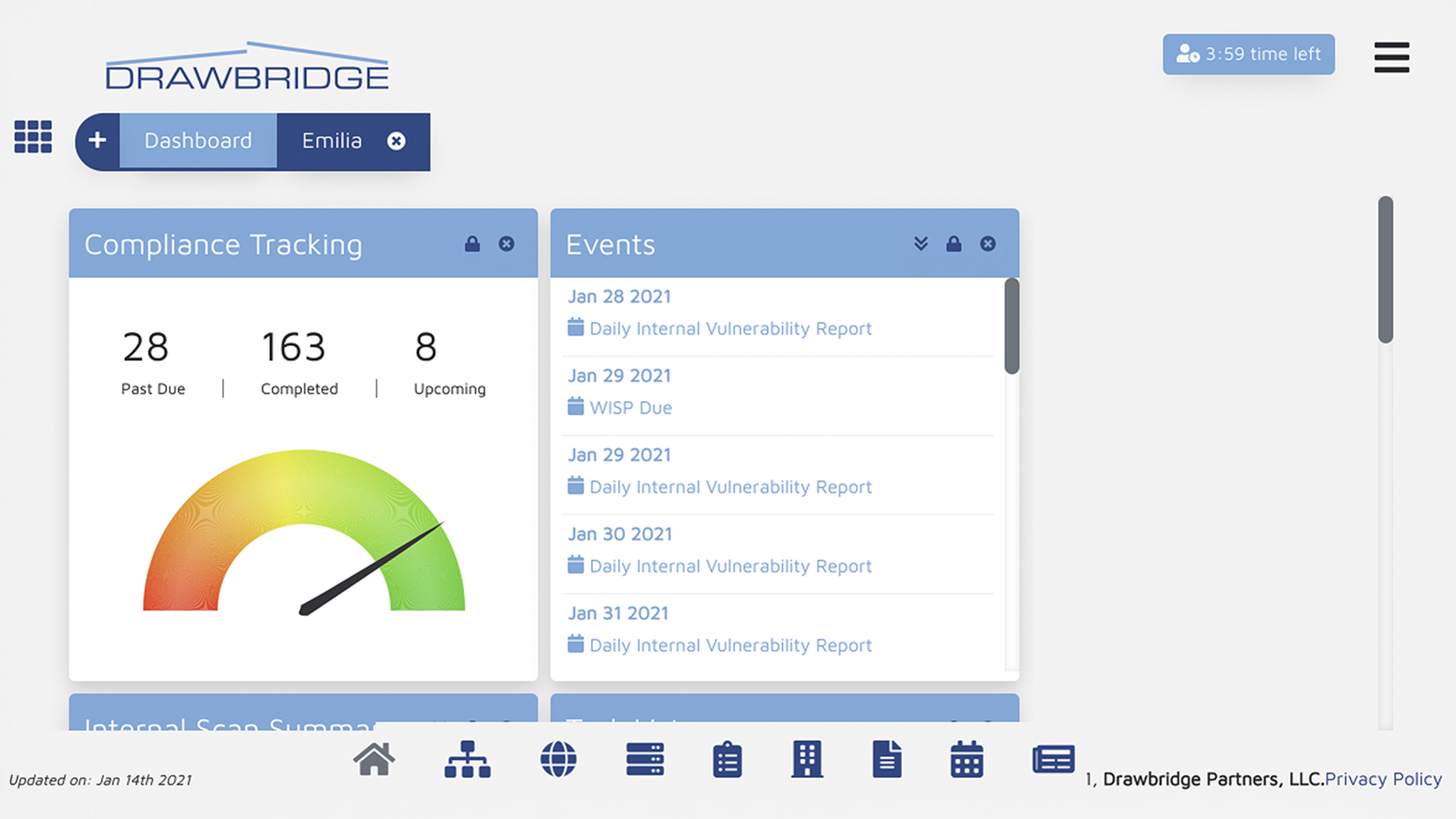
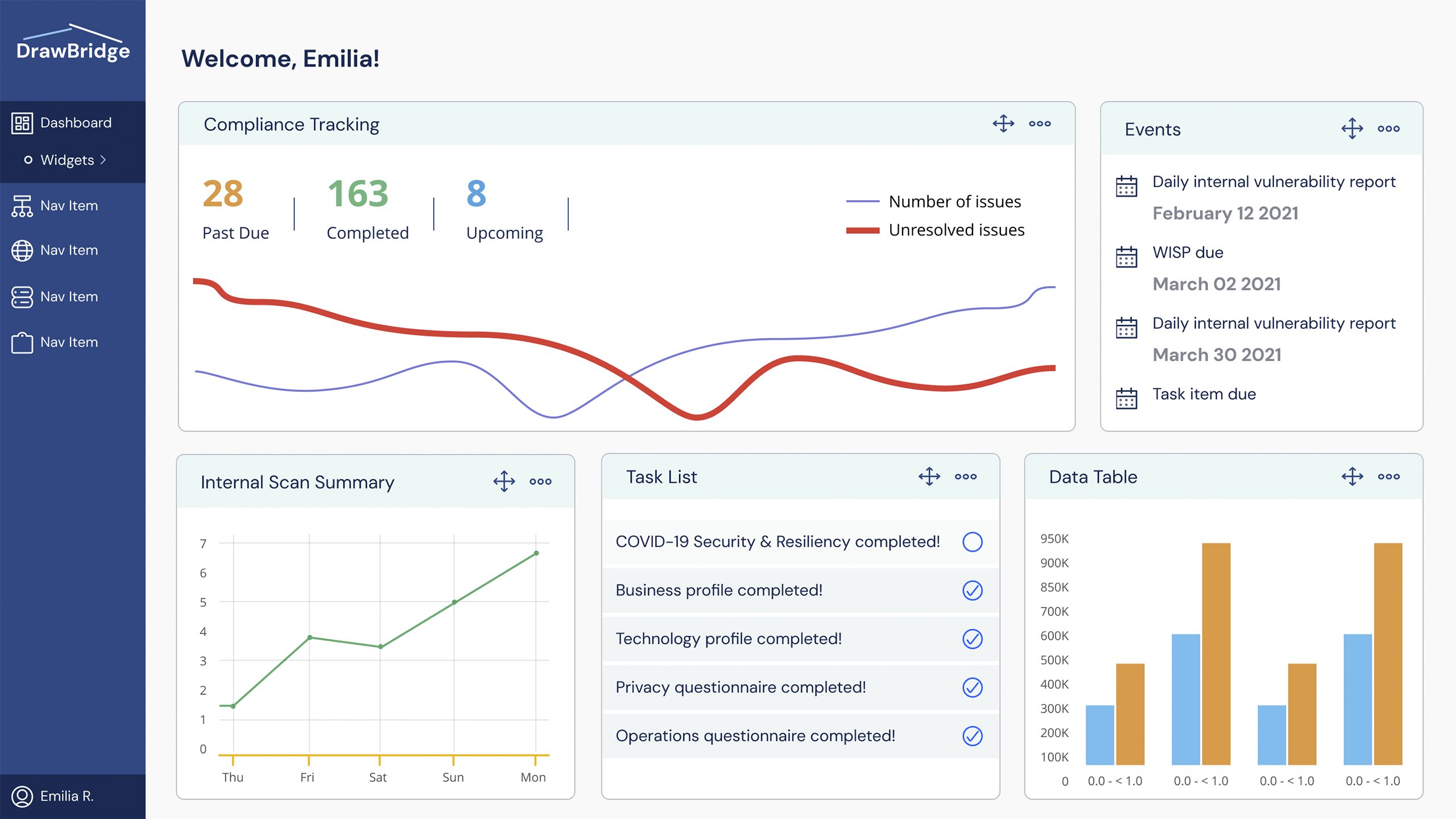
Drag the handle to compare the legacy home screen, a browse-everything grid that left the customer to work out what mattered, with the direction we handed back: a customizable dashboard of widgets where compliance status, scan results, open tasks and upcoming deadlines read at a glance.

Before redesignBefore redesign
After redesignAfter redesign
Before
After WANDR
Our Role

Audit the product, research the buyer, hand back a plan.

01
A stakeholder kickoff workshop covering problem typology, future mapping, scoping and a guided tour of the live app
02
A heuristic UX audit of seven core flows, each scored and mapped legacy against ideal
03
Five in-depth interviews with target buyers, debriefed and clustered for patterns
04
Two research-based personas with needs, attitudes and behaviors maps
05
A value proposition and unique selling point synthesized from the interview set
06
A redesigned, widget-based dashboard direction
07
A product-market-fit scorecard to track fit as the product changed
08
An NPS survey instrument for continuous customer feedback
Research

We asked the people who buy security software what makes them commit.

Five in-depth interviews with target customers, recruited from security and compliance leadership and from the operations side that handles vendor due diligence, deliberately including people with experience on both the vendor side and the approval side of a contract. The sessions were open-ended, covering how they approach the job of building a secure company and how they chose the tools they run today. Responses were then clusterized to find the patterns that repeated.

01
4 expectations   · Value proposition

Every buyer named the same four things.

Saving time. Ease of implementation, which all of them treated as a commodity and none would compromise on: they would not integrate a tool that was not easy to implement. Autoservice, meaning they expected to perform basic tasks themselves without customer service. And customer service quality, which they judged directly against what they were paying. “Risk analysis and cost benefits, that is why we choose to go with one vendor and not the other,” as one put it. For a company still delivering much of its value by hand, that was the whole brief.

02
7 flows   · Heuristic audit

The same action had more than one front door.

Dashboard, Connect-R, due diligence, org view, calendar, documents and news. Each was documented as a change overview, the legacy flow as built, an ideal flow drawn from best practice and the client's own vision, and a heuristic usability score. The audit closed on six ranked priorities, led by the dashboard, Connect-R and due diligence.

03
2 personas   · Needs, attitudes, behaviors

Two buyers, one shared demand: let me do it myself.

The interviews clustered cleanly into two archetypes with different pressures and the same expectation of autonomy. Both were mapped against needs, attitudes and behaviors, and the value proposition and unique selling point were written from what they said rather than from what the product already did.

2 very different buyers.

Persona 01
Casual gamer persona

Matthew, the security-minded CTO

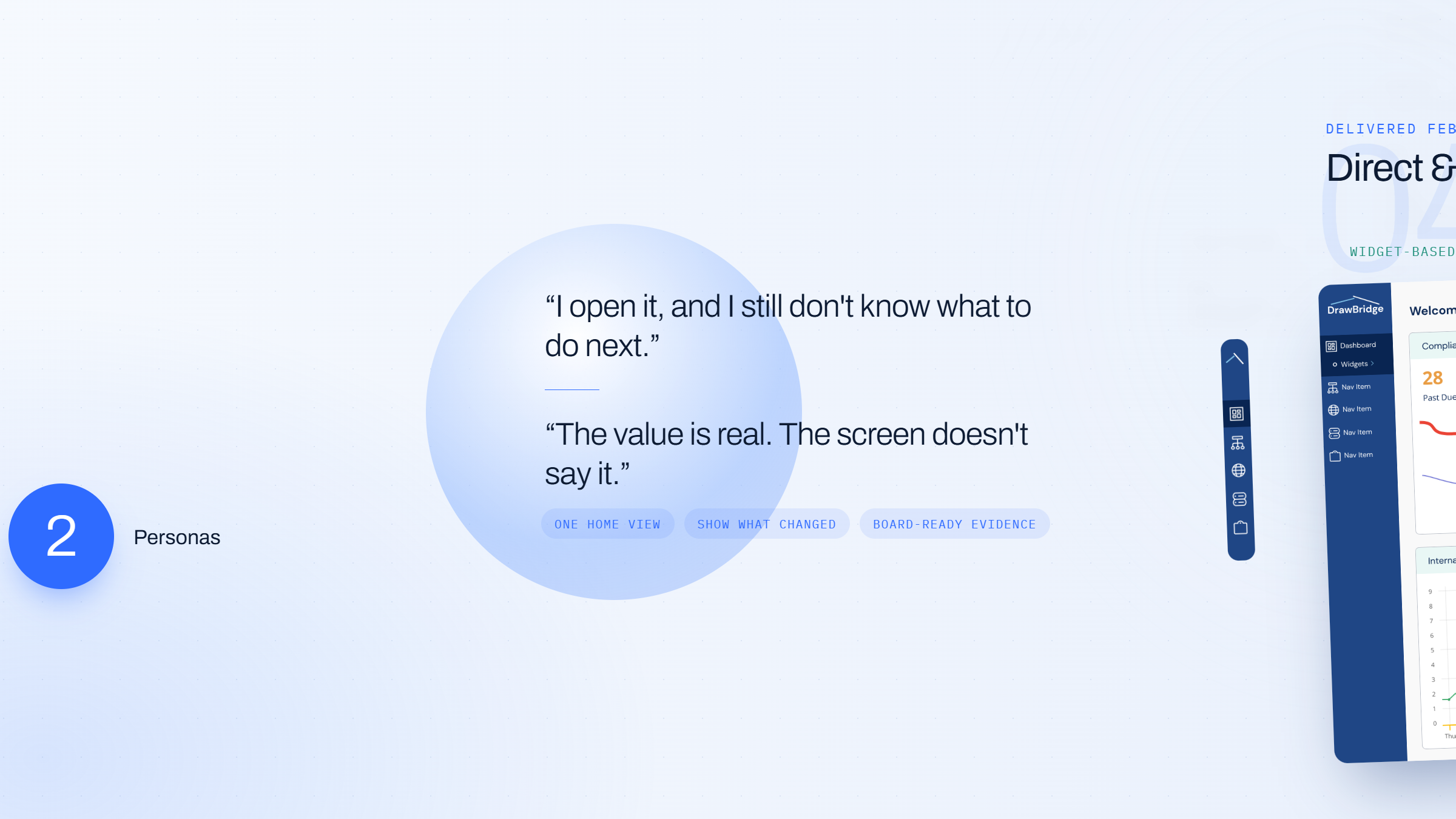
CTO at a financial firm, self-taught, with high digital literacy and a habit of doing everything he can through technology. Pragmatic, hands-on and thorough. He plans ahead, optimizes manpower, asks for references before deciding, and weighs cost against what he actually gets out of a tool. What frustrates him is redoing a task because of human error, or having to talk to a person to resolve something technology could have handled. “Last year, we implemented many things and did a lot to better our security, but I’m always looking for the perfect and latest addition to our security staff.”

Technical evaluator
Efficiency-first
 Checks references

Persona 02
Committed player persona

Angela, the data-driven COO

COO at a marketing consulting firm, responsible for contracting vendors and for getting her own company approved as one. She looks for answers independently, builds a culture of accountability, and analyzes cost against benefit continuously. “I’m 100% data-driven; all the decisions I make are based on data. I noticed that we were not using a vendor; the contract got automatically renewed. It is my job to negotiate a win-win scenario where we honor our agreement, but we don’t pay for a service we are not using.”

COO at a marketing consulting firm, responsible for contracting vendors and for getting her own company approved as one. She looks for answers independently, builds a culture of accountability, and analyzes cost against benefit continuously. “I’m 100% data-driven; all the decisions I make are based on data. I noticed that we were not using a vendor; the contract got automatically renewed. It is my job to negotiate a win-win scenario where we honor our agreement, but we don’t pay for a service we are not using.”
Self-ser
Cost-to-value
Persona 03
Office-context player persona

The Strategy

Make a services-grade product feel self-serve.

The research pointed at one job. Buyers wanted to move fast on their own. The audit showed exactly where the product got in their way. The value proposition written out of the interviews said it plainly: when every company is trying to accelerate its processes and create efficiency, Drawbridge is the partner that ensures security protection and vendor management. Three moves closed the gap between that sentence and the product.
01

Design for autoservice, not for onboarding calls.

If a buyer will not integrate a tool that is hard to implement, then every screen has to explain itself. The direction pushed plain language, self-evident labels and flows a first-time user could finish alone, so the founding team's presence stopped being a dependency of the product.

02

Cut the redundant paths and commit to one journey.

The audit ranked the flows worth rebuilding first, dashboard, Connect-R scanning and due diligence, and recommended defining a single user journey and removing the workarounds around it. That is a design decision with an engineering dividend: less unnecessary code to carry into the next stage of the company.

03

Turn data into a decision, not a chart.

 Users could not read value in the existing graphs, and the color and contrast choices did not meet accessibility standards. The recommendation was data visualization on every home screen in every sub-menu, accessible statuses and real analytics, so a security posture could be read rather than interpreted, and a design system underneath it all to hold seven flows to one vocabulary.
The dashboard direction made that concrete. The home screen was reframed from a fixed grid into a customizable board a user assembles from a widget library, with compliance tracking that counts issues past due, completed and upcoming against a trend line, an internal scan summary, an events feed of upcoming deadlines, a task list of completed onboarding steps, and a calendar. What each user needs to see first is a choice the user makes, which is exactly the autonomy the interviews asked for.

Principle 01 of
→ Continue scrolling
THE KEY INSIGHT

They asked for more features. What they wanted was less work.

The brief we heard in the first calls was almost entirely about appearance and features. Customers had told Drawbridge the product was barebones and asked for more capability; the team wanted it to look modern. The interviews said something different. Buyers were not asking for more surface. They wanted to save time, implement without a project, and do the basic things themselves. A product that adds features to answer that request gets heavier, not clearer. So the kickoff was designed to make one argument: looking good is a consequence of defining the right experience, and the way to automate and personalize a security program is to fix its information architecture first. That reframing is what turned a visual refresh into a discovery that could actually carry a business model change.

MPL redesign surface
Screen 01 of 08
→ Scroll horizontally
Outcomes

What the engagement produced.

Three weeks from kickoff, Drawbridge had an evidence-based buyer, a scored audit of its core product with a ranked list of what to fix first, a dashboard direction built for oversight, and the instruments to measure whether the move from service to software was landing.

01 · EVIDENCE
5 interviews
A buyer defined by research, not assumption
02 · ROADMAP
6 priorities
Ranked and handed to the product team
03 · DIRECTION
9 widgets
A dashboard the user assembles
04 · MEASUREMENT
7 measures
A product-market-fit scorecard, plus an NPS survey

Client Voice

In their words.

“
We were a security service becoming a software company, and that is a harder change than it sounds. Our customers knew us because they knew us. Nobody had ever proven who would buy the product cold. Wandr went and interviewed the people we were trying to sell to, audited every core flow of the platform against how it should work, and came back telling us the thing our customers actually wanted was not more features, it was the ability to do the basics without calling anyone. That reordered our roadmap
Replace · First Last
Title · MPL Gaming
Up next

Another story worth reading.

Buildbox case study preview
Next Case Study

Medtrainer

‍

No code gaming
·
SAAS
Read next case