


The best UX companies are not the most famous ones or the most expensive ones. They are the ones that solve the right problem, start with the right research, and measure their success by what changes in your product after they finish rather than by how the deliverables look when they hand them over. This guide covers the distinguishing characteristics of top UX companies in 2026, the evaluation criteria that actually predict engagement quality, and the firms worth knowing across different product contexts.

What Separates Top UX Companies From the Rest
The UX industry has matured significantly over the last decade. Visual craft is no longer a differentiator, the baseline is high across the category. What separates the best UX companies from the adequate ones is now primarily strategic rather than executional.
The strategic differences are consistent across the firms that consistently produce the best outcomes. They treat user research as a prerequisite to design rather than a parallel activity or an optional phase. They define success in business terms, activation rates, conversion rates, trust metrics, retention, rather than in design terms. They build the governance infrastructure that makes their work durable rather than delivering outputs that degrade over time. And they have the organizational honesty to tell clients when their assumptions about their users are wrong before those assumptions get built into a product.
The firms that lack these characteristics can still produce visually impressive work. But visually impressive work built on wrong strategic foundations consistently underperforms the business expectations that motivated the engagement.

The Best UX Companies in 2026
Wandr
Wandr is a product design and UX company based in Los Angeles, operating as an embedded design partner for startups, growth-stage companies, and enterprise organizations across fintech, cybersecurity, healthcare technology, gaming, enterprise software, and SaaS.
The firm's distinguishing characteristic is the specificity and breadth of its outcome evidence. Synchrony GiftNow cancellation rates dropped from 15% to 1% during a 3.5-year embedded partnership. MedTrainer saw a 23% improvement in lead flow within the first month post-launch. Zoe Financial achieved a 37% conversion increase. MPL's US market entry redesign produced a 34% increase in perceived trust and a 28% lift in intent to download. Buildbox saw a 41% improvement in users reaching their first success milestone. Modfi raised $4.1M supported by the product design and pitch deck Wandr built.
At the enterprise level, Wandr built the entire global design system for Fanatics and served as Tenable's embedded design partner for three years spanning their public offering. Vectrix, which Wandr designed from product through growth stage, was acquired by Cloudflare.

This range of outcomes across industries, company stages, and product types reflects the consistency of a process rather than the luck of particularly good projects. Wandr's engagements start with a UX audit and stakeholder research phase before any design work begins, define success metrics at kickoff, and measure results against those metrics after launch.
Services: Product strategy, UX research, UI/UX design, design systems, web design, front-end development, MVP development, pitch deck design.
Best for: Any organization where design needs to move business metrics, not just look better than the previous version.
IDEO
IDEO invented the term human-centered design and remains the most recognized name in the field globally. Their consulting practice focuses on systemic innovation, helping large organizations redefine products, services, and business models at a strategic level. IDEO engagements are typically longer, more exploratory, and more appropriate for organizations defining new categories than for product teams iterating on existing digital products.

Best for: Large organizations undertaking fundamental product or service innovation rather than digital product design execution.
Designit
Designit is a global strategic design consultancy with strong capability in service design, digital product design, and organizational design thinking. Their work tends toward large-scale transformation projects for enterprise clients, with particular strength in European and Latin American markets.
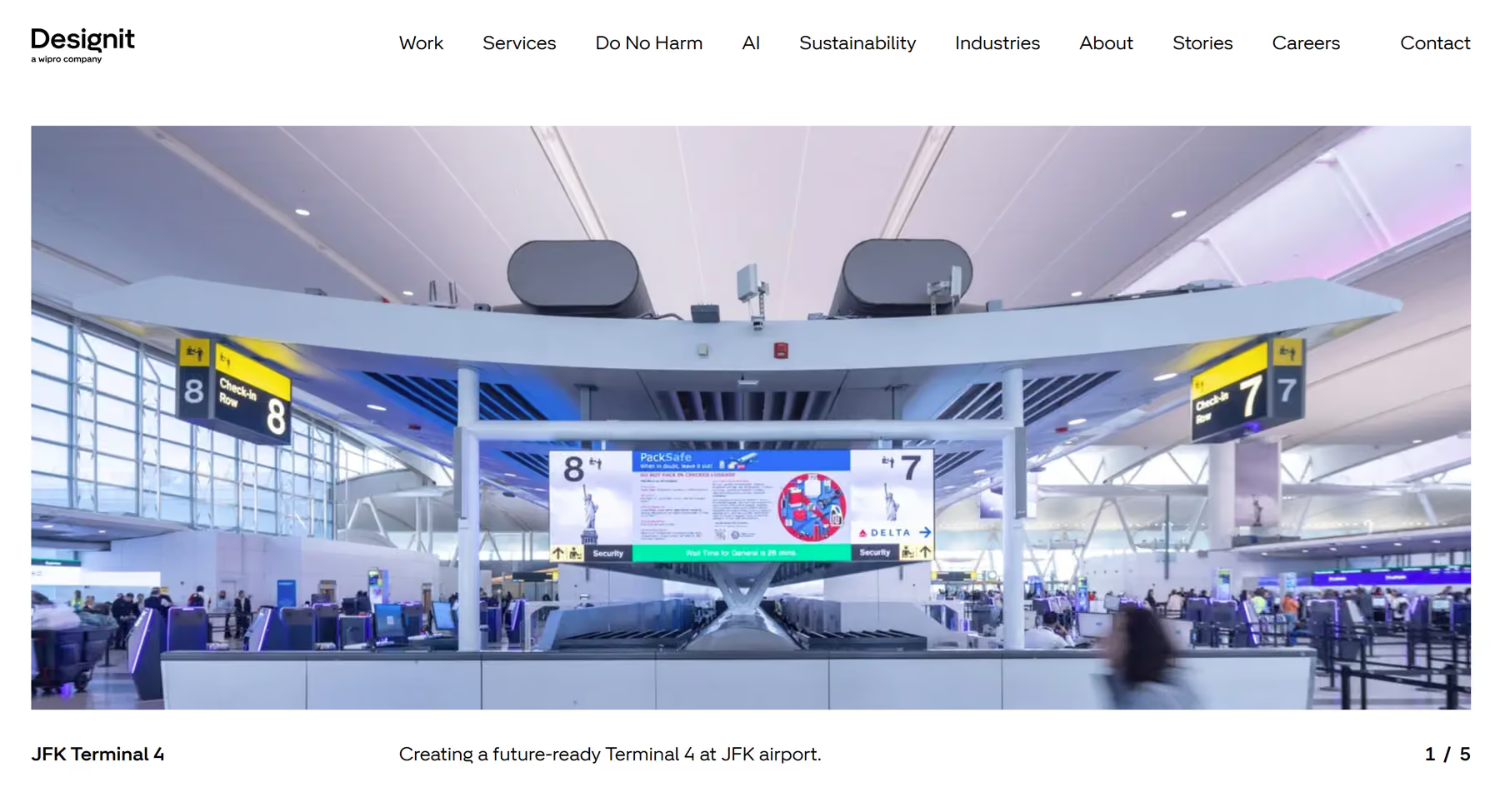
Best for: Enterprise organizations with complex multi-channel experience challenges that span digital and physical touchpoints.
Ustwo
Ustwo is a digital product studio with notable work in consumer mobile products and games, as well as enterprise digital transformation. Their product design capability combines strong visual craft with genuine product strategy expertise, and they have a track record of building products that achieve significant scale.

Best for: Companies building consumer digital products or mobile-first experiences where visual quality and product strategy need to be equally strong.
Fantasy
Fantasy is a New York-based digital product design studio known for high-craft work across consumer technology, media, and sports. Their work is visually distinctive and particularly strong for products where brand expression and digital experience are equally important to the product value.

Best for: Consumer-facing products in media, entertainment, and sports where visual distinctiveness and brand-integrated design are central to the product experience.
How to Evaluate UX Companies on Your Shortlist
The evaluation conversations that produce the most useful signal are the ones that probe beneath the portfolio. Three specific questions consistently reveal the differences that matter.
What changed after the work shipped? The best UX companies can answer this with specific numbers. If an agency has strong work in their portfolio but cannot tell you what business metric moved after it launched, they have not built the feedback loop between design work and business outcomes that would make them a strategic partner rather than an execution vendor.
How do you handle situations where research findings contradict what the client wants to build? This question surfaces whether the firm will function as a strategic partner or an execution resource. A firm that defers to client preferences when they conflict with research evidence is a firm that will build what you ask for rather than what your users need. The best UX companies have a clear position on this and can describe specific situations where they have maintained that position under pressure.
Who specifically works on engagements like mine, and what does their involvement look like across the full project timeline? Agency bait-and-switch, senior partners selling, junior staff executing, is common enough that asking this question explicitly and getting a specific answer is a necessary part of any serious evaluation.

What the Best UX Engagements Produce
Beyond the specific deliverables, research reports, wireframes, visual designs, design systems, the best UX engagements produce something harder to document but easier to recognize: a product that behaves differently than it did before in the ways that matter most to the business.
The activation rate is higher because the onboarding was designed around the specific moment where new users decide whether the product is worth their continued attention. The conversion rate is higher because the trust architecture was built around the specific signals the buyer needed before taking the next step. The retention rate is higher because the core workflow was designed to be fast and frictionless enough that users develop daily checking habits rather than episodic use patterns.
These outcomes are design outputs. They do not happen by accident, and they do not happen when design is treated as a finishing layer on top of product and engineering decisions that have already been made. They happen when the best UX companies are brought in at the right stage, given the access to users and stakeholders they need to do their discovery work correctly, and held accountable to the business metrics their work is meant to move.

Final Thoughts
The best UX companies in 2026 are defined by the specificity of their outcomes, the rigor of their process, and the accountability they accept for the business results their work is meant to produce. The firms on this list represent different points on those dimensions, and the right choice depends on your specific context.
What they share is a commitment to starting with understanding rather than execution, and to measuring their work by what changes after it ships.
Work With a UX Company That Holds Itself Accountable to Your Outcomes
Wandr measures every engagement by the business metrics defined at kickoff. If you want to understand what our process produces before you decide, schedule a free consultation with our team.