

Persona 01

Julia · the app owner.
CEO of a travel networking app. Knows CPA from CPC but leans on a developer for the technical work. Early growth has stalled and she needs a rewards program live fast.
Target user
Tech-literate
Time-poor
Appevate
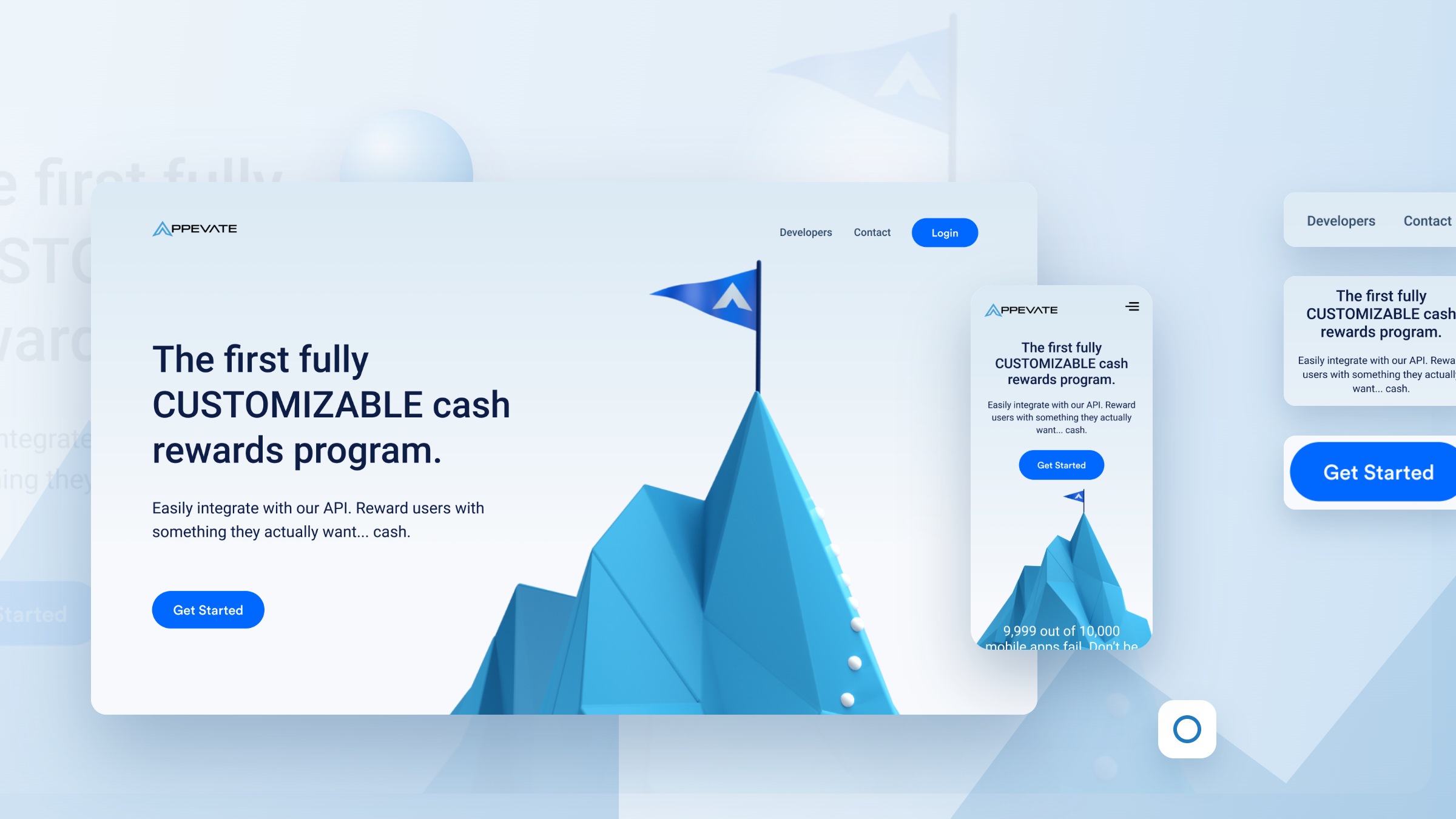
We turned a rewards API only a developer could install into a research-backed product, built so non-technical app owners could launch a program on their own.
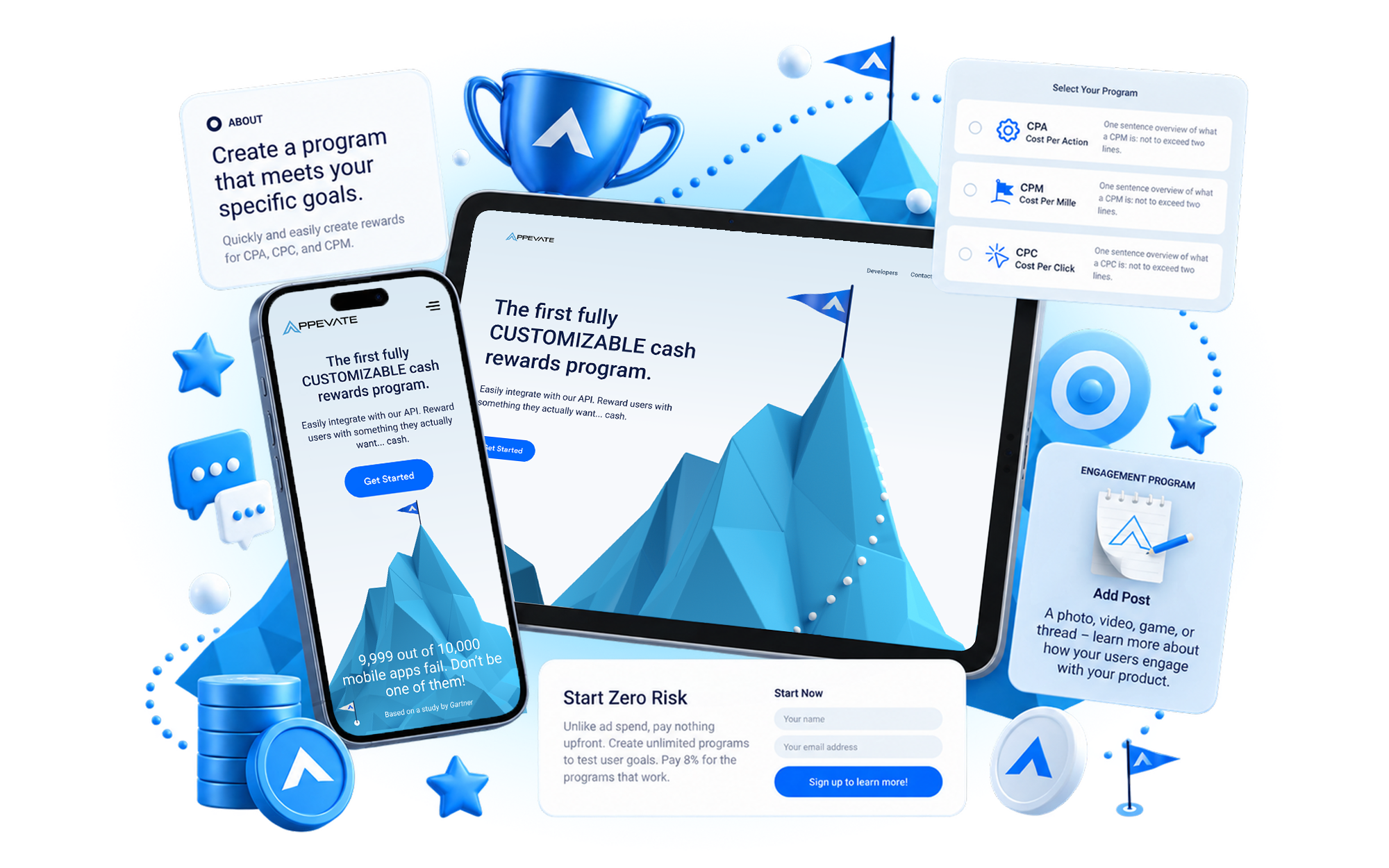
Research, design, brand, and build.
A startup turning any app into a rewards platform.
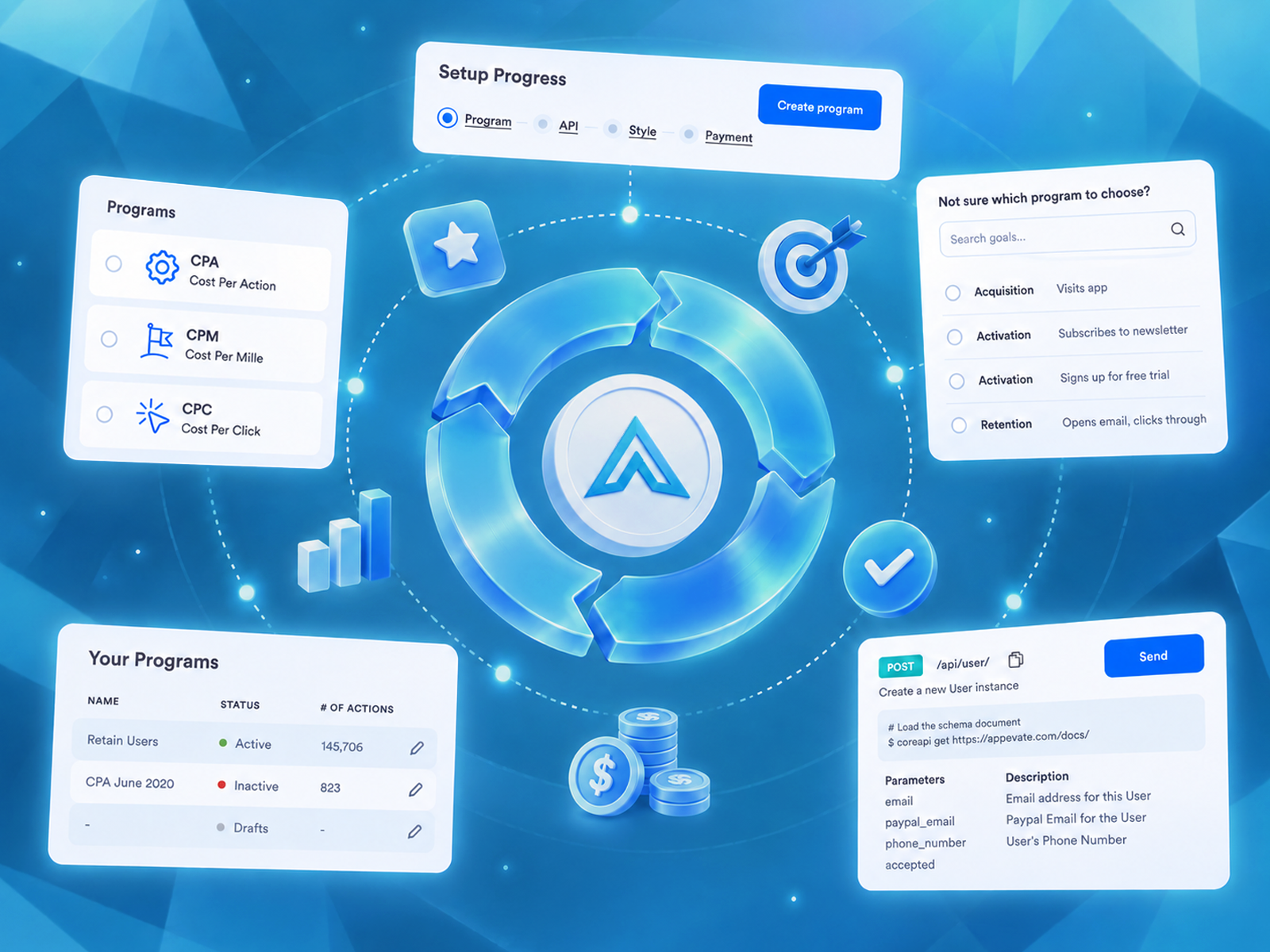
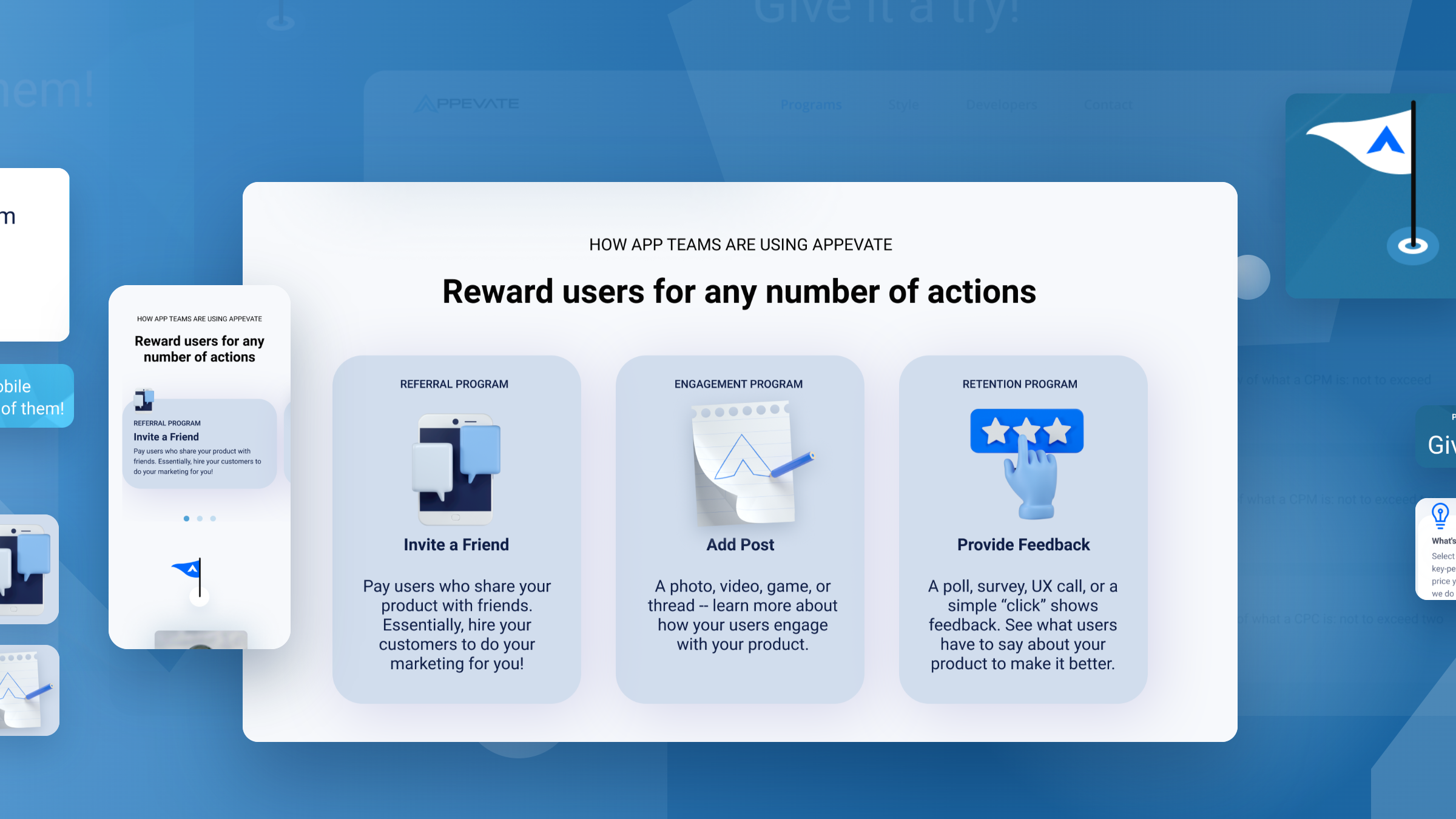
Appevate, built by ShareEdge, helps app owners drive engagement through rewards. App owners integrate its API, define rewards around the actions that matter, a signup, a click, an impression, and pay users in cash when they take them, all from one dashboard.
The pitch was simple: give smaller apps the loyalty engine big platforms build in-house, without the engineering budget. The catch was who had to set it up.
The product worked. Getting in didn't.
Appevate's early adopters were non-technical app owners, but integrating the API was a developer's job, and research showed the gap early.
Getting started meant an API key, a zip, and code. In testing, non-technical owners stalled at once, they were the buyers, but couldn't get Appevate running without pulling in an engineer.
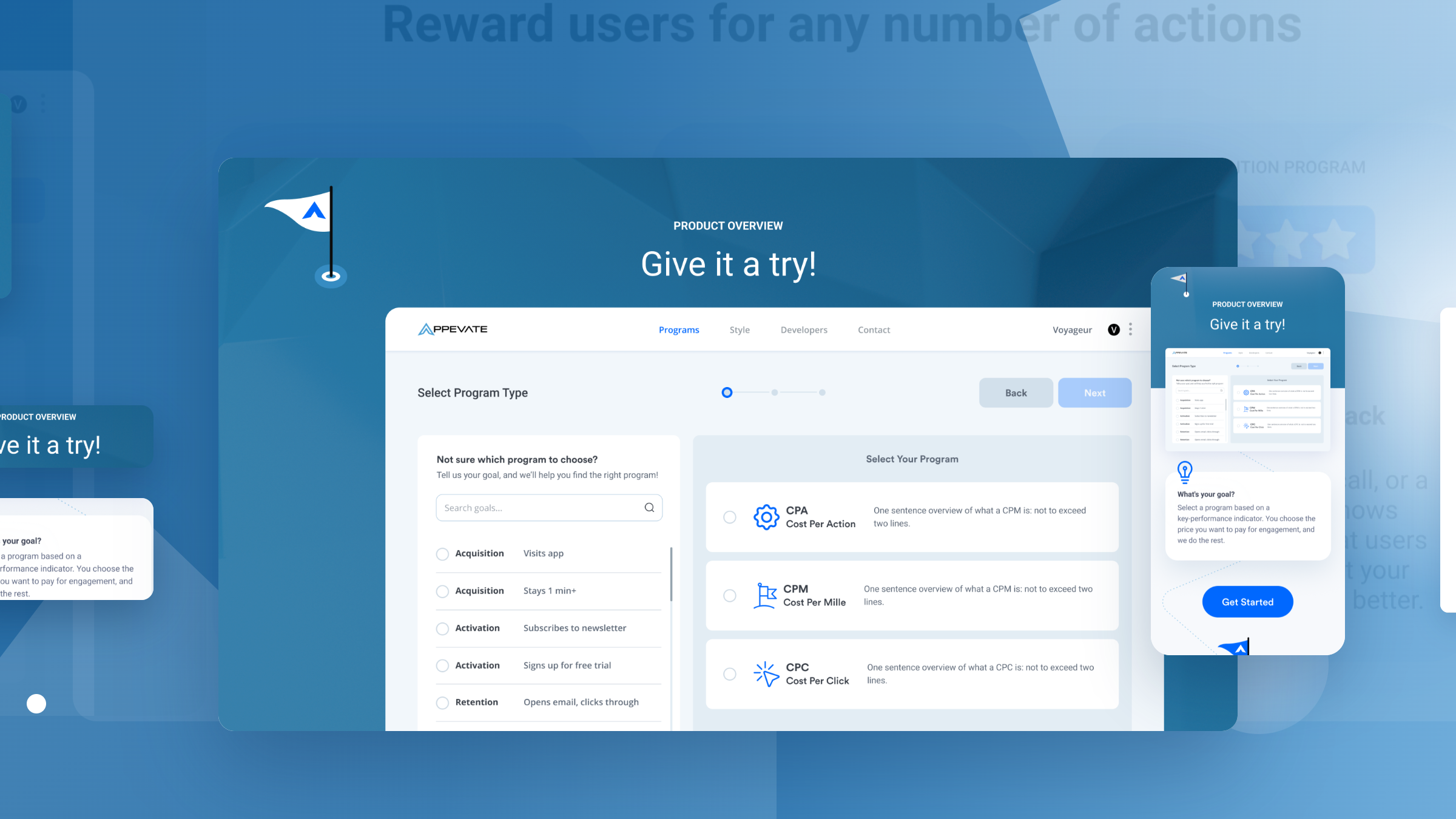
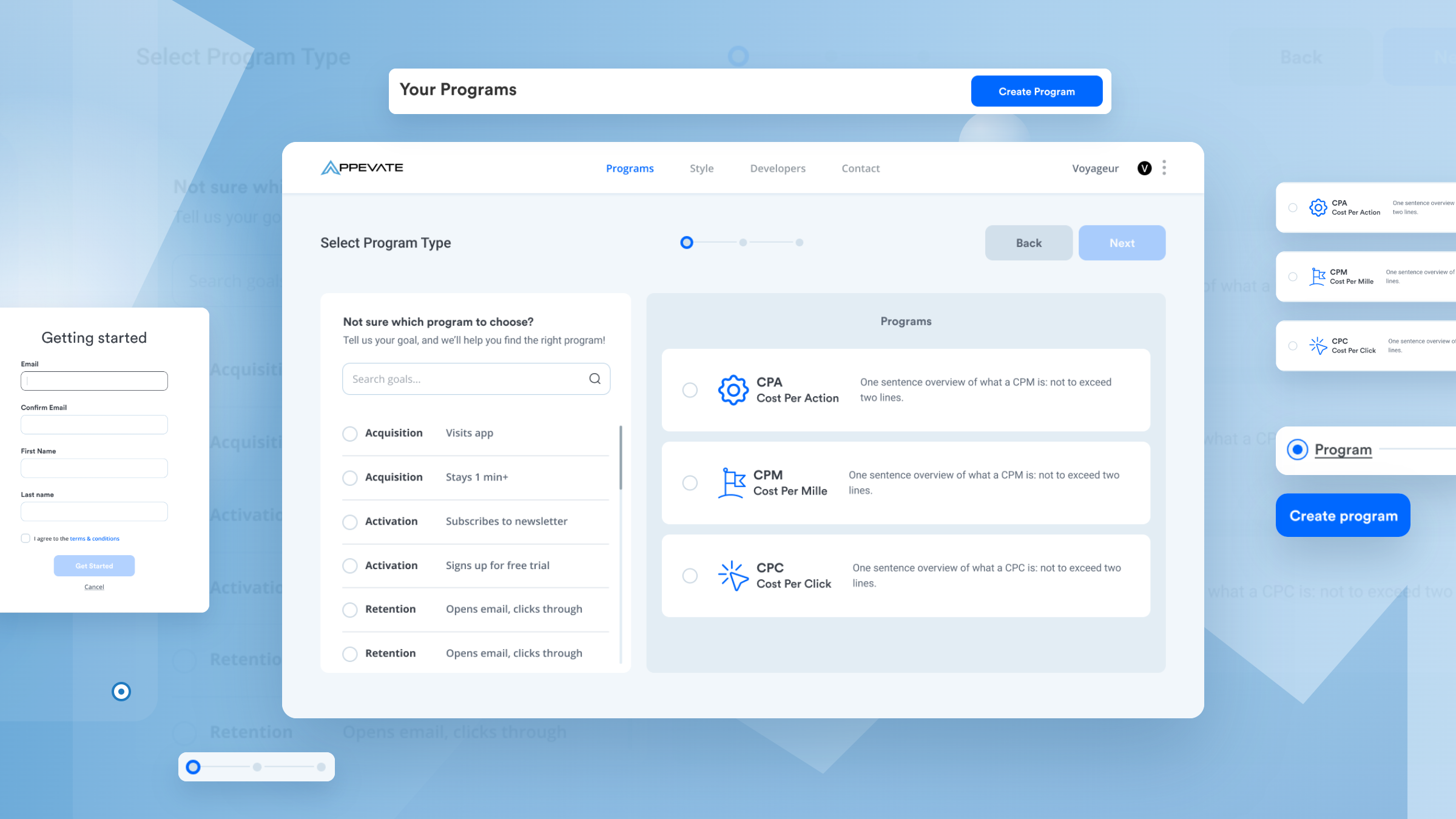
Owners had to choose between CPA, CPC, and CPM with no guidance. They knew their goal, grow, retain, re-engage, but not which program type would get them there.
Users wanted to see campaign goals against real results, not a feed of individual payouts. The existing view buried whether a program was actually working.
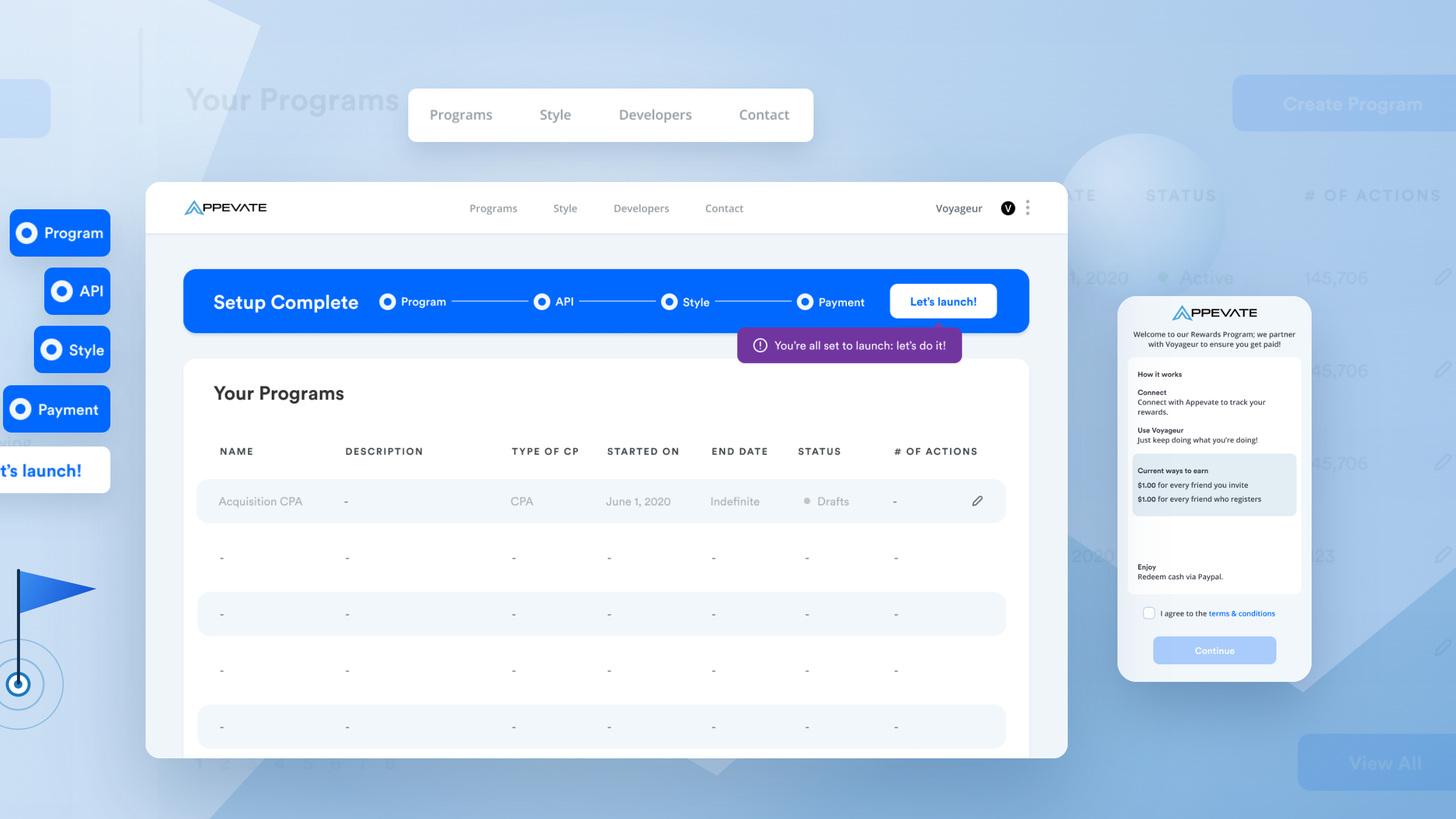
See how getting started changed, from a zip file and a raw API key that only a developer could handle into a guided, plain-language flow an owner could finish alone.
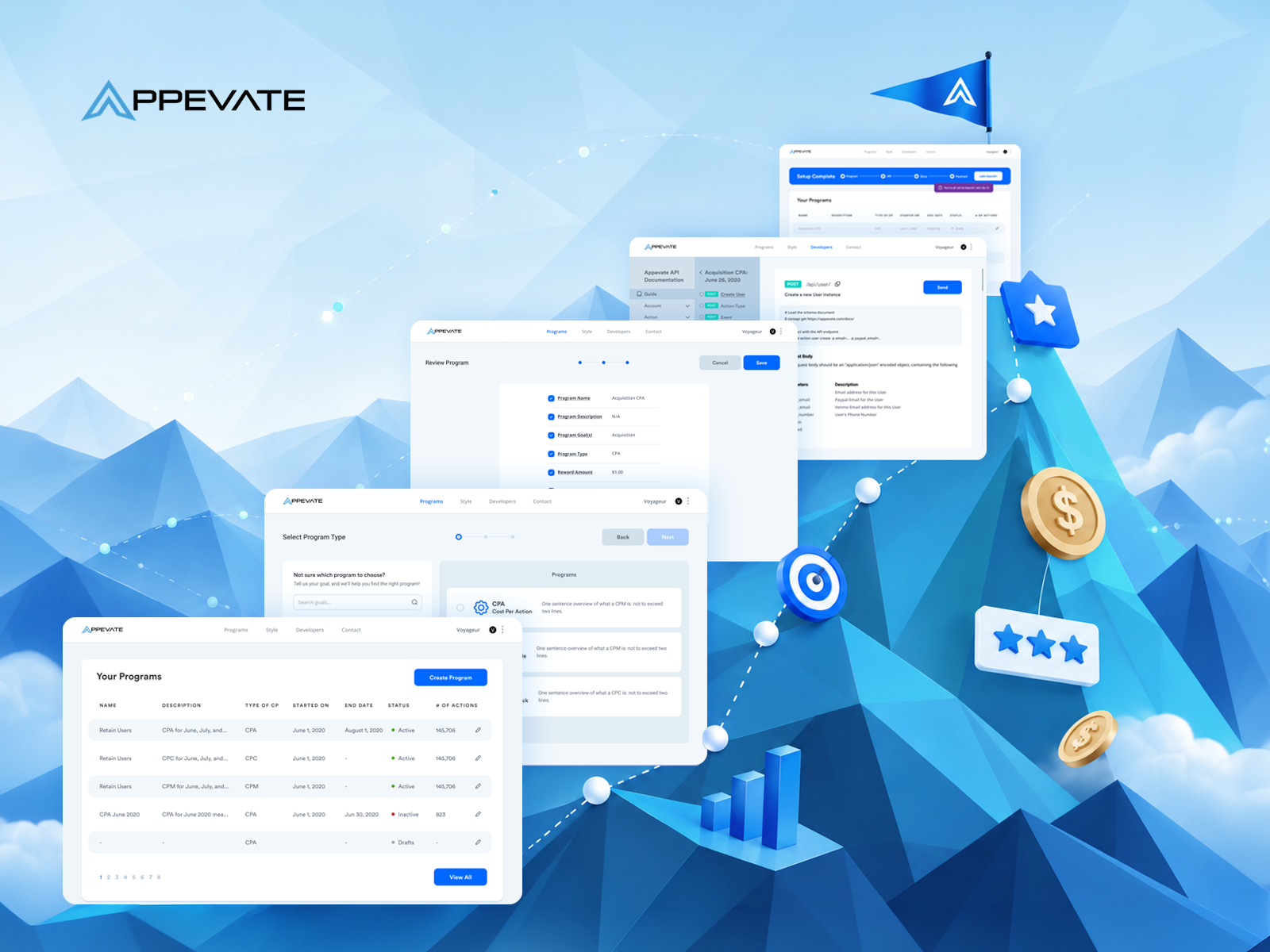


Before any pixel moved, WANDR ran expert and user interviews, a trends benchmark, and secondary research to pin down Appevate's real audience, and it changed the brief.
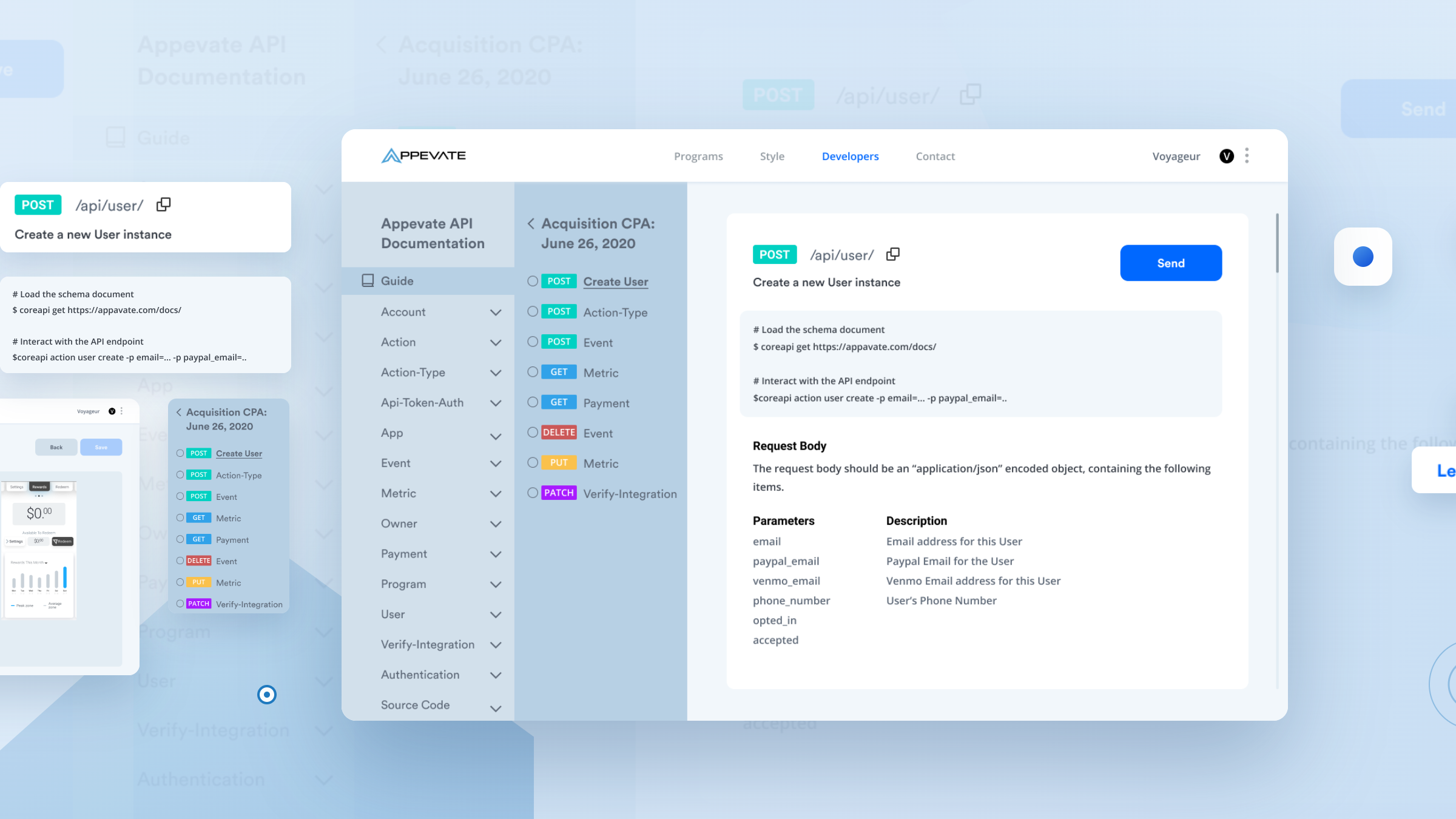
Mobile developers on iOS and Android told us a new API lives or dies on clear, example-led documentation that doesn't assume what they already know.
From tech-savvy founders to non-technical marketers, the people who choose Appevate rarely write the code that installs it, so onboarding had to carry them.
Users asked for “a dashboard that shows clear performance and result metrics based on the campaign's objectives,” not a list of individual payouts.
CEO of a travel networking app. Knows CPA from CPC but leans on a developer for the technical work. Early growth has stalled and she needs a rewards program live fast.

Marketing manager hired to restart growth. Knows marketing cold but is still learning what an API even is, and will do the legwork herself.

Overloaded mobile developer who inherits the rewards program. Wants clear docs, a way to test it works, and to get back to building.
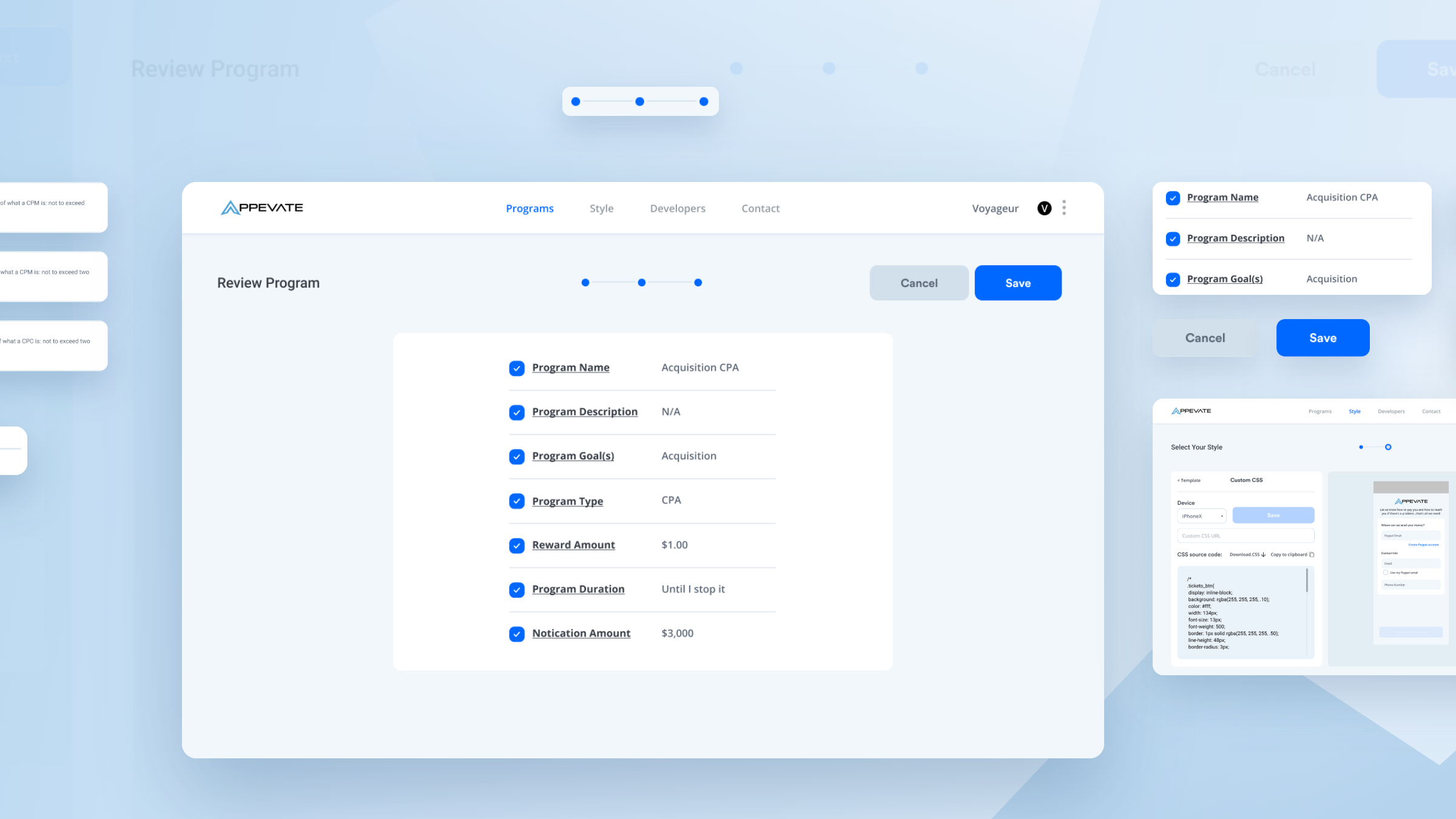
Setup was written for the least technical person in the room, explaining each step and term instead of presuming prior API knowledge.
Instead of asking owners to know CPA from CPM, the product asks their goal, grow, retain, re-engage, and recommends the program that fits.
The dashboard leads with whether a campaign hit its objective, so an owner can see at a glance if a program is working and what to do next.
Copying and pasting the API key was a common failure point in testing, so it became a single, unmistakable action inside the flow.
Appevate's product was strong, but the people it was sold to, non-technical app owners, weren't the people who could install it. Redesigning screens made the product look better. Rebuilding onboarding, documentation, and the program wizard around the non-technical buyer is what made it adoptable. Get that wrong and adoption stalls before the first program ever launches.
Wandr took the part of Appevate we were worst at explaining, the integration, and made it something our own customers could do without us. They came in as researchers and left us with a designed product, a brand, and a Vue.js front end our engineers could ship.