EverSafe
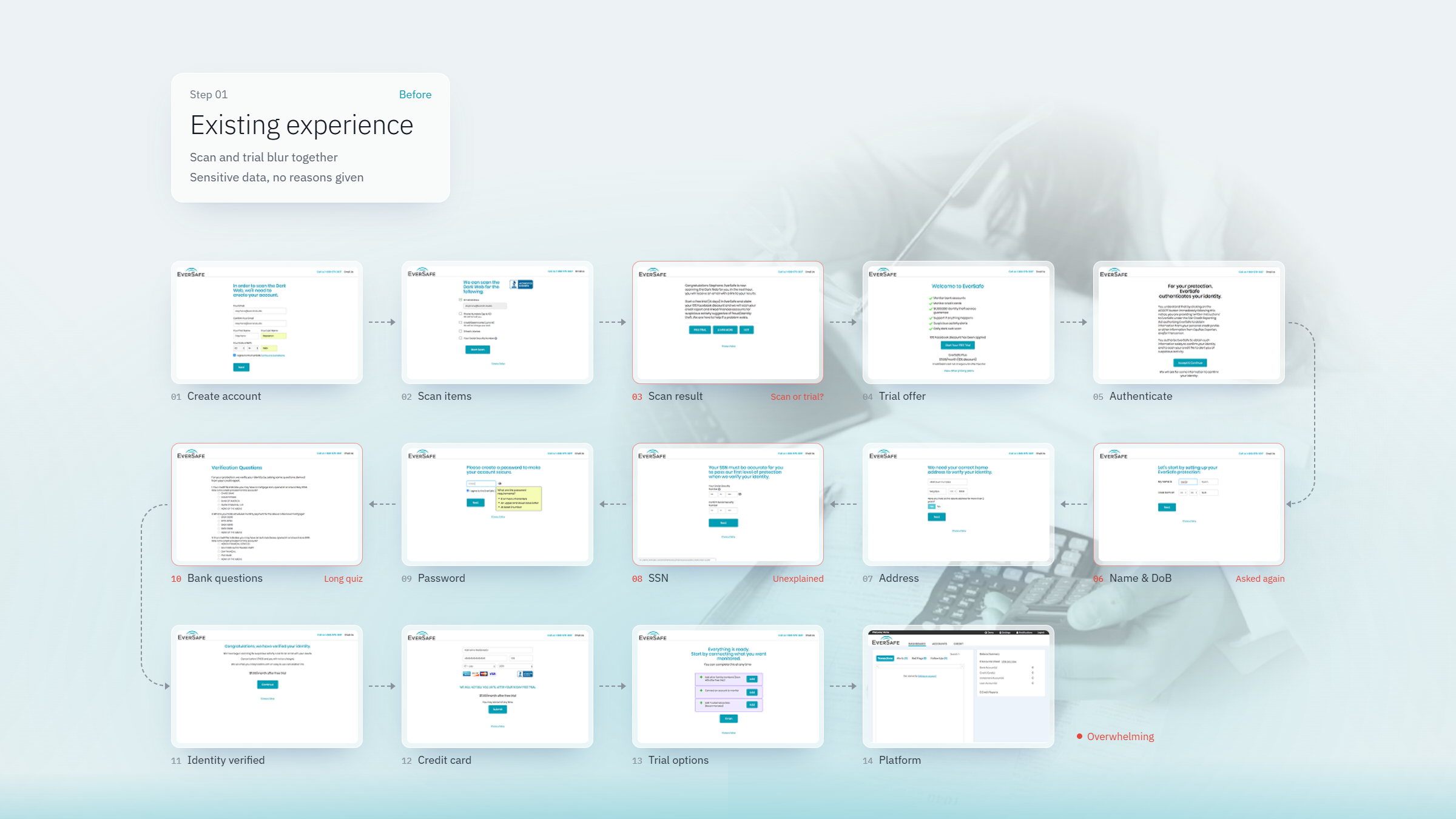
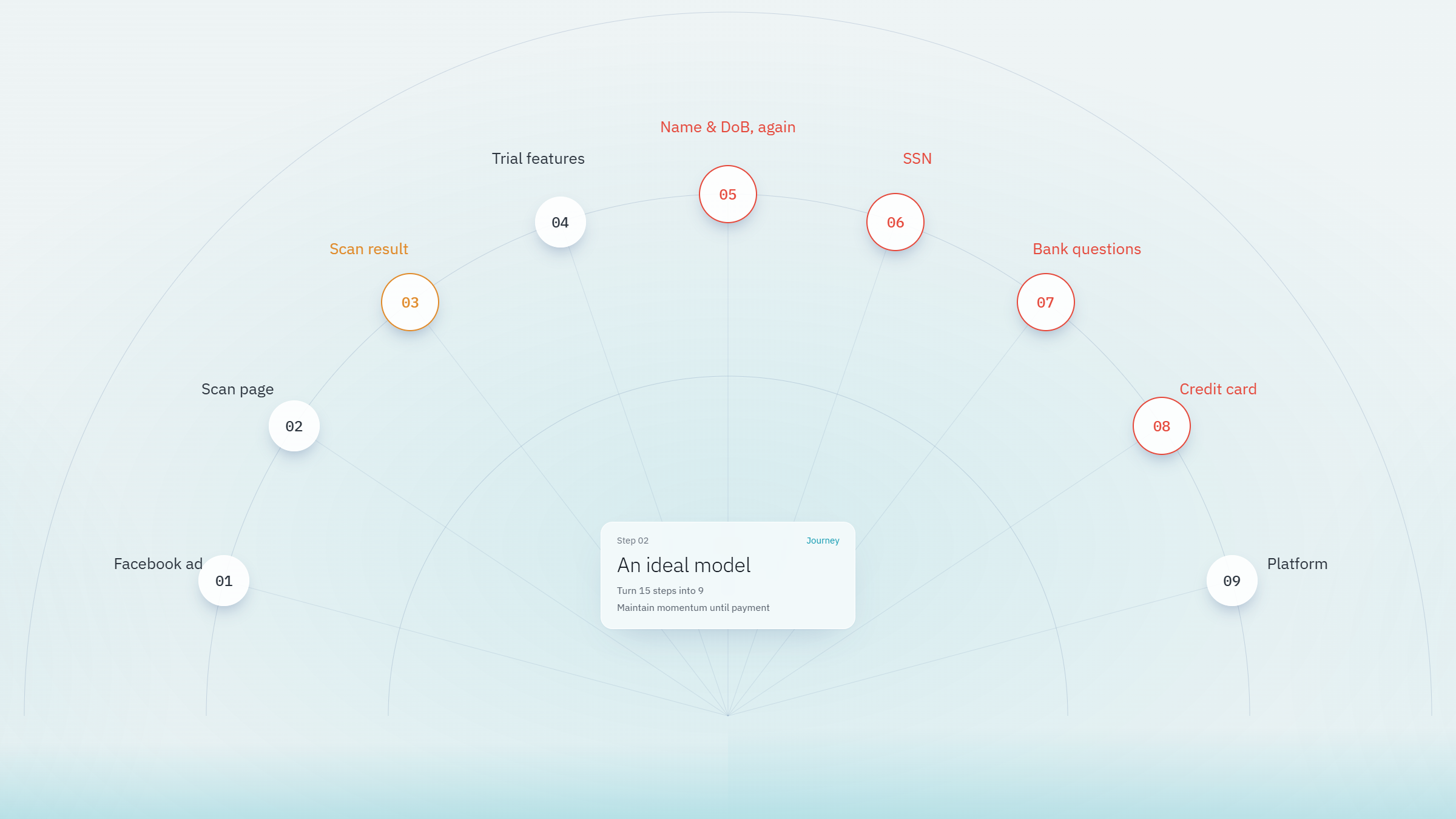
Fifteen enrollment screens became nine in a one-week sprint, a 40% cut in the steps between an anxious senior and protection for their savings.
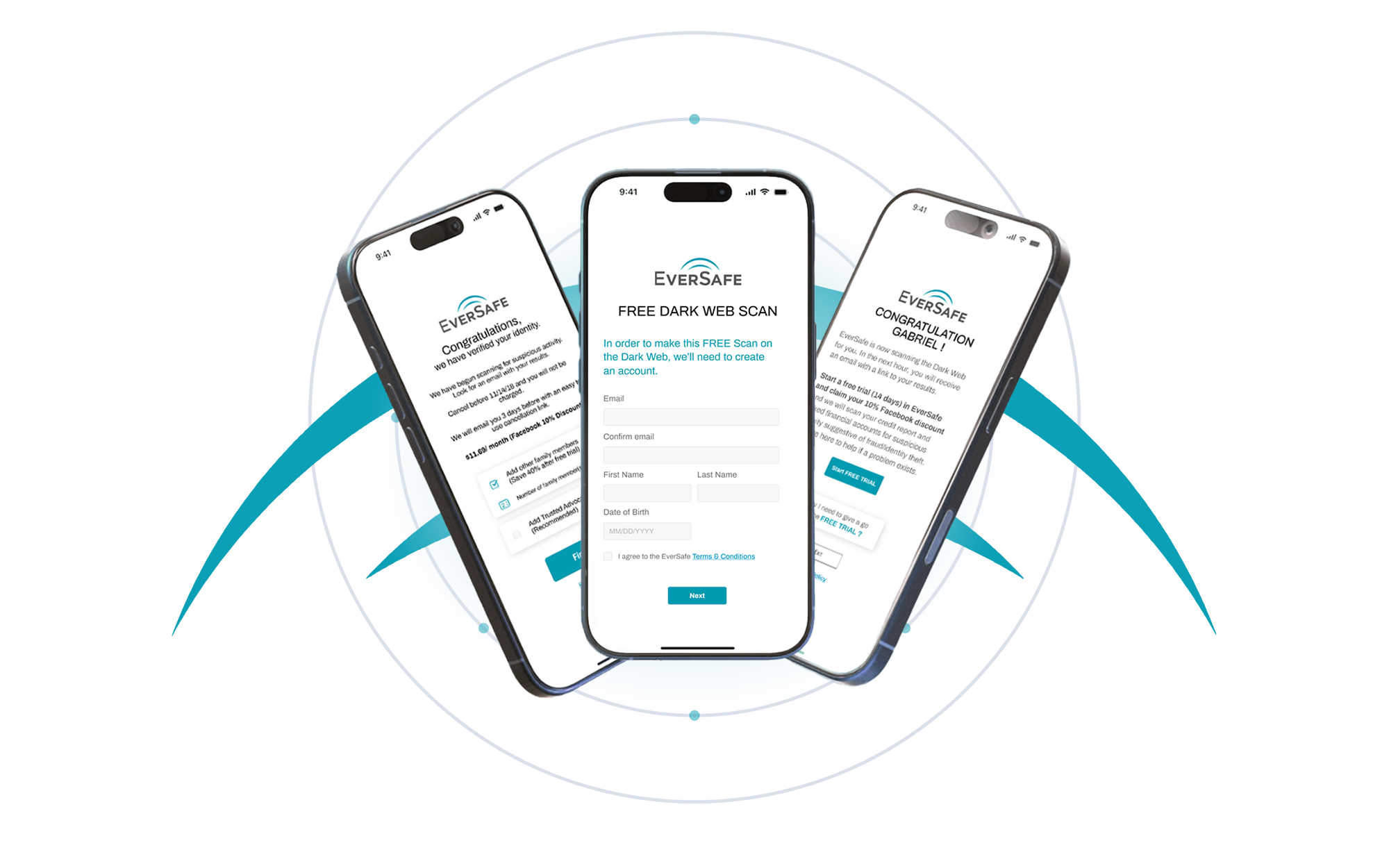
One week, and the front door stopped asking twice.
A fraud company founded by someone it happened to.

EverSafe monitors older adults' financial accounts and credit activity for the patterns that precede fraud: unusual withdrawals, missing deposits, changed beneficiaries, address switches. Howard Tischler started it after his own mother was defrauded in her 80s. He built the company with Elizabeth Loewy, the New York prosecutor who co-founded the first Elder Abuse Prosecution Unit in the United States, and her casework shaped the detection models the product runs on.
By 2018 EverSafe was buying traffic to a free dark web scan that offered a trial at the end of it. The scan worked. The trial was where people stopped.
An anti-fraud product whose sign-up felt like a scam.
EverSafe was asking people in their seventies and eighties to hand over a Social Security number, a home address, credit card details and answers to bank history questions, across fifteen screens, with almost nothing explaining why. For any product that would be friction. For a product whose entire promise is protecting you from people who ask for exactly those things, it read as a warning sign.
The same information, asked twice.
Name and date of birth were collected at the dark web scan, then asked for again a few screens later inside enrollment. Nothing carried forward, so the flow looked as if it had not been paying attention.
Nobody said what the scan was.
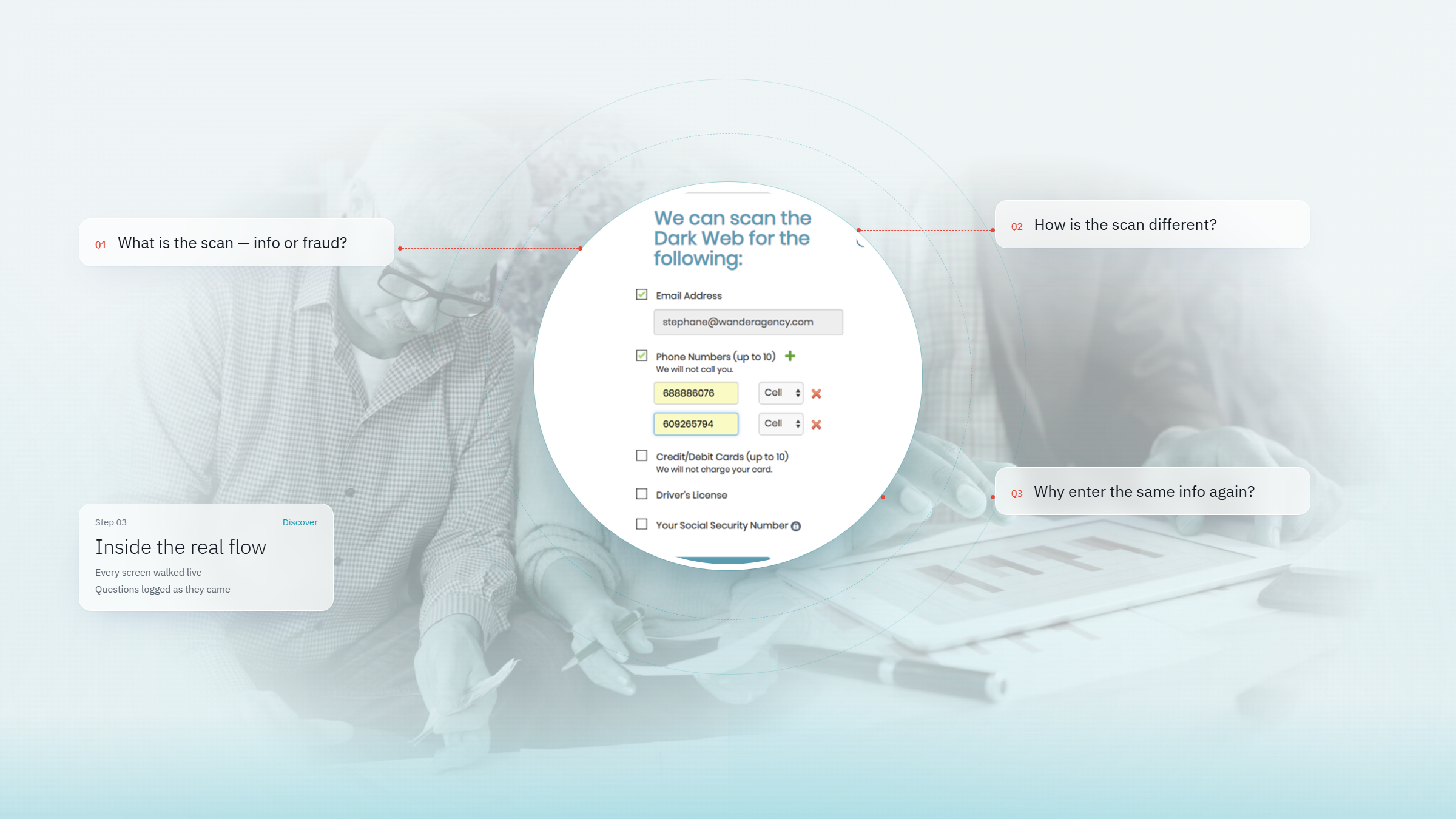
Users arrived from an ad, ran a scan, and were never told in plain language what had been checked, what was found, or how a free scan differed from the trial they were now being offered
The most sensitive asks came with no reassurance.
The Social Security number screen, the address screen and the credit history questions each appeared cold, with no explanation of why the data was needed or what would happen to it.
The middle of the flow killed the momentum.
The bank and credit history quiz landed deep in enrollment, right at the point where a user had committed enough to be worth keeping, and it read as an interrogation rather than a verification step.
No progress, no way back.
There was no indicator of how many steps remained and no clean way to step backwards, so a user who hesitated had no way to orient and simply left.
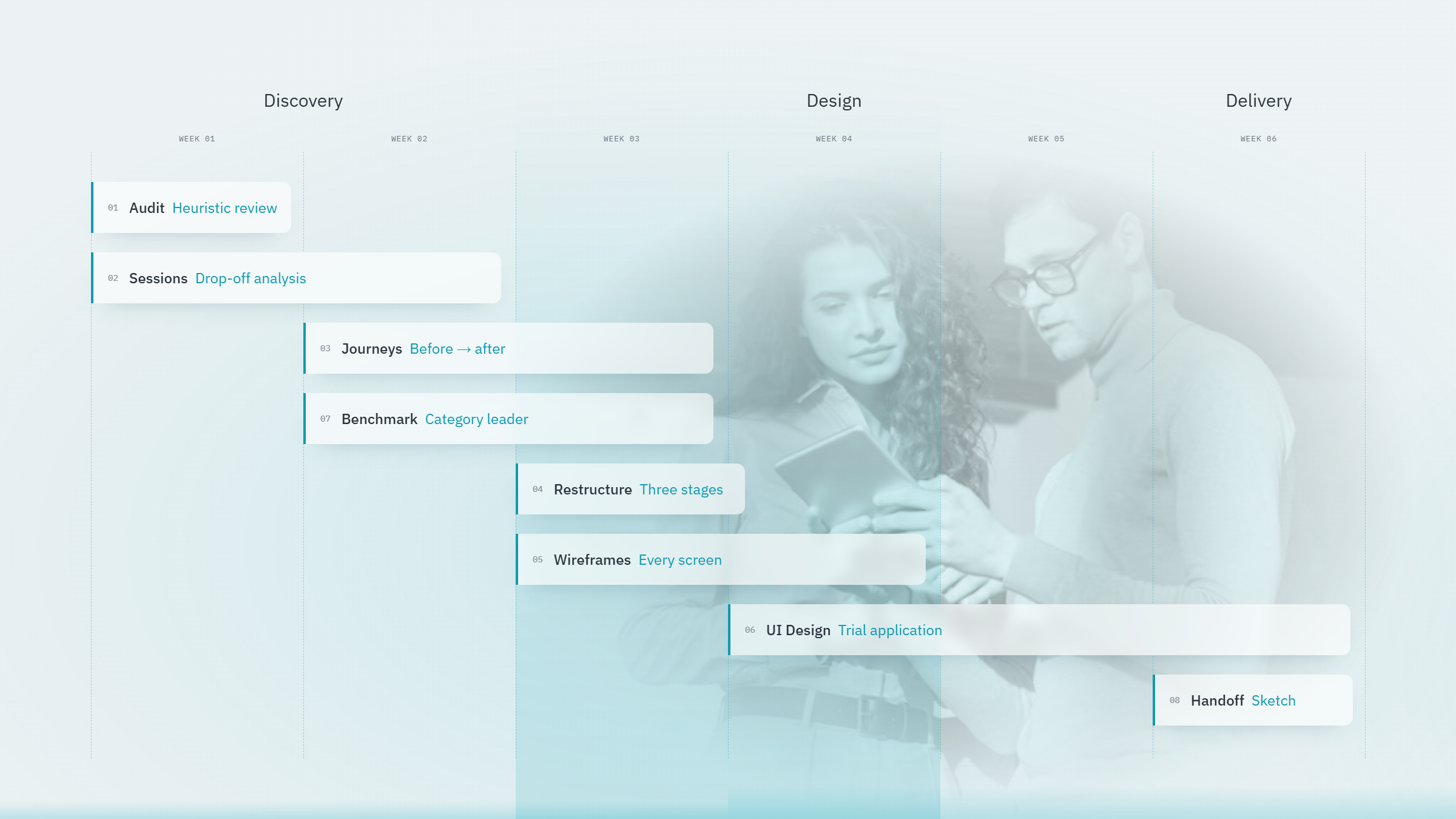
Audit the live flow, then rebuild it in a week.
We watched real people give up, then counted why.
EverSafe was running paid traffic into the dark web scan and recording every session. Rather than start with a workshop, the team went through those recordings, followed users who abandoned enrollment against the few who finished it, and mapped the failures onto the flow itself.
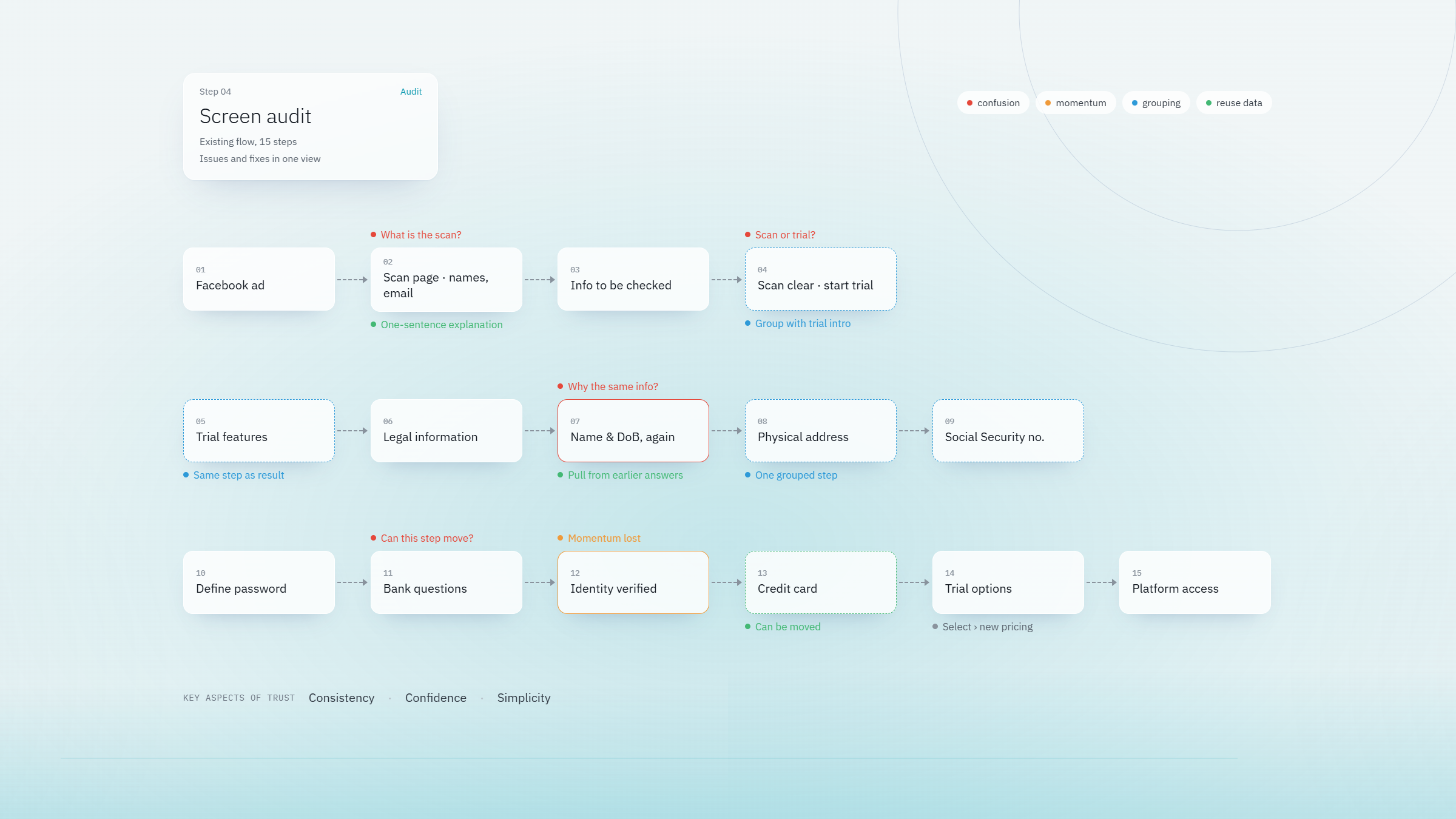
The flow asked far more than it explained.
From the ad to the platform, a user passed through fifteen distinct steps, the majority of them data entry. Explanation appeared almost nowhere: no definition of the scan, no statement of what the trial included, no reason given for any individual request.
Name and date of birth were collected twice.
The scan captured them, then enrollment asked again. It was the single clearest signal to a cautious user that the system either was not listening or was not one system at all, and it arrived immediately before the most sensitive asks in the flow.
Nothing told the user how far in they were.
No progress indicator, no step count, no reliable way back. Users who paused at the Social Security number screen had no way to judge whether they were nearly finished or only halfway, and the recordings showed them leaving rather than guessing.
Earn the sensitive question before you ask it.
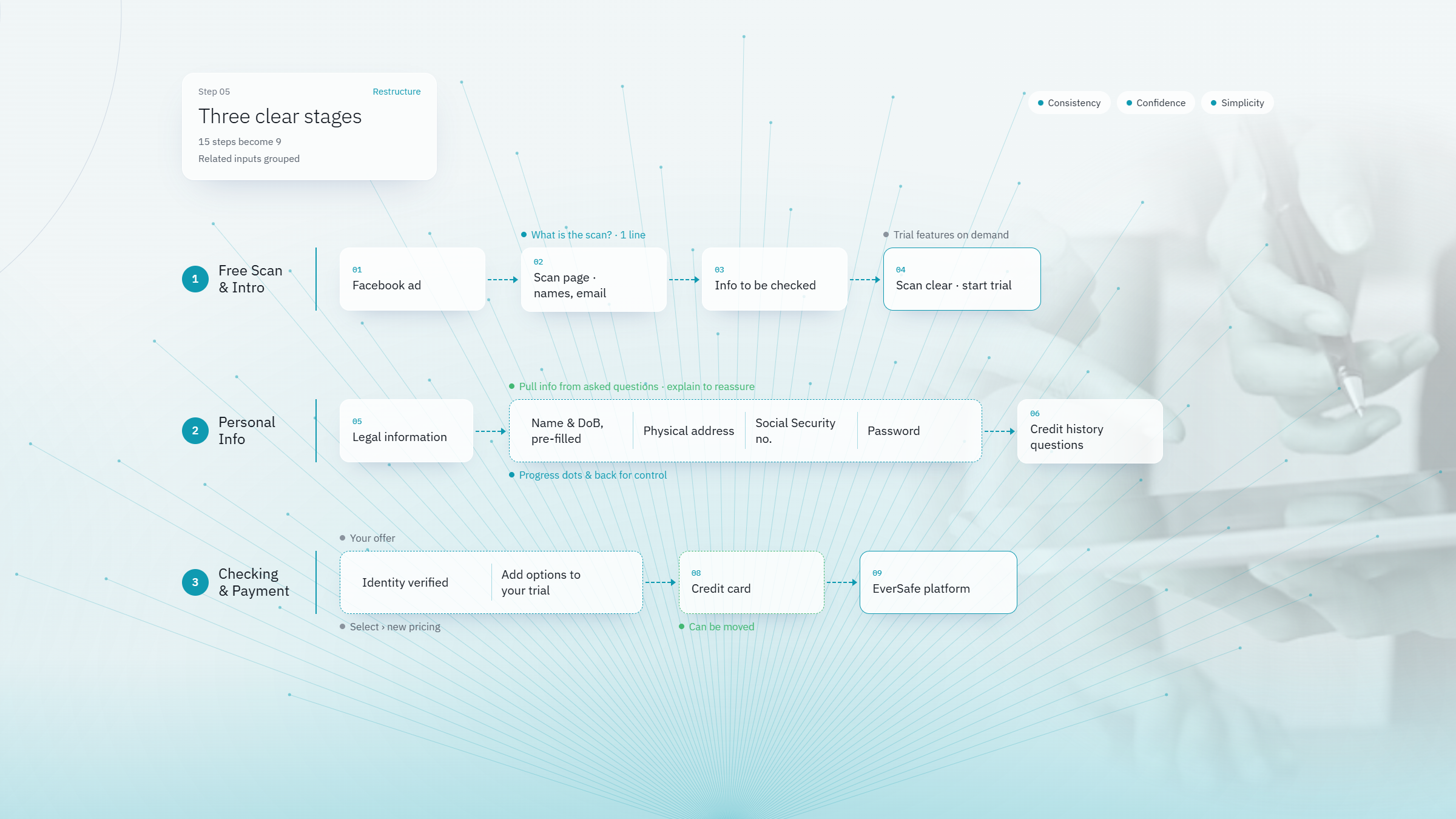
Explain, in one sentence, before asking.
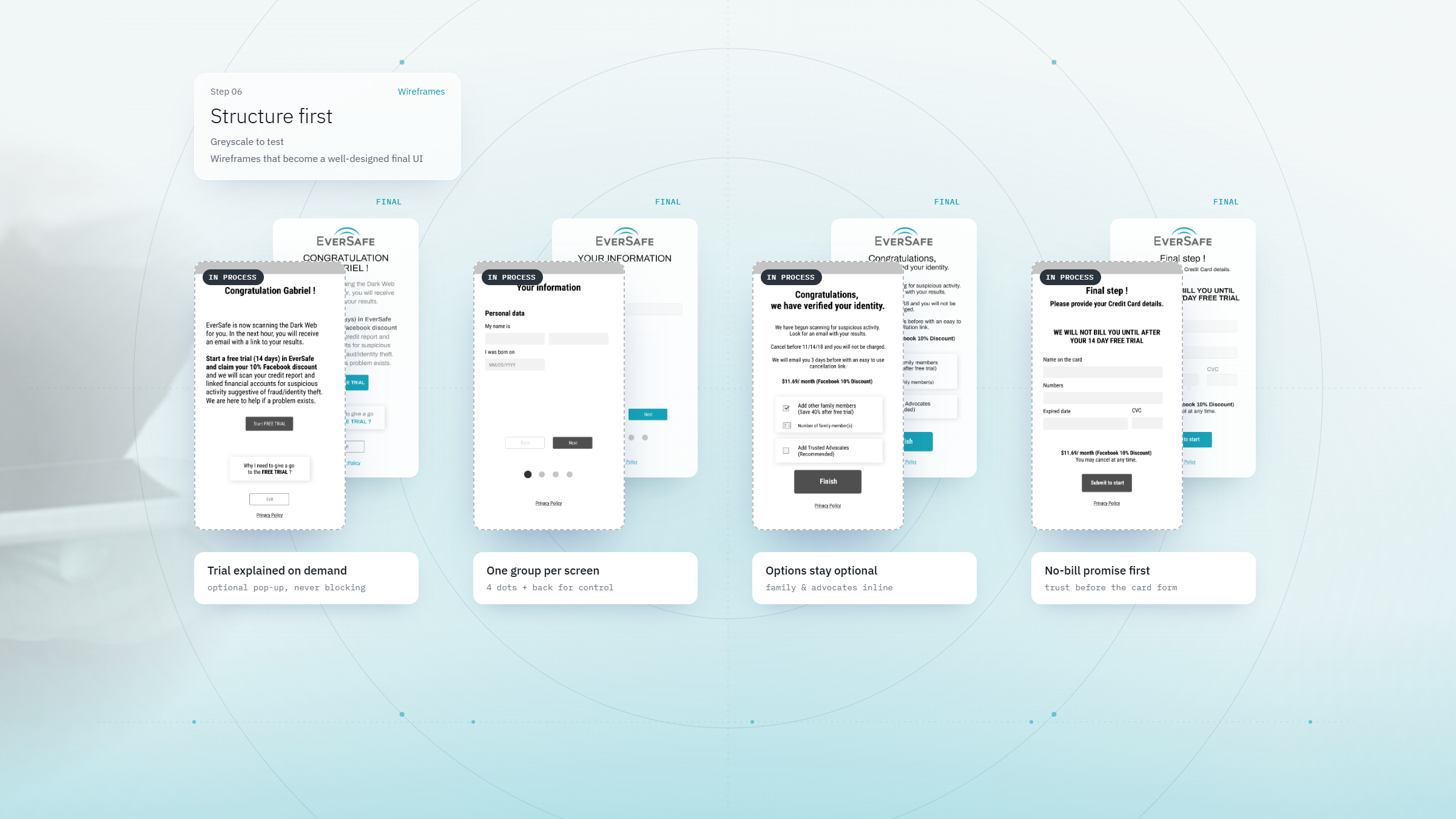
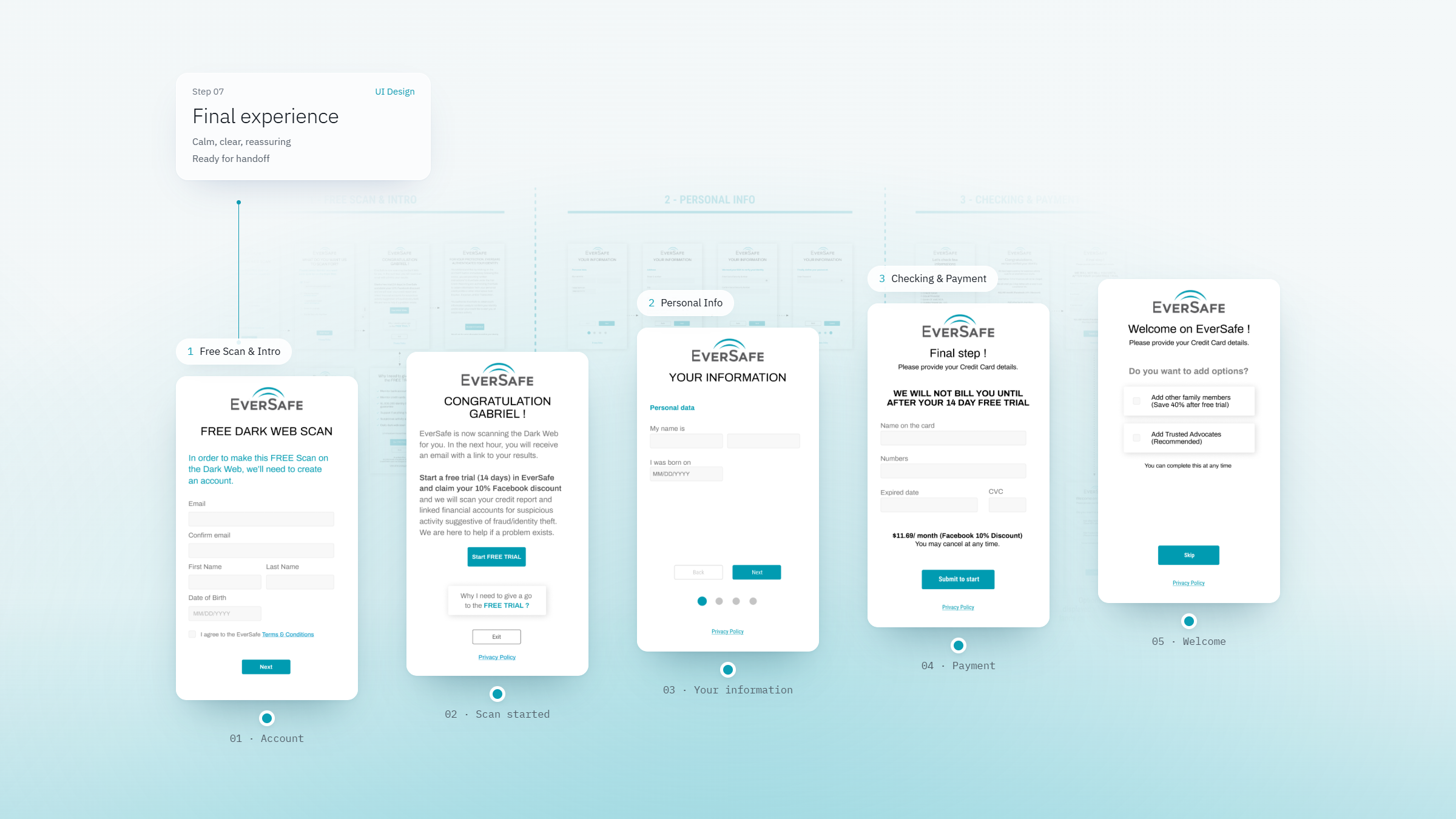
The scan gets a plain one-line definition at the top of the flow, the result screen says what was checked and what the trial adds, and each sensitive field carries a short reassurance about why it is needed.
Ask once, then reuse.
Name and date of birth captured at the scan are pre-filled into enrollment, shown for confirmation rather than re-entry. Related fields are gathered on the same step instead of one per screen.
Give the user the map.
The journey is regrouped into three named stages, free scan and intro, personal information, then checking and payment, with progress dots and a back control so nobody is ever guessing how much is left.
Move the money to the end.
The credit card ask is repositioned to sit after identity is verified and the trial options are chosen, so payment closes a decision the user has already made rather than interrupting one they are still making.
The brief was fewer screens. The problem was fewer surprises.
EverSafe asked for a shorter onboarding, and shorter is what the numbers show. But the recordings were not of people who ran out of patience. They were of people who got nervous. An unexplained Social Security field, a second request for a date of birth already given, a credit history quiz arriving out of nowhere: to a seventy-five-year-old who came in through an ad about fraud, that sequence is indistinguishable from the thing they were trying to protect themselves against. The screens we removed mattered less than the ones we made legible.
What the sprint produced.
One week from kickoff, EverSafe had an audited record of where its paid traffic was being lost, a restructured enrollment journey, and a finished UI set ready for build.
In their words.
Our whole business is telling older adults that somebody is trying to get their information. Then our own sign-up asked for a Social Security number on a screen that explained nothing, and asked for a date of birth we already had. Wandr went through the actual session recordings, showed us where people were walking away and why, and came back in a week with a flow that explains itself before it asks for anything. They also talked us out of copying a competitor we had pointed them at, because the pressure tactics in it were aimed at exactly the people we exist to protect. That was the conversation that told me they understood the company.