Fütness

$500K of a seed round closed on the prototype and pitch deck we designed, eight weeks after Fütness was still only a training method with no product attached.

INDUSTRY
Fitness
PLATFORM
Mobile app · Website
SIZE
Seed
goal

AI Product Design & MVP Development

MPL Gaming
·
Real-money Platform
·
U.S. Market
At a glance

Twenty sessions with real users. One MVP.

‍

01
Workshop and competitive mapping.
 With no competitor doing what Fütness does, study the adjacent category instead, football training apps, fitness apps, and wellness apps, and decide feature by feature what to borrow and what to leave behind.
02
Foundational research.
Ten in-depth interviews of 45 minutes each across Mexico City and Colombia, half of them with people already training on the method, to find what survives the move from a field to a phone.
03
Design the MVP.
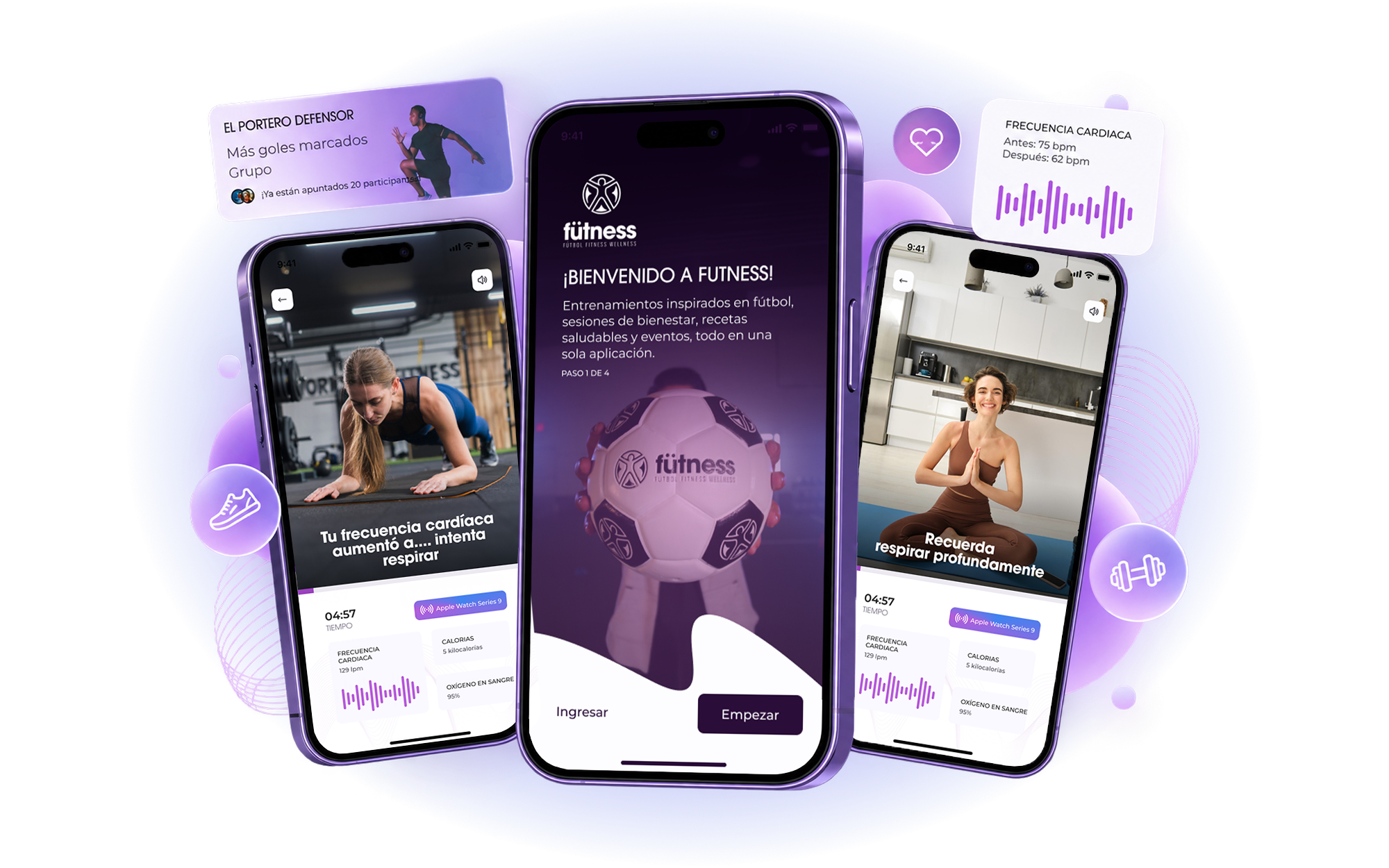
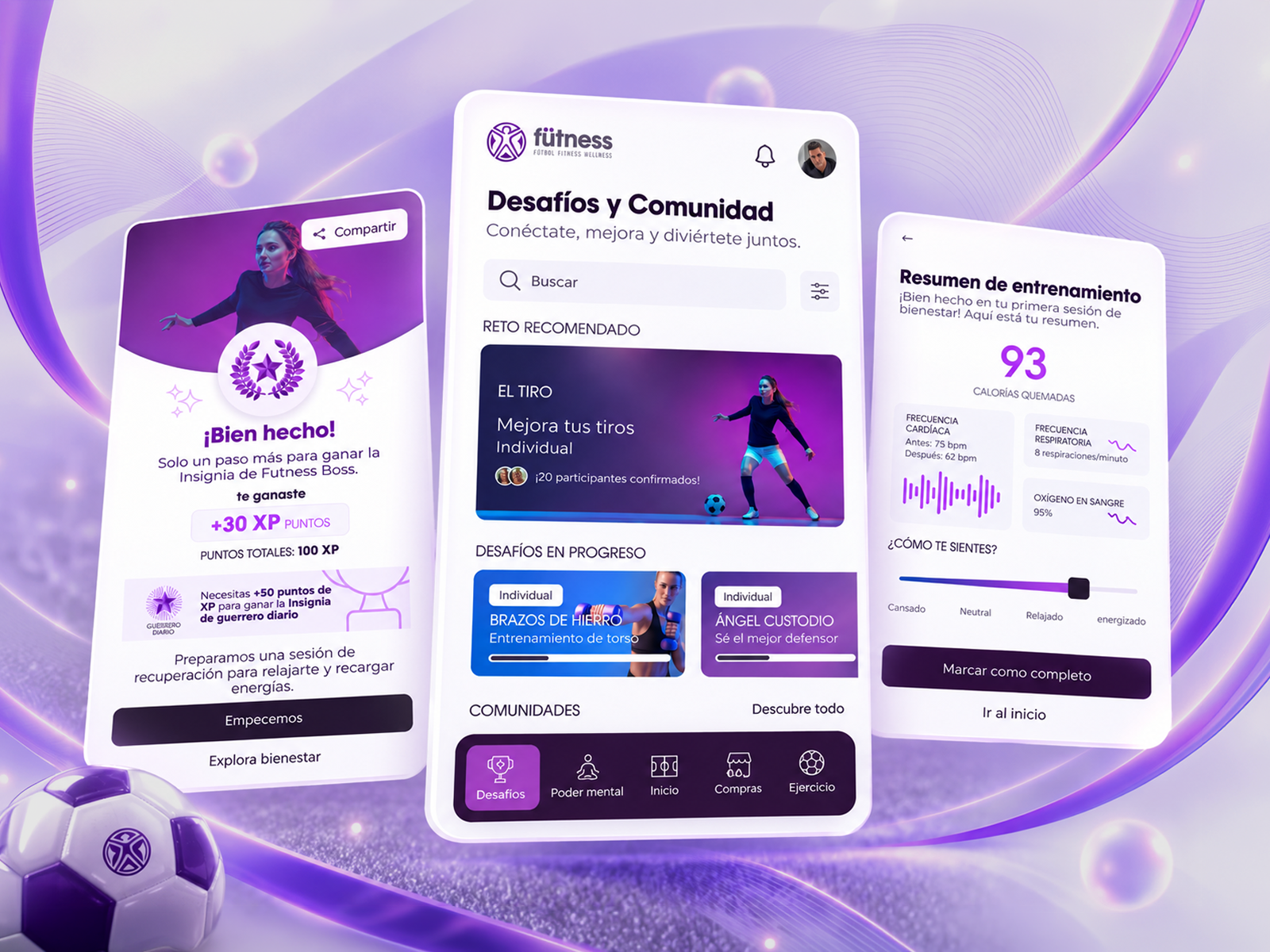
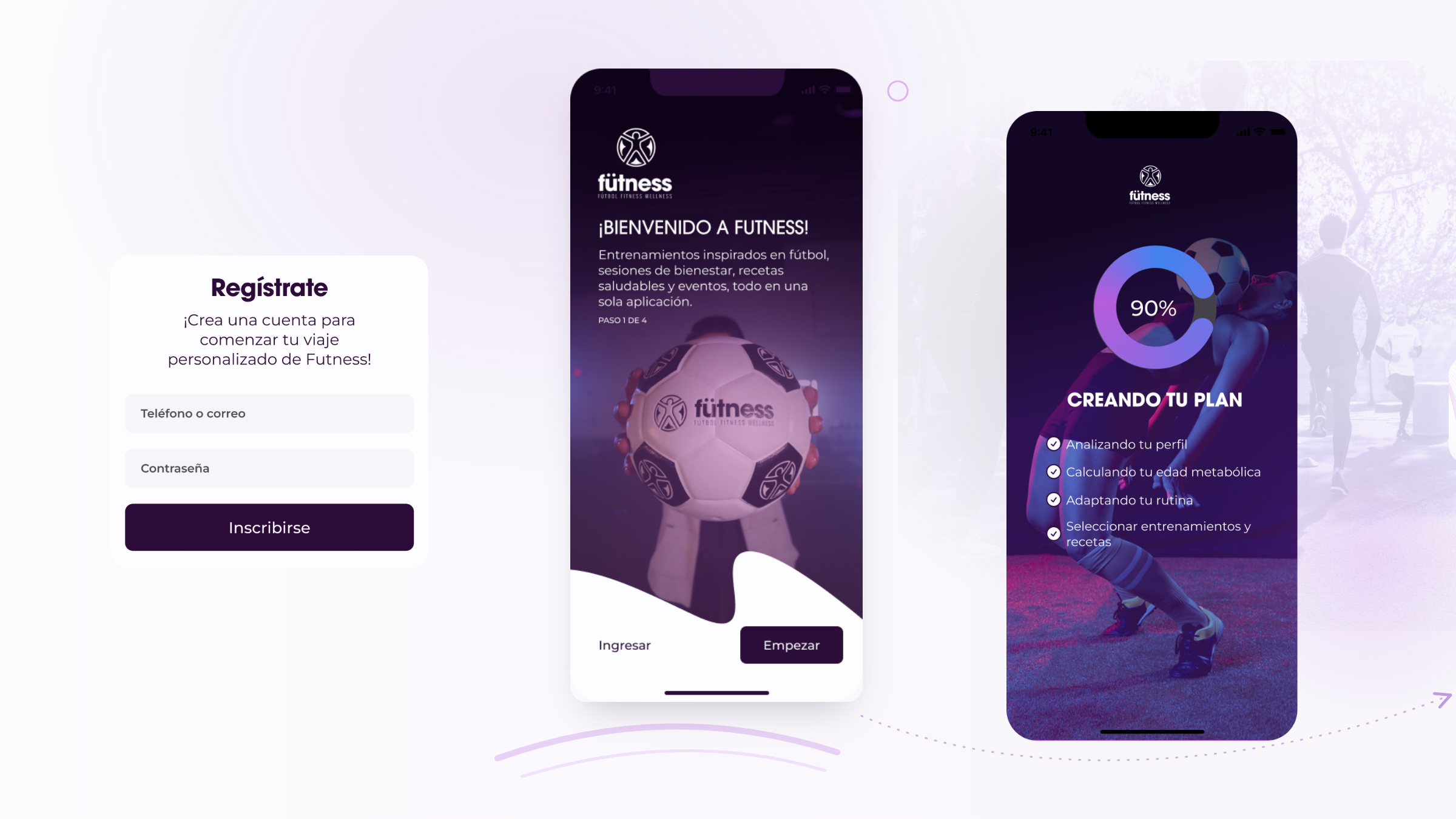
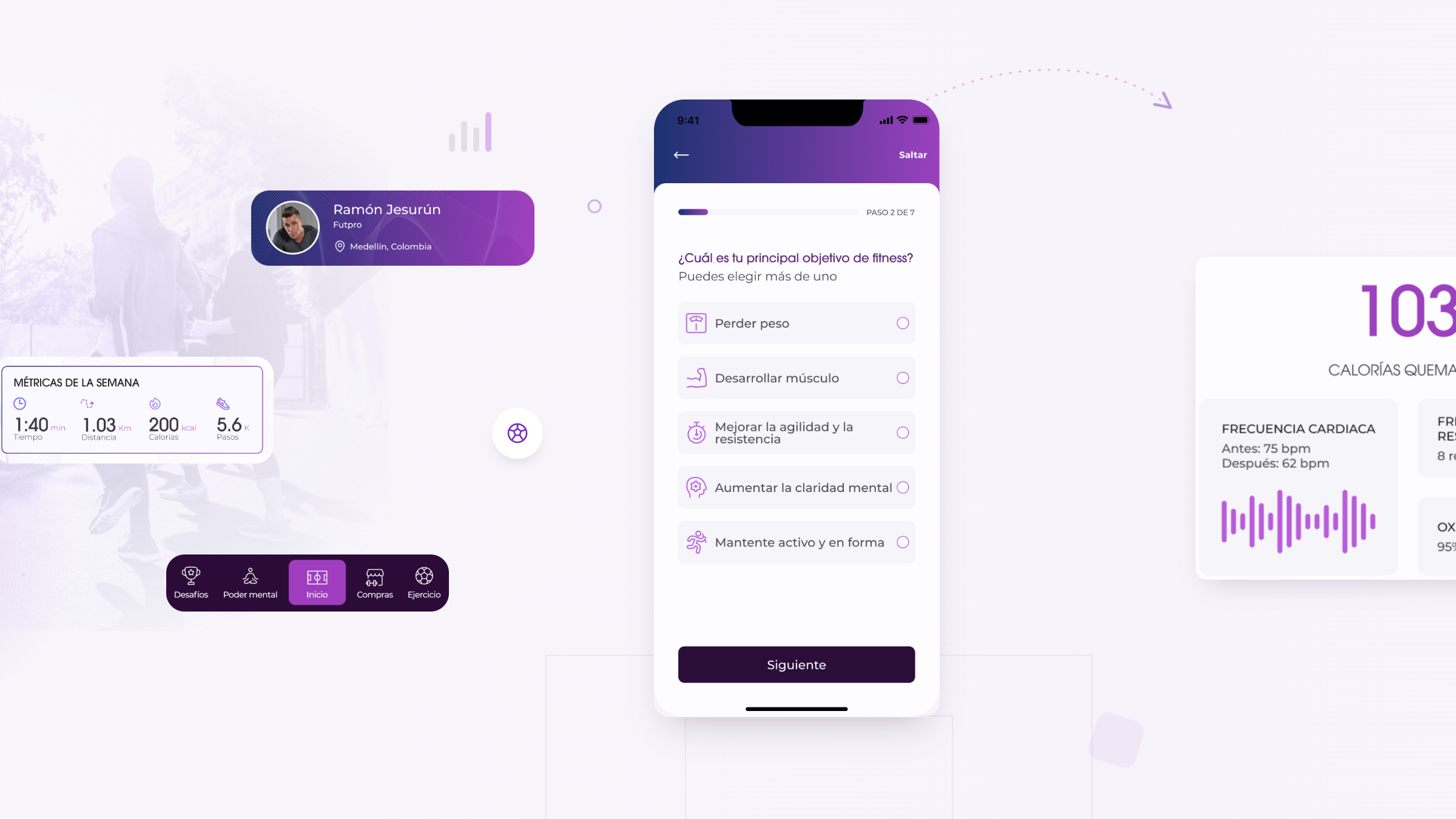
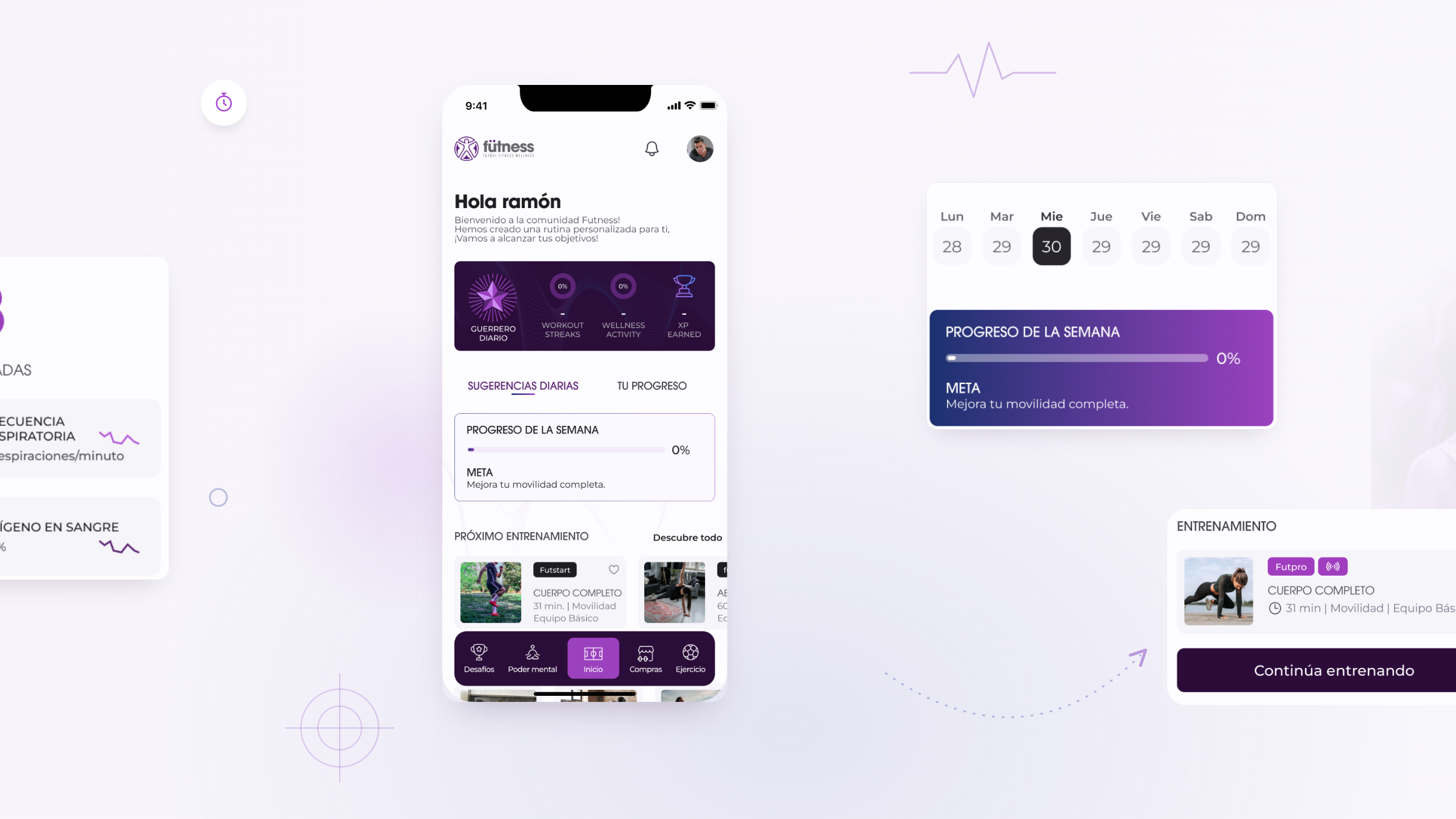
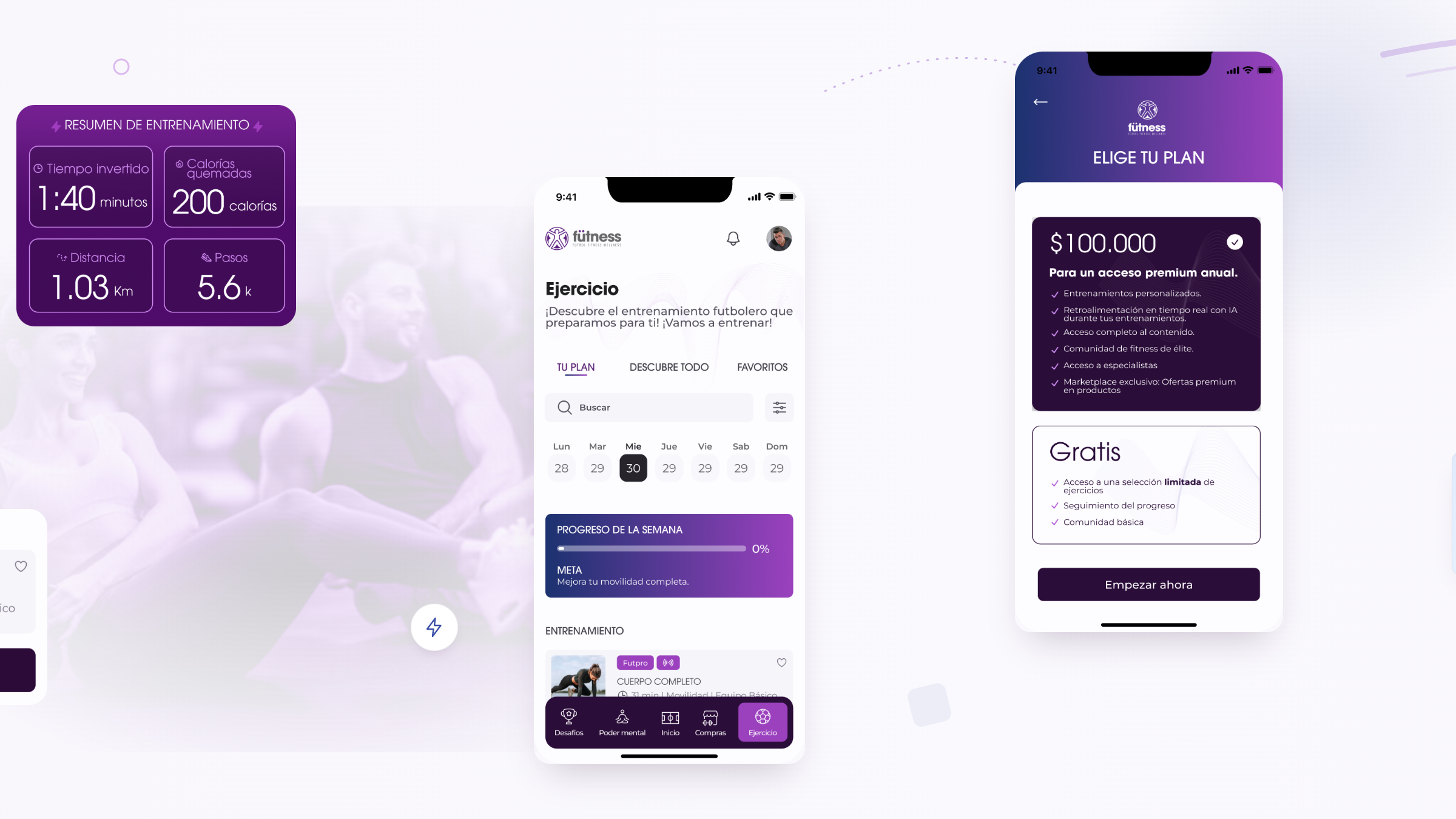
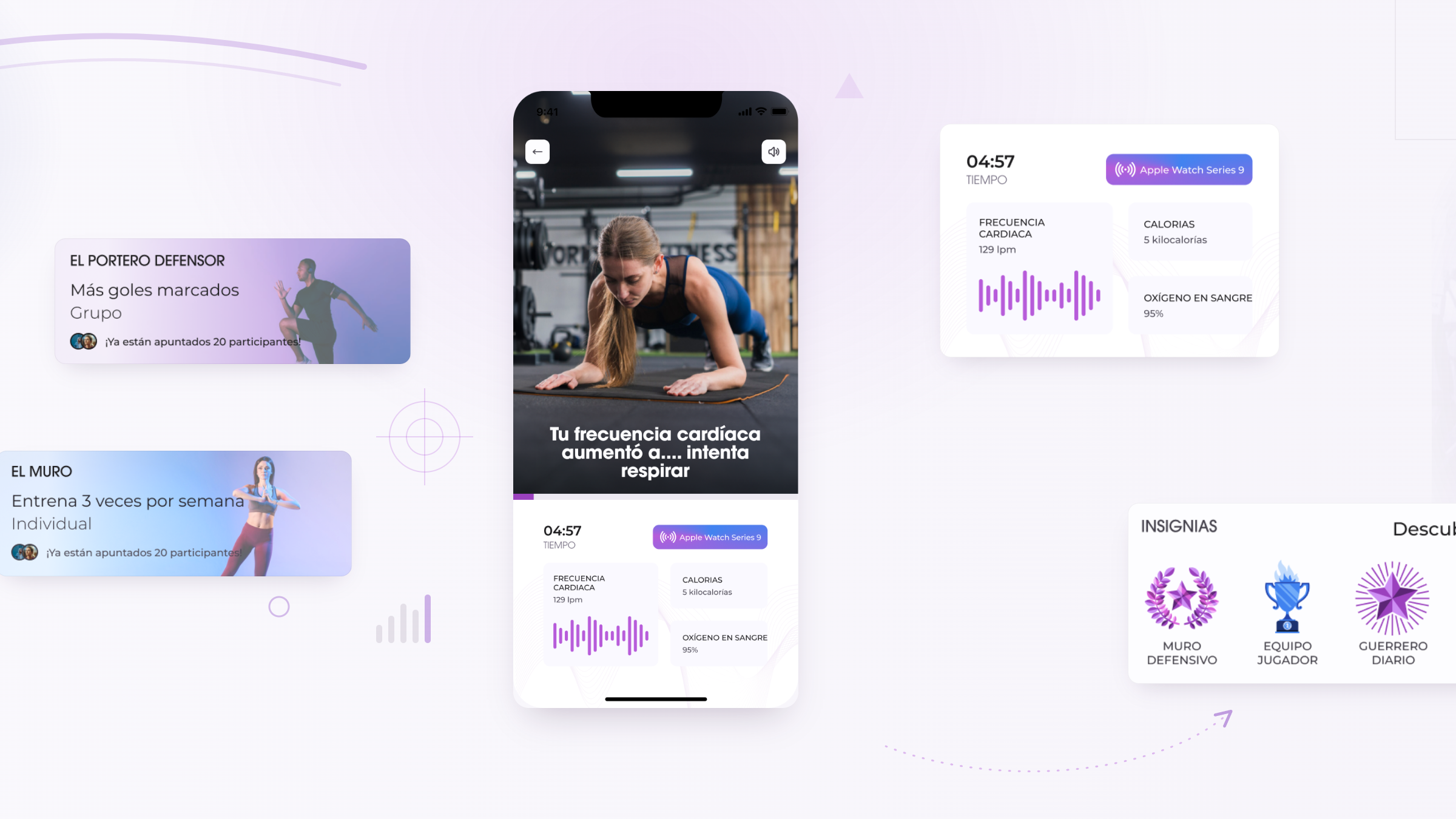
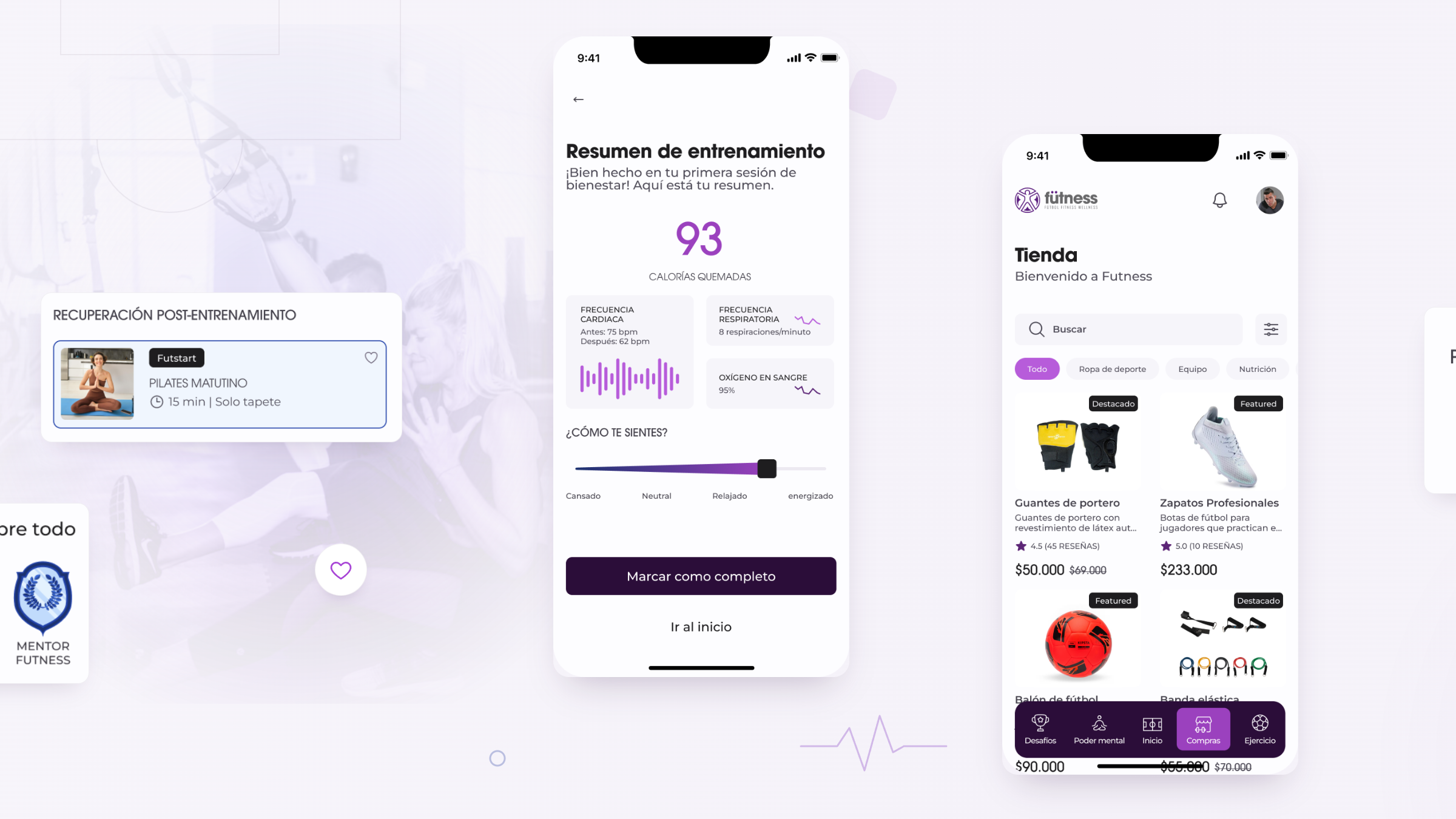
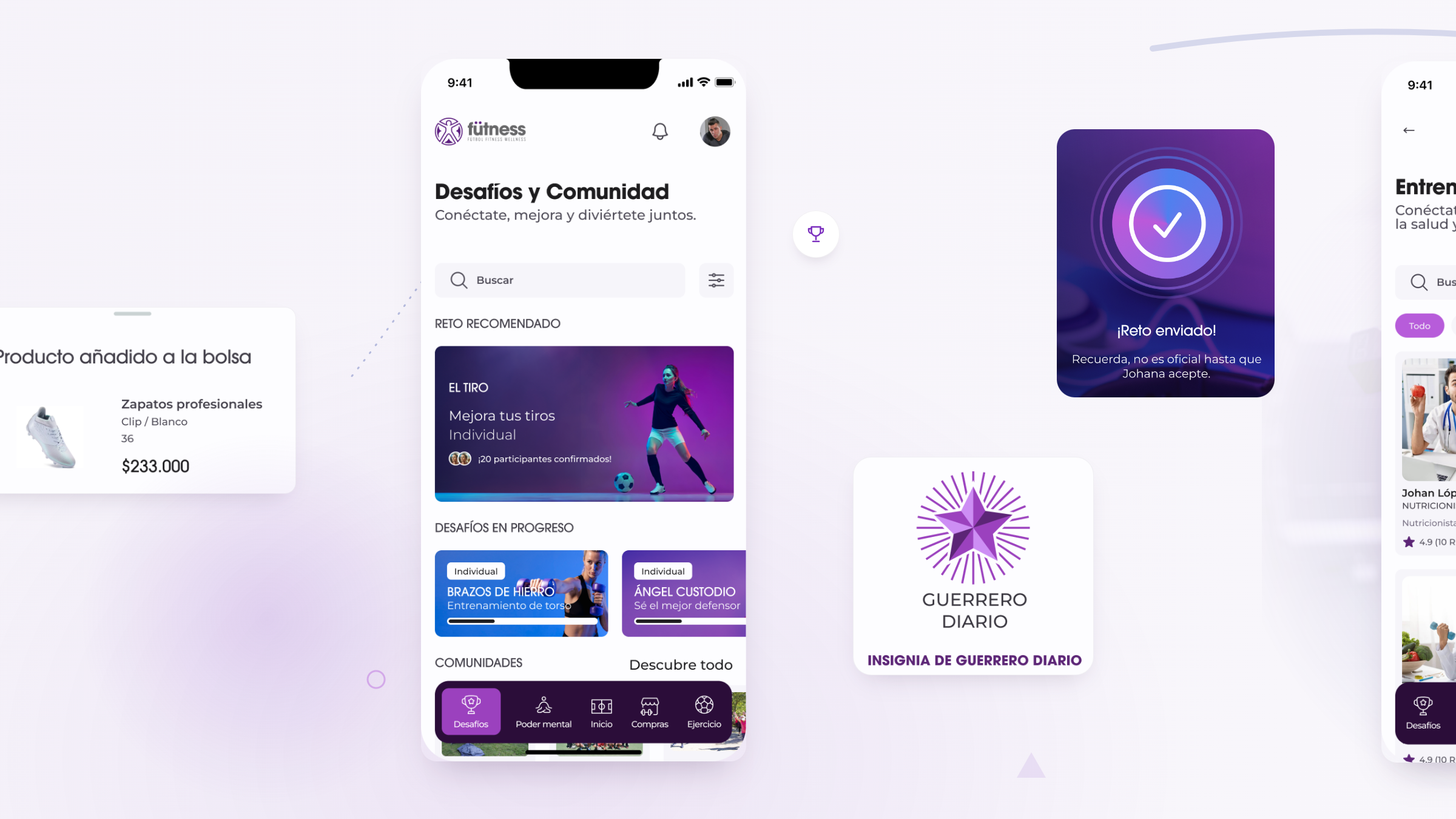
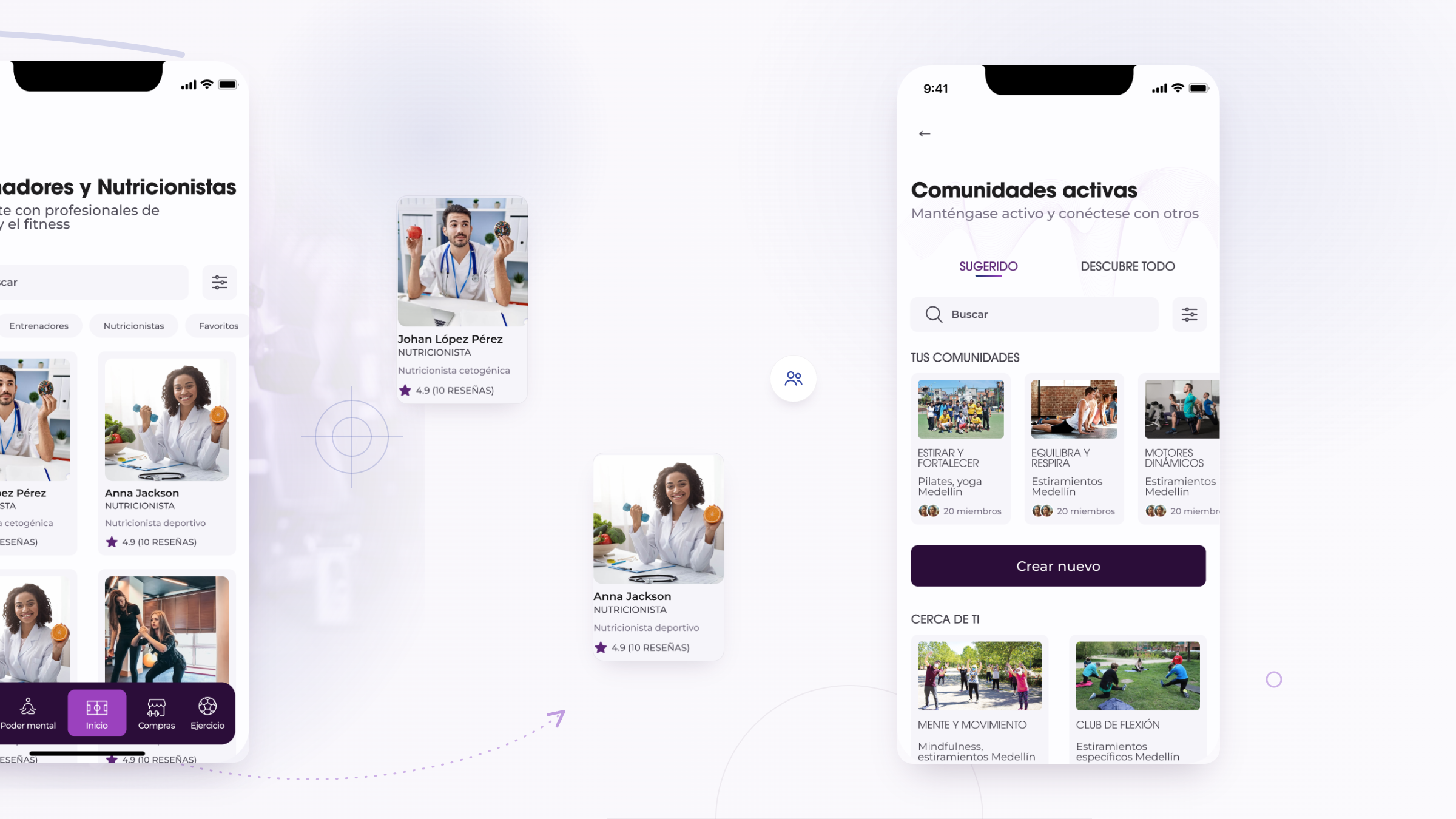
A full high-fidelity prototype in Figma: onboarding and questionnaire, daily plan, workout with AI Body Scan, Poder Mental, challenges and community, and a marketplace.
04
Test, then prioritize.
Moderated testing with ten participants across six areas of the product, closing with a ranked design-opportunity list and a feature roadmap split into MVP, MLP, and growth.
Drag / scroll →
Pace
8 weeks
Workshop through to a tested prototype
Evidence
10 interviews
45 minutes each, Mexico and Colombia
Validation
10 testers
7 Fütness users, 3 newcomers
Portfolio
1 of 7
MVPs built for Boostart Venture Studio
The Client

A method with a following, and nothing to carry it past the field.

MPL Gaming player base

Fütness is a training methodology that fuses football drills with fitness training in a high-intensity interval format, built around what its founder calls mentalidad campeona, a champion’s mentality. It runs on three pillars: fitness, using the ball to build strength and condition; wellness, with partner and team exercises plus meditation aimed at sporting mindset; and community, which is what turns a workout into a reason to come back.

Founder Ramón Jesurún built it out of his own turnaround, from overweight and unmotivated to a method he has since taught across Latin America. “The ball,” as he puts it, “was my recovery tool.” More than 2,500 people had trained on it across LatAm, CONMEBOL certified its first cohort of 19 Fütness mentors in Paraguay in 2022, and sessions run today in Barranquilla, Colombia and Aventura, Florida.

What it did not have was a product. Fütness existed wherever a mentor and a ball happened to be in the same place, which capped it at the size of a room. It came to WANDR through Boostart Venture Studio, the Bogotá venture studio that had partnered with WANDR to build MVPs across its portfolio.


‍

2,500+
People trained on the method across LatAm
19 mentors
Certified with CONMEBOL in Paraguay, 2022
2 countries
Sessions running in Colombia and the US
The Challenge

A method that only worked when everyone was in the same room.

Fütness had a proven in-person method, a founder story, and real regional traction. Taking it digital meant solving the three problems the workshop named outright, plus five more that the research and the build surfaced underneath them.

Problem 01

Getting anyone to download another fitness app.

The first stated challenge. Fütness was asking people to add an app to a phone that already had one, or to start a habit they had failed to start before. Nothing about a new logo in an app store solves that.

Problem 02

Keeping the ones who did.

The second. A methodology that works because a coach is watching and a group is sweating alongside you has no obvious retention mechanic once it becomes a video on a screen at home.

Problem 03

A crowded category, and no one to copy inside it.

The third stated challenge was competing in a saturated fitness market against platforms funded through Series D and E with users in the millions. The harder version of it was that none of them did what Fütness does. There was no direct competitor to study, so there was no proven pattern for combining football drills with fitness training on a phone.

Problem 04

The ball was the differentiator and the obstacle.

 Nothing else in the category trained with a football, which was the whole advantage. It was also a barrier: the exercises need a ball and the space to use one, and the name risked reading as football-only to the much larger audience that just wants to get fit.

Problem 05

A method that only existed where a coach was standing.

Everything that made a Fütness session work, the correction of technique, the energy of training together, the mentor’s read on the room, lived in the room. None of it had been translated into something a person could open alone, and the virtual class was the only place a screen had to do the coach’s job.

Drag / scroll →
Our Role

From a training method to a product.

01
A definition workshop with the founding team, closing on pros, cons, and the three challenges the product had to beat
02
A competitive study across three adjacent category groups, since no competitor shared the modality: football training apps, fitness apps, and wellness apps
03
A feature-by-feature call on what Fütness should adopt from each group, and what it should not
04
A working session with the founder translating his coaching experience into the app’s gamification levels
05
Ten in-depth interviews of 45 minutes, split between Mexico City and Colombia
06
Two research-grounded personas and a presencial-versus-digital opportunity map
07
A journey map across finding a goal, finding the right training, and tracking progress, with pain points and opportunities at each stage
08
Content research defining what the training videos needed to carry, from set and audio to length and filtering
Research

We asked what actually survives the move to a screen.

Ten in-depth interviews, then ten moderated testing sessions on the prototype. Participants split between people who already trained on the Fütness method and people who had never heard of it, so every finding could be read two ways: does this hold for the community, and does it hold for a stranger?

01
0   · Direct competitors

Nobody else was doing this, which sounds like an advantage and is mostly a problem.

The competitive study found no product combining football drills with fitness training in the way the method does. Fütness was first. That meant nothing on the market could show what the product should be, so the study changed job: instead of hunting a gap, it went looking for convention. How do fitness apps organize classes, how do people filter them, how are levels handled, and what actually makes someone open the app again tomorrow?

02
10/10   · Challenges and competition

Every single participant said challenges were what would make them train.

Ten out of ten agreed that desafíos were an attractive way to break the monotony of training. Five said competition between users made them more motivated, and four wanted to see their position on the leaderboard. As one non-user put it: everyone who likes football likes competing, and that makes you want to be in the top three. Competition, not content volume, was the retention mechanic.

03
9/10   · Poder Mental

Nine in ten said the mental training was what made the app feel complete.

Participants described routinely leaving their fitness app for YouTube to find stretching, breathing, and meditation content. Having it inside one tool was the single most valued addition. That moved wellness out of the nice-to-have column and into the MVP alongside the workouts.

2 very different reasons to train.

Persona 01
Casual gamer persona

Fútbol driven

Trains to improve technique, performance, and match fitness, plays on a team, and uses cardio and strength work to avoid injury. Usually trains under a coach, values the community of the in-person class, and mostly does not use digital tools to train.

Competitive
Technique
Injury-wary
Persona 02
Committed player persona

Fitness driven.

Trains for physical and mental health, alone or in a group. Wants routines matched to their current level and available time, progress they can actually see, and a reason not to skip a day.

Personal goals
Habit-building
Progress-driven
Persona 03
Office-context player persona

The vendor.

On the supplying side of the assessment, asked to upload the same evidence into multiple platforms multiple times, with no visibility into what happens to it next.

Supply-side
Evidence-heavy
Needs status
Persona 03
Office-context player persona

The insurance carrier.

Underwriting risk across the same supply chain and reading the same data for an entirely different purpose: comparability across a portfolio

Third-party
Risk-pricing
Needs comparability
The Strategy

Sell the fitness. Keep the ball.

The research pointed at one repositioning and a set of design moves that followed from it.
01

Position it as fitness, not football.

The biggest call of the engagement. Sold as football training, Fütness inherited a niche. Framed as a versatile fitness method that happens to use a ball, it could reach people who want to get in shape without any interest in the sport, and the interviews confirmed that framing landed with both groups.

02

 Make the ball an accessory, not a requirement.

The ball was the differentiator and the barrier at once. Copy and imagery had to state plainly that Fütness is not only about football, and the marketplace turned the equipment requirement into a revenue line by selling the branded ball inside the app.

03

Build the community, because that is what the class was.

After the pandemic, people went back to training in person specifically for belonging, group motivation, and competitive spirit. Communities, live sessions, team workouts, and event notifications went into the MVP so the thing people actually came back for had somewhere to live.

Principle 01 of
→ Continue scrolling
THE KEY INSIGHT

Fütness had no competitor in the market. It had one in its own gym.

The competitive study came back close to empty. Nothing on the market paired football drills with fitness training the way the method does, which reads at first like an open field. Then the interviews explained why the field being open did not help. After the pandemic, people had deliberately gone back to training in person, and they said exactly why: community, a sense of belonging to a group, the motivation of a coach in the room, and the competitive edge of training beside someone else. Virtual training was described, consistently, as a complement or a fallback for the days you cannot get there, never as the main event.
That is a hard finding for a company about to build an app, and it is the one that made the product work. Fütness was not fighting Nike Training Club for screen time. It was fighting its own Tuesday-night class, and on content alone it was going to lose. So the digital product was built to carry the room instead: the coach’s voice and constant motivation in the videos, the group in communities and live sessions, the competitive edge in challenges and leaderboards, and the coach’s eye in the post-workout body scan. Every one of those sits in the MVP alongside the workouts rather than behind them, because without them the product is a video library, and the class already beat that.

MPL redesign surface
Screen 01 of 08
→ Scroll horizontally
Outcomes

What the work unlocked.

Fütness started the engagement as an in-person method with regional traction and no product. It finished with a tested prototype, a live launch surface, a marketing plan its own team could run, a roadmap for what comes after the MVP, and the investor materials that carried it into a raise.

01 · FUNDING
$500K
Seed round closed
at a $1.2M valuation, against the prototype and deck we designed
02 · DEFINITION
0 → 1
A method turned into a tested product
researched, designed, and validated with real users
03 · EVIDENCE
20 sessions
Interviewed, then tested
ten 45-minute interviews, then ten moderated testing sessions
04 · ROADMAP
3 phases
MVP, lovable, and growth
every feature ranked by user value against design effort

Client Voice

In their words.

“
WANDR always motivates our customers and our internal team to think big. They push the expectations, and they take AI and technologies as far and as ambitious as possible, with a more strategic and visionary mindset.
Replace · First Last
Title · MPL Gaming
Up next

Another story worth reading.

Buildbox case study preview
Next Case Study

Dakota

No code gaming
·
SAAS
Read next case