The senior casting executive
Approves rather than searches, and said plainly that open search is junior work. Decides in the room, wants the final list printed, and is acutely aware of the politics attached to every name.
Talent Systems
Fifteen interviews across the casting industry turned an AI search demo into a ranked product roadmap, and surfaced the one feature its most senior users would never touch.

Eighteen weeks. Fifteen interviews. One product.
The casting infrastructure behind the screen you are watching.

Talent Systems is the leading technology provider for casting, auditioning and crew hiring in the entertainment industry. Its portfolio runs from Casting Networks and Spotlight, the British platform founded in 1927, to Cast It Systems, Cast It Reach, Casting Frontier, Staff Me Up and Tagmin, giving it the largest global footprint in casting software. RedBird Capital Partners acquired the company in 2022.
That reach is built on an extraordinary asset: two decades of auditions, tapes and performer profiles no competitor can replicate. The problem Talent Systems brought to Wandr was that the asset was not the workflow. As one participant put it, the platform had become the place you go to watch old tapes and send each other links. The work itself had moved somewhere else.
The industry’s deepest casting database, and everyone still worked around it.
Post-pandemic digitalization and a new wave of competitors put pressure on a platform that had led the category for twenty years. Mapping the casting journey end to end turned that pressure into six specific failures.
From receiving the script to booking the talent, the casting journey runs through ten distinct stages. Breakdowns were written in Breakdown Services and Eco Casting, roles posted through Backstage and Breakdown Express, credits verified in IMDb Pro, lists assembled in Choir, Excel or the notes app on a phone, and approvals handled in person on printed paper. The platform holding the industry’s talent data appeared at almost none of those stages.
IMDb Pro was named repeatedly as the source of truth: who represents an actor, who to call, what the credits actually are. Its own weakness, records and media that go out of date, pushed casting directors to look elsewhere and added another time-consuming task to the list. A profile nobody trusts is a search nobody trusts.
Film and television casting passes through casting managers, directors, producers and the studio funding the production. The tools are chosen the same way. Studios and agencies dictate the software by tenure and pricing, which does not mean teams use it: several described posting through Breakdown because that is the unwritten agreement, then uploading self-tapes to Cast It.
Senior casting directors approve in rooms, not dashboards, and the final list still goes out as printed material. “Existing casting directors love printing,” one participant said. Any modernization had to keep producing clean, printable output rather than assume everyone would review on a screen.
The casting industry is fast, unforgiving and switching costs are low. “This business is a one-shot opportunity. First mistake and you are out.” Bugs and interface failures in the current product were not cosmetic complaints, they were the reason teams moved to something else.
Fifteen one-hour sessions, nine with internal product and brand leaders across the Talent Systems portfolio and six with external casting professionals in the US, UK and Australia, including casting directors working with major studios and streamers
Script to booking runs through ten stages, and we logged the tools and pain points at each one: Breakdown Services and Eco Casting for breakdowns, Backstage and Breakdown Express for posting, IMDb Pro for credits, Choir, Excel and phone notes for lists, email for review, printed material for approvals. No single product covered the job.
We compared nine platforms across ten feature dimensions, and the set had to include Google Forms and Instagram because casting teams genuinely used them. Advanced search, form building and invite-to-role were split unevenly across the field, and not one product held all three. The category also looked its age: plain, dated interfaces that had not moved in years, which made the experience itself an opening rather than the data.
Search and lists were prototyped and tested. The search bar read as obvious and easy to find, and casting executives told us they would not use it: open searches are run by less senior casting directors. “Lord knows what would come up, it would probably be all over the place.” On lists, the pattern reversed, and testers asked for more: folders per role, and permissions so their notes stay away from production.

Approves rather than searches, and said plainly that open search is junior work. Decides in the room, wants the final list printed, and is acutely aware of the politics attached to every name.

Runs the process day to day and pays for the fragmentation. Writes breakdowns in one product, builds lists in another, verifies credits in a third, and keeps the real record in a spreadsheet

The intermediary nobody can design around. Handles pricing, availability and delivery, and objects to casting reaching talent directly. “They get very precious of their talent.”
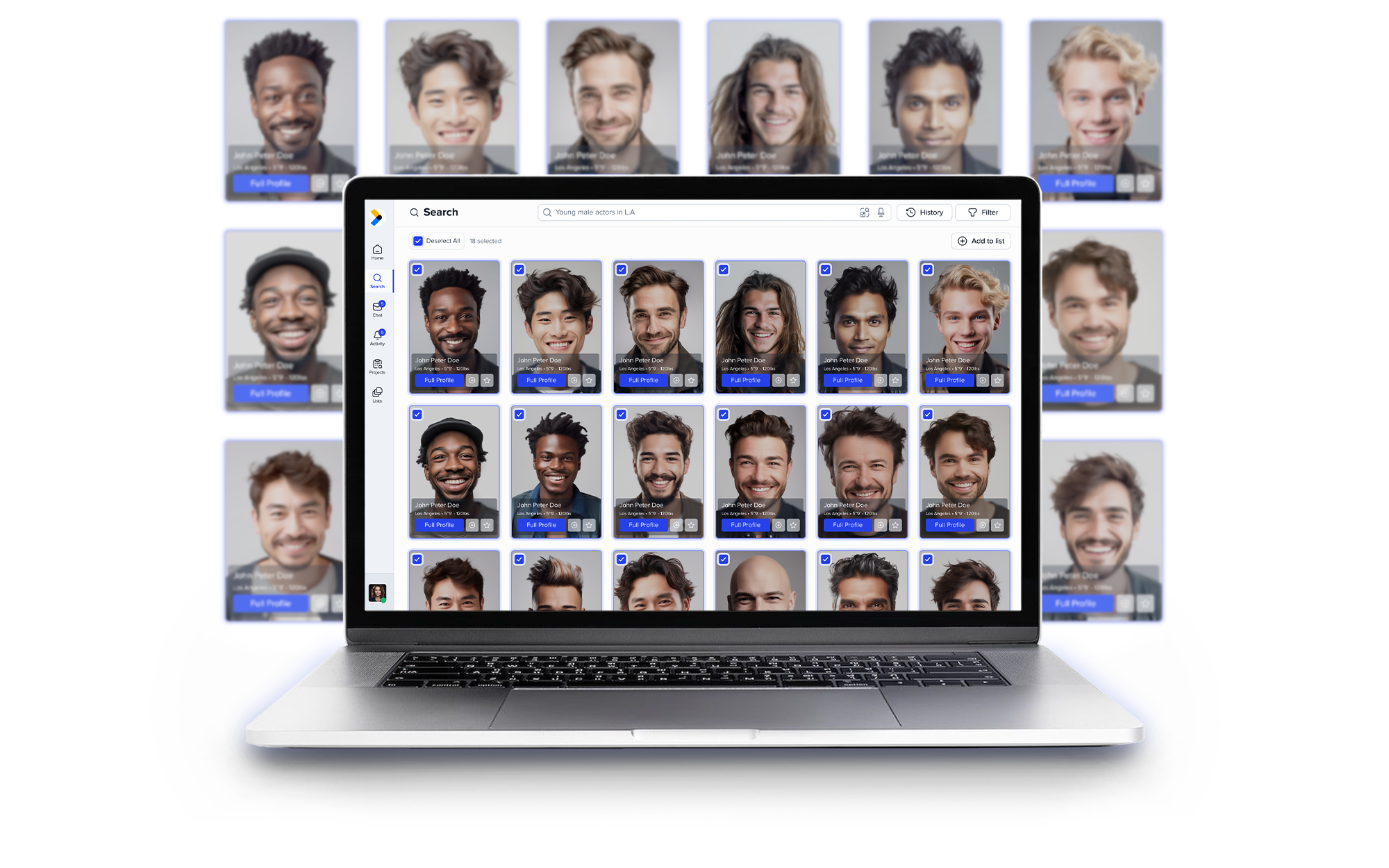
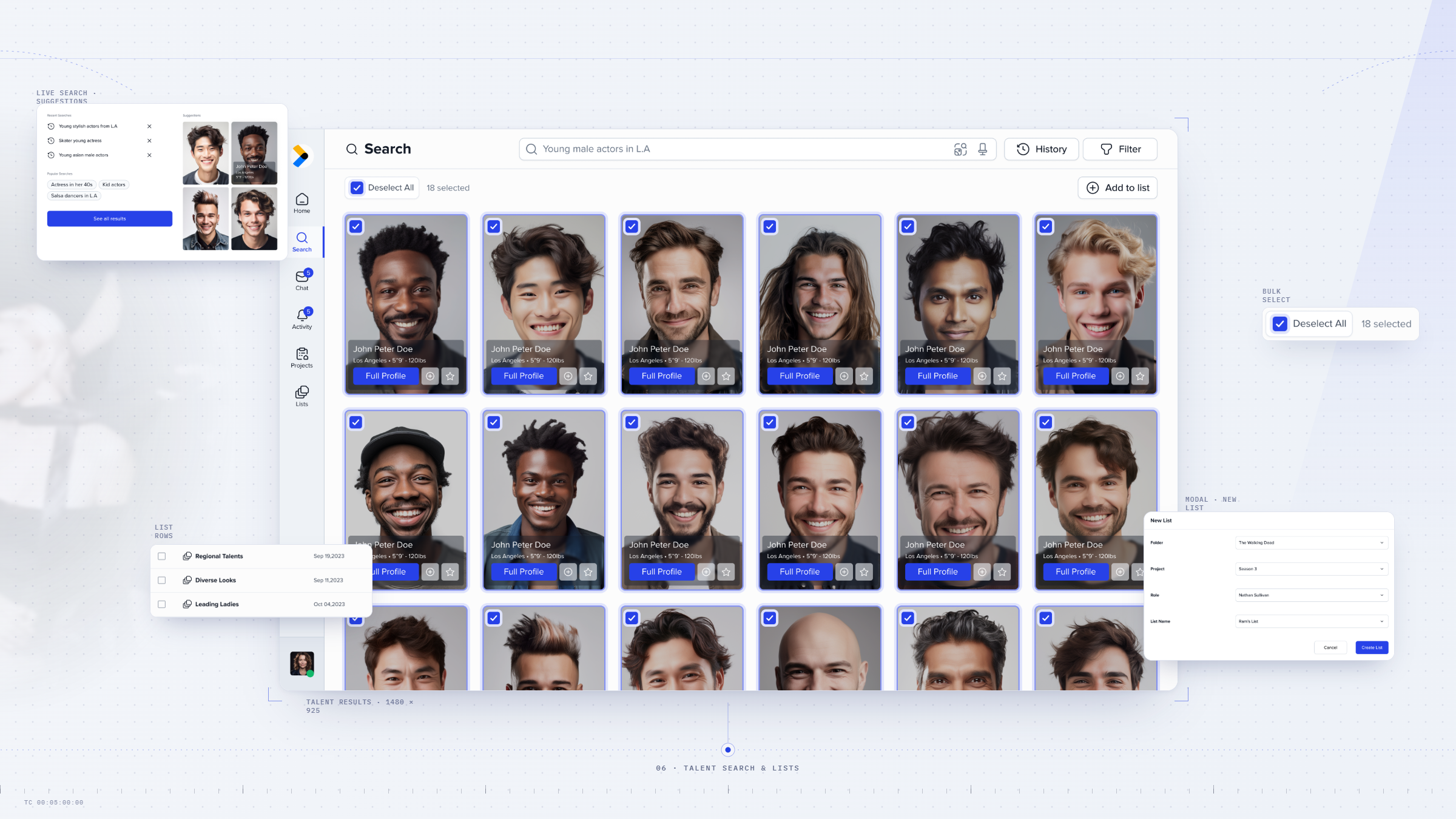
Casting directors describe performers in sentences, so the search was rebuilt to accept them. “Actors with curly hair, blue eyes, who speak French, in Paris.” “Show me voice actors in New York with deep luxury brand vibes.” “Kinda looks like Audrey Hepburn.” “Boom operators in Seattle.” An AI-enhanced search made predictive matches against what a role actually needed, instead of forcing a human sentence through a filter panel. Testing then told us who it was for: the casting directors running open searches, not the executives approving them.
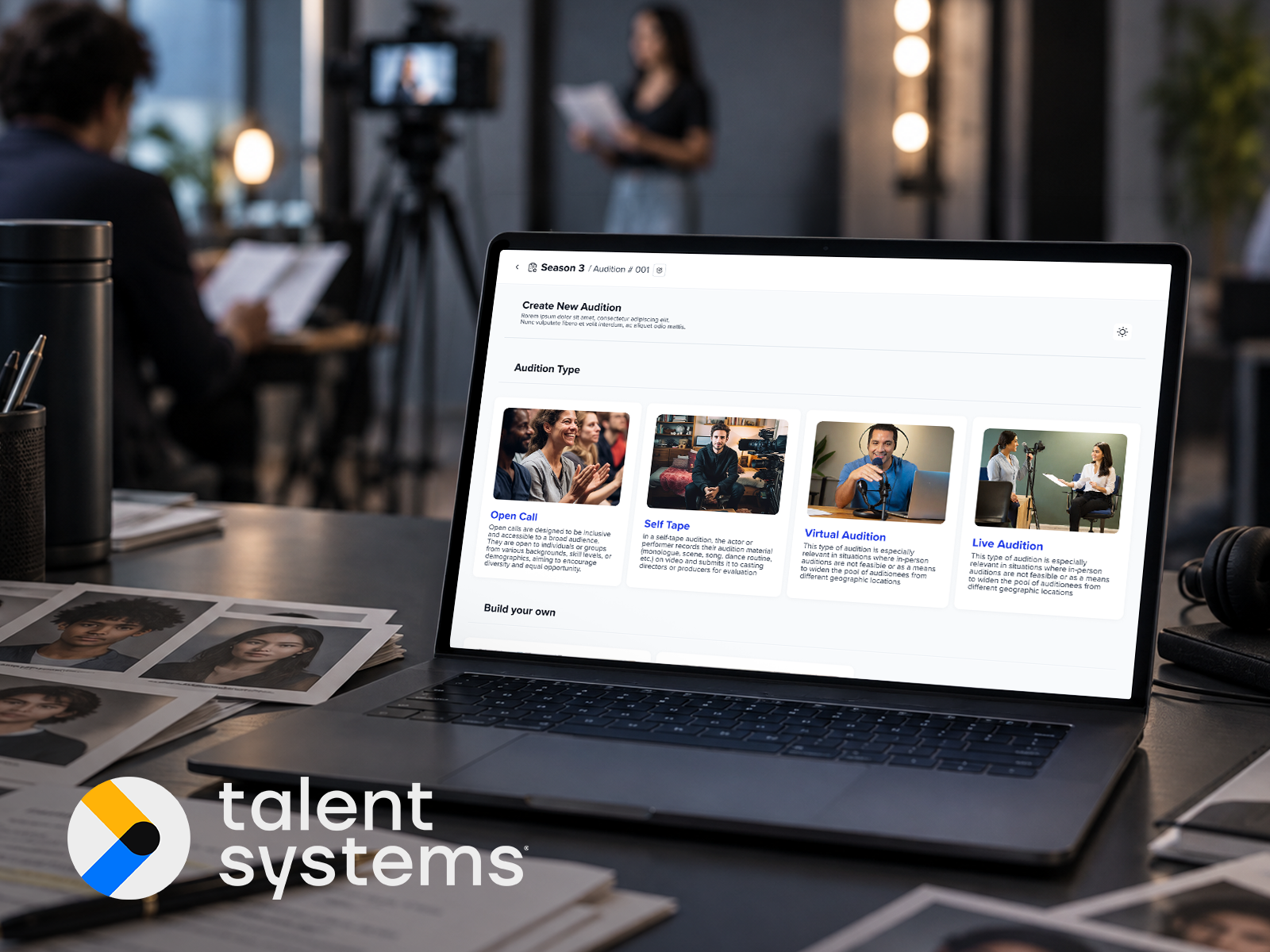
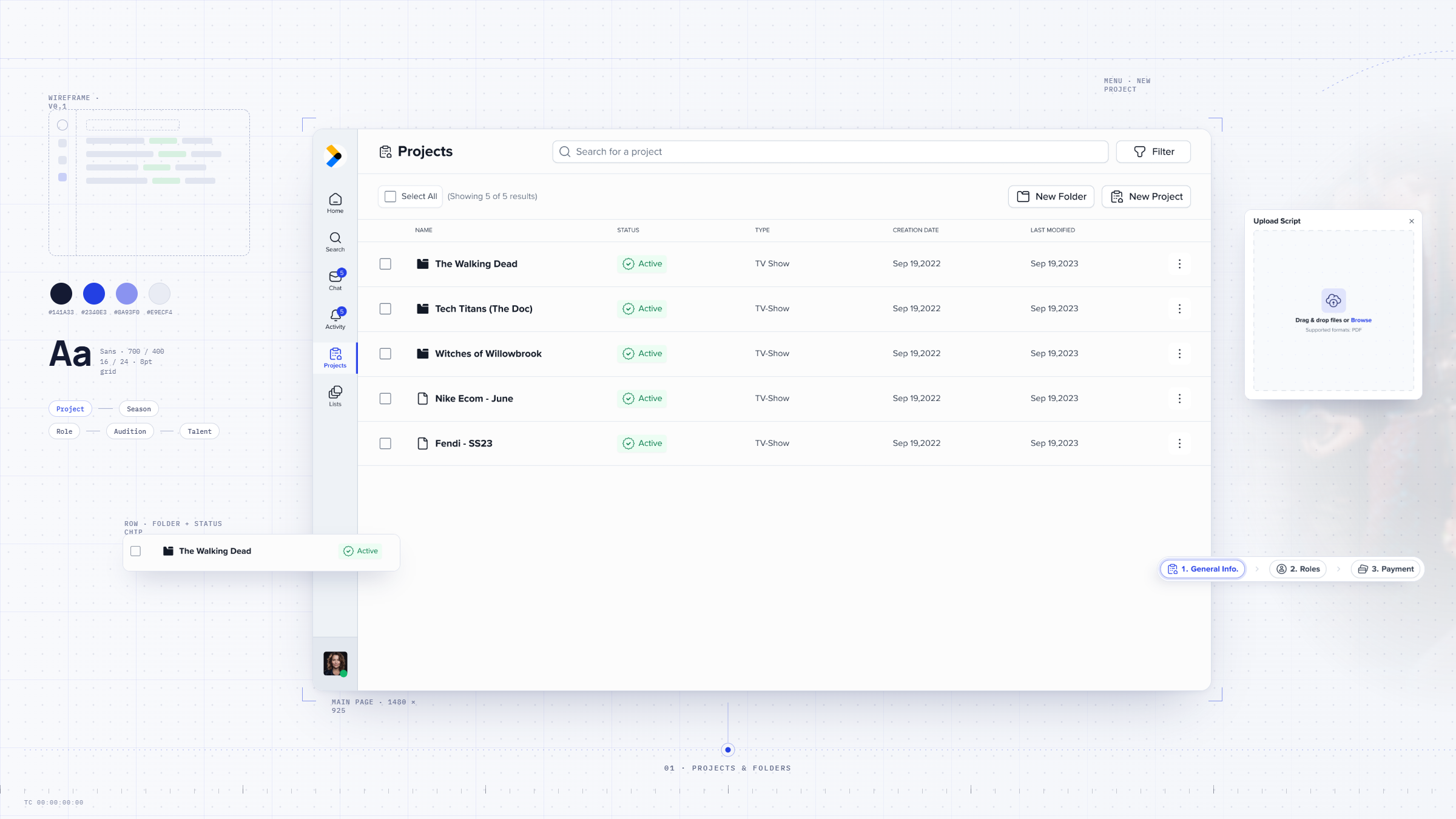
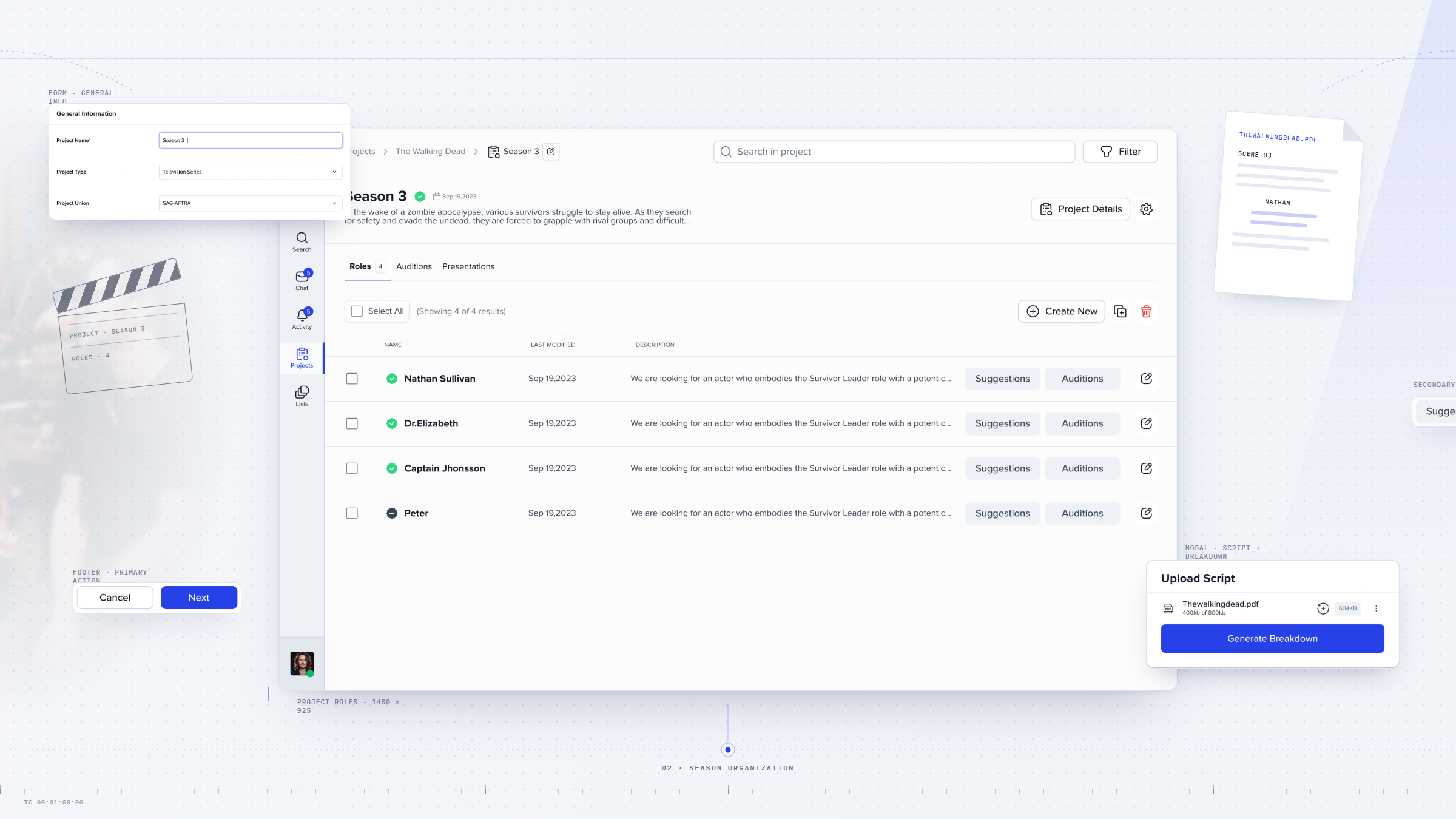
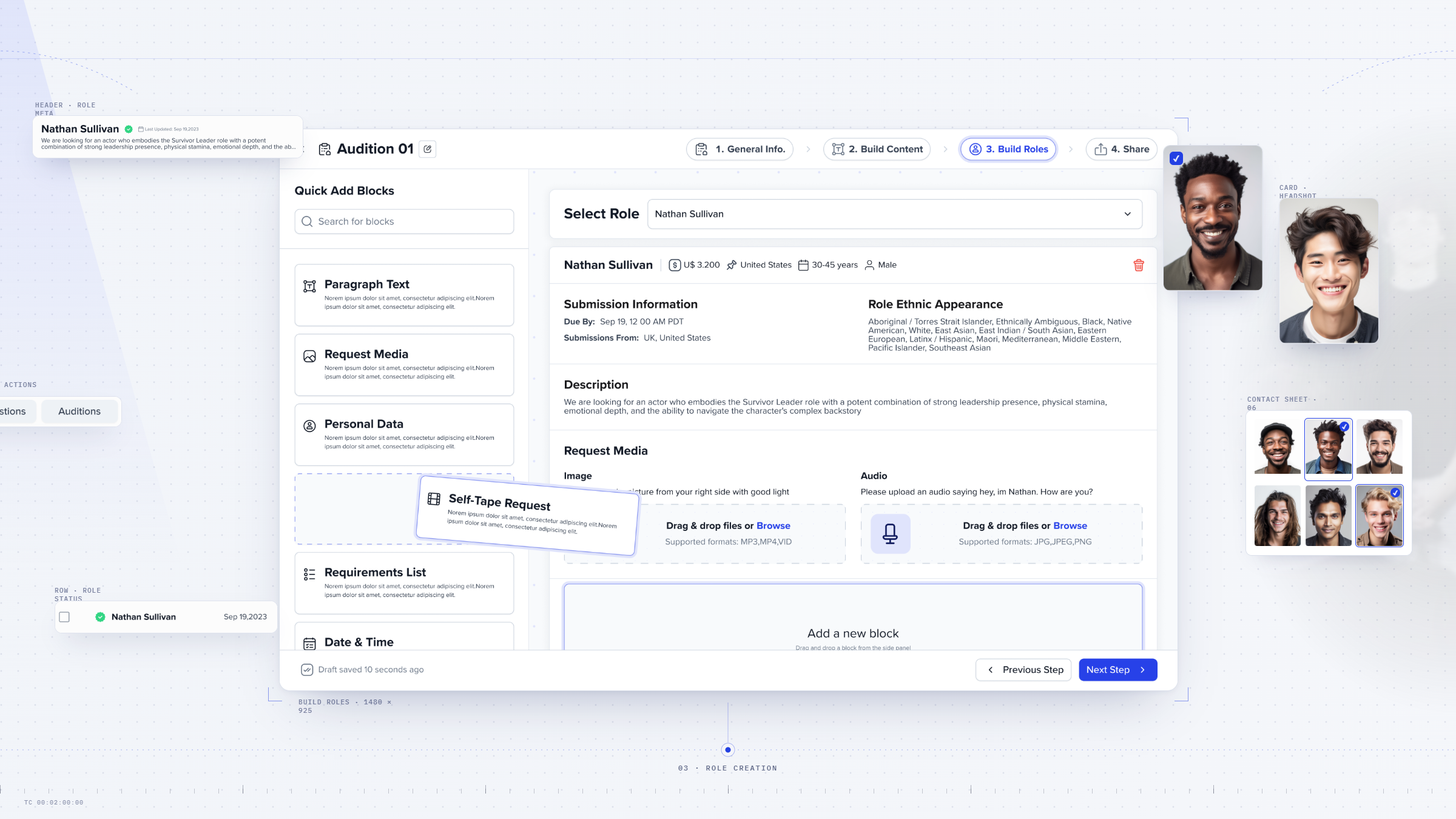
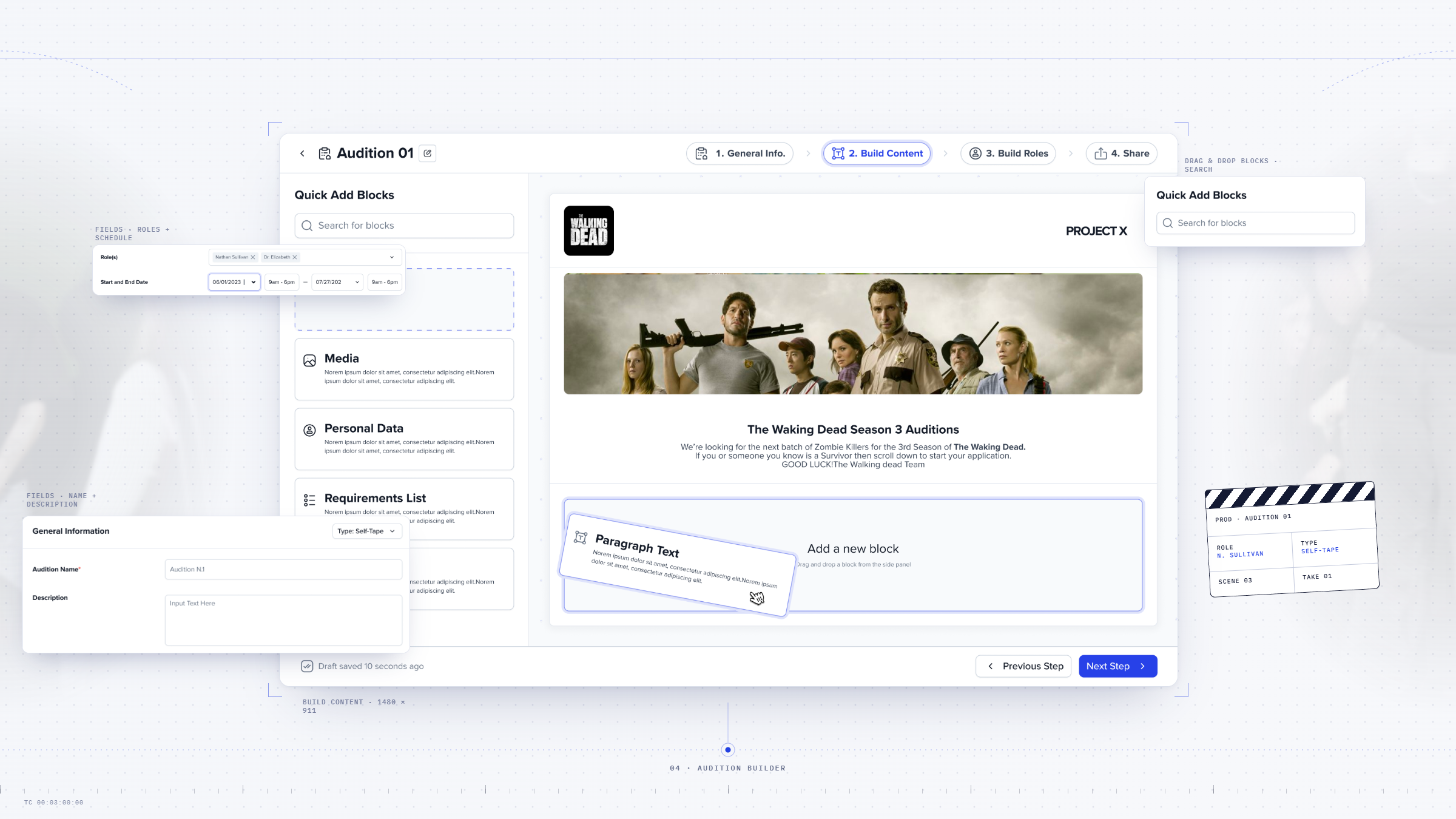
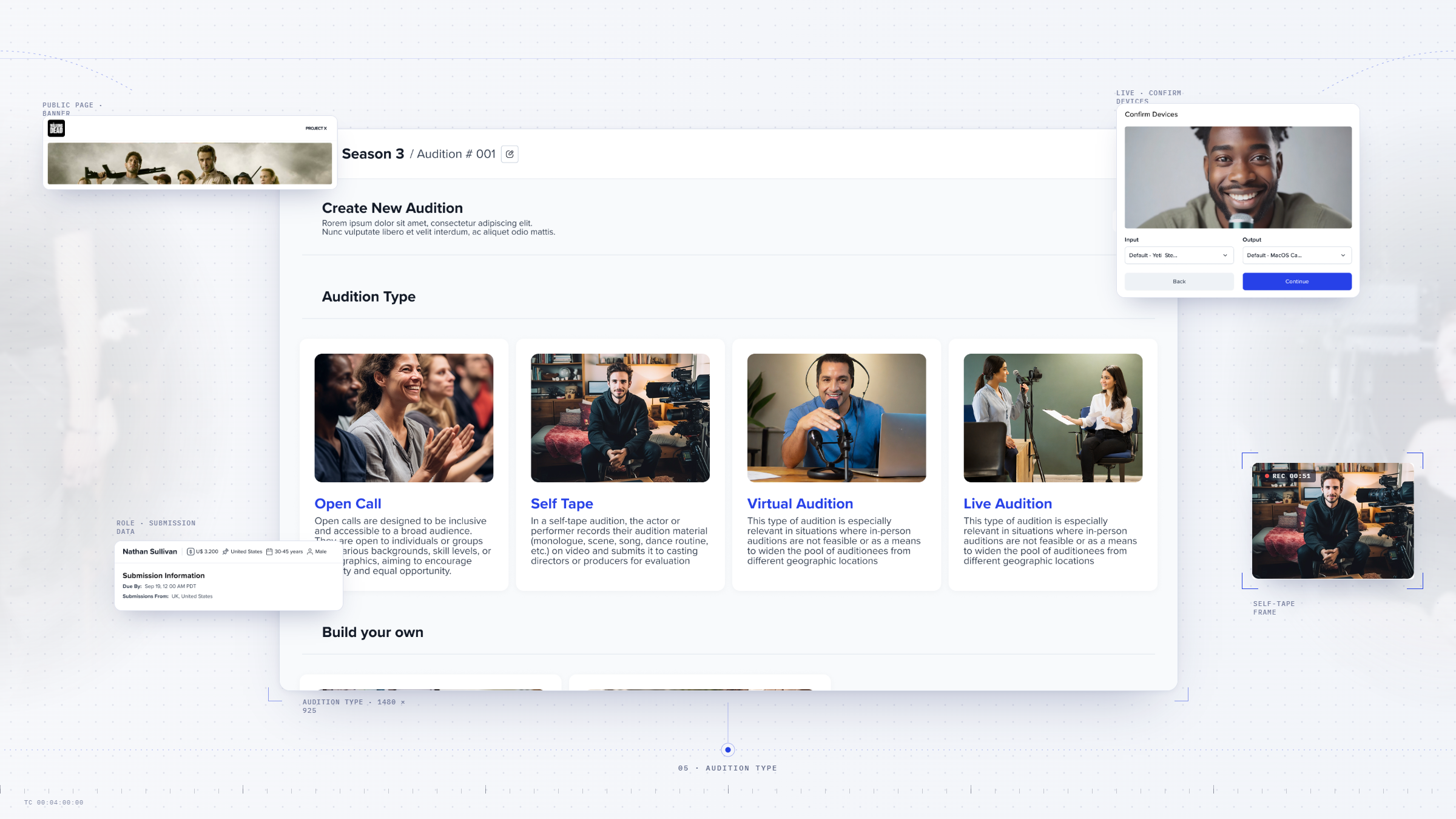
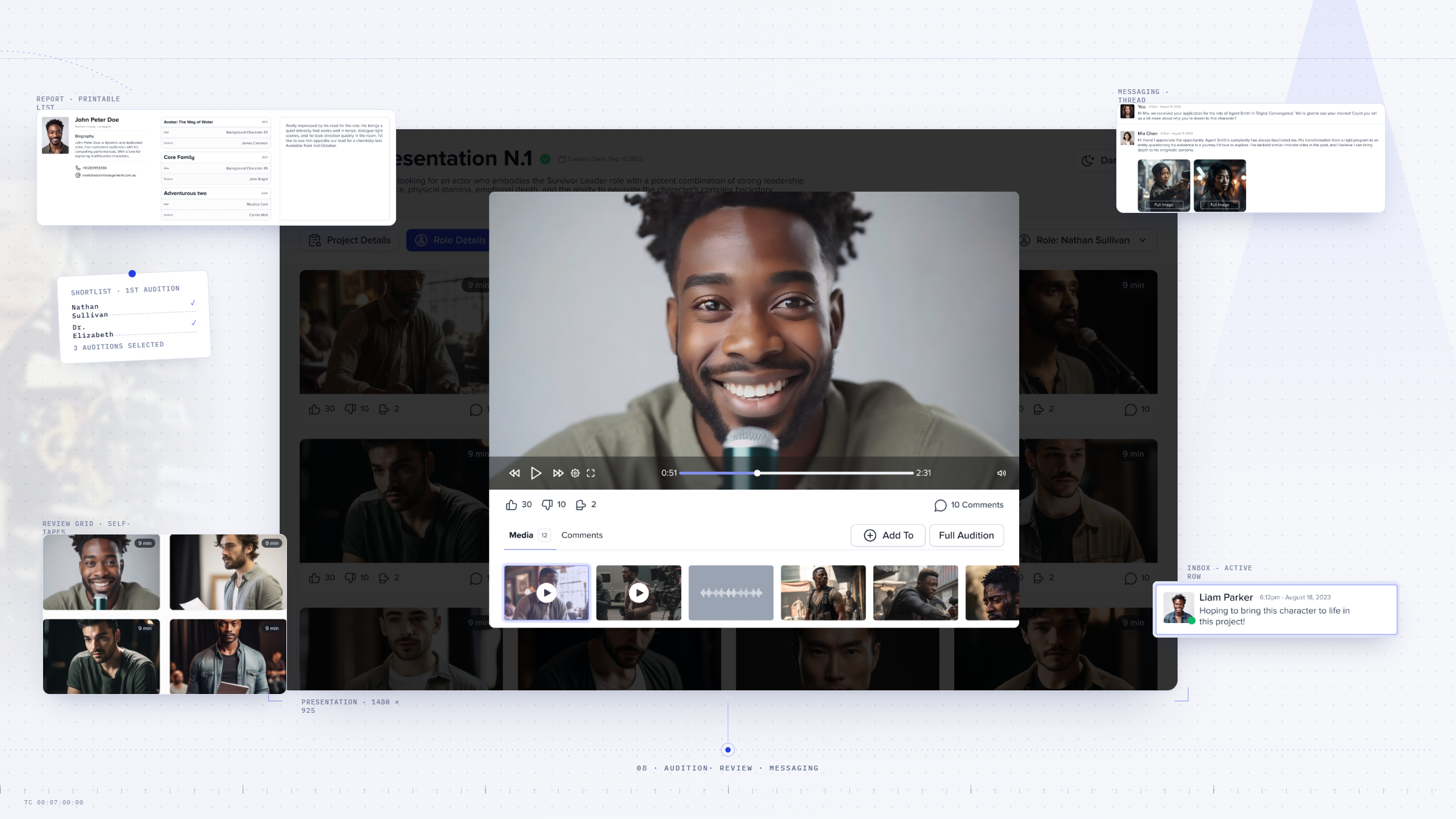
Lists rebuilt with folders per role and permissions, so a casting director’s private notes never reach production. Candidates gathered into a folder and moved through the selection rounds as one continuous funnel, from first pass to callback to the final contracted cast, with breakdown, project and role creation, auditions, self-tapes and open calls all living inside it. Messaging routed the way the industry actually works, through the agent rather than around them. Presentations built to export as the clean printable report an approval meeting needs.
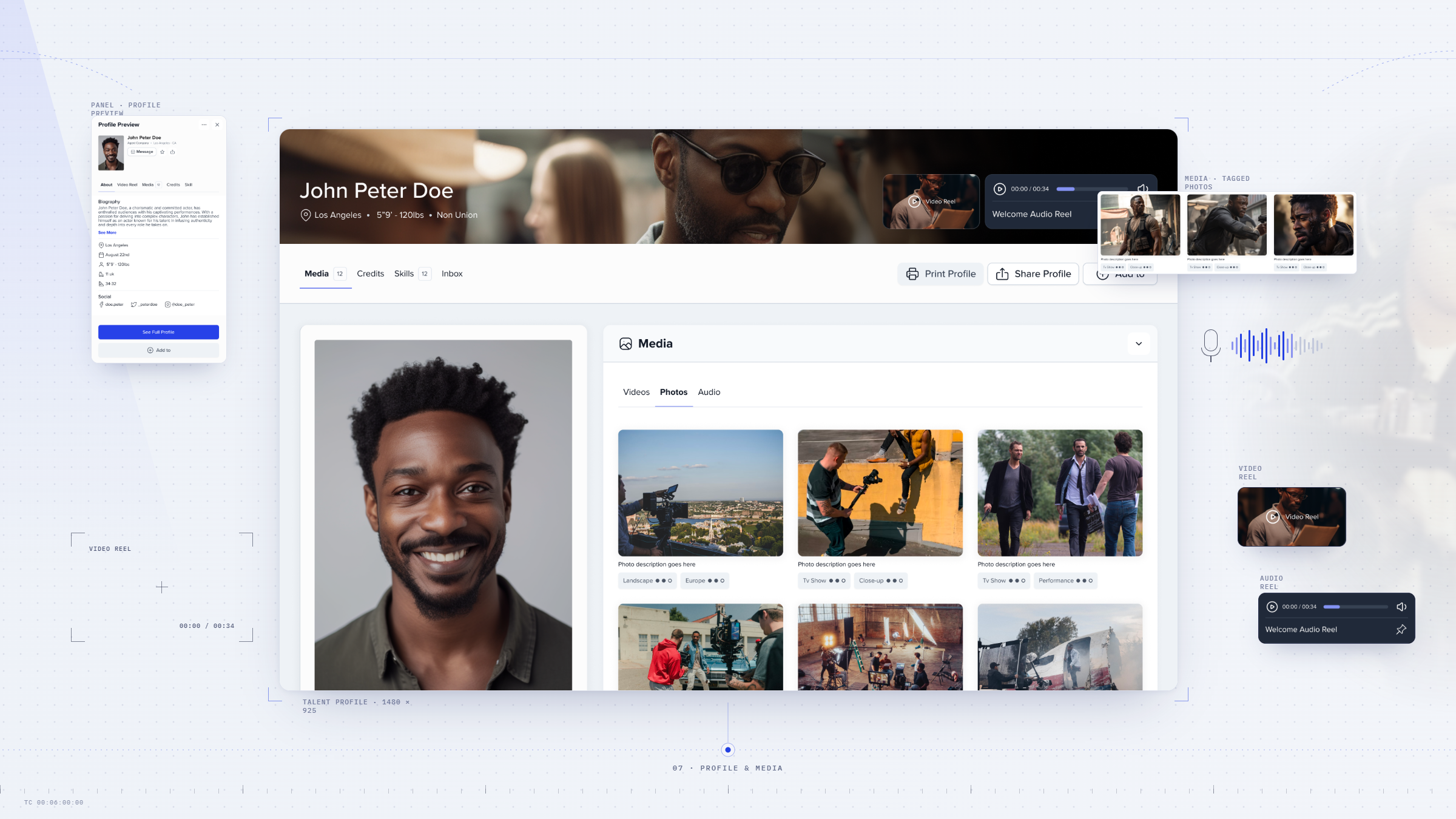
Talent browsing built around scannable baseball cards that reveal detail on hover, opening into a profile deep enough to hold the whole picture of a performer: physical characteristics through to emotional and character range, stills, credits and video from real performances. Credits were promoted to the top, because credits are how an actor’s tier gets read, with a direct link out to IMDb Pro so the source of truth sits one click away, and printable output preserved for the decision-makers who still work on paper.
We arrived with an AI-enhanced natural-language search, and it demoed beautifully. The research said something more uncomfortable. Casting executives, the people who sign off, told us they would not run open searches: that is junior work, and what comes back is unpredictable. To this industry the word AI meant high-end generated media, not a better search engine, and casting itself is an art form its practitioners are not looking to automate.


Eighteen weeks from kickoff, Talent Systems had a designed end-to-end casting product, a mapped industry journey, a ranked build order argued from its own users, and a leadership team that had seen the whole thing working as a prototype.
We brought Wandr in for three months to steady our design, and they ended up shaping how we build product. They learned a genuinely hard domain, took ownership, and earned enough trust that we kept expanding the team. They are the group we did not want to give back.