Troinet

Twelve weeks from a founder's notes to a designed platform, then two years embedded with the team that built it.

INDUSTRY
B2B SaaS
PLATFORM
Web app
SIZE
SMB
goal

UI/UX Design - MVP  - User Research

MPL Gaming
·
Real-money Platform
·
U.S. Market
At a glance

From a few sheets of notes to a built platform.

‍

W1
W2
01
 Research and definition.
Twenty-two interviews with IT leaders and executive buyers, to find who really decides, how licenses are managed today, and whether the founder's concept held up outside his own consulting practice.
W3
W4
02
 Architecture
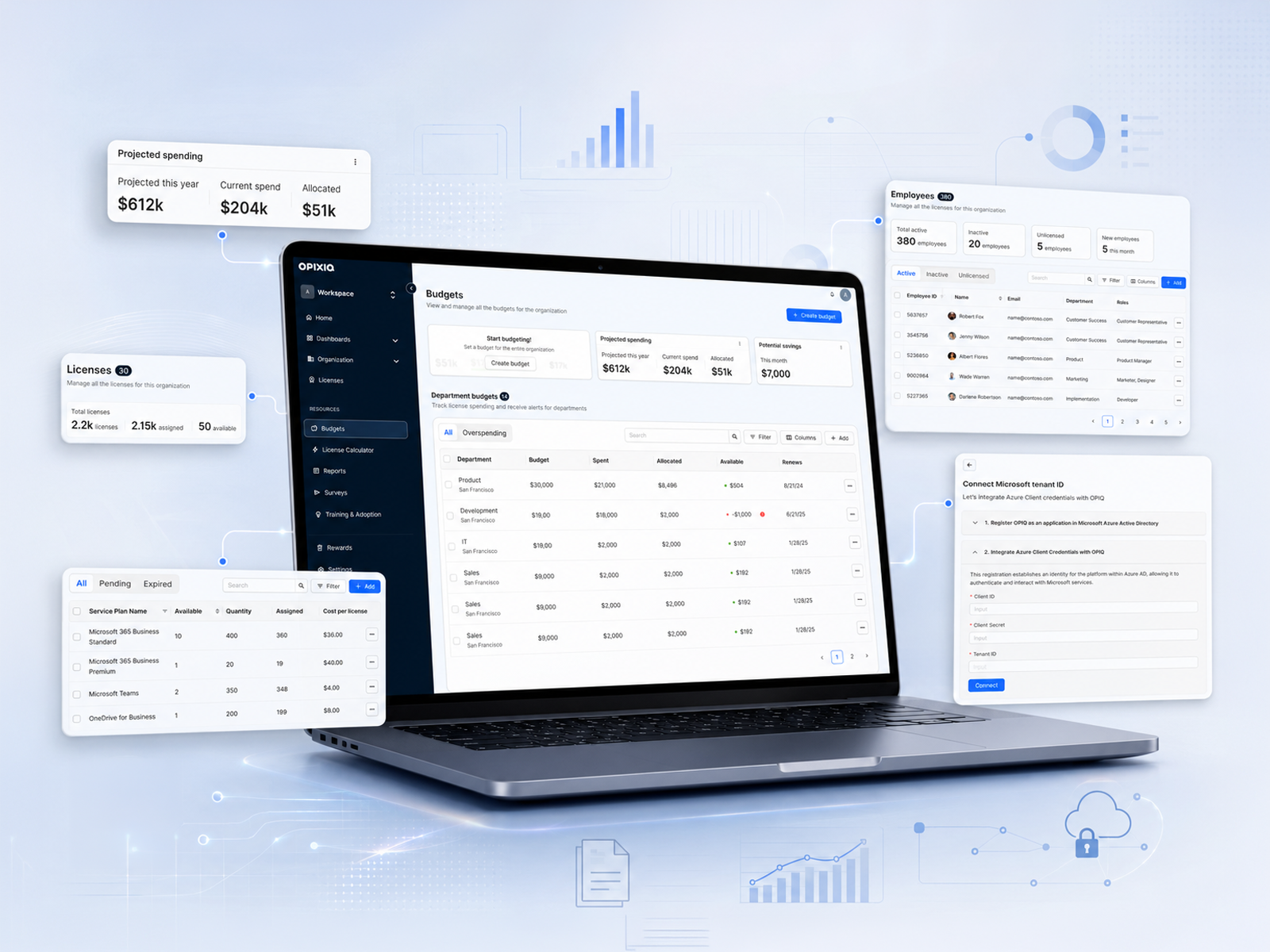
Map the full platform: dashboards, insights, reports, license and user management, roles, budgets, and a store. Then decide, deliberately, what not to build.
W5
W6
W7
03
Design and test
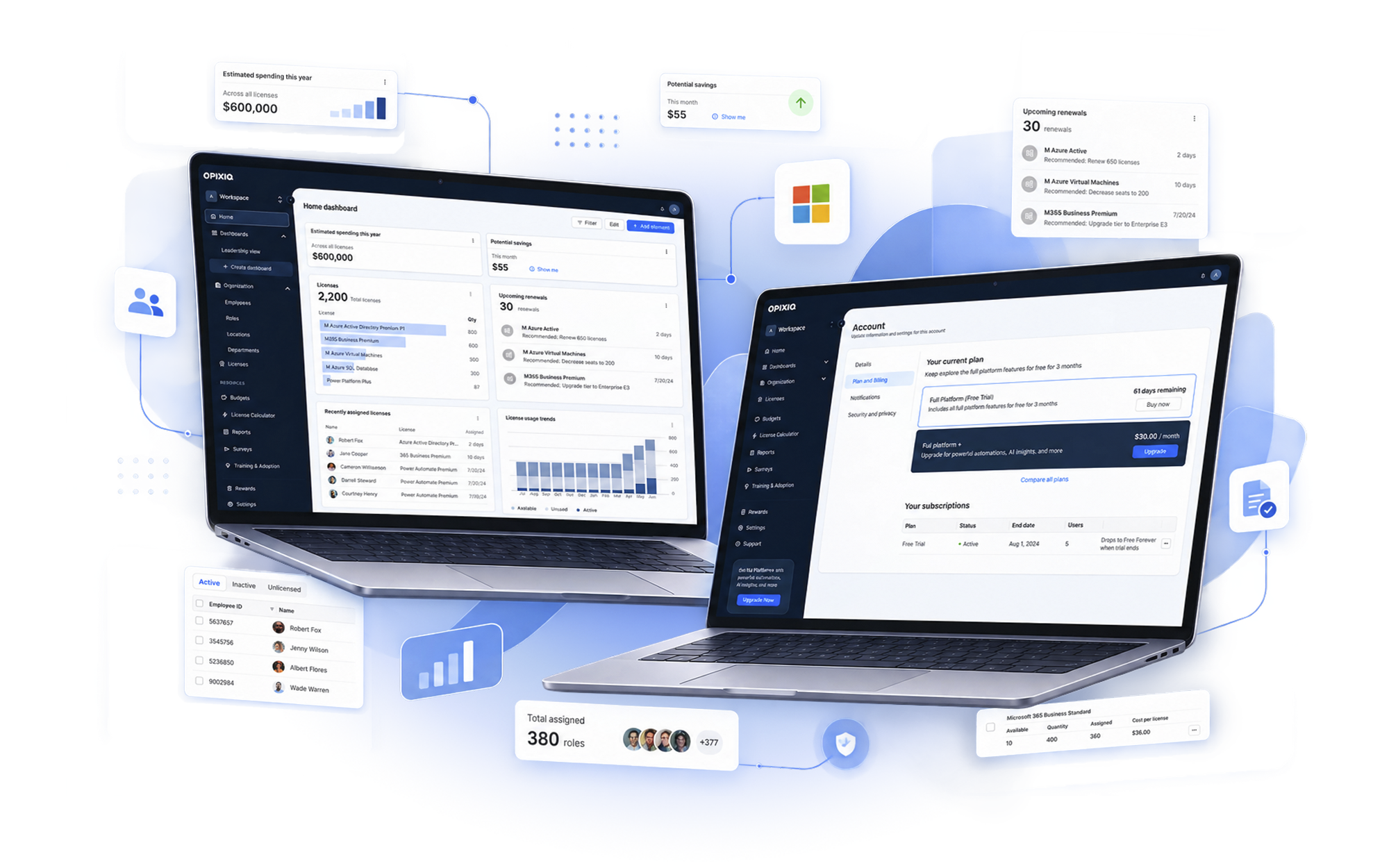
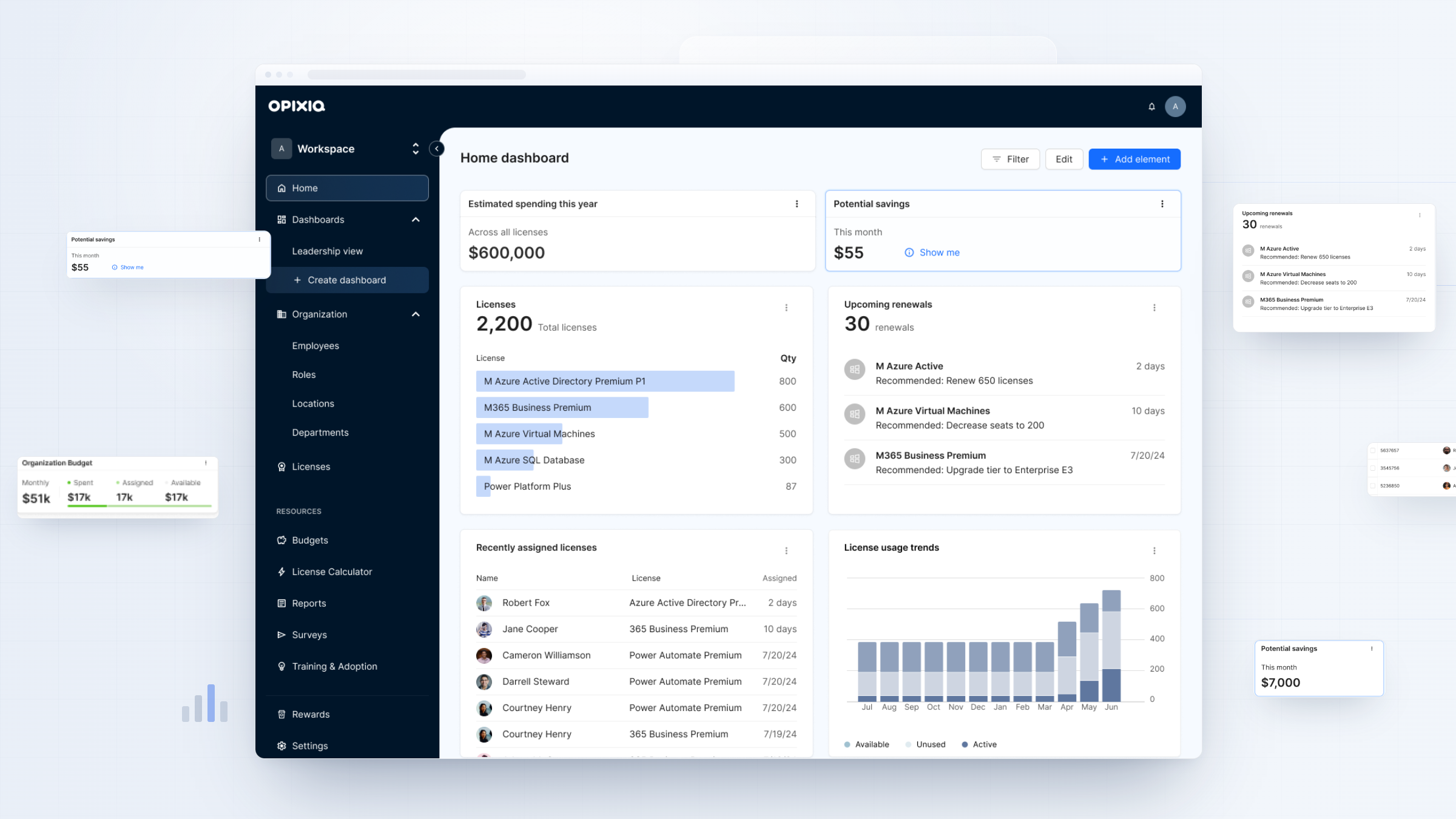
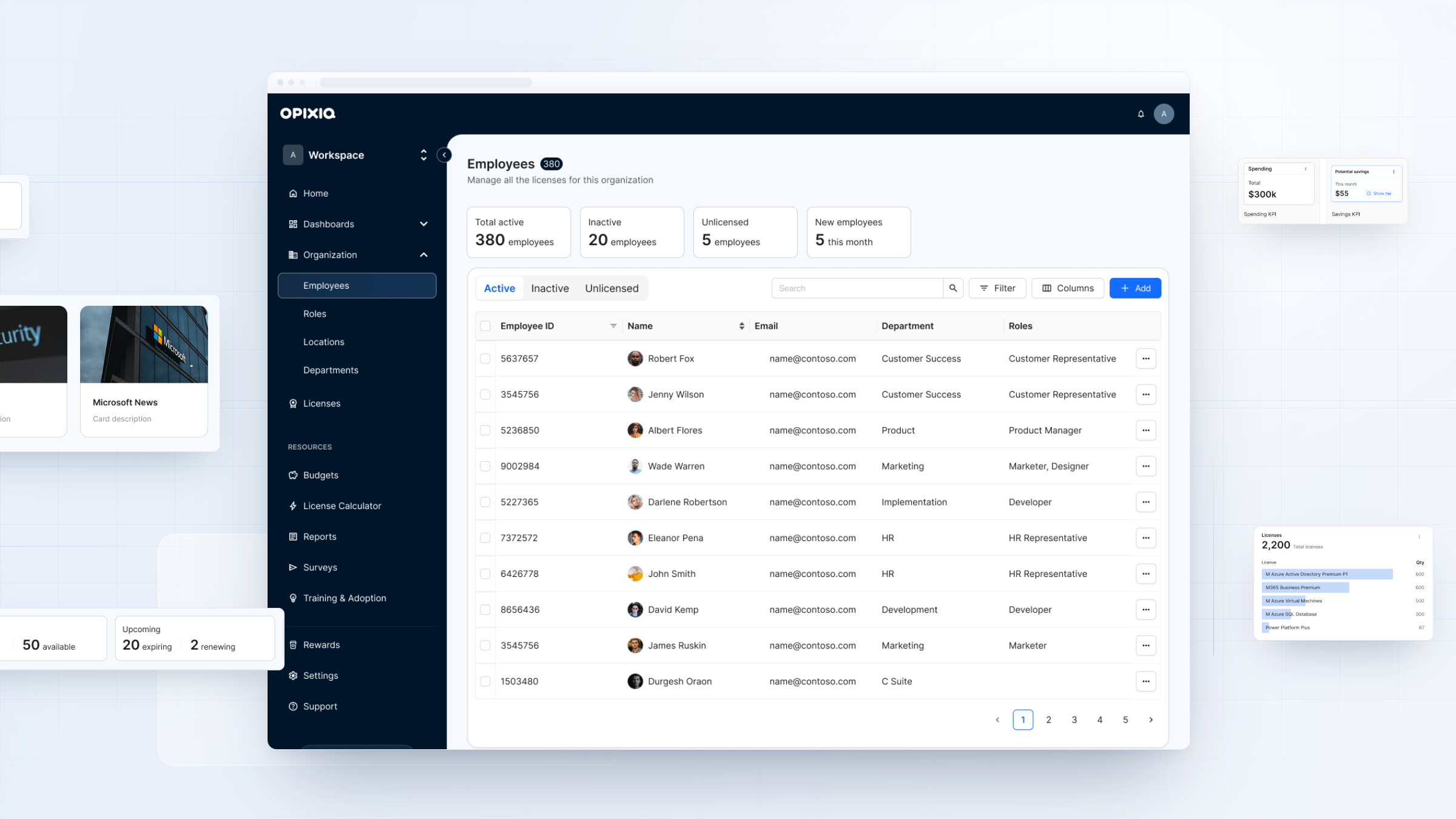
User flows, wireframes, and final UI across every area in scope, then usability testing with ten IT and MSP participants that renamed the navigation and shortened onboarding before a line of code was written.
W8
04
Embedded through development.
Source and vet development partners, then stay on for QA, delivery management, and design iteration as the build met real constraints.
Drag / scroll →
team
4-person
Product designer, researcher, research lead, engagement lead
research
22 interviews
IT leaders and executive buyers, 45 minutes each
Scope
10+ areas
Dashboards, licenses, roles, budgets, reports, store
CUT
4 modules
Marketplace, surveys, HR, and deep automations
The Client

An IT firm that decided to become a software company.

MPL Gaming player base

Troinet has been a managed IT provider since 1999, run out of Staten Island and serving businesses across New York and New Jersey. Its clients are Microsoft shops, and Troinet runs the systems underneath them: identity, devices, access, and the licensing that governs all of it.

CEO Wayne Roye watched the same problem repeat across every client. Companies pay for seats belonging to people who left two years ago, put entire departments on premium tiers they barely touch, and have no practical way to see any of it. Worse, the money wasted on over-provisioning is matched by money wasted on under-adoption: licenses people have and do not know how to use. Troinet's technicians untangled this by hand, one client at a time, and Wayne came to believe the expertise his team kept spending was a product.

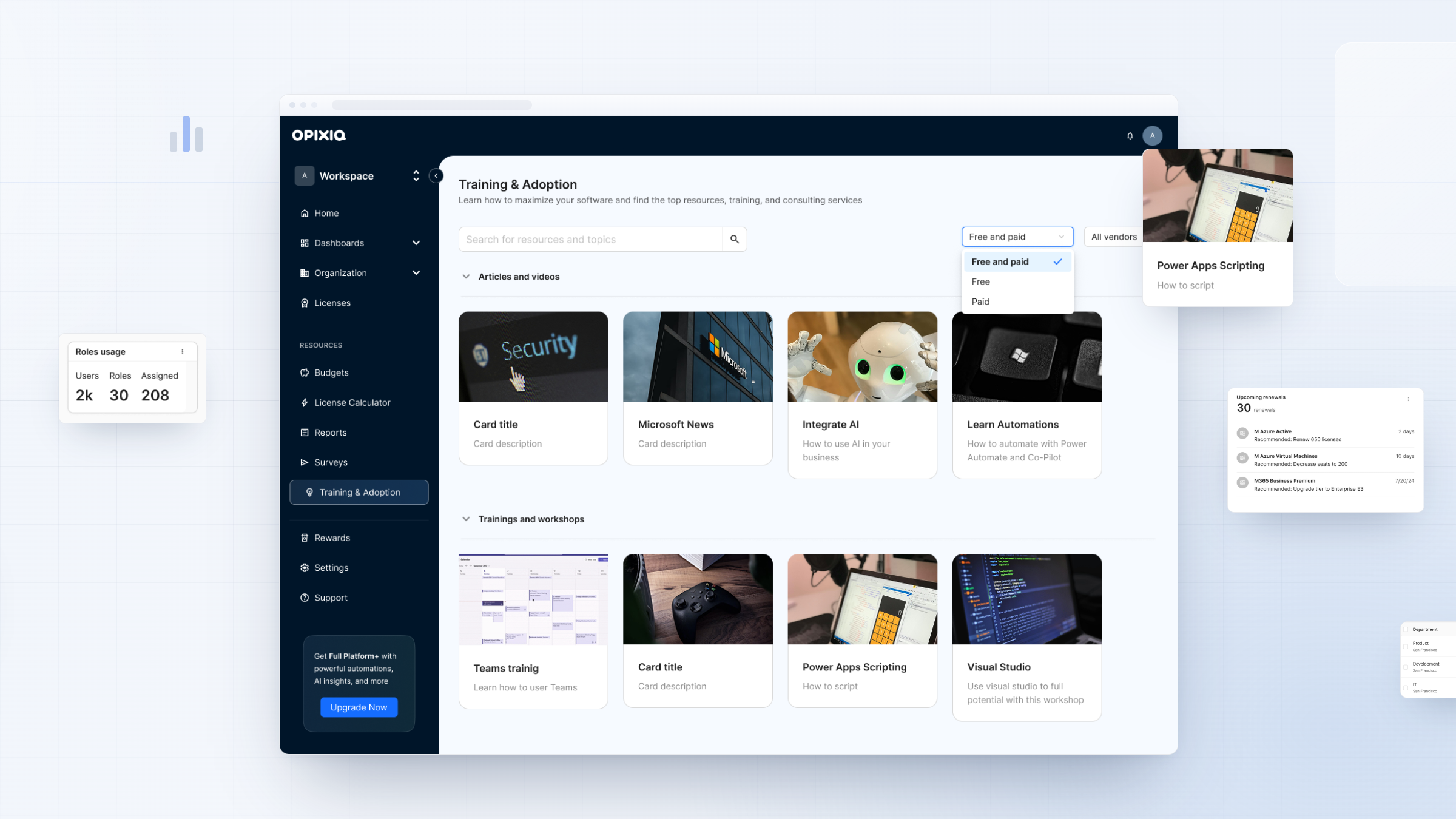
He named it OPIQ, for Operational IQ, and wrote down what it should be: automate and simplify the management of a company's operations on the Microsoft platform, for people who do not have deep technical knowledge. The commercial model was to become the client's cloud solution provider, so licenses could be bought and managed in one place, with a marketplace for training and consulting alongside.

He had never built software. He is a business operator, not a developer, and what he brought to WANDR was a handful of pages: five module names, a free tier and a paid tier, and a screenshot of a Microsoft license calculator annotated with one line. How can we do something similar but better, more flexible and user friendlier.


‍

1999
25 years of managed IT before it built any software
4 certified partners
Microsoft, Cisco, Apple, and Synology
40 Under 40
Crain's New York Business, MWBE, and Best for NYC
The Challenge

Everyone in this market sells licenses. Nobody helps you run the business.

A services firm with a genuine insight, a founder who had never shipped software, and a category where the incumbent is simultaneously the competitor, the supplier, and the reason the problem exists.

Problem 01

A licensing model nobody can read.

Microsoft sells in bundles rather than individual products, so companies routinely buy packages where half the included tools go untouched. Comparing what one plan holds against another means reading a matrix hundreds of rows deep. The complexity is not accidental, and the party best placed to simplify it has the least reason to.

Problem 02

The real system of record was a spreadsheet.

Thirteen of twenty-one research participants were managing licenses in Excel, supplemented by individual software audits. Those sheets held no user logins, no contract owners, and no renewal periods. The competitor was never really Microsoft's admin center. It was a spreadsheet and a great deal of manual work, punctuated by untracked free demos that participants called space junk, quietly converting into payments nobody approved.

Problem 03

The category was crowded with people selling the same thing.

Appriver, Pax8, Sherweb, GoDaddy, Microsoft itself. As Wayne put it, buyers do not much care who they buy from, because everyone just sells the license. Competing on price or catalogue was unwinnable. The product had to compete on what happens after the purchase.

Problem 04

Every recommendation looks like an upsell.

Customers assume that any tool recommending licenses is trying to sell more of them, because that is exactly what they believe is happening to them already. A recommendation engine that could not prove its reasoning was worth nothing.

Problem 05

Connecting the platform means handing over the keys.

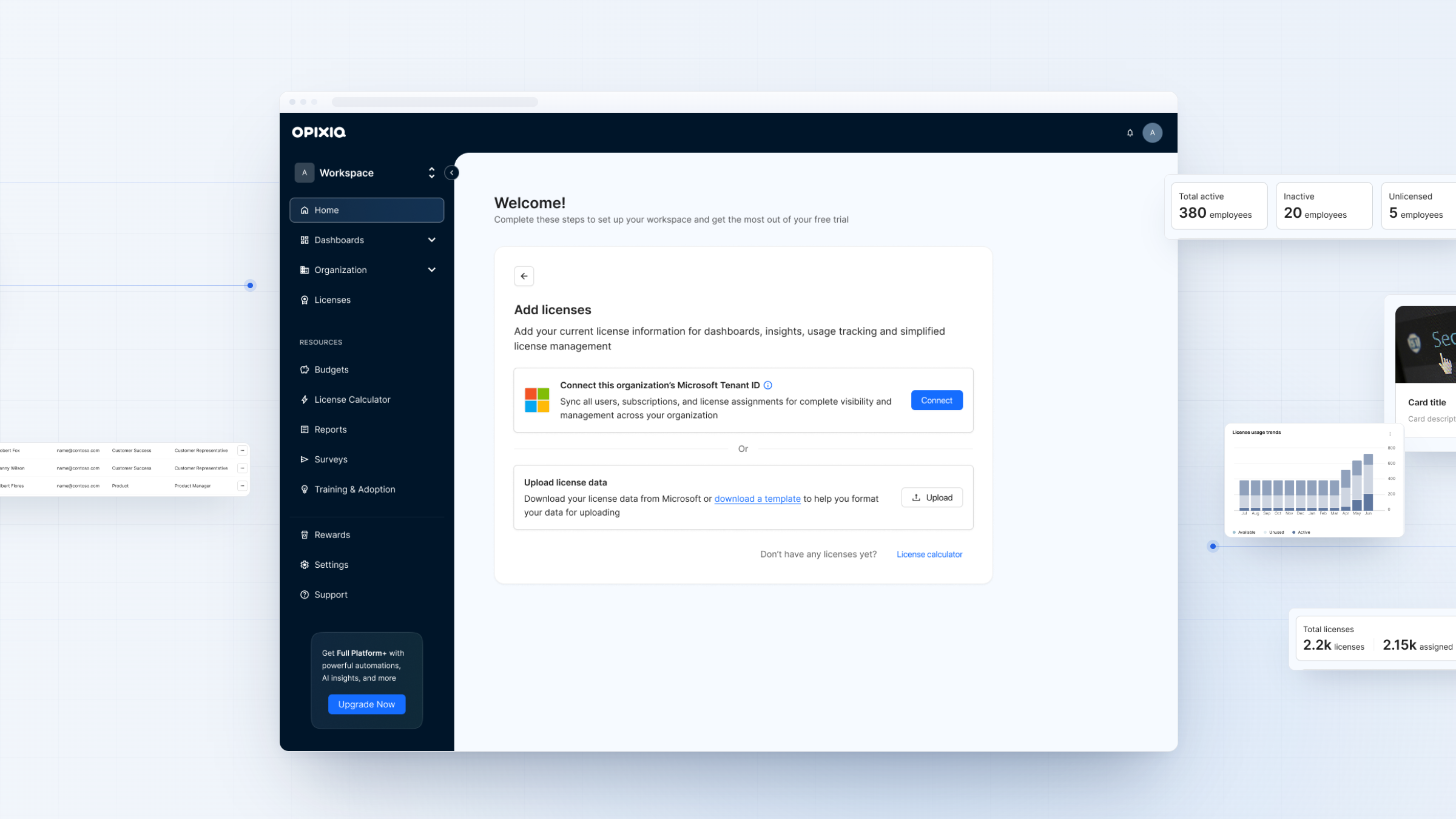
A Microsoft tenant connection gives the platform visibility into every user in the company. Research was blunt about the consequence: the more sensitive the data involved, from payment details to live network access, the higher the bar a buyer sets before connecting anything.

Drag / scroll →
Our Role

Design it, then stay until it exists.

‍

01
User research, 22 interviews with IT leaders and executive buyers
02
Competitive analysis across SAM platforms and license distributors
03
A ten-stage software buying journey map, with tools, stakeholders, and pain points
04
Information architecture for the full platform
05
Scope definition and MVP negotiation
06
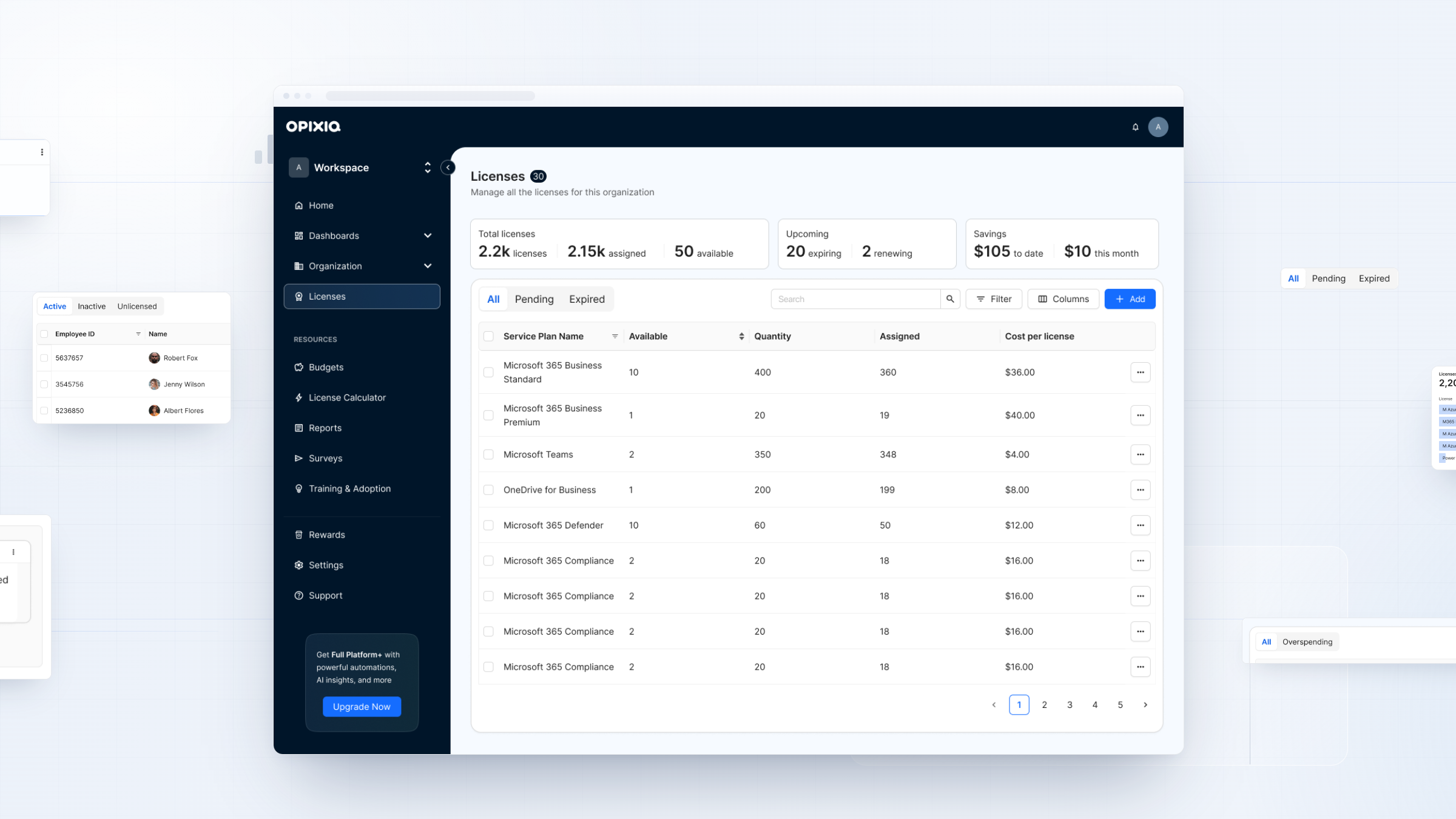
User flows, wireframes, and final UI across every area in scope
07
Prototype usability testing, 10 sessions, and a ranked design action plan
08
Interim brand identity, so design could move before naming settled
Research

Twenty-five interviews to find out whether the idea survived contact.

Twenty-two interviews with twenty-one participants, in 45-minute one-to-one sessions: IT service desk managers, managed service providers, Microsoft service providers, CTOs, CIOs, and tech company founders, all at companies of 50 employees or more. The goal was to find the pain in software selection, map how a purchase actually gets approved, and validate the calculator concept before designing it.
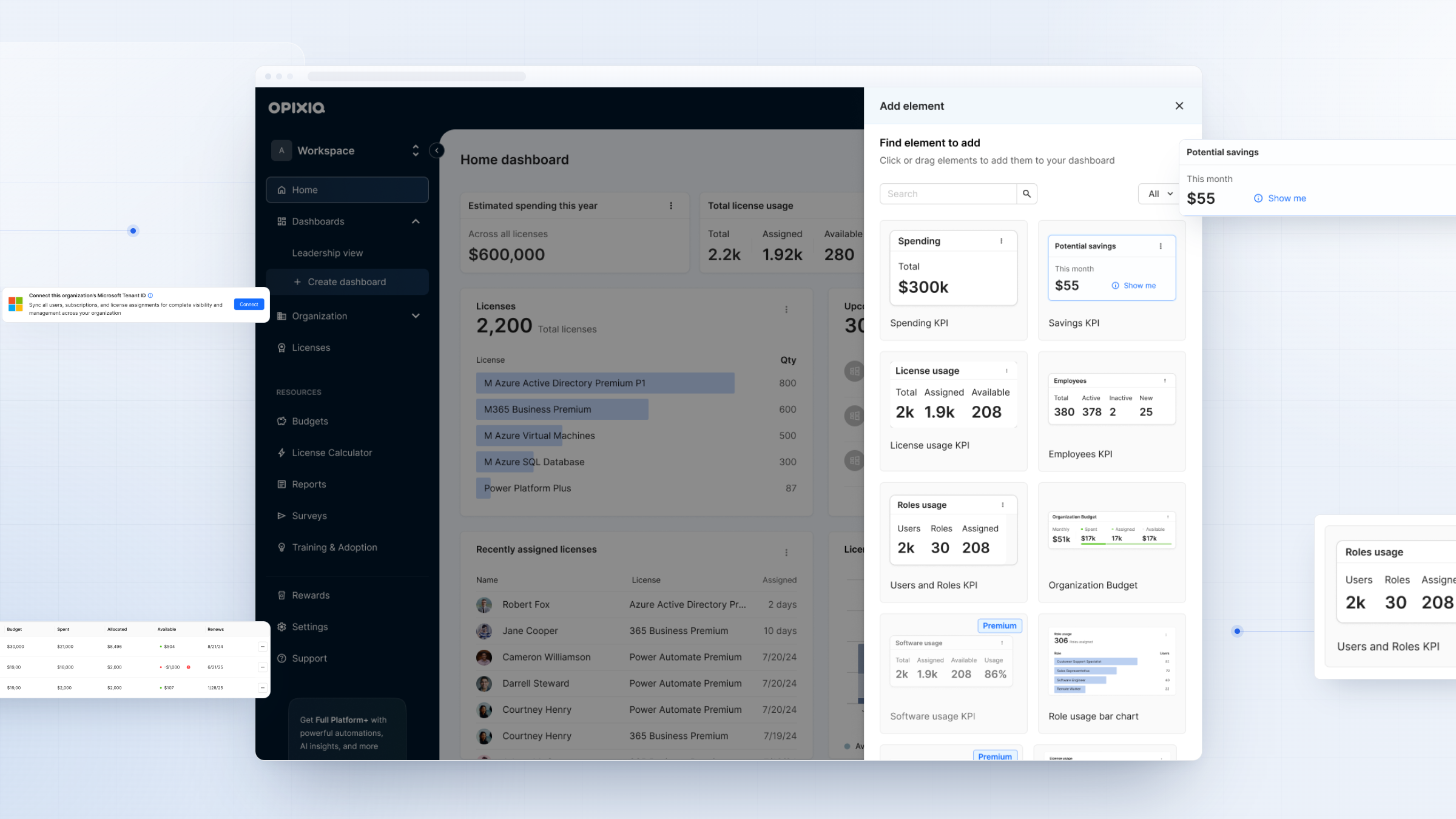
It came back with a requirements list that shaped the architecture directly: thresholds users set themselves, with alerts when spend or usage crosses them; email notifications for contracts, vulnerabilities, and recommendations so people stay informed without opening the tool; integrations with Slack, Teams, Excel, and the wider software estate including Jira, ServiceNow, and Salesforce; provisioning driven by HR data so accounts create and delete themselves; granular categorization by license type, industry, and profile with role-based access controls; and dashboards both technical and non-technical users can configure, with alerts and role-specific recommendations on the first screen and depth available on demand.

01
License management was running on spreadsheets.

Excel

Teams tracked licenses in Excel sheets and custom-built systems holding no user logins, no contract owners, and no renewal periods. One participant: “There's a lot of legacy software here that we've been paying for that hasn't been used. We kind of have to just audit it and see when was the last time it was accessed.” The competitor was never Microsoft's admin center. It was a spreadsheet.

02
Half this market outsources the problem entirely.

15 vs 6

Fifteen participants managed licenses internally. Six were managed service providers doing it for client companies. Different administrators, different viewers, different failures: internal teams lose track of demo licenses and departed staff, while MSPs cannot get current usage data from clients and so cannot advise them. That split drove workspaces, role-based access, and a transparency layer between provider and client.

03
The differentiator

Foresight

Comparing products is already handled by ordinary research or ChatGPT. What nobody could get was forward-looking information. As one CTO put it, there is “nothing similar to a calculator that can automatically give you a competitive analysis, insights, recommendations, all in one place.” Another described what good would feel like: “I want to sleep well at night. I don't want to fight with my tool to get it to understand my environment.”

Administrator and viewer are two different products.

Persona 01
Casual gamer persona

The administrator

Internal IT, MSP technicians, project managers. Tracks logins and usage, assigns and revokes licenses, provisions new hires. Owns the spreadsheet today and will not accept a tool that does less than they already have.

Primary user
Deep domain
Wants automation
Persona 02
Committed player persona

The executive viewer

CFO, CIO, CEO, VPs, procurement, HR. Needs ROI, compliance, financial reporting, and budget justification. Viewer access rather than edit rights, and all of it in plain language.

Approves budget
Reads, does not edit
 Wants proof
Persona 03
Office-context player persona

The Strategy

Give value before asking for anything.

‍

The study closed with five recommendations to the client: customize the dashboard by role, let people experience the core benefit before buying, automate the time-consuming tasks, give users control over license billing, and keep comparison but drive it with personalized recommendations. Four design decisions carried them into the product.
01

Lead with the calculator, and make it free.

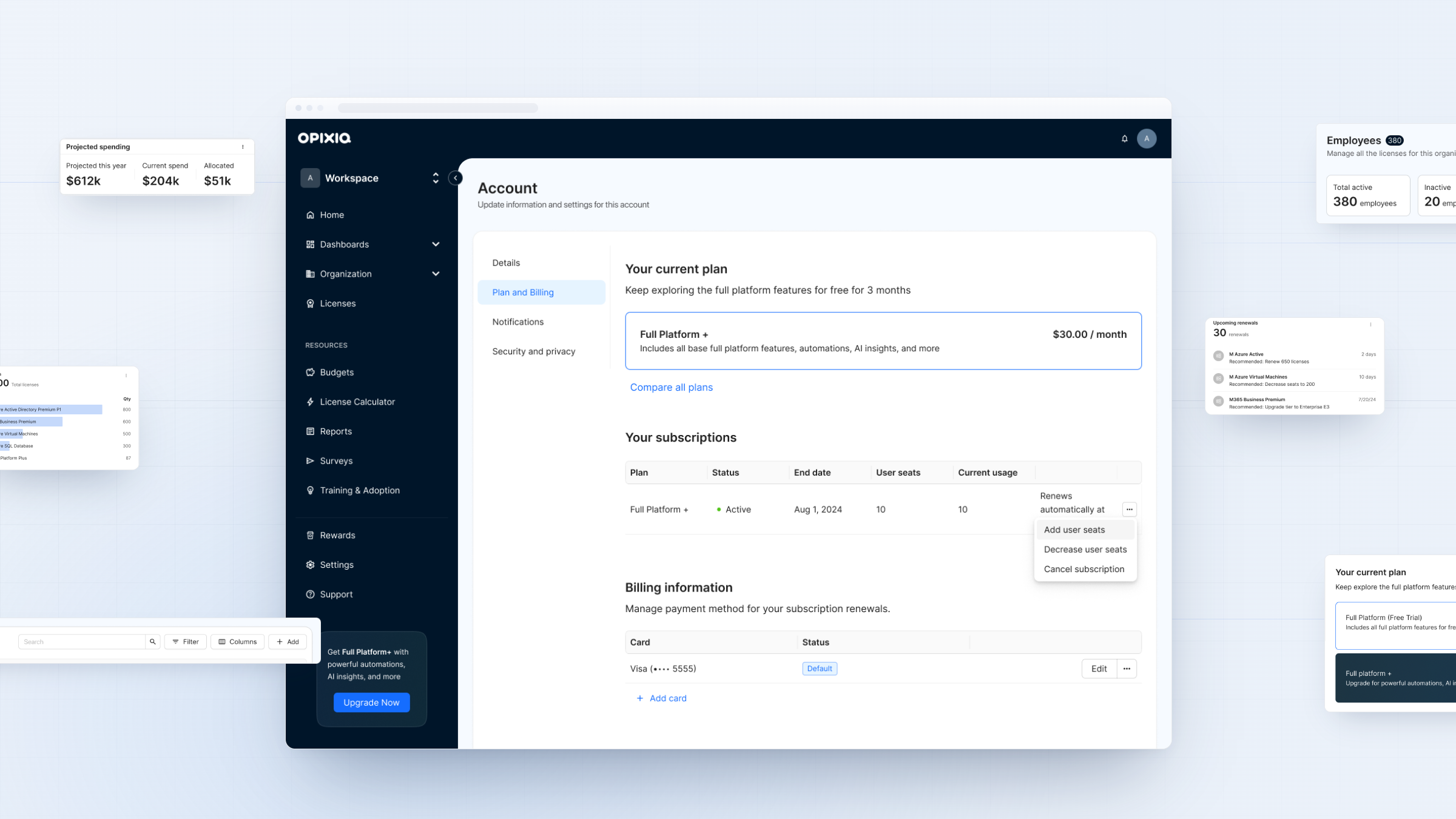
Design started on the license calculator rather than the dashboard, because research had already shown that buyers evaluate on free trials before they commit. Upload or connect, define your roles, get costed recommendations, all in front of the signup wall. A user who walks away with only that still got something worth having. A user who stays carries everything they just built into the platform. The free tier is the calculator and a basic dashboard; the paid tier adds cost analysis, auto-provisioning, and scheduled license changes.

02

Make roles the spine

A role bundles what a group of people actually needs: security level, communication tools, analysis tools. Licenses attach to the role rather than to individuals guessed at one by one. Hire fifty people into a role and they provision automatically. Edit the role and the change cascades to everyone in it. This is the piece that makes OPIQ something other than a reskin of the Microsoft admin center.

03

 Forecast, do not compare.

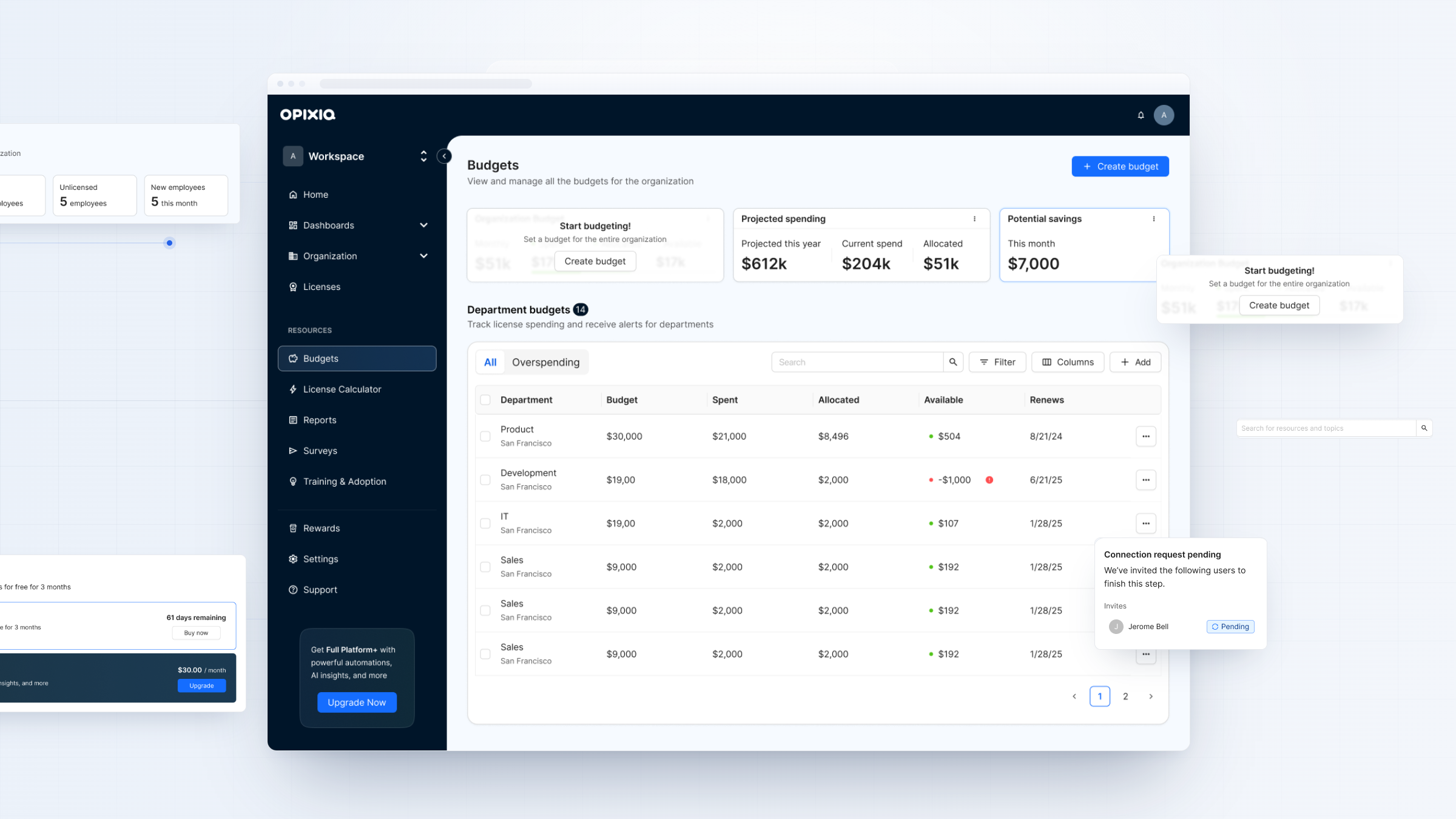
Research killed the obvious feature. Nobody needed another product comparison engine. What they needed was the next twelve months made visible: renewals coming, contracts changing, prices moving, budgets about to be crossed. Reporting was built to look forward rather than to summarize what already happened.

04

Constrain the customization.

Microsoft answers complexity with a switch for everything, buried three levels into settings, and SAP answers it with density nobody wants to read. We went the other way: preset dashboard widgets, predefined role buckets drawn from research, and deliberate limits on what users configure. Breadth, without handing anyone a blank canvas.

Principle 01 of
→ Continue scrolling
THE KEY INSIGHT

The market was not short of tools. It was short of tools anyone could read.

Eight of twenty-one participants already ran a real software asset management platform. Thirteen were still on Excel. Both groups described the same failure in different words. The platforms were overwhelming, or ugly, or technical enough that only a specialist could pull a report, or simply silent on the one question that mattered: is anybody actually using this. Capability was never the gap. Comprehension was.
Credibility was the other half. OPIQ was asking customers to trust a recommendation engine, from a small company, in a category where they had learned that recommendations mean somebody is selling them something, and to hand over administrative visibility into their entire workforce in order to receive those recommendations at all. Every decision that mattered traced back to those two things. Rationale attached to every suggestion. Recommendations sourced from the customer's data rather than the platform's margin. Plain language for the executive who signs. A free calculator that gives before it takes. The features were the straightforward part. Being understood and believed was the product.

MPL redesign surface
Screen 01 of 08
→ Scroll horizontally
Outcomes

What the work produced.

Troinet started with an idea and no software. It finished with a researched, tested, built platform and a founder who now knows what shipping one takes.
Before a line of code was written, the design went in front of ten IT and MSP participants. Ten out of ten misread one navigation label, so it was renamed. The template step in onboarding was cut mid-study, and the remaining participants moved through faster. The copy on the Microsoft connection, the highest-stakes decision in the product, turned out to be telling people the opposite of the truth and was rewritten. An invite control was added at the steps people could not finish alone.
In 2025 the license calculator became the platform's AI surface: baseline recommendations against predefined role buckets, then a chat that interrogates them and recalculates against MSRP. Two rules held it together. Every output carries its rationale, drawn from the customer's own data, because an unexplained recommendation in this category is indistinguishable from an upsell. And every AI path has a non-AI equivalent, so the calculator still works as a builder without the chat ever being opened.

01 · AI
Integrated AI
Built into the calculator, not bolted on as a chatbot
02 · SPEED
12 weeks
From notes to tested design
03 · VALIDATED
10 of 10
Users tested the design before development began
04 · PARTNERSHIP
2 years
WANDR embedded well past design

OPIQ is built and moving toward a soft launch with initial customers. No adoption or performance metrics exist yet. Usage and savings figures should be sourced from Troinet once the platform is live.

Client Voice

In their words.

“
I came to WANDR with a handful of notes and an idea I had been carrying around for years. They were able to make exactly what I had in my mind, and then they went further. The research told us who we were actually building for, and the design finally gave me something I could put in front of people. By the time we finished I had a bunch more ideas, and a designer I would have happily kept forever.
Replace · First Last
Title · MPL Gaming
Up next

Another story worth reading.

Buildbox case study preview
Next Case Study

Vectrix

Cybersecurity - UI/UX Design
·
SAAS
Read next case