Truelytics
Five days from go-ahead to a full mobile pass of the 2.0 web app, handed to their developers as production Sketch files. Truelytics is now part of Envestnet.
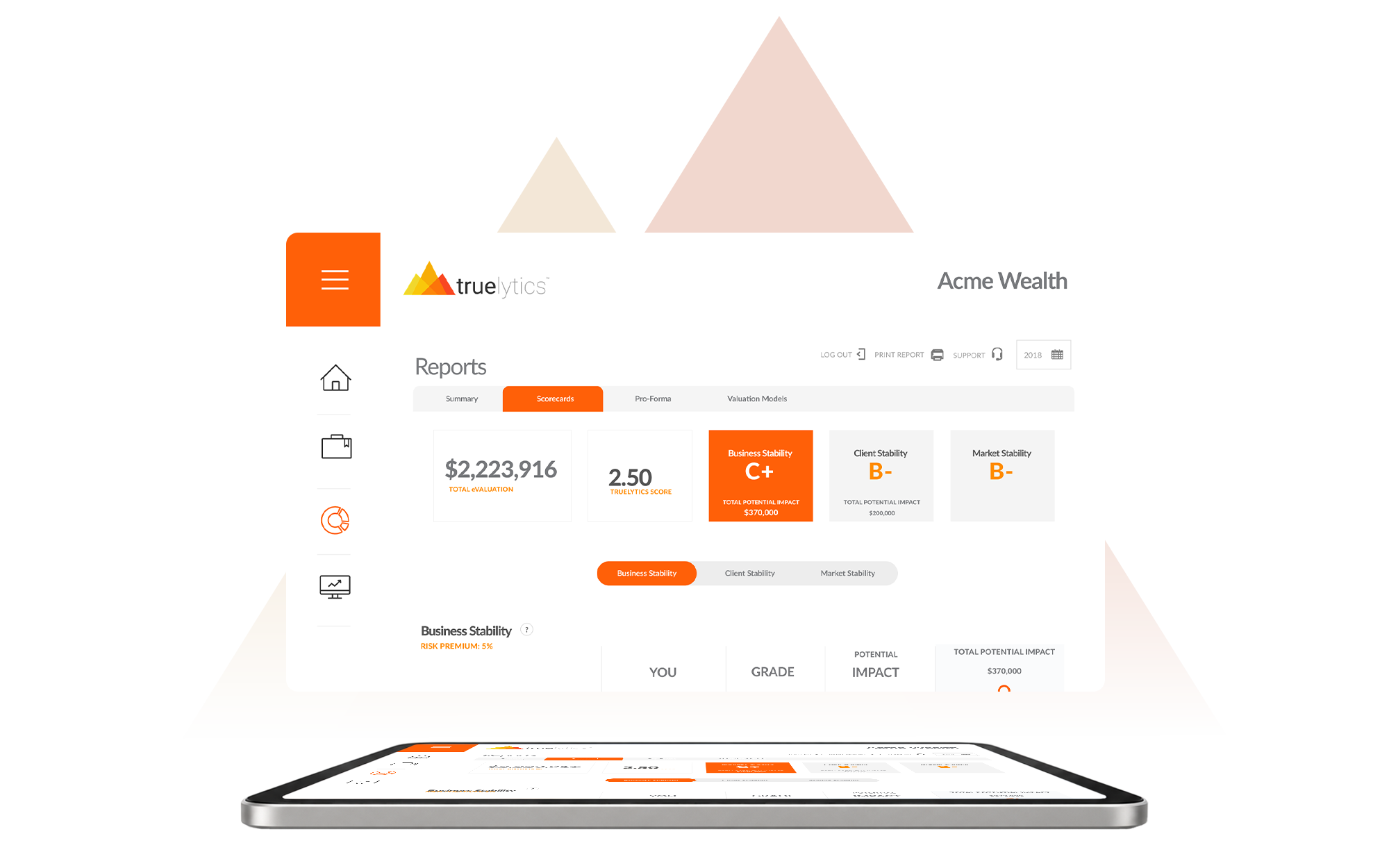
Five days. Two breakpoints. One clean handoff.
The scorecard behind a financial advisor's whole business.
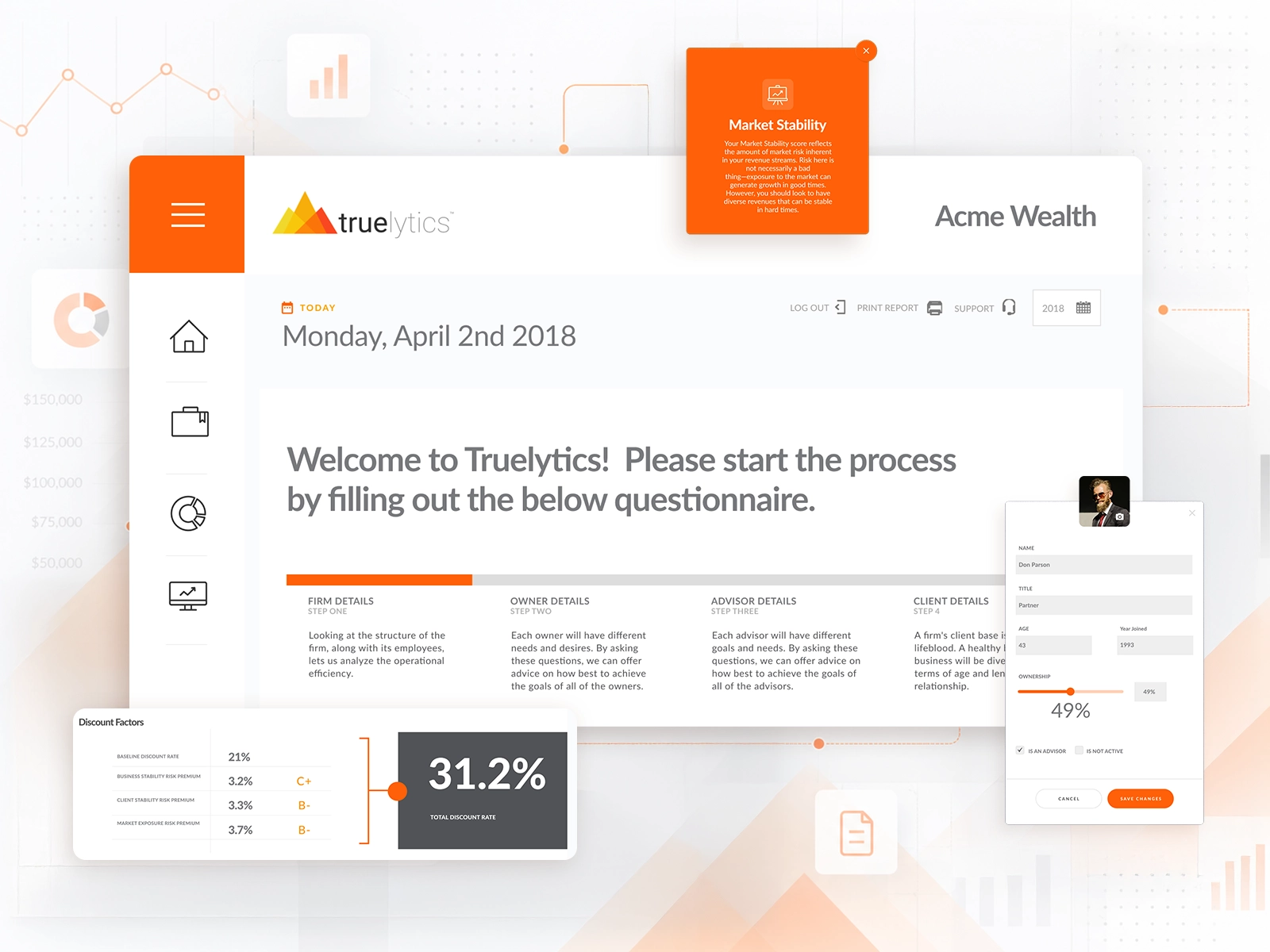
Truelytics is a business intelligence platform for wealth management. Its software grades the health of an advisory practice against close to fifty performance indicators, benchmarks it against comparable firms, and produces a valuation, so an advisor can see what their business is actually worth and what is holding it back. By early 2018 the platform was in use at firms including Carson Wealth, ProEquities and Cetera, and a partnership with Advisor Group put it in front of more than 6,000 registered representatives.
That spring the company was finishing version 2.0, a rebuilt platform with a new interface, white-label support and enterprise content management, scheduled to launch in May. The designs existed, the developers were building, and the whole thing had been drawn for a desktop browser.
A launch weeks away, and a product that only existed at desktop width.
Truelytics had built a data-dense platform for an industry that works from client meetings, conference floors and airport lounges. Version 2.0 was designed for exactly one screen size, and the release date was not moving.
The 2.0 designs stopped at the browser.
Every screen in the file, from the performance scorecard to the valuation summary, existed only as a desktop layout. An advisor who wanted to check a number between meetings had nothing to open.
Tablet was assumed to be a smaller web app.
The working assumption on the client side was that tablet could simply be a shrunk-down version of the desktop interface. Dense benchmark tables and multi-column scorecards do not survive that treatment.
Engineering was mid-build and needed files, not a rethink.
The developers were already constructing 2.0. Anything that arrived as a conceptual redesign rather than as buildable layouts would have cost the release its date.
No design function of its own.
Truelytics ran lean, with product and marketing owned by a single executive and engineering focused on shipping. There was no internal design capacity to add two breakpoints in the middle of a launch.
A fixed scope, run at the speed of a launch.
Decide what matters on a phone, then draw it.
Take the smallest screen first.
Mobile was where the product simply did not exist, so it was designed first and delivered on its own rather than waiting for a complete responsive set. The developers had something to build from within the week.
Give tablet its own layout.
Tablet was treated as a distinct breakpoint with its own column logic and its own decisions about what stays visible, because a scorecard built for a wide monitor loses its comparisons the moment it is compressed.
Design for the handoff, not the presentation.
Deliverables were structured as production Sketch files their engineers could pull from directly, with InVision prototypes alongside them so stakeholders could review the same work without touching the build.
Responsive design on a data product is not layout. It is editing.
A dashboard carrying close to fifty indicators can afford to show everything at once on a desktop monitor. On a phone it cannot, and no amount of stacking or scrolling makes that untrue. The real work in converting Truelytics was deciding, screen by screen, what an advisor actually opened the product to find out, and letting everything else move down the page. That is a product judgment, not a resizing exercise, which is why the same pass that produced the layouts also produced a list of improvements worth making to the desktop version.
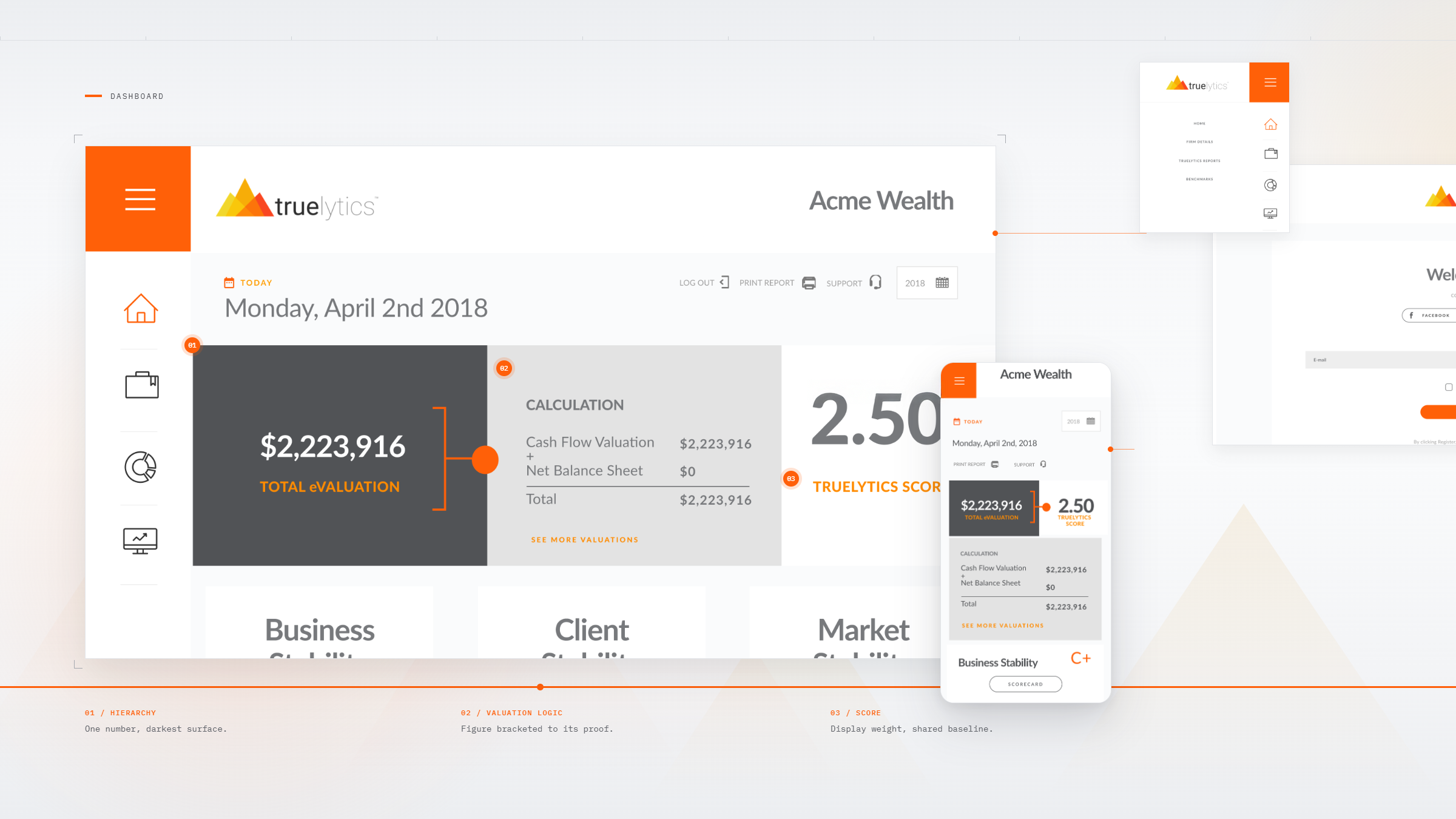
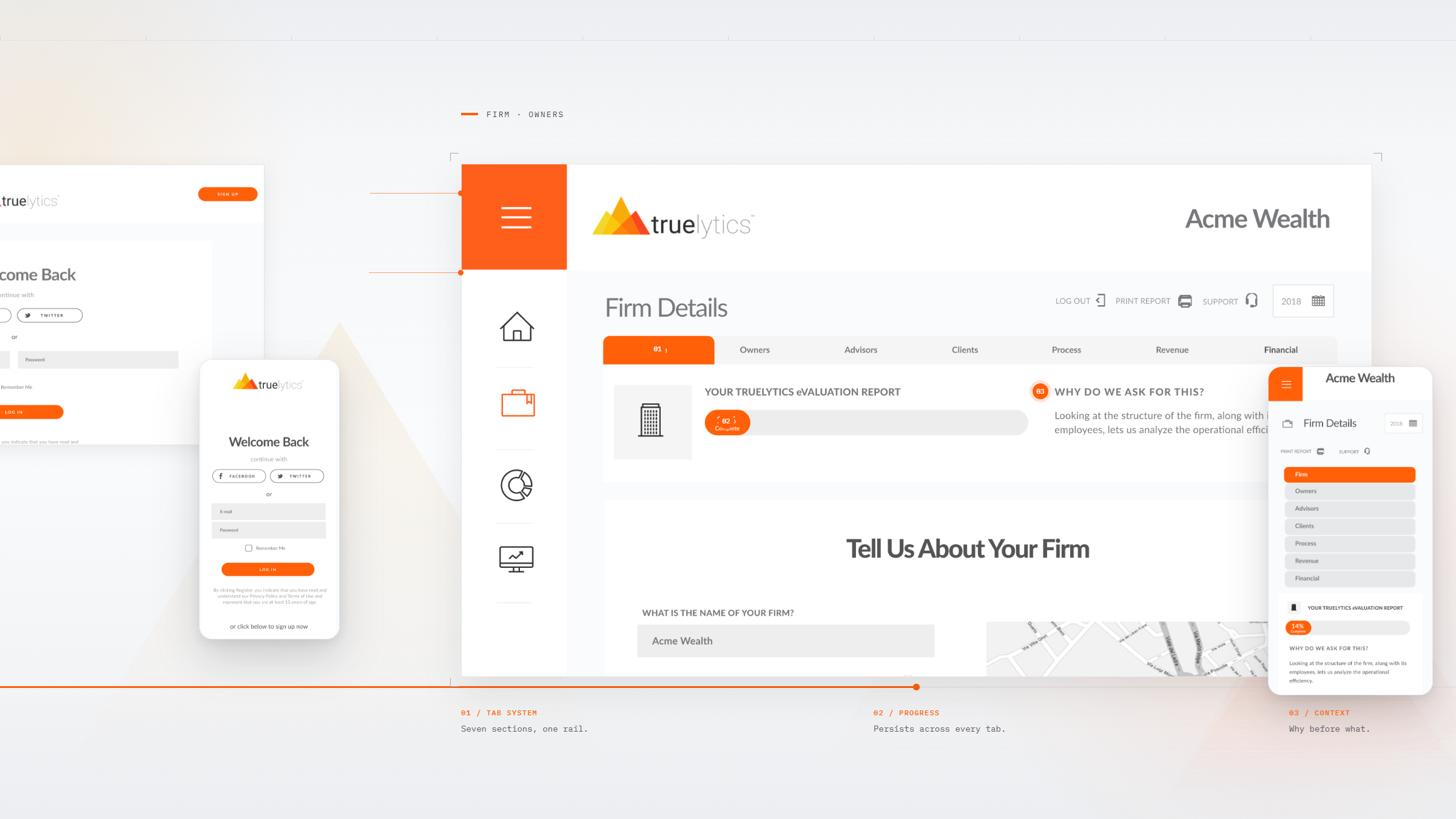
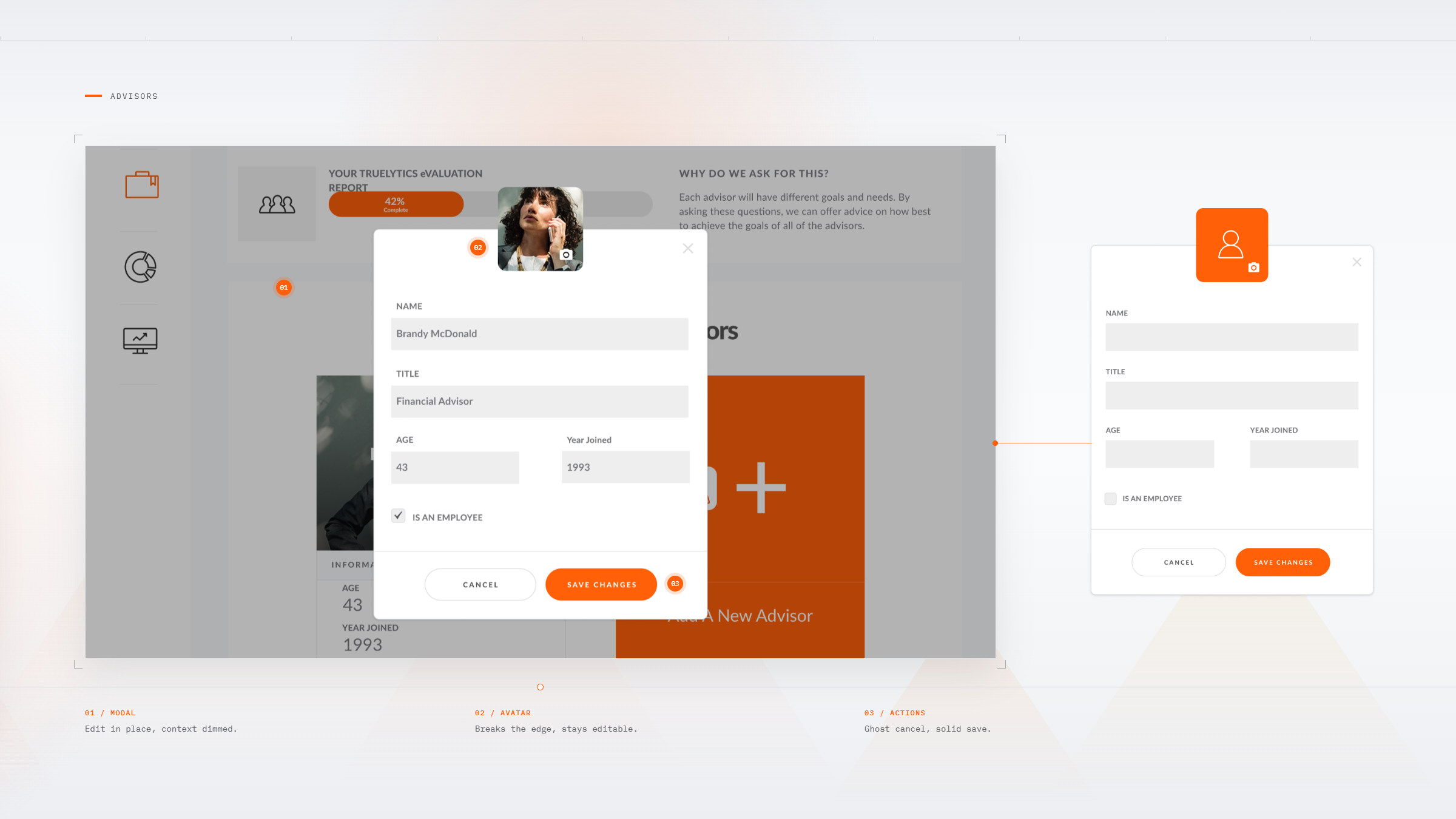
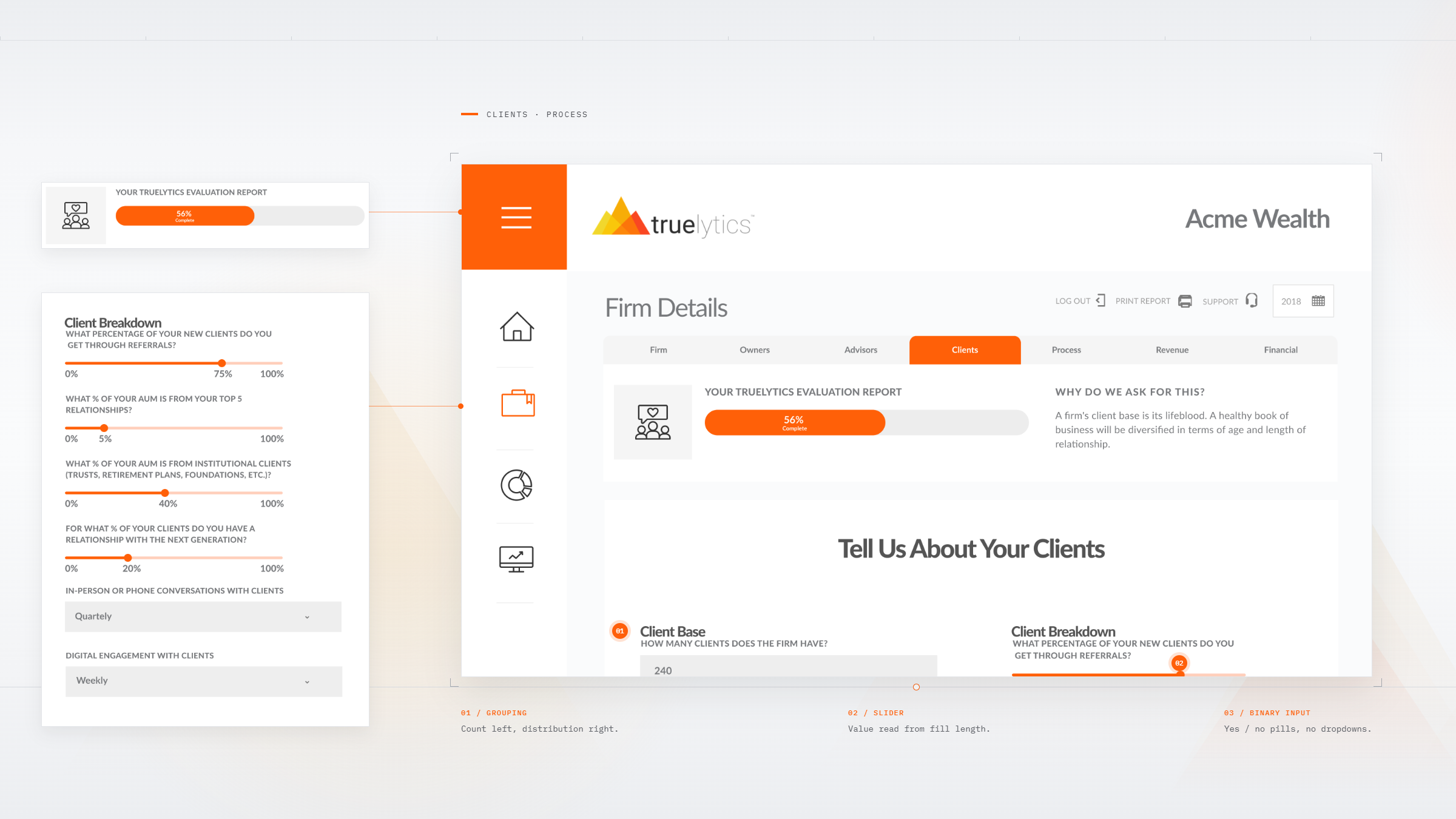
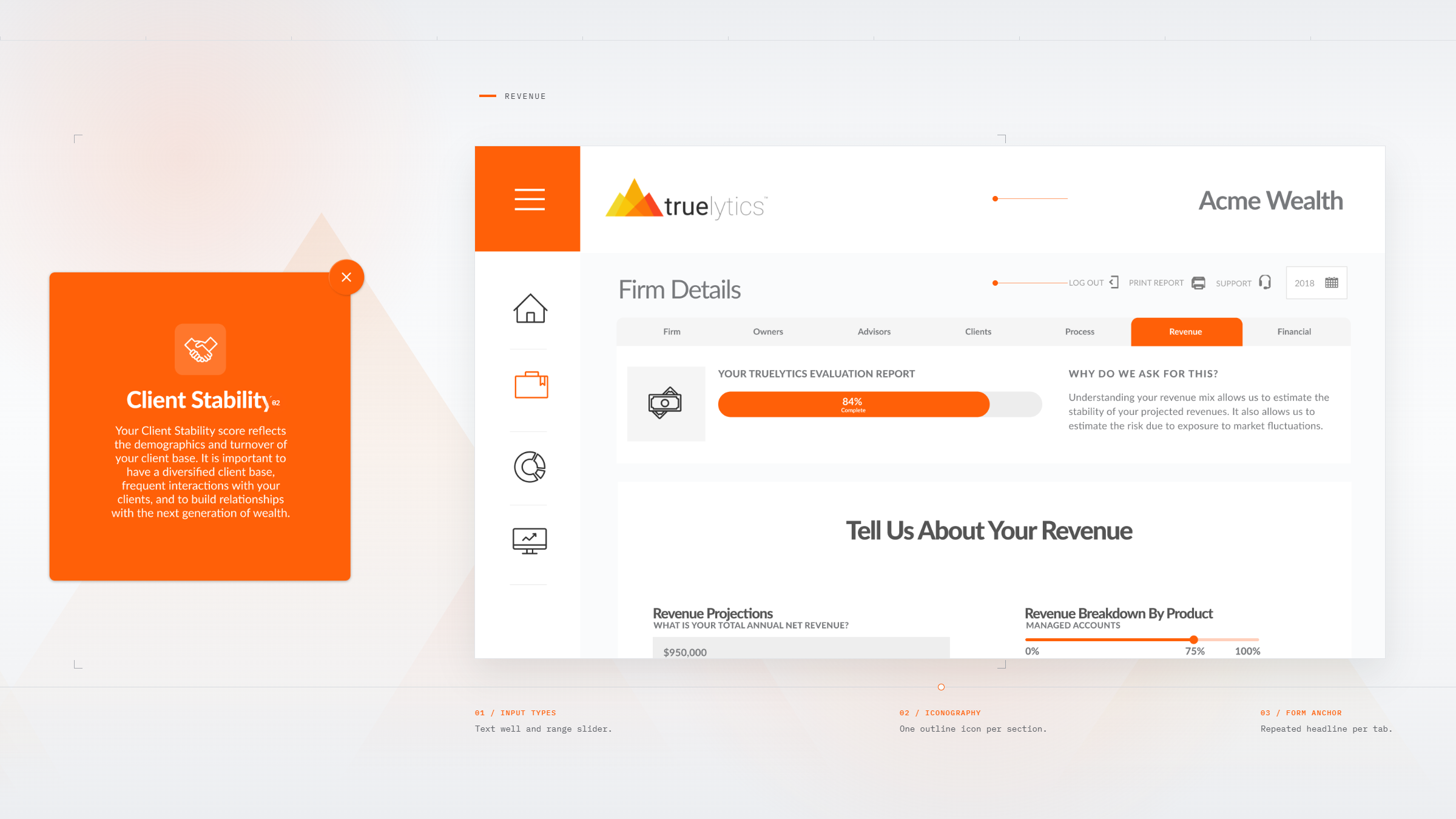
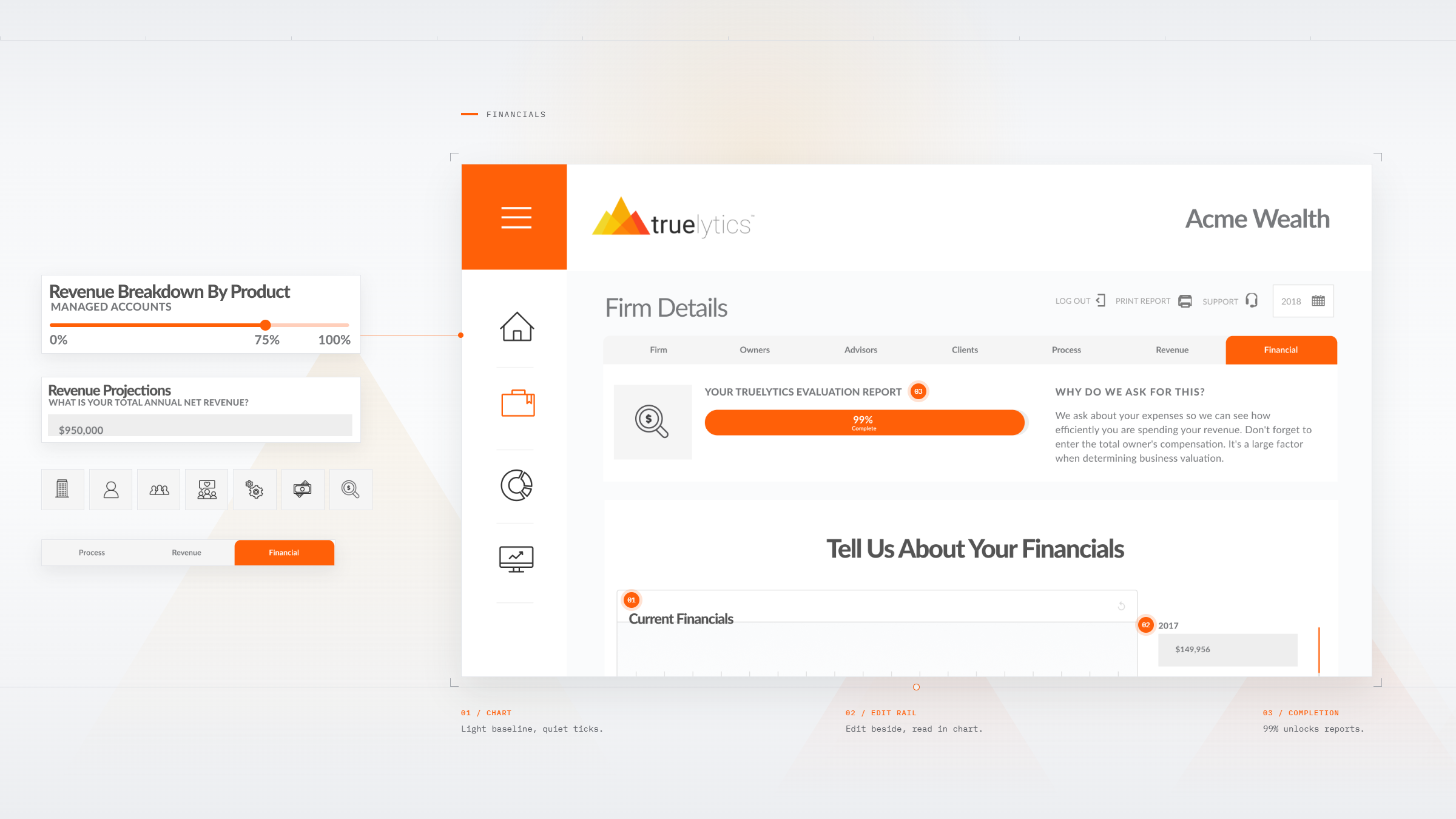
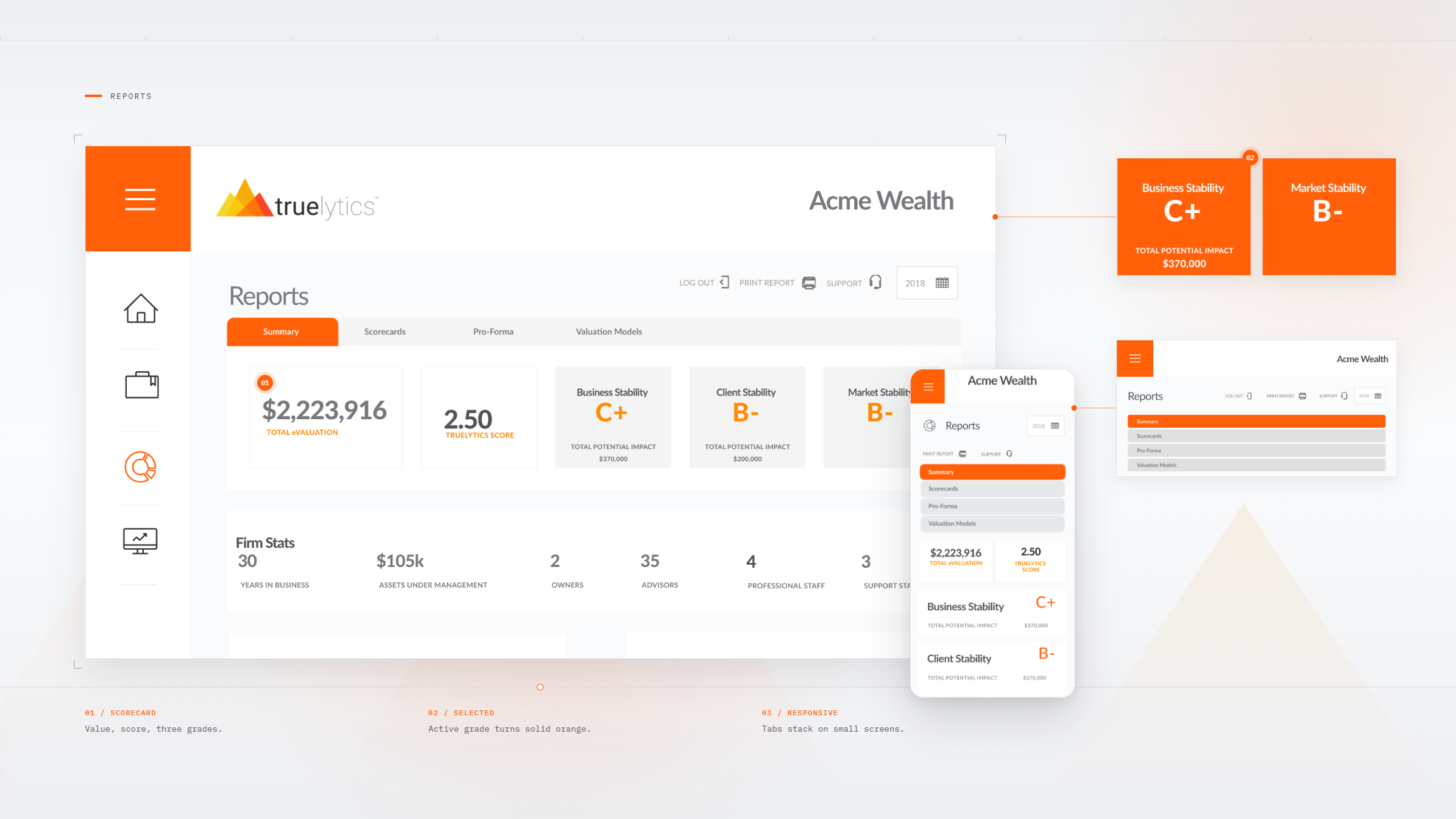
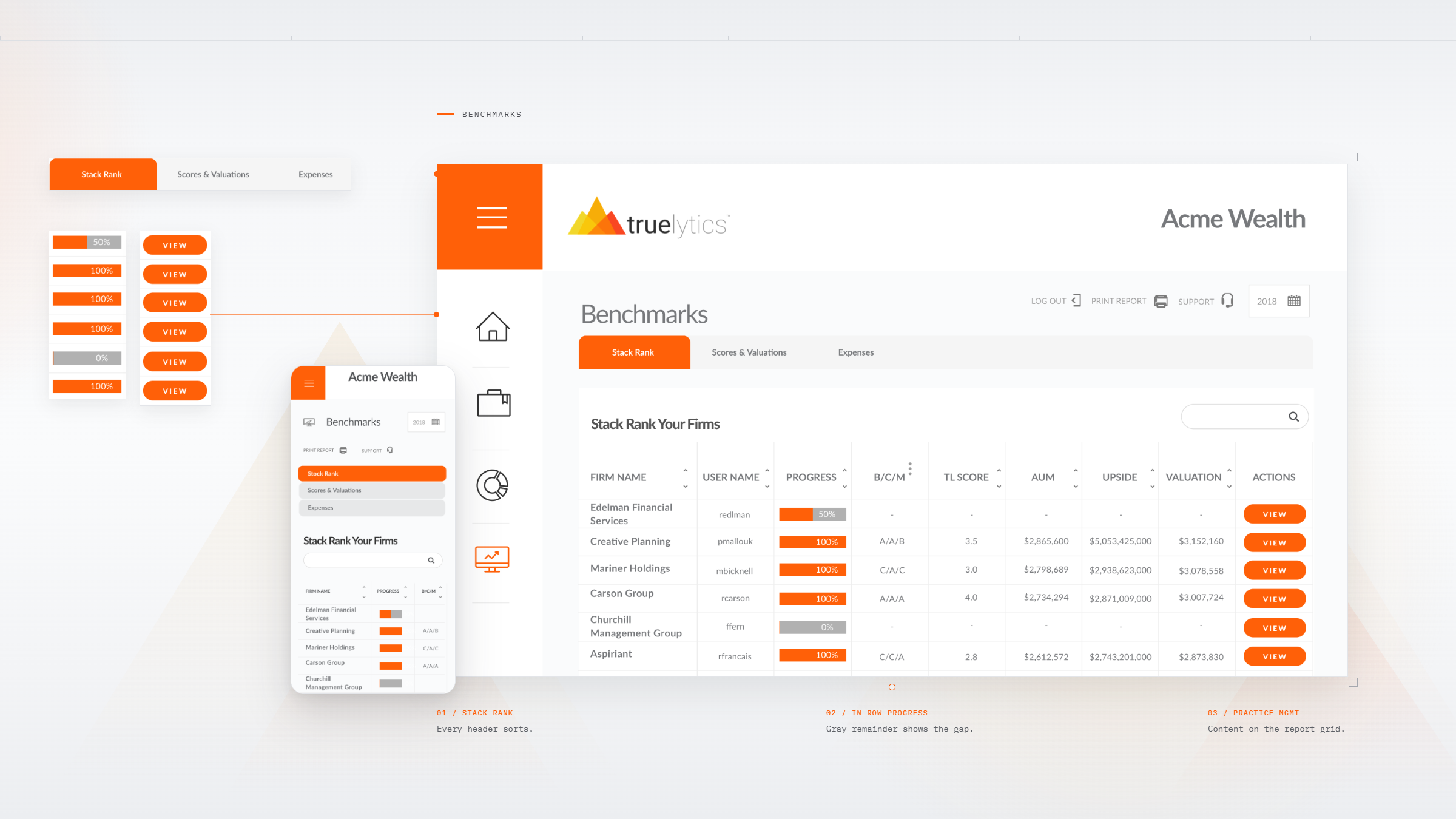
What the engagement delivered.
Three weeks after the first email, Truelytics' 2.0 platform had mobile and tablet layouts its developers could build from, ahead of the release.
In their words.
We were weeks out from launching version 2.0 and the entire platform still only existed at desktop width. My developers needed responsive layouts they could build from, and they needed them without a redesign that would push the release. Wandr scoped it in two days and had the full mobile pass back to us inside a week, then came back with tablet designed properly instead of shrunk down. What I did not expect was the list of improvements they flagged on the way through. It was the least disruptive way I have ever added two screen sizes to a product.