Persona 01

The portfolio lead.
Brings loan data in and evaluates the book. Lives in Excel today and needs messy, inconsistent spreadsheets to import cleanly.
Excel-native
Portfolio
Data import
Veracity
Wandr rebuilt Veracity's design operation from the inside, turning a three-month trial into an open-ended retainer and doubling the embedded team.
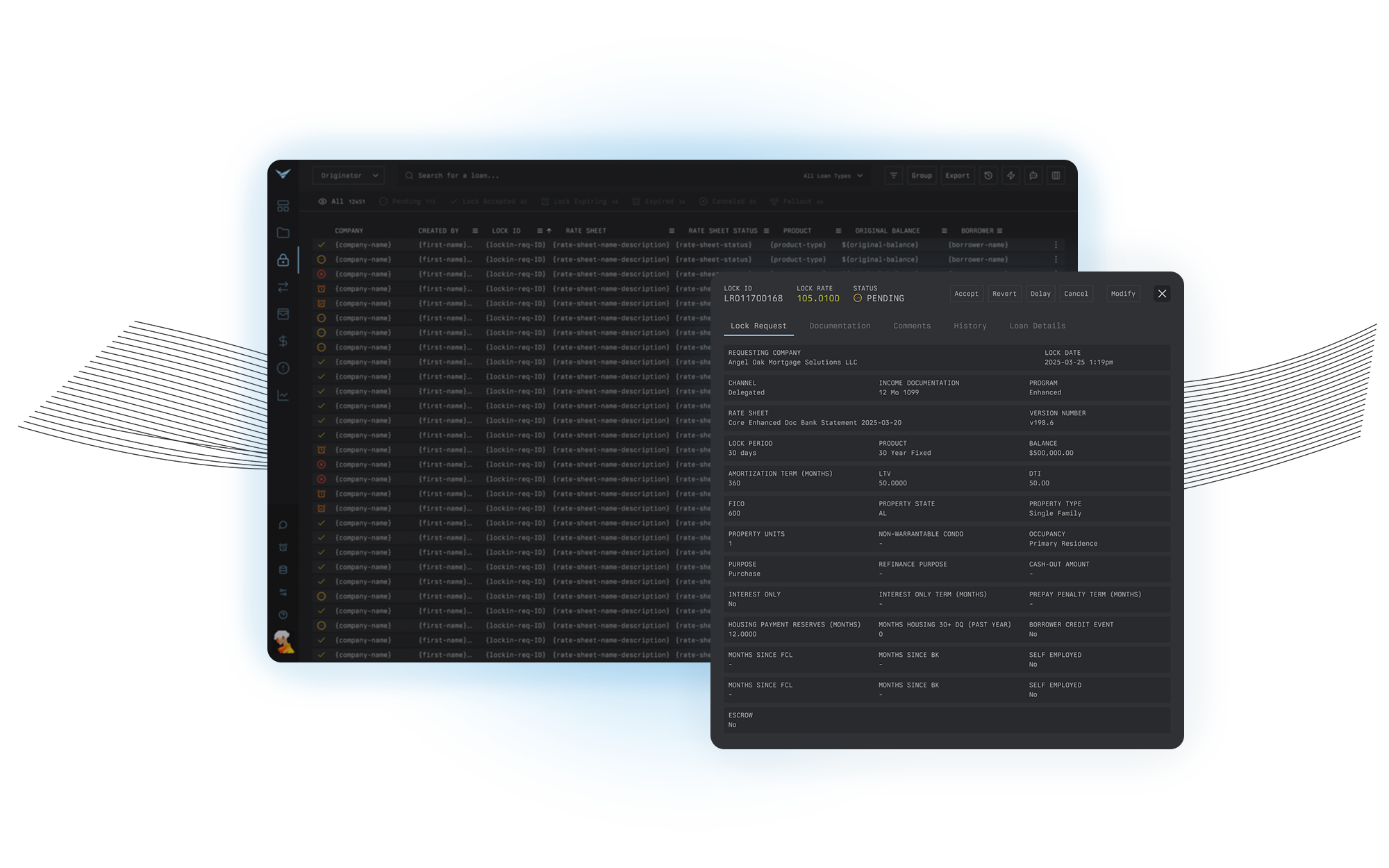
A hard domain. No process. A design operation, rebuilt.
The technology moving loan trading off spreadsheets.
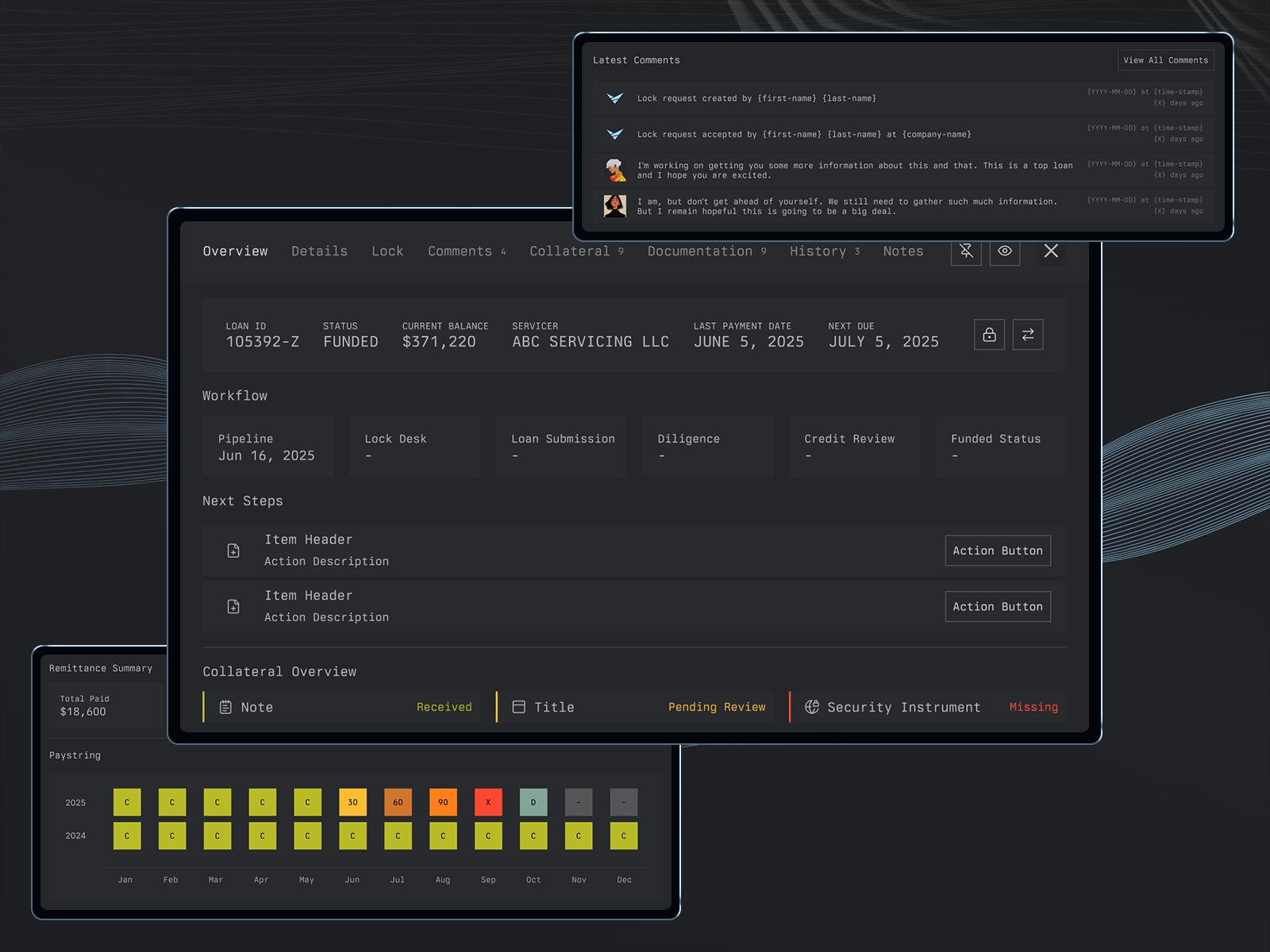
Veracity Loan Technologies is building a digital platform for trading and managing whole loans, a multi-billion-dollar corner of the mortgage market that still runs largely on email and Excel. Its first tenant is eRESI Mortgage, and it is led by president Tim Wang and CTO Eric Barrow.
The ambition was clear and the domain was brutal, but the company was early: a small, fast-moving org with little design maturity, no product documentation, and an in-house design seat that was not delivering.
A design operation that had to be built, not inherited.
An early-stage org building in a domain most designers never touch, with little documentation and no validation culture to lean on.
Requirements lived in conversations, not documents. Design became the only place decisions got captured, so the team made user flows the de facto product spec.
With no research or validation culture, the org used design iterations to work out what to build, so scope kept shifting even after handoff.
Two product owners often worked the same area at once. Wandr flagged it and helped split ownership so effort stopped doubling up.
The existing in-house design resource was not keeping pace with the product, so Wandr stepped in to own product design and set the tempo.
See how the platform changed, from a rigid, single-tenant tool of one-off screens into a cohesive product on a bespoke design system.
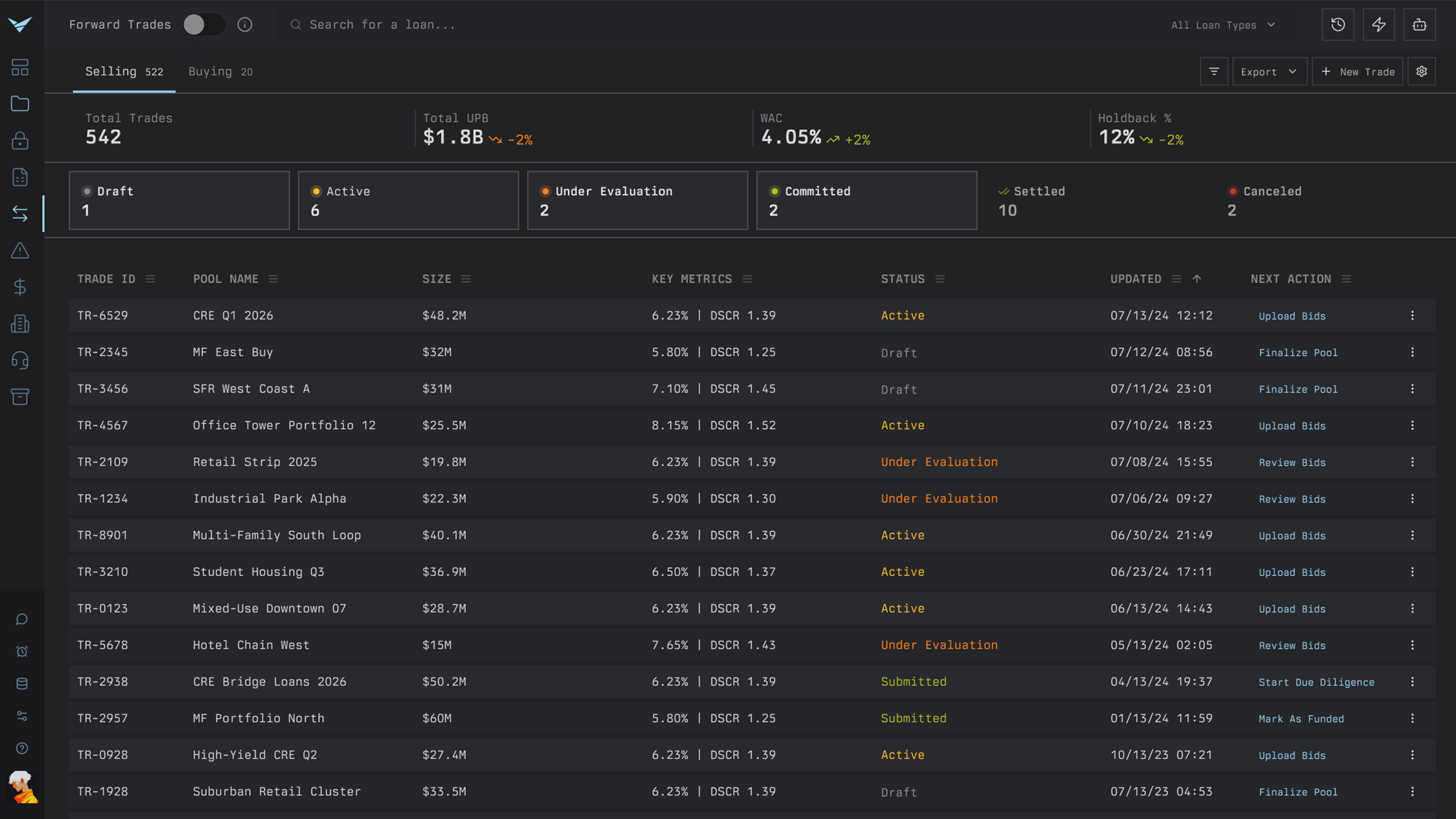
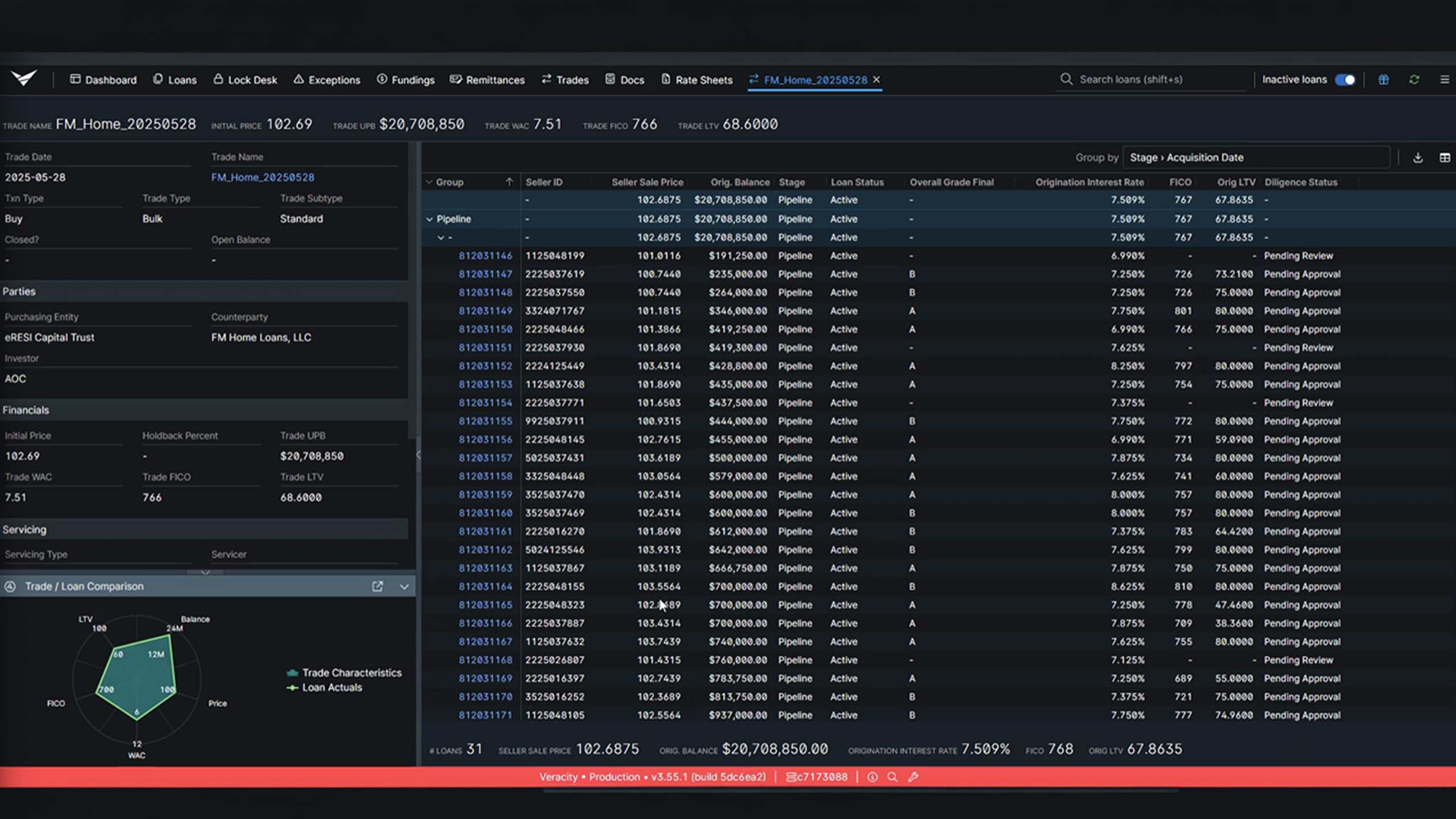
With no product documentation to inherit, Wandr built its own picture of how loan trading works, through the legacy platform, direct user interviews, and flows.
Wandr audited the single-tenant 1.0 tool to separate what to keep from what to rebuild, since nothing else was documented.
Interviews with a senior user validated assumptions about the highest-stakes workflow, in a domain the team was still learning.
With requirements living only in conversations, flows became how the team and client aligned on what to build.
Brings loan data in and evaluates the book. Lives in Excel today and needs messy, inconsistent spreadsheets to import cleanly.

Runs compliance and reconciliation on each loan, flagging exceptions against tolerances. Needs discrepancies visible and every decision logged.

Decides which loans to fund and at what price, weighing risk across the book. Needs severity legible at a glance, not buried in a cell.

Handles collateral and documents through the loan lifecycle. Needs the record to hold as loans move between parties.
Embed senior designers who take product-area ownership from day one, so the client gets decisions and shipped UI, not a resource to manage.
Use design and user flows to surface and pin down requirements the org never wrote down, turning discovery-as-design into a repeatable process.
Replace custom-component sprawl with a bespoke design system, so patterns, color, and type stay consistent as the platform grows.
Veracity had the ambition, the domain, and a hard product to build. What it lacked was a way to make design decisions and hold them: documentation, process, ownership, and a system. Redesigning screens would have fixed a symptom. Building the operation fixed the cause, so the work compounds as the product grows. A better screen ships once. A design operation the team can build on ships continuously, which is why a three-month trial became a standing part of how Veracity builds.
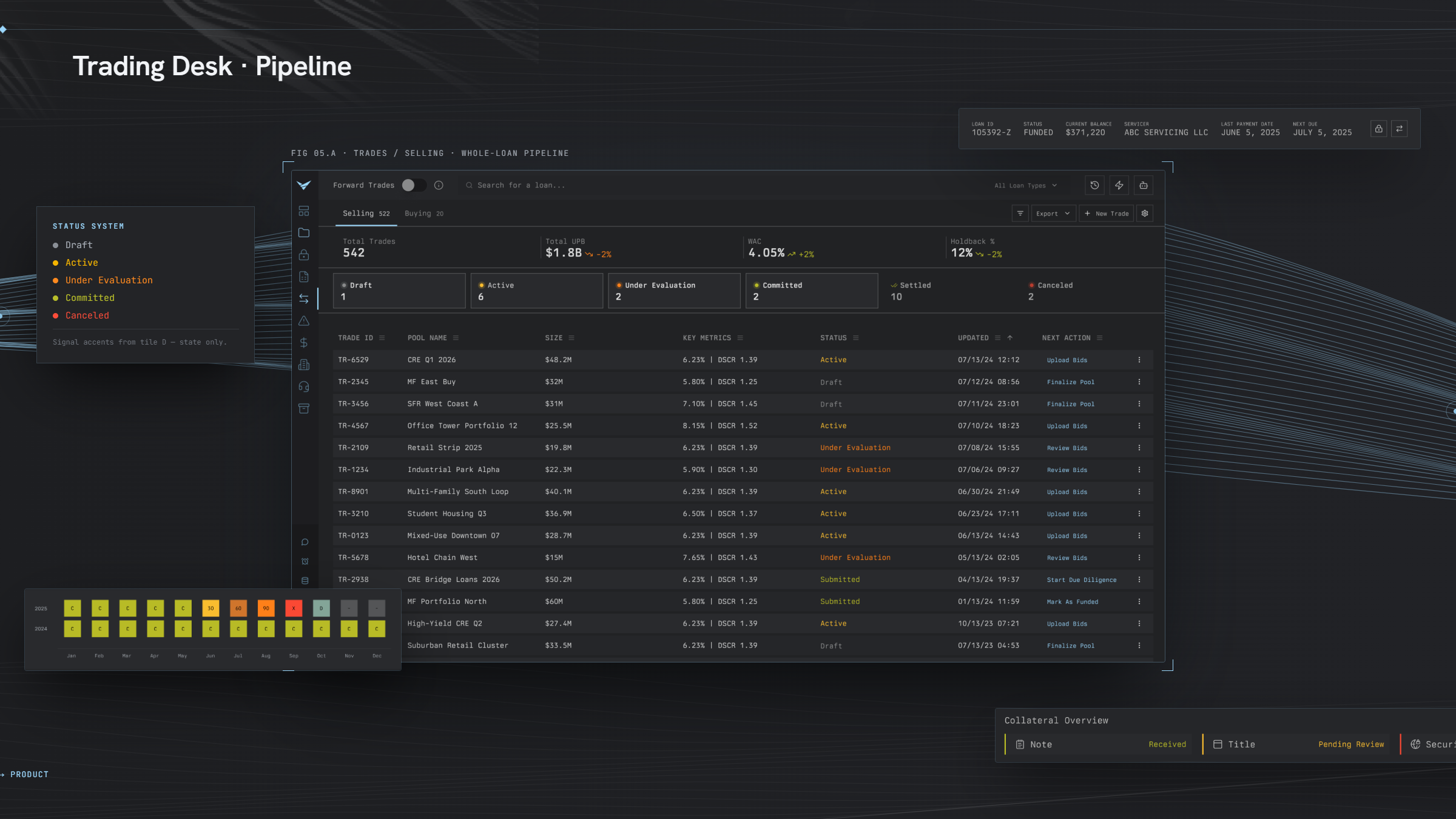
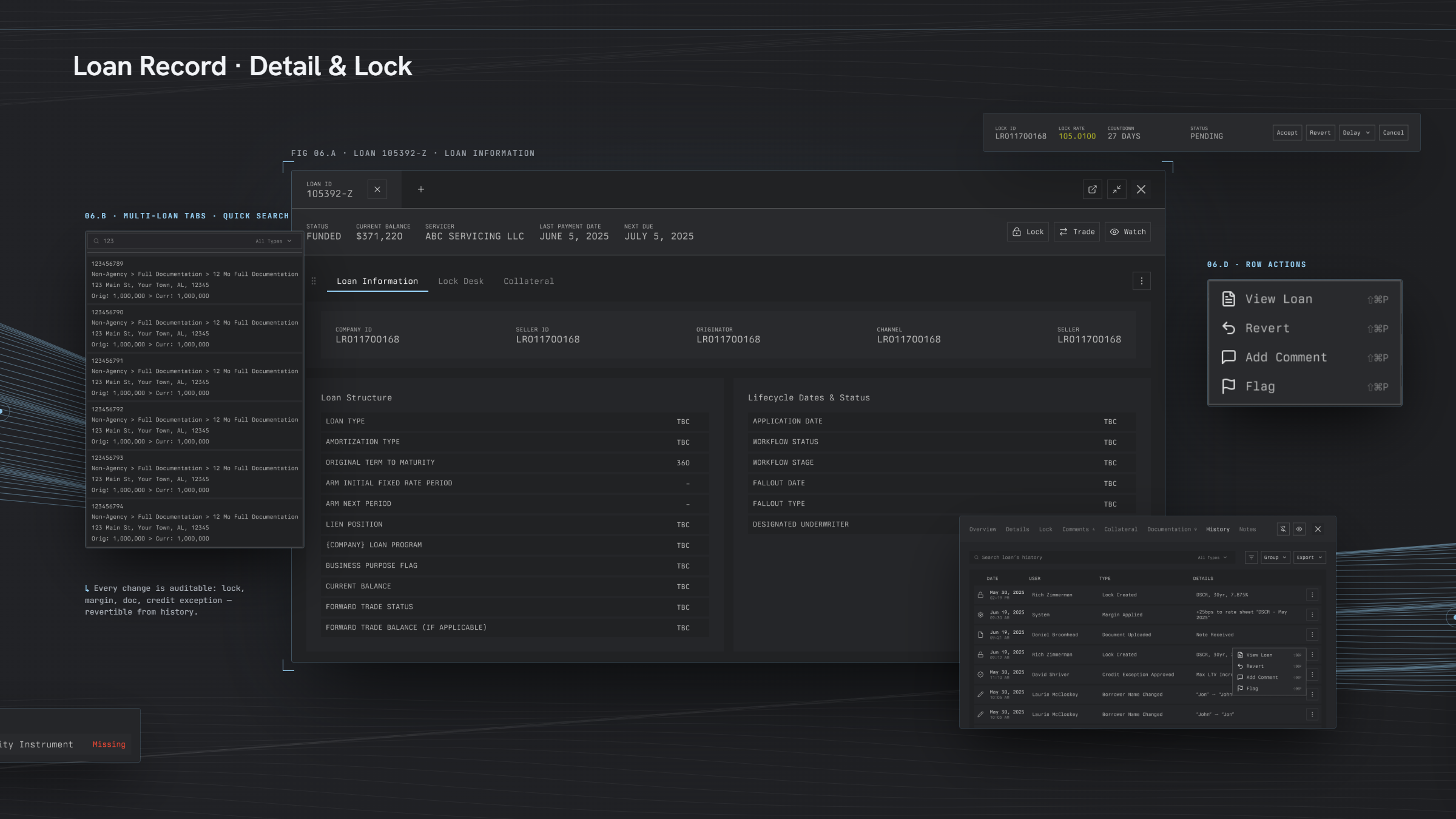
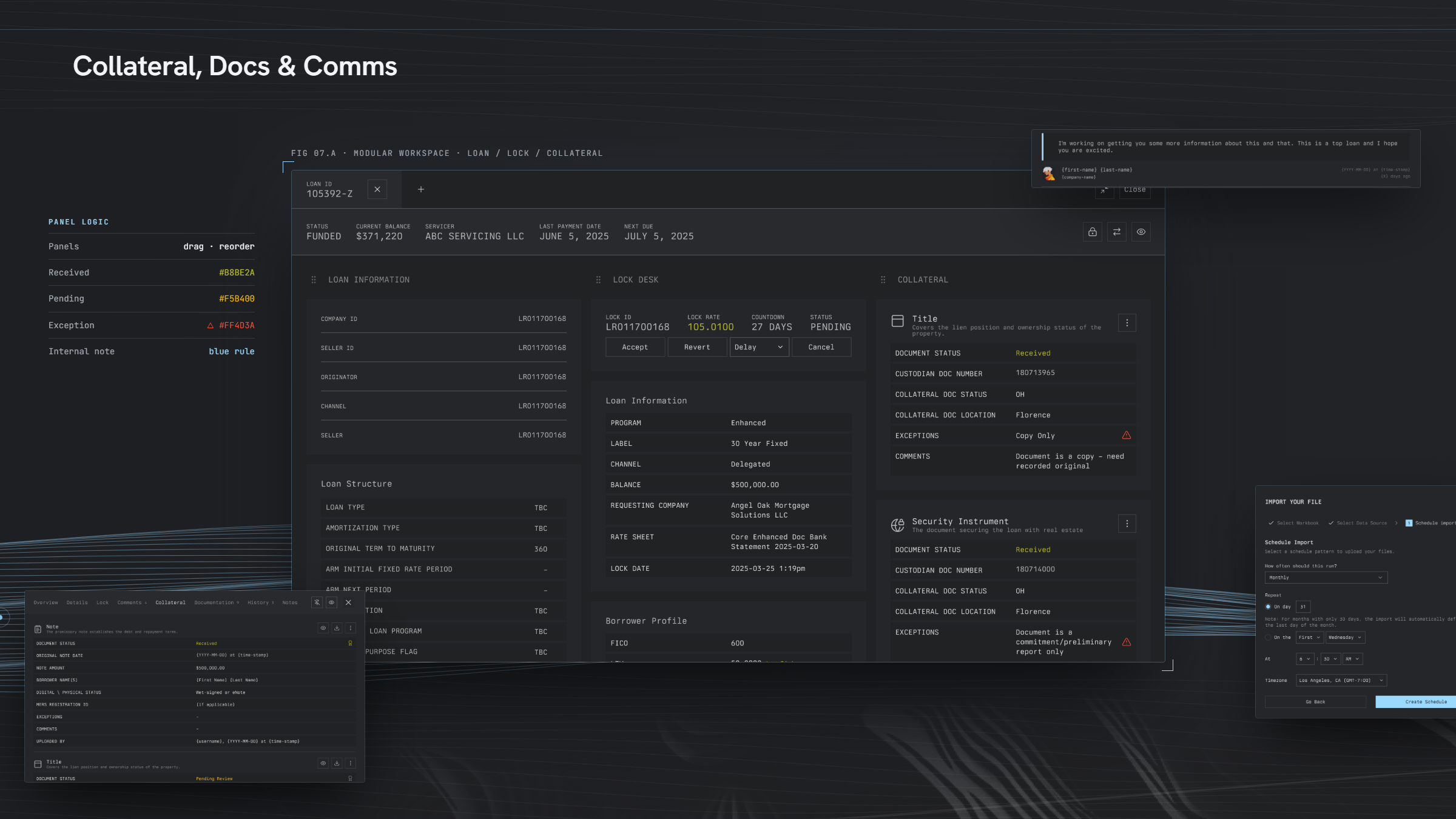
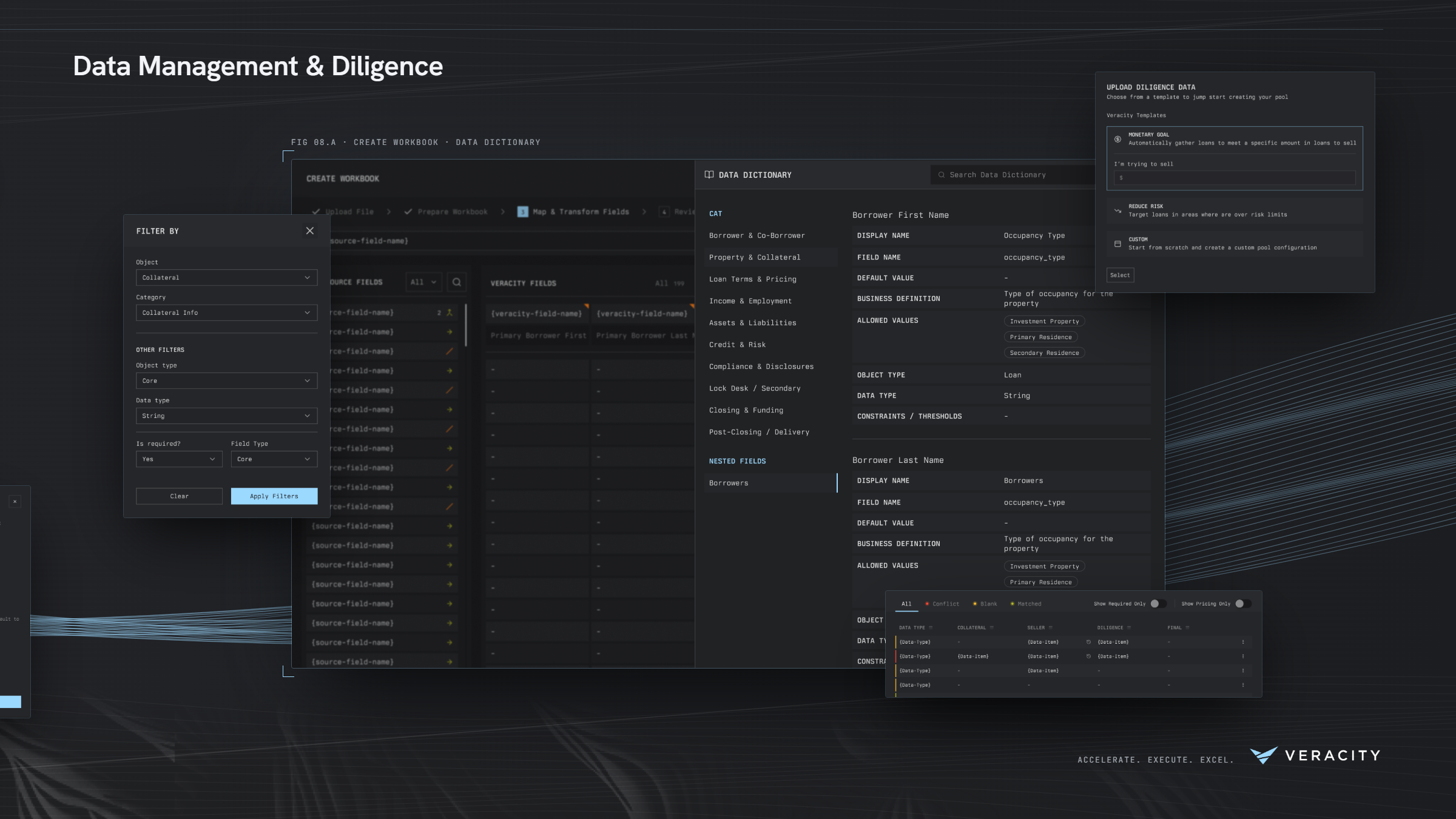
Fifteen months in, the outcomes are about trust and operating capability, not launch metrics, since the platform is still pre-launch.
We brought Wandr in for three months to steady our design, and they ended up shaping how we build product. They learned a genuinely hard domain, took ownership, and earned enough trust that we kept expanding the team. They are the group we did not want to give back.