

Persona 01

The security manager
Often the first security hire, technically proficient, and protective of a lean team’s time. Wonders whether the tool fits a team of one.
FIRST-HIRE
PROFICIENT
“not for a team of one”
In a nine-week engagement, we researched, redesigned, and tested a Y Combinator security startup’s platform, lifting task-success to 91% and activation by 76%, before Cloudflare acquired the company.

A Y Combinator startup inventing
à la carte cloud security.

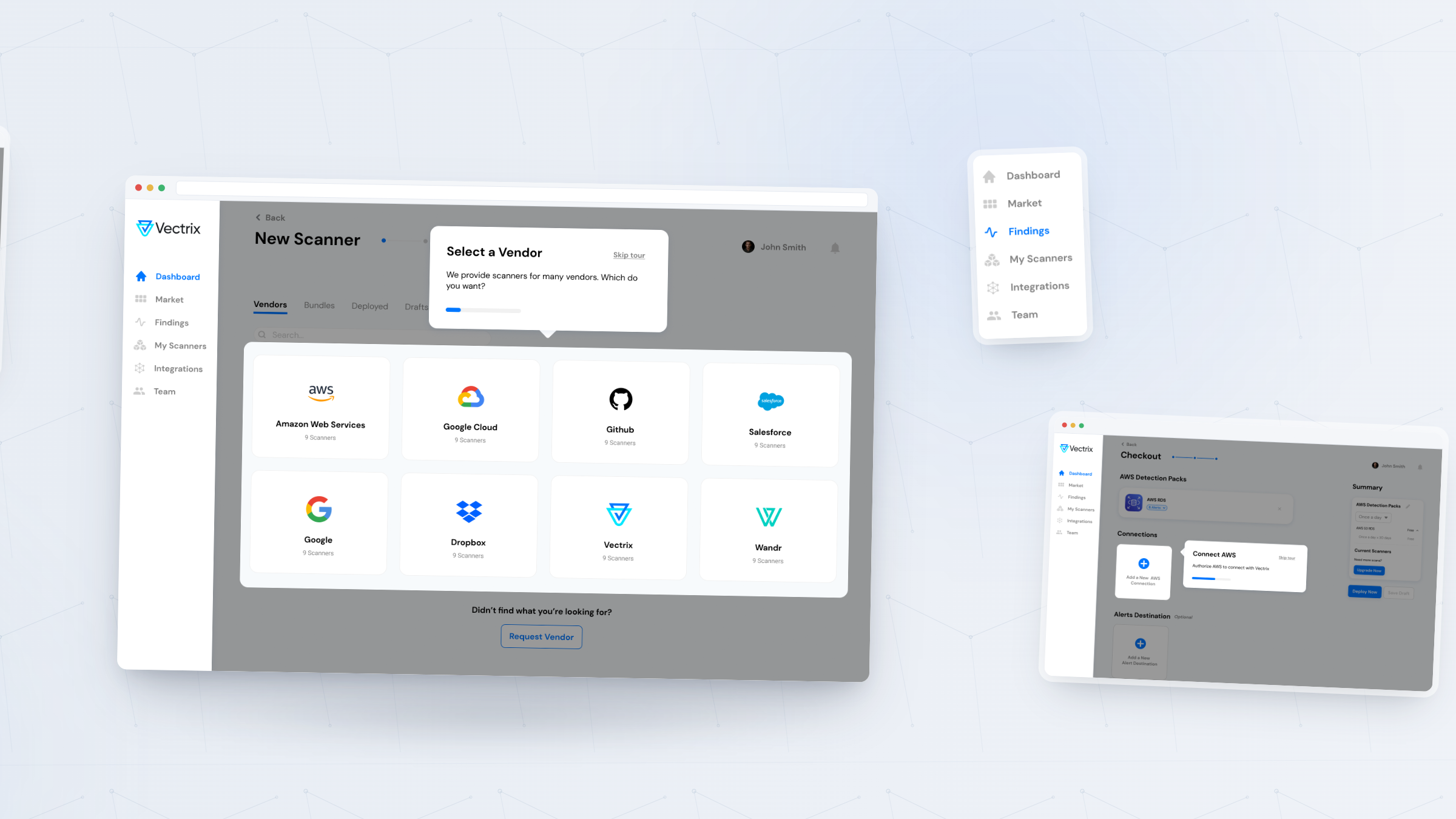
Vectrix built an API-driven cloud access security broker, a CASB, that gave IT and security teams one-click visibility and control across all their SaaS applications. It worked like a marketplace of à la carte scanners for tools like AWS, Google Workspace, GitHub, Salesforce, and Dropbox, surfacing issues from unauthorized access and file exposure to misconfigurations and shadow IT.
Our research found the product did not fit any existing category, so part of the job was helping Vectrix define and own a new one. When Wandr came on, Vectrix was an early-stage Y Combinator team with a powerful but deeply technical MVP, and a founding team that knew adoption depended on making that power feel simple.
A powerful platform that asked too much of its users.
Vectrix had built real security capability. The experience around it still assumed the depth of knowledge its own engineers had.
The platform could do a lot, but it exposed that capability directly. First-time users struggled with setup, deployment, and simply reading whether the system was working.
There was no clear picture of who the product was for or where it sat in the market, which made both the roadmap and the go-to-market story harder to build.
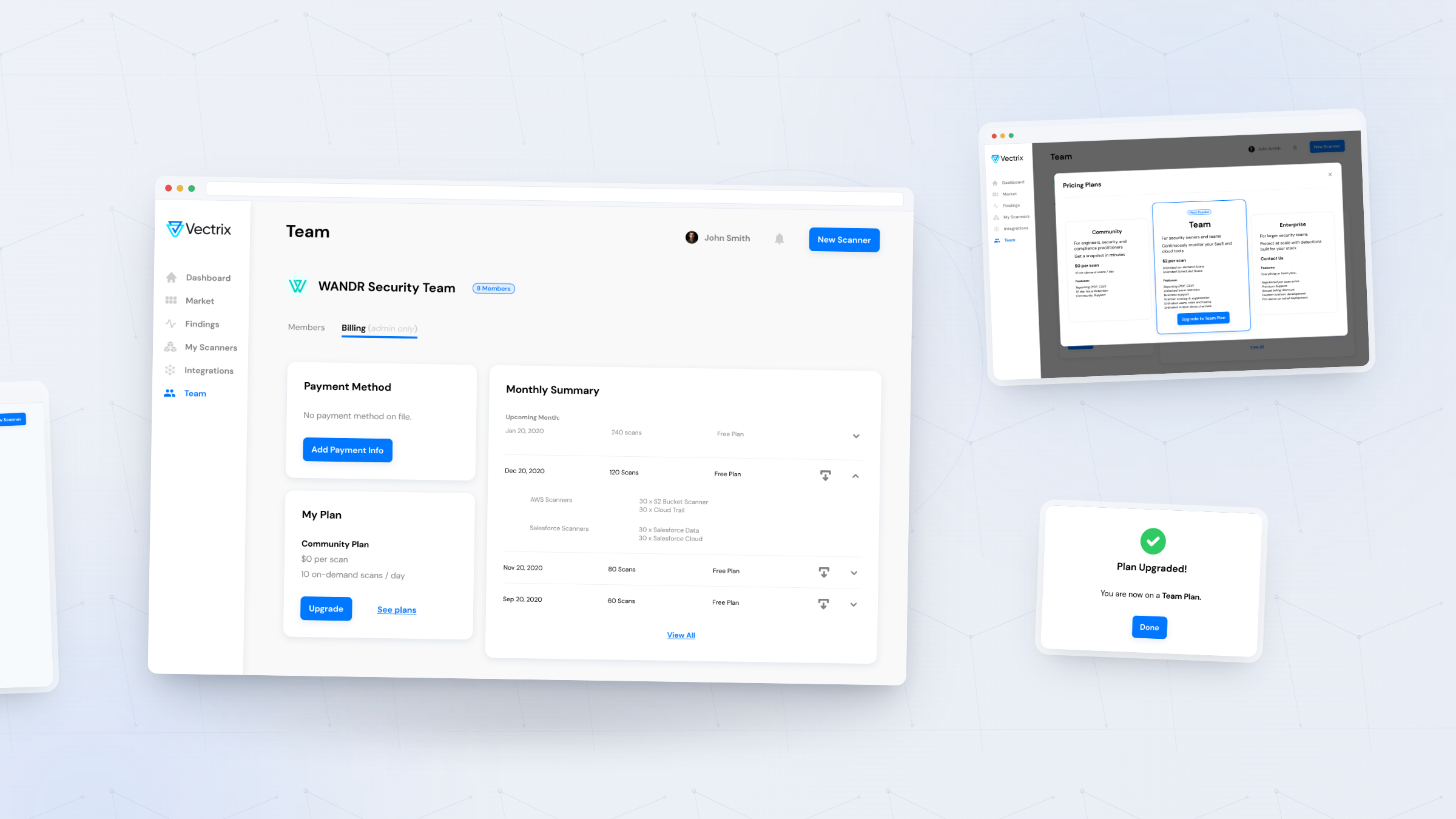
The riskiest moments were pricing and permissions. Users were unsure what they were paying for and uneasy about granting access to their data before they had committed.
Buyers ranged from very advanced security engineers to less technical risk analysts, so the same flows had to work for people with very different depth.
MPL needed a system, not a one-off page. Without a shared design language and component library, every new segment, promotion, or market would mean rebuilding from scratch. The experience had to scale as fast as the roadmap.
Same powerful platform,
rebuilt to be adopted.
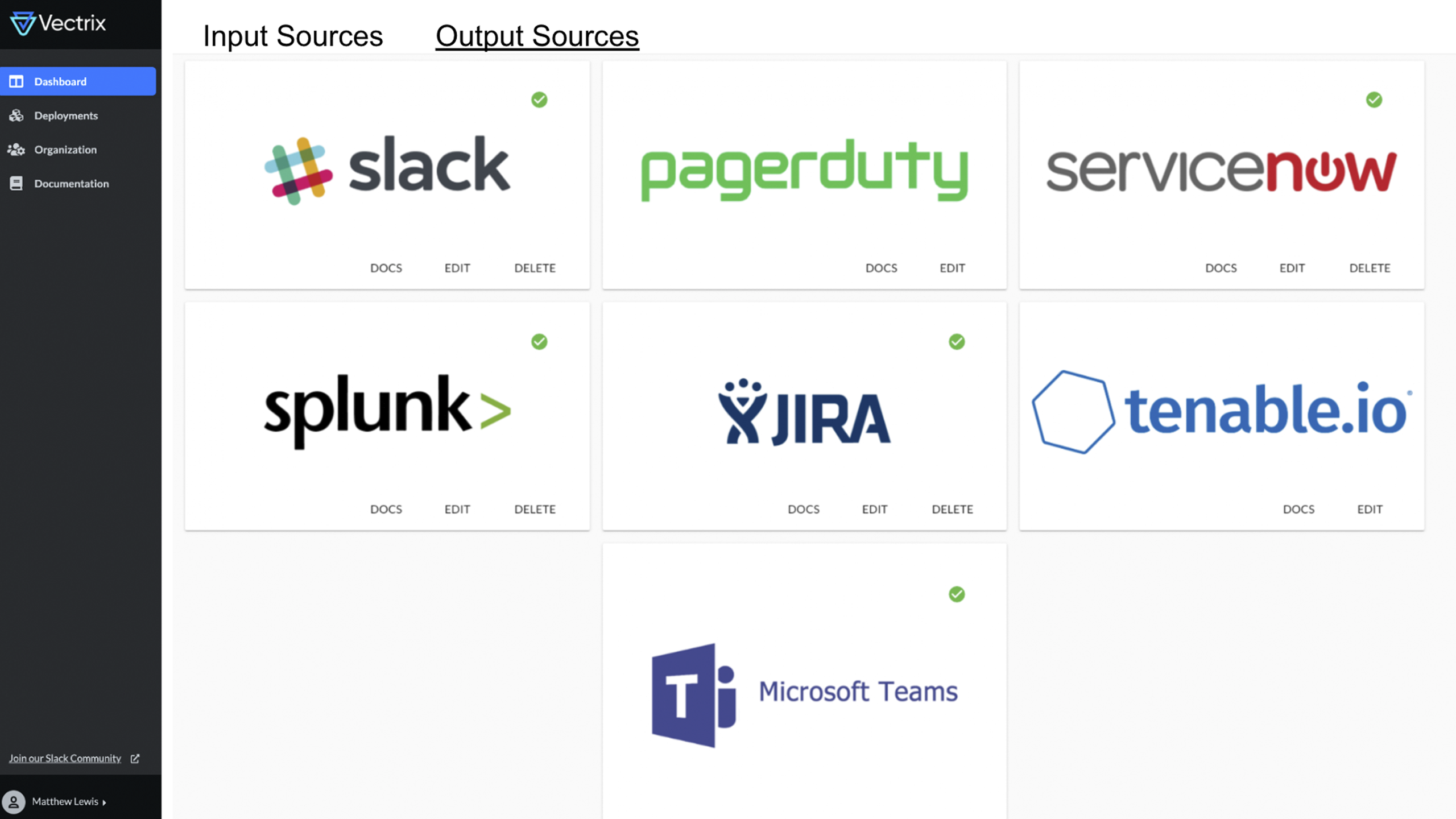
Drag the handle to see how the core flows changed, from a technical MVP that lost first-time users into a guided, tested experience built around real user mental models.



From research to tested prototype.
Before redesigning, we defined
The buyer and the category.
Eight in-depth interviews mapped who Vectrix was really for, then five security professionals tested the redesigned prototype flow by flow, scoring each task.
Eight in-depth interviews with security professionals, clustered into patterns across hiring order, seniority, and technical fluency.
Five security professionals ran the prototype across eight core flows, each scored for success on a 1 to 3 scale.
Task-success on the redesigned flows reached 91%, with six of the eight flows scoring at or near a clean success.
Often the first security hire, technically proficient, and protective of a lean team’s time. Wonders whether the tool fits a team of one.

Very advanced and hands-on, moving fast, but tripped up by payment options and unclear permissions.

Less technical, evaluating through cost and outcomes rather than deep configuration. Needs the pricing model to make sense.
Teach a new category. Earn trust before commitment.
We framed Vectrix as an à la carte cloud-security marketplace and designed the flows so first-time users could grasp that model instead of guessing at it.
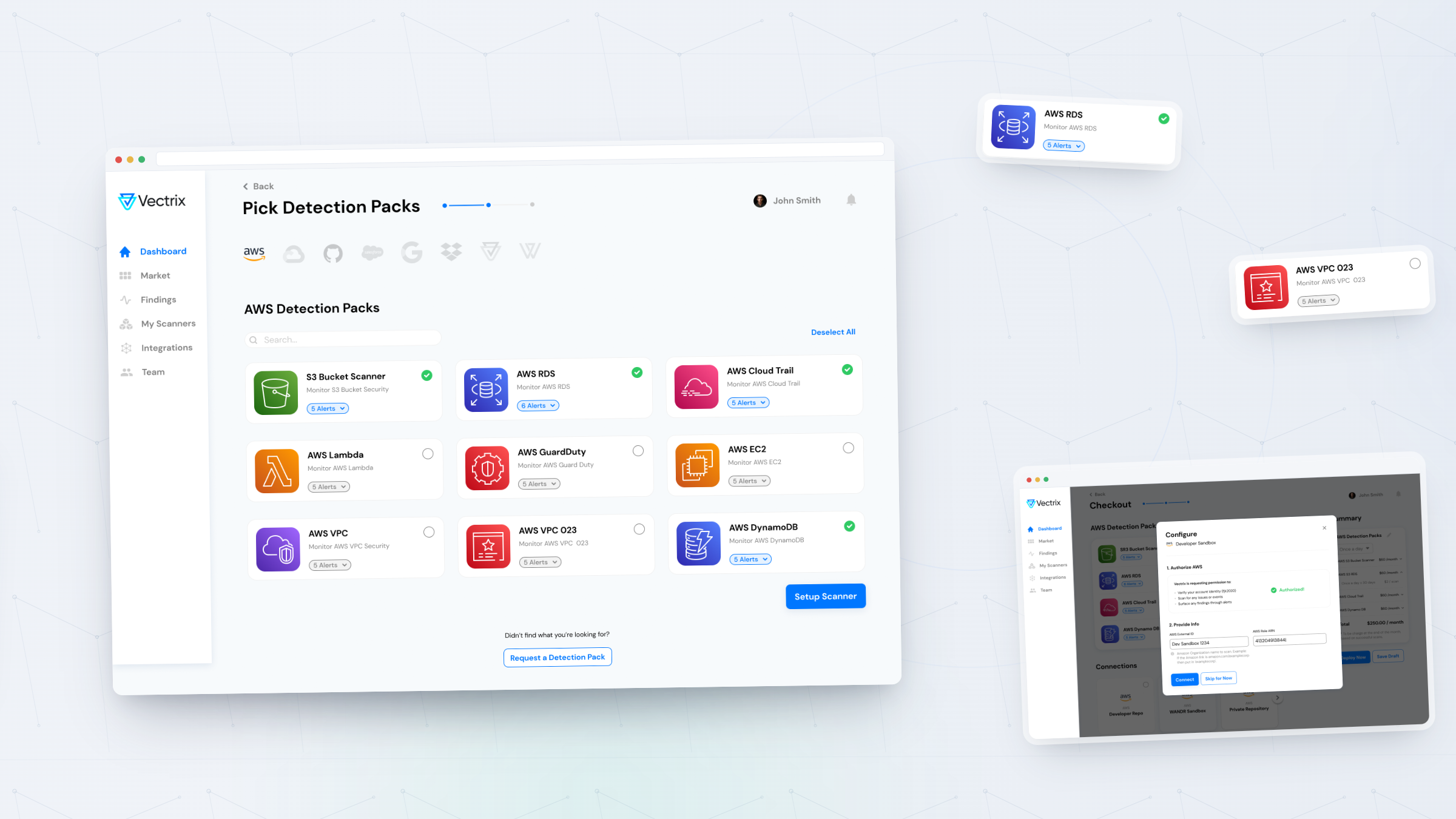
Pricing and permissions were where users hesitated, so we made cost transparent and explained exactly what access each connection granted, before asking anyone to commit.
Buyers spanned engineers, managers, and analysts, so the redesign used plain language and progressive detail that worked whether or not you lived in security tooling.
The product wasn’t unclear. The category was.
Vectrix did not fit an existing category, and its buyers ranged from very advanced engineers to less technical analysts.
The redesign’s job was to teach a new model, an à la carte cloud-security marketplace, clearly enough that a first-time user could act on it, without stripping the depth its engineers relied on.
Naming and shaping that category was as much of the work as the screens, and it is the more repeatable version of the problem: a cleaner flow helps once, but a category the market understands compounds.




What the work moved.
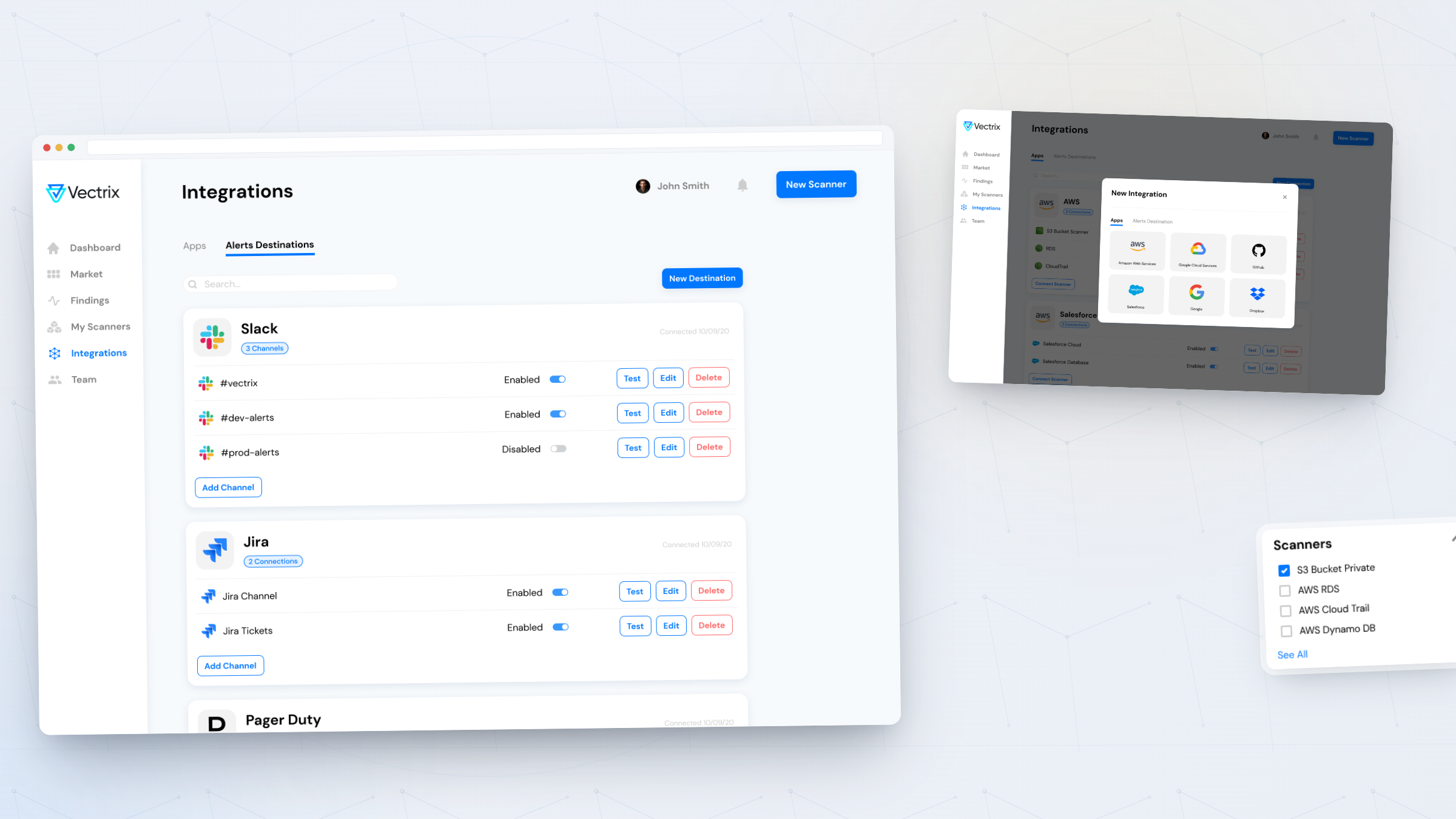
By the end of the engagement, Vectrix had a defined buyer, a redesigned and user-tested product, and a way to measure product-market fit.
Performance figures reflect results published on WANDR’s Vectrix case study. The December 2020 usability study additionally recorded per-flow success scores (1.03 to 1.80 on a 1 to 3 scale) and a System Usability Scale of roughly 83.
WANDR played a critical role in shaping our product at a pivotal time. Their team brought clarity, speed, and senior-level thinking when we needed it most.

